
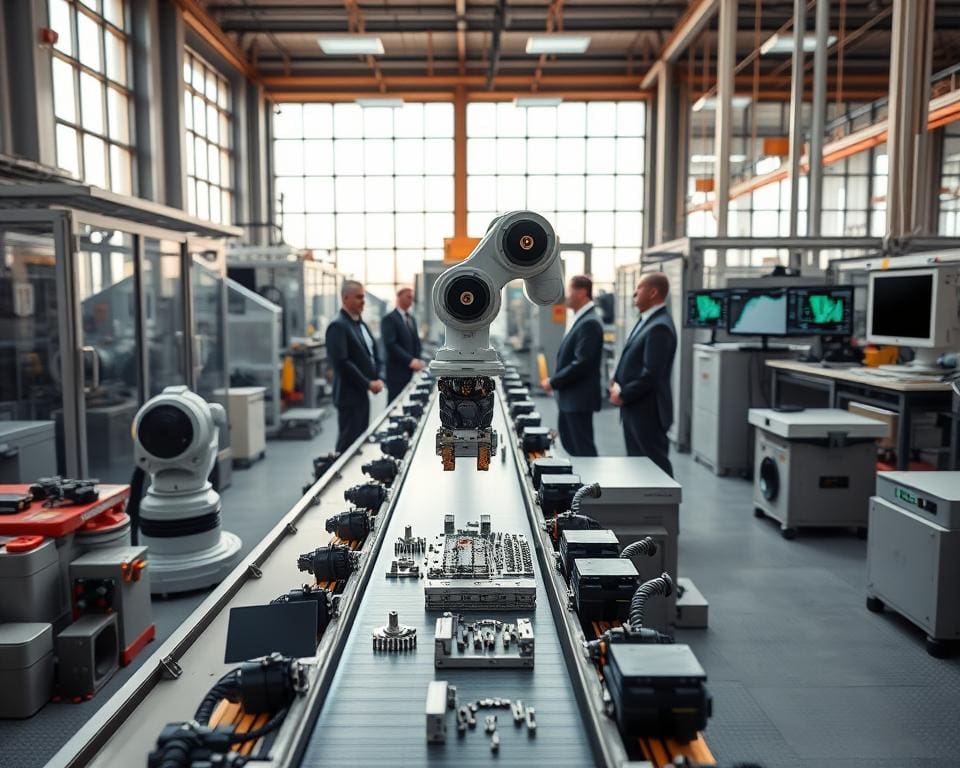
Industrial automation is heralding a new era in manufacturing processes, transforming how industries operate and adapt to ever-changing market demands. As automation technologies, including robotics and intelligent systems, gain prominence, traditional paradigms are being redefined. This shift is driven predominantly by the need for greater efficiency, cost reductions, and the ability to respond swiftly to consumer needs. In this landscape, the manufacturing industry faces numerous challenges that the advent of automation aims to address, ultimately enhancing productivity and streamlining operations.
Understanding Industrial Automation
The industrial automation definition encompasses the technologies and processes that eliminate or reduce human intervention in industrial operations. This transformation is vital for driving manufacturing improvement across diverse sectors. Robotics, control systems, and sophisticated software work in tandem to enhance precision, speed, and overall productivity.
In contrast to manual processes, which often rely on human skill and judgement, automation provides a consistency that leads to fewer errors. The advantages of automation manifest in various forms, offering significant automation benefits such as increased production rates, enhanced product quality, and lowered labour costs. Industries such as automotive, electronics, and consumer goods stand as prime examples of sectors that have embraced these changes, leading to more effective and efficient manufacturing lines.
By adopting automation, businesses enable their workforce to focus on higher-value tasks rather than routine, repetitive activities. This shift not only enhances employee satisfaction but also promotes innovation, which is essential for long-term success. The ongoing evolution of industrial automation is indicative of a future where efficiency and agility become the cornerstone of manufacturing practices.
Key Technologies Driving Industrial Automation
The landscape of manufacturing is undergoing a profound transformation, driven by the integration of automation technologies that optimise efficiency and productivity. Central to this evolution are advancements in robotics, which play a pivotal role in streamlining operations. Robots equipped with advanced sensors and artificial intelligence capabilities can take on complex tasks, reducing the reliance on manual labour and enhancing precision.
AI in manufacturing is revolutionising how factories operate. Systems powered by artificial intelligence analyse vast amounts of data in real time, allowing for predictive maintenance and minimising downtime. This capacity for intelligent decision-making optimises production schedules, thereby increasing overall output.
Companies such as Siemens and ABB are at the forefront of these technological innovations. They showcase the practical application of sophisticated machinery and smart systems in their manufacturing processes. Siemens, for example, utilises IoT technologies to connect devices and create seamless communication between machines, significantly boosting operational efficiency.
Furthermore, trends in cloud computing and data analytics are further supporting automated systems. This integration enables manufacturers to access critical information from various locations, facilitating timely responses to changing production demands. By harnessing these powerful tools, organisations can achieve greater flexibility and scalability in their operations.
Why is industrial automation reshaping manufacturing processes?
Industrial automation is revolutionising manufacturing processes, driving significant changes that redefine operational capabilities. Key to this transformation are two crucial factors: automation efficiency and the reduction of human error. The integration of advanced technologies allows businesses to optimise every aspect of their production lines, resulting in an unprecedented level of efficiency.
The Impact on Efficiency
Automation enhances productivity through streamlined operations and precise control over manufacturing environments. In an era where speed and accuracy determine success, automated systems enable manufacturers to achieve higher outputs with greater consistency. The implementation of robotics and intelligent systems has resulted in a marked increase in throughput while lowering operational costs. These efficiencies contribute to improved profit margins, allowing companies to invest further in innovation.
Reducing Human Error
The introduction of automation significantly reduces the likelihood of human error, which can have costly repercussions in manufacturing settings. Machines designed for specific tasks operate with a level of reliability that surpasses human capabilities. This accuracy leads to better quality control and diminished waste, effectively enhancing the overall productivity increase within organisations. As automating processes continues to unfold, the focus shifts toward empowering human employees to tackle more strategic roles that require creative and critical thinking.
Cost Savings and Economic Implications
Embracing manufacturing automation presents a transformative opportunity for industries seeking significant cost savings. The initial investment in automation technologies might appear substantial, yet the long-term benefits often outweigh these early expenditures. Through enhanced productivity and reduced operational costs, many manufacturers find a pathway to greater profitability.
The economic impact of implementing automation extends beyond mere numbers. Industries across the United Kingdom have reported notable uplift in performance, demonstrating how automation can lead to increased efficiency and lower overall production expenses. This sophisticated approach allows businesses to allocate resources judiciously, engaging in strategic investments that drive innovation.
Case studies reveal that firms like Siemens and Jaguar Land Rover have successfully integrated manufacturing automation into their operations, reaping tangible financial rewards. Users of automation technology frequently highlight reductions in waste and improvements in operational output as pillars of their financial success. These companies not only enhance their own bottom lines, but also contribute to job creation in tech-driven fields, thereby fostering a robust economic environment.
The Role of Artificial Intelligence in Manufacturing
Artificial intelligence manufacturing is revolutionising how businesses operate within the sector. By leveraging AI technologies, manufacturers can significantly improve efficiency and streamline operations. Smart manufacturing is not merely a buzzword; it represents a profound shift in how products are designed, produced, and maintained.
AI systems excel at analysing vast amounts of data, which enables manufacturers to predict maintenance needs proactively. For instance, predictive analytics can help identify potential machine failures before they occur, minimising downtime and reducing costs. Companies like Rolls-Royce are at the forefront of this transformation, using AI to optimise their operations and ensure timely maintenance of their engines.
Optimising supply chains also benefits from artificial intelligence. By utilising AI technologies, manufacturers can forecast demand more accurately, adjust inventory levels, and enhance product design effortlessly. This leads to better resource management and improved customer satisfaction, as products are delivered on time and meet high standards of quality.
Machine vision is another application that highlights the capabilities of AI in manufacturing. Through sophisticated imaging systems, AI can detect defects in products at a much faster rate than human inspectors. This not only enhances product quality but also reduces human error, thereby ensuring a consistent output across production lines. UK manufacturers implementing these cutting-edge technologies are setting new benchmarks for efficiency and quality in their respective fields.
Enhancing Product Quality and Consistency
In the realm of industrial automation, enhancing product quality and consistency emerges as a crucial focus. As manufacturers seek to meet ever-growing consumer demands, the integration of technology in quality control becomes vital. This section delves into various techniques and technologies that play a role in achieving superior product quality.
Quality Control Automation Techniques
Automation in quality control encompasses a wide array of techniques designed to ensure that every product meets stringent quality standards. Automated inspection systems, equipped with advanced imaging technologies, can detect defects that may go unnoticed during manual evaluations. These systems not only increase accuracy but also significantly reduce the time needed for inspections.
- Automated testing systems evaluate product functionality and performance efficiently, ensuring reliability across different batches.
- Data-driven analytics drives continuous improvement, enabling manufacturers to make informed decisions based on quality metrics.
- Robotic process automation streamlines workflows, decreasing the likelihood of human error while enhancing overall effectiveness.
Real-Time Monitoring and Adaptation
Real-time monitoring stands as a cornerstone of contemporary manufacturing practices. This technology allows for instant feedback on product quality, enabling manufacturers to adapt processes dynamically. For instance, sensors embedded in production lines provide continuous data, facilitating immediate adjustments to ensure optimal quality maintenance.
By implementing real-time monitoring, manufacturers can pinpoint quality deviations swiftly, allowing for corrective measures to be taken before products reach consumers. This proactive approach not only safeguards product quality but also reinforces brand reputation, ensuring customer satisfaction remains at the forefront of production efforts.
Future Trends in Industrial Automation
The future of industrial automation is poised for remarkable transformation, driven by a convergence of cutting-edge technologies and innovative practices. Advancements in artificial intelligence and robotics are set to redefine operational paradigms, enabling manufacturers to achieve unprecedented efficiency and precision. As these technologies evolve, the automation landscape will see the integration of smart systems that facilitate real-time data analysis, allowing for agile responses to fluctuating market demands.
Another significant trend is the growing emphasis on sustainability. Eco-friendly manufacturing practices not only contribute to environmental preservation but also resonate with the increasing consumer demand for responsible production. Companies are adopting greener technologies and methods as part of their operations, signalling a shift towards a more sustainable future for industrial automation. This commitment to sustainability reflects a broader industry trend where corporations intertwine profit with purpose.
Additionally, the incorporation of augmented reality (AR) in training and operational processes is paving the way for enhanced efficiency. AR offers immersive experiences that can significantly improve workforce training and facilitate better interaction with complex machinery. As these innovations reshape the way workers engage with technology, the automation sector is likely to witness a surge in productivity and innovation. Insights from industry leaders indicate that such trends will define the future of industrial automation, ultimately revolutionising manufacturing processes in ways we have yet to fully explore.