
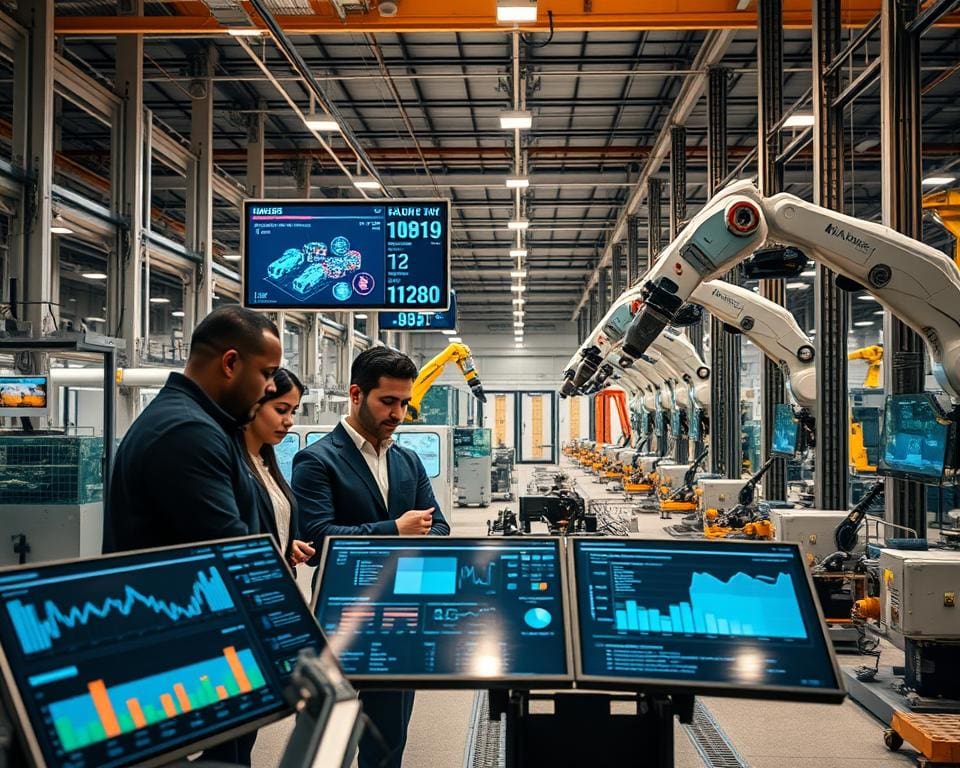
Digitalisation is reshaping the UK manufacturing workforce through automation, the industrial Internet of Things (IIoT), robotics, cloud and edge computing, and data analytics. Major firms such as Jaguar Land Rover, Rolls‑Royce and Siemens are investing in smart factories and digital tooling, while government initiatives like the Made Smarter review and funding from Innovate UK push adoption across the sector.
The headline effects on jobs are clear. Routine, repetitive roles are being displaced as machines and automated inspection systems take on manual tasks, improving quality and lowering error rates. At the same time, new Industry 4.0 jobs are emerging: higher‑skilled technical, supervisory and analytical positions that require hybrid skills in mechanics, electronics and software.
Reports from the Office for National Statistics and the World Economic Forum point to both job shifts and net job creation in advanced manufacturing ecosystems. The impact of automation on employment varies by region and plant, with many firms reporting productivity gains alongside new roles in maintenance, data analysis and systems integration.
This article will take a product‑review angle, examining how hardware choices drive factory digital transformation and influence job roles, training needs and community outcomes. Hardware selection matters for scalability, safety and reliability, and it helps determine how quickly the workforce must reskill to keep pace.
Our aim is practical and aspirational. We want managers, engineers, policy makers and workers across the UK to understand how digitalisation and manufacturing jobs are evolving, and to find pathways that maximise benefits while reducing disruption. For background on how industrial automation is changing manufacturing processes, see this overview from Evovivo on automation and industry trends.
How does hardware support automation goals?
Hardware forms the backbone of modern factory transformation. Clear choices about industrial automation hardware shape throughput, flexibility and the types of jobs on the floor. Practical examples range from robotic weld cells in automotive plants to precision CNC centres in electronics assembly.
Core industrial hardware components driving automation
PLCs from Siemens, Rockwell Automation (Allen‑Bradley) and Schneider Electric handle deterministic control and safety logic. They sequence machinery, manage interlocks and integrate with higher‑level systems.
Industrial robots by ABB, KUKA and FANUC take on heavy, repetitive and hazardous tasks. Collaborative robots from Universal Robots work side‑by‑side with people for pick‑and‑place and delicate assembly, expanding flexibility.
Motion control elements such as servo motors and CNC machines deliver precision machining. Automated guided vehicles (AGVs) move materials with minimal supervision, cutting transit time between workstations.
Sensors and actuators complete closed‑loop control. Vision systems by Cognex and Basler, force/torque sensors and vibration probes enable condition monitoring. These components influence process changeover speed and overall throughput.
Connectivity and edge devices: linking machines and systems
Interoperability rests on industrial Ethernet standards such as PROFINET and EtherCAT, plus OPC UA for data exchange. Gateways and IIoT edge devices from Advantech, HPE Edgeline and Siemens aggregate signals from PLCs and robots.
Edge devices perform local analytics and anomaly detection so that latency‑sensitive control stays on the shop floor. They forward curated data to cloud platforms like Microsoft Azure IoT or AWS IoT when long‑term analysis is required.
Cybersecurity features in hardware matter. Secure boot, hardware root of trust and industrial firewalls protect operations technology. Network segmentation reduces exposure for critical control systems.
Reliability and safety considerations for factory hardware
Designing for uptime begins with MTBF targets, redundancy such as dual controllers and hot‑swap power supplies, and clear spare‑parts strategies. Certifications like CE, ATEX and SIL guide safe deployment in regulated environments.
Factory safety hardware includes safety‑rated controllers, emergency stop circuits, safety light curtains and area scanners from SICK and Keyence. Collaborative robots add force limiting and speed‑and‑separation monitoring to protect operators.
Condition monitoring hardware such as vibration sensors and thermography cameras supports predictive maintenance. That reduces unplanned downtime and shifts maintenance from reactive to planned activity.
Thoughtful selection of industrial automation hardware and IIoT edge devices sets the scope for automation, the resilience of operations and the mix of technical and supervisory roles required on the shop floor.
Impact of digital technologies on job roles in manufacturing
The rise of sensors, cloud platforms and advanced automation is changing how factories operate and who they employ. This shift affects shopfloor routines, management layers and technical teams. It also creates fresh opportunities for workers to move into higher‑value roles.
Shifts from manual tasks to supervisory and technical roles
Repetitive, low‑skill tasks such as manual assembly, packing and basic inspection are increasingly automated. Operators in automotive and food manufacturing now oversee multiple machines, program changeovers and perform first‑line troubleshooting.
Supervisory posts and quality assurance engineers grow in number as firms demand staff who can manage automated cells and lead process improvement. Soft skills like problem solving, teamwork, clear communication and safety awareness become essential in mixed human‑robot environments.
New specialist roles: data analysts, IIoT engineers and robotic technicians
New job families have emerged to turn data and devices into value. Data analysts and data scientists interpret production telemetry to drive efficiency gains and reduce downtime.
IIoT engineers integrate sensors, gateways and cloud services so machines share reliable data. Robotic technician jobs involve maintaining, programming and recalibrating robot cells to keep lines running smoothly.
Training routes from Siemens Mechatronics and ABB Robotics, Cognex vision courses and Microsoft and AWS IoT certifications help workers acquire these skills. UK job postings and industry surveys show rising vacancies for IIoT engineers, automation specialists and data roles, often with wages above the manufacturing average.
Changes in workforce composition and skill demand in the UK
Manufacturing job shifts UK are most visible in the Midlands and North West, where clusters need more technicians and engineers. Public programmes such as the National Retraining Scheme and Local Skills Improvement Plans target advanced manufacturing skills.
Employers seek NVQ, HNC/HND and degree‑level technical qualifications as the proportion of technical roles within manufacturing grows. The demand for workforce digital skills spans younger entrants and long‑service operatives, creating both a chance to retain talent and a need to upskill older staff to prevent exclusion.
- Examples of role change: operators to multi‑machine supervisors.
- Typical training: vendor courses and cloud‑OT certifications.
- Regional focus: Midlands, North West and other manufacturing hubs.
Product review perspective: evaluating automation hardware for factories
Choosing the right kit shapes productivity, staff roles and long‑term cost. This product review automation hardware guide sets out practical criteria and real examples to help plant managers, engineers and procurement teams in the UK make informed choices.
Start with performance and suitability. For robots look at precision, cycle time, payload and repeatability. For PLCs check I/O count and deterministic behaviour. For edge devices measure throughput and latency.
Assess scalability and modularity. Systems that support OPC UA and phased investment reduce vendor lock‑in and make it easier to expand lines over time.
Factor total cost of ownership. Include capex, commissioning, licensing, maintenance and spare parts. Use ROI metrics such as reduced labour hours, higher yield and less downtime to compare options.
Consider usability and training. Intuitive programming, vendor training and local integrator support in the UK speed deployment and raise adoption among shopfloor staff.
Verify safety, compliance and environmental robustness. Look for IP ratings, CE marking and certifications required for food or pharmaceutical environments.
Comparing leading hardware solutions for small and large manufacturers
Small manufacturers benefit from compact, cost‑effective choices. Collaborative robots from Universal Robots and compact PLCs like Siemens S7‑1200 lower capital barriers. Plug‑and‑play vision kits from Basler speed quality checks and shorten payback time.
Large manufacturers need industrial‑grade throughput. ABB, FANUC and KUKA robots handle heavy cycles. High‑performance PLCs such as Siemens S7‑1500 and Rockwell ControlLogix support complex logic and redundancy. Enterprise edge platforms from HPE and Siemens Industrial Edge link devices to MES and ERP.
Use a comparison PLCs robots edge devices checklist when you evaluate vendors. Include integration with Siemens Opcenter or Rockwell FactoryTalk and confirm local authorised service centres and system integrators in the UK.
Case examples: successful hardware deployments and measurable outcomes
Automotive plants deploying robotic welding cells report consistent weld quality, fewer rejects and faster cycle times. Typical gains include double‑digit reductions in defect rates and clear rises in throughput.
Food and beverage sites using vision inspection systems achieve fewer recalls and better compliance with Food Standards Agency rules. Inspection hardware can cut recall risk and improve first‑pass yield.
At a small‑scale manufacturer a cobot handled repetitive assembly tasks. Staff moved to higher‑value roles in maintenance and programming while musculoskeletal injuries declined.
To choose factory automation equipment match operational goals, budget and workforce strategy. Prioritise vendors that show strong local support, training and documented automation case studies UK to reduce risk and speed return on investment.
Workforce reskilling, training programmes and career pathways
Manufacturing needs a clear plan to shift skills at pace. Employers, universities and training centres are building routes that mix classroom learning with shop‑floor practice. This blended approach helps the reskilling manufacturing workforce UK move into roles that use data, control systems and collaborative robots.
Industry-led apprenticeships and university partnerships
Longstanding frameworks such as T Levels and higher apprenticeships in engineering provide a national backbone for skills. Institutions like the University of Sheffield AMRC and Loughborough University partner with firms to create Centres for Digital Manufacturing and applied research.
Employer consortia and bodies such as the Manufacturing Technology Centre and the Institute for Apprenticeships & Technical Education shape apprenticeships automation standards. These schemes combine academic modules with workplace placements so trainees gain hands‑on experience with real equipment.
On-the-job training, certifications and micro-credentials
Modular, competency‑based training lets workers learn in stages. Vendor certifications from Siemens, ABB, Rockwell and Universal Robots sit alongside cloud IoT badges from Microsoft Azure IoT and AWS.
Short courses from City & Guilds, the Open University and specialist providers support IIoT training and robotic technician courses. Micro-credentials manufacturing offers stackable units in PLC programming, robot programming, data analytics and OT cyber security for ongoing CPD.
Practical tips for workers transitioning to digital roles
- Start small: build basic digital literacy, then move to PLC ladder logic, robot teach pendants and simple Python for data handling.
- Seek employer support: agree time for training, find an on‑site mentor and target industry‑recognised certifications.
- Map a career path: technician → senior technician → automation engineer → process improvement lead. Cross‑disciplinary skills give the best mobility.
- Find funding: explore government grants, SME Digital Adoption vouchers and sector funds to reduce training costs.
Combining apprenticeships automation, IIoT training and targeted robotic technician courses with micro-credentials manufacturing creates clear, attainable pathways. This structure helps individuals and firms invest in resilient careers while accelerating digital adoption across the UK.
Economic and social effects of digitalisation on factory communities
The rise of automation reshapes towns that host factories. It lifts productivity, raises quality and keeps UK firms competitive. At the same time some manual roles shrink, so communities can feel the strain of change.
Automation often reduces routine headcount while creating technical and supervisory roles. This trade‑off feeds the debate over productivity vs employment. In some cases reshoring linked to automation has preserved skilled jobs in Sheffield and Coventry by making local plants viable again. In other towns, like parts of South Wales, shop‑floor contraction has left gaps in employment and local spending.
Higher output can generate multiplier effects for engineering services, maintenance and supply‑chain partners. Those benefits depend on a local workforce with the right skills. Without quick retraining, gains in competitiveness may not translate into broader regional prosperity.
Policy responses and regional development initiatives in the UK
National and local programmes help firms adopt digital tools and support workers. Schemes such as Made Smarter North West, Skills Bootcamps and funding from Innovate UK aim to spur regional development manufacturing and close skills gaps. Local Enterprise Partnerships and Combined Authorities coordinate training, infrastructure and inward investment to rebalance impacts.
Public funds have subsidised pilot projects through the Industrial Strategy Challenge Fund and Regional Growth Funds. These interventions target both adoption and talent pipelines, so smaller towns can attract new roles created by automation.
Strategies to ensure inclusive benefits for workers and towns
Policymakers and employers can make change fairer with inclusive automation strategies. Practical measures include mandatory impact assessments for large projects and procurement rules that require retraining budgets. Firms can adopt apprenticeship quotas and local hiring incentives to keep jobs in the community.
Collaboration between employers, further education colleges and councils creates clear pathways for displaced workers. Mobile training centres, digital hubs and targeted job‑matching reduce friction for transitions. Social safety nets such as transitional income support help households manage short‑term disruption.
Deliberate action by government and industry can tilt outcomes so productivity vs employment becomes a shared gain. With the right mix of investment, skills policy and local coordination, economic effects digitalisation manufacturing UK can strengthen towns instead of leaving them behind.
Future outlook: emerging innovations and implications for jobs
The future of factory jobs will be shaped by a wave of emerging automation innovations. In the near term expect more collaborative robots with advanced sensing, AI-powered vision systems for quality control, and edge AI platforms such as NVIDIA Jetson and Intel Movidius. Greater OT‑IT integration through standards like OPC UA over TSN will speed deployment and allow modular, upgradeable hardware to support changing production needs.
Digital twins and additive manufacturing hardware will change how factories design and test processes. Digital twins enable fast simulation and optimisation, reducing downtime and guiding human decision‑making. Industrial 3D printing and mobile, modular automation platforms will give manufacturers new flexibility for small-batch and customised work, while autonomous robots and AMRs will handle routine logistics and hazardous tasks.
These technologies shift demand toward blended roles that combine shop‑floor expertise with digital skills. Future skills manufacturing UK will include AI model tuning for manufacturing data, digital twin engineering, autonomous fleet supervision and human–robot collaboration specialisms. Lifelong learning, micro‑credentials and employer‑sponsored CPD will be essential for workers to adapt and progress into higher‑value positions.
Employers should invest in vendor partnerships that include training, and plan reskilling budgets with clear timelines. Workers should build systems thinking and pursue sector‑recognised certifications to stay competitive. Policymakers can support inclusive adoption by aligning funding and regional strategies, and by incentivising SMEs to modernise responsibly. With thoughtful training and community support, hardware becomes more than equipment: it becomes an enabler of safer, better‑paid work and an opportunity for the UK to lead in humane, high‑value manufacturing.