Across the UK, homeowners, interior designers and developers are asking the same question: why are sustainable materials popular in home design? This article begins by defining what sustainable materials mean for residential projects and by mapping the scope of sustainable home design and eco-friendly materials in practice.
In simple terms, sustainable materials are those with a lower environmental impact across extraction, manufacture, transport, use and end-of-life. That includes renewable or recycled inputs, certified timber, low-toxicity finishes and long-lasting products. Key UK terms you will meet here are embodied carbon, life cycle assessment (LCA), FSC and PEFC certification, low-VOC, circular economy and cradle-to-cradle principles.
The trend owes much to practical drivers: tightening building regulations such as Part L, net zero ambitions, local availability of reclaimed timber and a growing emphasis on climate resilience. Leading industry bodies—UK Green Building Council, BRE and BREEAM—plus brands like Farrow & Ball and Interface provide standards and market examples that make green building materials and sustainable interiors UK credible and accessible.
Readers will gain a clear overview of historical shifts, social motivations, environmental science and the tangible benefits of using eco-friendly materials at home. Later sections will show which green building materials suit floors, walls and furniture and offer sourcing and specification tips for confident decision-making.
Why are sustainable materials popular in home design?
Interest in greener choices for the home grew from a mix of policy, craft and consumer demand. The history of sustainable design UK charts a clear path: post-war building favoured speed and economy, yet by the 1990s regulations and public awareness began to shift priorities toward energy efficiency and material provenance.
Historical shift towards sustainability in UK homes
The Climate Change Act 2008 and standards such as BREEAM moved sustainability from niche to mainstream. Certified forest schemes like FSC and PEFC widened the market for responsibly sourced timber.
During the 2010s reclaimed timber yards and remanufacturers expanded, while brands introduced low-VOC paints and better insulation. This steady supply growth made it easier for homeowners and builders to choose greener options.
Social and cultural drivers behind the trend
Younger homeowners prize transparency, ethics and long-lasting design. These cultural drivers sustainable interiors show in choices that favour repairable furniture and natural finishes.
Architects and designers embrace biophilic principles that bring nature into homes. Media, lifestyle programmes and online creators have amplified interest, nudging retailers to offer clear labelling and green product lines.
Environmental concerns motivating consumer choice
Concerns about carbon emissions, biodiversity loss and microplastic pollution shape buying decisions. People check embodied carbon and ask about deforestation when choosing timber.
Local planning targets and developer reporting push higher standards across supply chains. Reports from UKGBC and BRE give evidence that selecting lower-impact materials improves both carbon outcomes and indoor health.
Benefits of using sustainable materials in home interiors
Choosing sustainable materials transforms a living space. You gain healthier rooms, lower running costs and features that buyers in the UK increasingly prize. The benefits sustainable materials bring are practical, measurable and often beautiful.
Health and indoor air quality advantages
Low-VOC and non-toxic finishes cut chemical off-gassing and make homes kinder to lungs. Brands such as Farrow & Ball now offer modern, certified low-VOC ranges that meet public health guidance. Natural products like wool insulation, lime plaster and solid timber help regulate humidity and reduce mould risk, supporting clearer air and fewer respiratory issues.
Durability, lifecycle costs and long-term value
Sustainable choices often last longer and can be repaired rather than replaced. Responsibly sourced hardwood floors and metal fixtures endure decades and can be refinished when needed. A lifecycle costs sustainable materials analysis commonly shows higher upfront spend offset by lower maintenance and replacement bills over time.
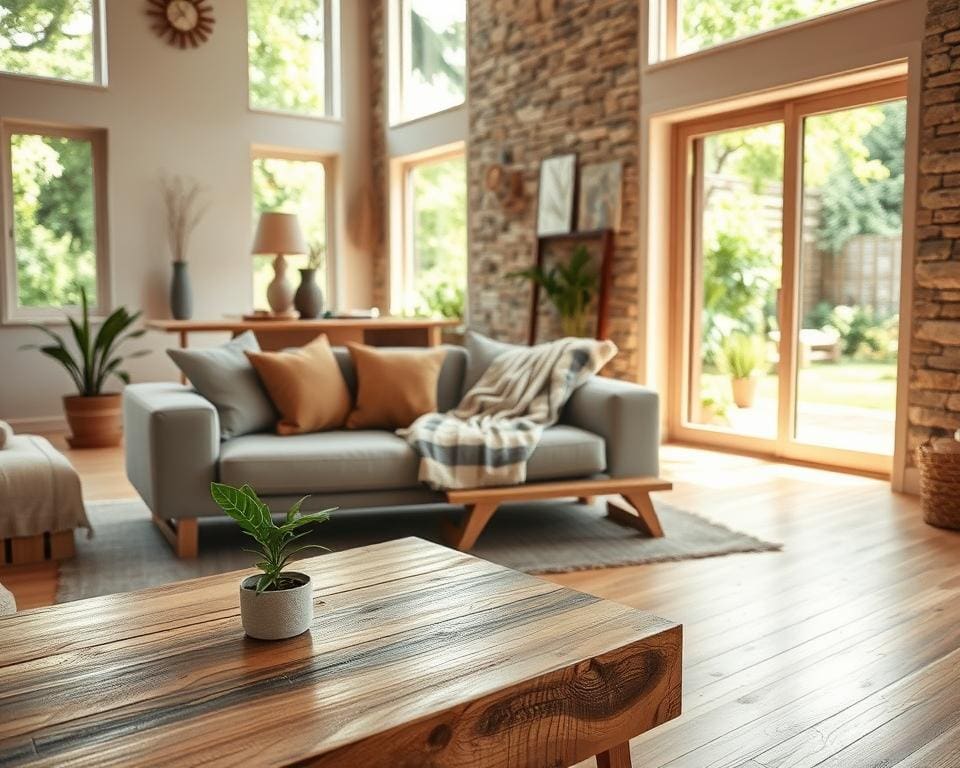
Reclaimed timber floors provide a clear example; they accept repeated sanding and retain character. Long-lived materials spread embodied carbon across many years, improving overall carbon performance for the home.
Energy efficiency and reduced carbon footprint
Materials with high thermal mass, like natural stone and dense timber, even out indoor temperatures and reduce heating needs. Breathable insulation systems cut moisture issues while lowering operational energy demand. Choosing recycled aluminium, recycled glass or responsibly sourced timber reduces embodied carbon from the outset.
Products with Environmental Product Declarations allow precise assessment of embodied emissions when planning whole-house upgrades. Local and renewable materials further shrink transport emissions and support energy efficiency sustainable homes.
Positive resale value and market appeal in the UK
Buyers in the UK are drawn to efficient, eco-conscious properties. Well-chosen materials can lift energy performance certificates and attract attention from sustainability-focused estate agents. These features often translate into stronger resale value eco homes UK.
Green mortgages and clearer supply-chain information push market demand. A house that performs better on running costs and shows careful material choice tends to appeal to a wider, cost-aware audience.
Popular sustainable materials and where to use them
Choose materials that bring character and low environmental impact into everyday rooms. Certified timber reclaimed wood offers warmth and a story for floors, beams and bespoke joinery. Use FSC- or PEFC-certified timber for window frames and structural details to ensure legal, sustainable forest management.
Reclaimed timber suits floors and panelling where unique patina is wanted. Check moisture content, treatment history and provenance with trusted UK reclamation yards and specialist merchants before installation.
Bamboo and cork make excellent choices for furniture and finishes. Bamboo is fast-growing and works well for engineered panels, flooring and some furniture, though lifecycle impacts from transport should be considered.
Cork is harvested without felling, offering natural insulation, resilience and acoustic benefits. Portuguese cork is widely used for flooring and underlay. Natural fibres such as wool, linen and hemp fit soft furnishings and upholstery when certified to GOTS or OEKO-TEX standards.
Many homeowners pair bamboo cork furniture with organic textiles to reduce chemical load and add tactile warmth. Look for European-sourced options to cut transport emissions where possible.
Interior finishes matter for health and durability. Low-VOC paints UK ranges now offer strong colour performance with lower indoor pollutants. Select water-based formulations and ensure primers and sealants are also low-VOC to protect breathable systems.
Natural plasters like lime and clay deliver breathable wall finishes that manage moisture, reduce condensation and suit retrofit and solid-wall properties. Specify compatible products to avoid trapping moisture behind finishes.
For kitchens and bathrooms, recycled glass countertops bring colour and durability while cutting embodied impacts. Recycled glass countertops work well as worktops and splashbacks when paired with robust fabrication.
Recycled metals and composite materials are practical for high-use surfaces. Recycled aluminium and steel need less energy than primary production. Reconstituted materials with high recycled content provide durable options for flooring and tiles.
When selecting sustainable surface materials, review Environmental Product Declarations and recycled-content claims. Choose local fabricators to reduce transport emissions and confirm wear resistance and repairability for busy spaces.
How homeowners and designers can choose and source sustainable materials
Start with a clear decision framework: prioritise health, longevity, embodied carbon and end-of-life options. Ask for low‑toxicity declarations, repairability information and EPDs where available. Use life‑cycle thinking — weigh extraction, manufacture, transport, installation, use and disposal so operational energy savings are balanced against embodied impacts when you specify sustainable materials.
Check trusted certifications and documentation such as FSC or PEFC for timber, GOTS and OEKO‑TEX for textiles, and BREEAM or LEED criteria for larger projects. When sourcing sustainable materials UK, favour suppliers who publish EPDs and responsible sourcing statements so you can verify claims. Request samples and technical data to test breathable systems, colour fastness and compatibility with existing fabric before committing.
Practical sourcing tips matter: buy local where possible to cut transport emissions and support British stone suppliers, reclaimed timber yards and local joiners. Consider second‑hand and reclaimed options from salvage yards and auctions for unique, lower‑impact finishes. Use reputable sustainable suppliers UK and online tools such as BRE Green Guide and EPD registries to compare embodied carbon and health credentials.
Work with experienced designers or architects who know how to specify sustainable materials and meet building regulations. In procurement, include sustainability criteria in tender documents, allow lifecycle cost analysis and require supplier evidence. Plan maintenance, educate occupants on ventilation and cleaning, and measure outcomes like energy use and indoor air quality to demonstrate long‑term value when selling or letting a property.