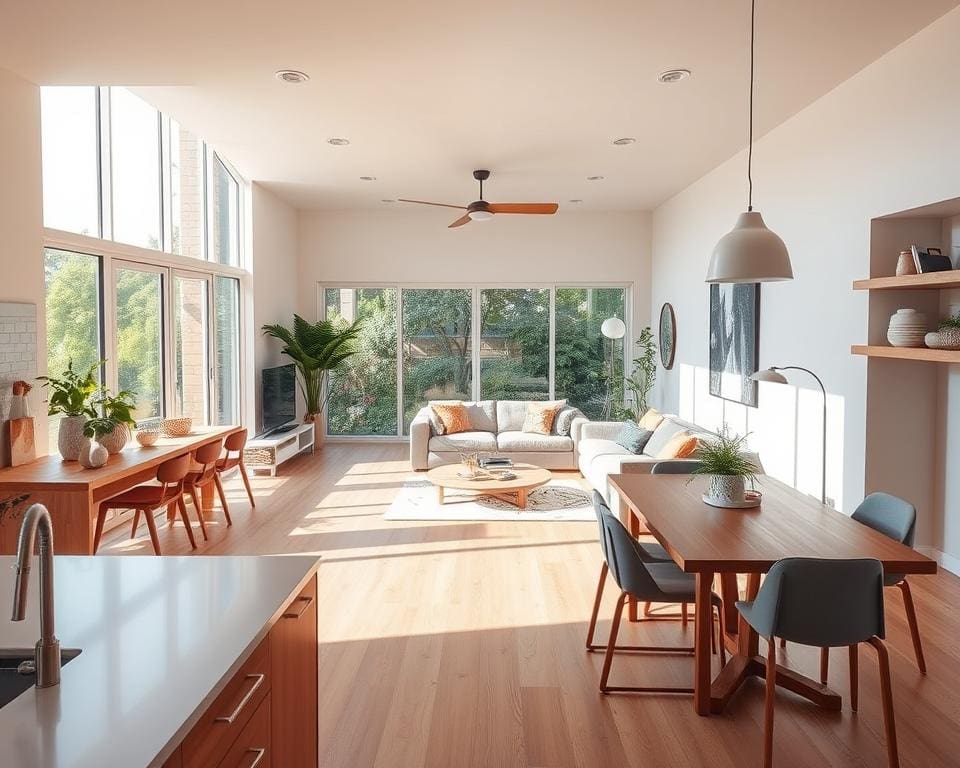
Open-plan living reshapes a home by removing or reducing internal partitions between the kitchen, dining and living areas. This approach creates a continuous, multifunctional space that feels brighter and more connected.
The open-plan living advantages are clear: more natural light, a stronger sense of space and easier circulation. Many UK homeowners choose an open-plan layout UK to make modest rooms feel larger and to suit modern family routines.
Open-plan home benefits also include greater sociability and flexibility. Whether you need a space for family meals, remote working or hosting friends, an open plan house pros list often starts with adaptability and improved interaction.
For buyers and renovators the appeal is practical as well as aesthetic. RIBA commentary and estate agent feedback show that well-executed open-plan layouts can enhance marketability and resale value, provided you address ventilation, fire safety and party wall considerations during remodelling.
In short, understanding what are the benefits of open-plan living helps homeowners plan extensions, loft conversions and kitchen-diner remodelling that reflect contemporary UK lifestyles—bringing light, togetherness and versatility to everyday life.
What are the benefits of open-plan living?
Open-plan layouts change how a home feels and works. They let daylight move further into the interior and create flexible communal zones that suit modern life. The following points explore practical gains for homeowners and designers across the UK.
Maximising natural light and a sense of space
Removing internal walls allows daylight to travel deeper into the plan, which reduces reliance on artificial lighting and lifts mood. Thoughtful window placement, rooflights and bifold doors are common in London extensions to bring in more sun while meeting planning rules.
Light-reflective finishes such as pale paint, satin woodwork and gloss tiles amplify illumination and enhance perceived room size. Designers often prioritise sightlines and glazing to make spaces feel larger and more uplifting.
Improved circulation and flexibility of layout
An open layout improves flow between cooking, dining and relaxing areas. Planning primary circulation routes avoids bottlenecks and keeps movement effortless.
Use islands, peninsula counters or freestanding shelving to define zones without full-height walls. That flexible layout open plan means a dining corner can become a workspace or play area as family needs shift.
Enhancing sociability and family interaction
Bringing kitchen, dining and living together fosters shared activity and easier supervision of children. Kitchen islands enable hosts to prepare food while staying engaged with guests.
Integrated seating, media layouts and feature lighting create focal points that encourage conversation. Many households report more casual entertaining and increased communal time in social living spaces.
Design considerations for acoustic comfort
Removing partitions increases sound transmission across the plan, which can disrupt work or rest. Soft furnishings, rugs and heavy curtains absorb noise and reduce echoes.
Acoustic panels, upholstered wall sections and textured ceilings help manage reverberation. Consider partial-height partitions or glazed screens and upgrade underfloor insulation, double glazing and sound-rated doors for adjoining rooms.
How open-plan living can increase property appeal
Estate agents such as Savills and Foxtons note strong buyer interest in open kitchen-diner-living spaces. A well-executed scheme can improve listing photos, reduce time on market and boost open-plan resale value UK.
Extensions and refurbished ground floors often raise perceived value, provided curb appeal and total floor area remain attractive. Be mindful that some buyers prefer separate rooms; highlight acoustic solutions and flexible layouts to widen appeal.
Practical design tips to get the most from open-plan spaces
Open-plan living invites flexibility. Use clear strategies to make each area feel distinct while keeping the overall space calm and connected. The following practical ideas help homeowners, renovators and interior designers craft functional, stylish rooms that suit UK homes.
Anchor zones with rugs and furniture to define purpose without walls. Place a large rug under a seating cluster to mark the lounge. Position a dining table beneath a pendant to signal the eating area. Use a kitchen island as a subtle divider that adds worktop and casual seating.
Choose sofa backs and console tables that suggest boundaries but stay visually light. Leave clear walkways so circulation feels natural. Scale furniture to the room to avoid crowding.
Lighting strategies for layered ambience
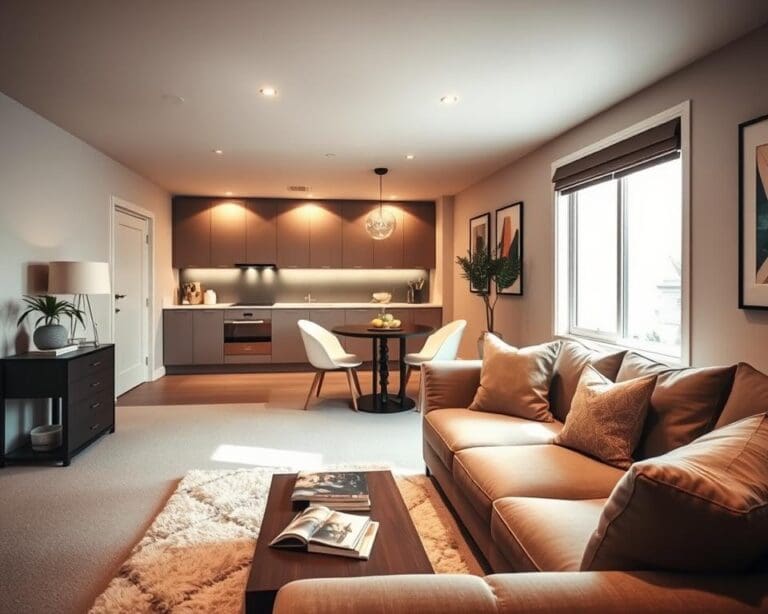
Layer lighting to set mood and distinguish zones. Combine recessed downlights for general illumination with pendant lamps over dining and island areas. Add wall sconces for reading nooks and LED strips for under-cabinet tasks.
Fit dimmers so you can shift from family time to entertaining. Use energy-efficient LEDs to cut running costs and meet UK refurbishment regulations for fixed wiring and switch positions.
Storage solutions to keep open spaces uncluttered
Clutter breaks the sense of openness. Integrate storage early in the design to preserve flow. Consider full-height fitted cabinetry, built-in seating with lockers and under-bench cupboards in islands.
Hide pantries, conceal bins and specify bespoke joinery to incorporate appliances. Planning storage at the start avoids awkward retrofits that interrupt the visual line across the plan.
Choosing materials and finishes for cohesion
Unify zones with a restrained palette and repeated textures. Continuous flooring such as engineered oak, porcelain tile or screed links areas visually. Coordinate joinery hardware and door finishes for a polished look.
Pick durable, low-maintenance finishes suited to family life. Use low-VOC paints and FSC-certified timber to reduce environmental impact and appeal to UK buyers focused on sustainability.
Balancing privacy and openness with screens and partial walls
Add screens and partial partitions to create privacy where needed while keeping light and sightlines. Sliding or folding screens, glazed partitions with black frames and half-height walls work well in living spaces.
Use a glazed partition to form a snug for TV watching or a quiet study nook for remote work. Opt for reversible solutions to keep options open and to avoid planning constraints in sensitive areas.
Health, lifestyle and financial advantages of open-plan homes
Open-plan living brings clear open-plan health benefits. Increased daylight helps regulate circadian rhythms, lifts mood and supports brief daytime vitamin D exposure. Bright, airy spaces feel less confining and can reduce stress, improving overall wellbeing open-plan living for occupants of all ages.
Layouts without many walls also encourage gentle movement through the day. Walking between cooking, social and work zones cuts prolonged sitting and promotes more activity. The lifestyle benefits open-plan are immediate: spaces adapt for homeworking, children’s play and hobbies without major restructuring, making everyday routines more fluid and social.
Families and flatmates gain social wellbeing from shared sightlines and communal areas. Open kitchens and living rooms support communal meals, informal entertaining and easier supervision of children. These lifestyle benefits open-plan increase opportunities for connection and reduce isolation.
There are clear financial advantages open-plan when done well. Many UK buyers prefer modern, open layouts, so open-plan resale UK can improve desirability and perceived value. A single, well-planned renovation to open up a space can be more cost-effective than multiple room refurbishments, though structural works such as installing steel supports add cost and require building control approval.
Energy and running costs need attention but can be managed. Continuity of flooring, high-performance glazing and zoned heating with smart thermostats reduce heat loss and control bills. Practical notes also matter: structural calculations, fire-safety planning and informing insurers are essential for safe, insurable alterations.
In summary, open-plan living combines health, sociability and flexible utility while offering notable financial advantages open-plan for UK homeowners. Thoughtful design, acoustic solutions and compliance with Building Regulations and Party Wall procedures ensure the best outcomes for wellbeing open-plan living and long-term value.