
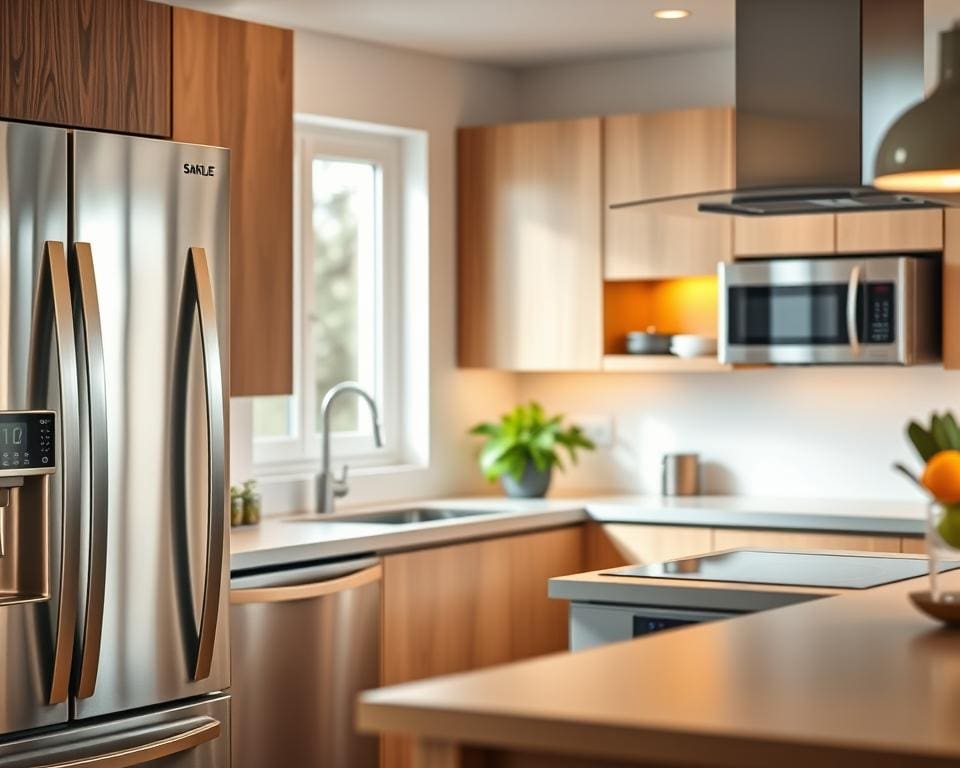
Energy-efficient appliances are designed to use less electricity, gas, or water while delivering the same or better performance than standard models. This includes refrigerators, dishwashers, washing machines, dryers, heating and cooling systems, water heaters, and smart thermostats. Choosing eco-friendly appliances and ENERGY STAR appliances helps households save energy appliances without sacrificing comfort.
Labels like ENERGY STAR from the U.S. Environmental Protection Agency and Department of Energy, EnergyGuide stickers, and Department of Energy appliance standards give clear signals about efficiency and reliability. These certifications help consumers compare models and estimate how much they can reduce utility bills over time.
With rising electricity and gas prices across many U.S. regions and federal and state goals to cut emissions, the advantages of energy-efficient appliances are practical and timely. Homeowners can take tangible steps to lower costs and household emissions by replacing old equipment with efficient options.
This article will unpack direct benefits—financial savings, improved comfort, and environmental impact—then cover rebates, tax credits, and ROI calculations, and finally offer guidance on choosing and maintaining appliances to maximize long-term value.
What are the benefits of energy-efficient appliances?
Upgrading to modern, energy-smart appliances delivers clear wins for households. You get noticeable savings, improved daily comfort, and a smaller environmental footprint. The points below explain how efficient choices pay off in real life and how to spot benefits on labels like ENERGY STAR and EnergyGuide.
Lower utility bills and long-term savings
Energy-efficient models use less electricity, natural gas, or water than older units. For example, ENERGY STAR refrigerators and dishwashers often use 10–50% less energy than non-certified models. Heat pump water heaters and heat pump clothes dryers can cut energy use compared with conventional electric resistance units.
Upfront costs for high-efficiency appliances can be higher. Their lower operating costs usually give a lower total cost of ownership over the appliance’s life. Use the EnergyGuide label and ENERGY STAR estimates to compare annual energy use and cost when you shop.
Replacing several old units at once—refrigerator, washing machine, HVAC—can yield cumulative savings. Depending on local energy rates and household habits, upgrades can add up to hundreds of dollars per year in reduced bills and long-term savings appliances provide.
Improved home comfort and performance
New HVAC systems and heat-pump technologies deliver steadier temperatures, better humidity control, and quieter operation. Those features raise home comfort energy efficient outcomes beyond just lower bills.
Efficient refrigerators keep more uniform temperatures, which helps preserve food longer and reduces wasted groceries. Modern dishwashers and washers use better sensors and optimized cycles to clean thoroughly with less water.
Many models from Whirlpool, GE Appliances, Samsung, LG, and Bosch include smart controls, load-sensing, and Wi‑Fi connectivity. Programmable settings let owners run appliances during lower-rate hours and respond to utility signals, improving convenience and lowering operating costs.
Reduced environmental impact and carbon footprint
Using less energy reduces greenhouse gas emissions tied to electricity and natural gas. Swapping an old fridge for an ENERGY STAR model can lower annual CO2-equivalent emissions by an amount comparable to removing a fraction of a passenger vehicle’s yearly output, depending on regional grid intensity.
High-efficiency washers and dishwashers cut water use, which lowers water bills and reduces the energy needed to heat water. These savings combine to produce reduced carbon footprint appliances that help local air quality and ease pressure on the grid.
Upgrading appliances is a tangible way homeowners can support U.S. climate goals while enjoying efficient refrigerator savings and broader benefits for community health and resilience.
Financial incentives, rebates, and return on investment for energy-efficient appliances
Upgrading to efficient appliances can feel costly at first. Federal, state, local, and retailer programs often reduce that burden. Look for appliance rebates and ENERGY STAR rebates that cut purchase price at the point of sale. Keep receipts and spec sheets to support claims and tax filings.
Federal incentives may apply to heat pumps, heat pump water heaters, and other electrification measures when allowed by current law. Check U.S. Department of Energy guidance and IRS publications for up-to-date rules. Manufacturer and retailer promotions from Home Depot, Lowe’s, and Best Buy frequently include instant discounts or trade-in offers that stack with utility rebates energy efficient programs.
Federal, state, and local rebate programs
- Many states and utilities offer point-of-sale or mail-in rebates for ENERGY STAR appliances and efficient water heaters. Examples include California’s energy efficiency rebates, NYSERDA incentives, and offers from Pacific Gas & Electric or Con Edison.
- Visit DSIRE listings and your local utility website to find current programs. Program details and eligibility change often, so confirm requirements before buying.
- Retailers and manufacturers sometimes run limited-time promotions that complement utility rebates or appliance tax credits.
Energy savings calculations and payback periods
- Use the EnergyGuide label to compare estimated annual energy use. Multiply that figure by your local electricity or gas rate to estimate yearly cost.
- Adjust estimates for household size and usage patterns. A busy family will see bigger savings than a single occupant.
- Calculate appliance payback period: divide the extra upfront cost by the annual energy cost savings. For example, an ENERGY STAR refrigerator that costs $200 more but saves $75 per year has a payback of about 2.7 years.
- Factors that change payback include local energy prices, usage intensity, expected lifespan, and maintenance. Heat pumps often reach faster payback in mild climates or where electrification incentives apply.
- Use an energy savings calculator to test scenarios with different electricity rates and usage patterns before deciding.
Tax credits and financing options
- Federal appliance tax credits and residential energy credits shift with legislation. Review IRS guidance and Department of Energy updates to verify which products qualify and what documentation you need.
- Retailers and utilities sometimes offer 0% APR promotions or low-interest loans for energy upgrades. PACE financing may be available in your area to spread costs across property tax bills.
- Recordkeeping helps you claim incentives. Save sales receipts, ENERGY STAR certifications, manufacturer spec sheets, and any contractor paperwork required by the program.
- Consult a tax professional for personalized advice on claiming appliance tax credits and for guidance on documentation and eligibility.
Choosing the right energy-efficient appliances and maintaining them for maximum benefit
Start by matching appliance size and features to your household needs. Check EnergyGuide labels and the ENERGY STAR buying guide to compare estimated annual operating costs. Prioritize high-energy-use systems first—HVAC, water heating, refrigerator, and clothes dryer—to maximize savings and improve appliance lifespan.
Compare technologies and trusted brands like Whirlpool, LG, Samsung, Bosch, Rheem, Carrier, Trane, and Daikin. Learn trade-offs such as heat-pump versus resistance water heaters, and front-load versus top-load washers. Look for inverter-driven compressors in refrigerators and HVAC for better part-load efficiency, and verify smart-home compatibility for load-shifting or demand-response programs.
Professional installation matters for complex systems. Certified technicians ensure correct sizing, refrigerant charge, duct sealing, and optimal performance so you actually realize savings. Follow appliance maintenance tips: change HVAC filters regularly, clean dryer vents, defrost and inspect seals on refrigerators, flush water heaters when recommended, and use proper detergents and load sizes for washers and dishwashers.
Use smart controls, meters, and energy monitors to track real-world use and to maximize efficiency appliances through off-peak scheduling. Replace units older than 10–15 years when efficiency drops or repair costs near replacement. Small steps—choosing energy efficient appliances, following appliance maintenance tips, and using incentives—add up to lower bills, better comfort, and meaningful environmental gains. Learn practical household measures in this short guide for home efficiency: home energy-efficiency tips.