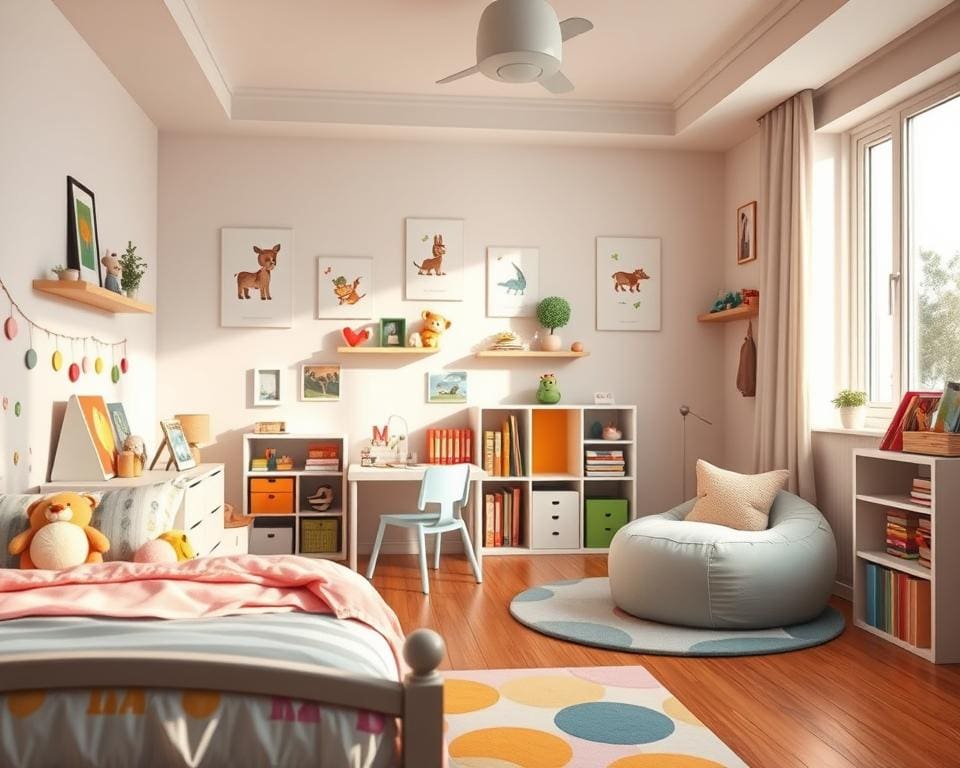
Designing a child’s room is more than picking a theme. A thoughtful kids room design balances safety, function, and play to support sleep, learning, and growing independence.
Parents often rank kids’ safety room design, durability, and easy maintenance as top priorities. Consider childproofing, non-toxic finishes, and rounded furniture edges to reduce risk while keeping the space inviting.
Functionality matters: zone areas for play, rest, and study, and add smart storage so toys and books stay accessible. Practical children’s bedroom ideas include multi-purpose furniture and washable fabrics that stand up to daily life.
Sensory needs and aesthetics go hand in hand. Soft lighting, calm color palettes, and varied textures help children feel safe and creative. Personal touches let kids express themselves while the room remains adaptable as they age.
Budget and sustainability are part of good planning. Choose low-VOC paints, durable materials, and consider upcycling or quality secondhand pieces to extend longevity.
These child-friendly room tips suit caregivers of infants through tweens, with flexibility to change as children grow. For practical examples on creating safe, playful family spaces, see this guide on designing a child-friendly living room from Evovivo: child-friendly living room ideas.
Read on for detailed advice on balancing safety and creativity, planning layouts by age, mastering storage, and choosing color and lighting that support development.
What should you consider when designing a kids’ room?
Designing a kids’ room blends safety, function, and a sense of wonder. Start with practical choices that protect health and reduce hazards. Pick durable palettes and layouts that grow with your child so the space stays useful and inspiring.
Balancing safety and creativity
Prioritize a childproof kids room with tamper-resistant receptacles or sliding outlet covers, window guards and stops, and anti-tip straps for heavy furniture. Brands such as KidCo and anchors available at Home Depot and Lowe’s make securing bookcases straightforward.
Choose cordless window coverings to cut strangulation risk. Add rounded furniture, corner guards, and high-density padded rugs or foam play mats from makers like Skip Hop for impact absorption.
For finishes, select non-toxic paints for kids rooms. Options like Benjamin Moore Natura and Sherwin-Williams Harmony cut VOCs and protect indoor air quality. Look for Greenguard or Green Seal certifications and prefer water-based topcoats.
Age-appropriate layout and furniture
Match the room to developmental needs. For infants and toddlers, focus on crib safety with a firm mattress and no loose bedding, plenty of floor space for tummy time, and low storage for accessible toys.
For school-age and tweens, add a dedicated study area, task lighting, and age-appropriate furniture such as height-adjustable desks and chairs. IKEA’s FLISAT and VARIER offer flexible seating and desks that adapt over time.
Choose convertible pieces like Graco or Delta cribs and modular storage such as IKEA KALLAX. Adjustable designs reduce replacements and keep the room functional as children grow.
Encouraging imagination and personalization
Layer neutral main pieces with playful accents to support evolving tastes. Use peel-and-stick wallpaper, removable decals, and themed throw pillows so you can refresh the look without a full remodel.
Build interactive zones: chalkboard or magnetic paint sections using Rust-Oleum products, gallery ledges or clip displays for rotating artwork, and a washable craft station. These creative kids room ideas nurture play and learning.
Involve children in choices to boost ownership. Offer limited options for color accents, bedding, or artwork for younger kids and let older kids help select furniture and layout to reflect their growing independence.
Design fundamentals for a functional kids’ room
A thoughtful kids room layout makes daily life simpler for families. Zoning creates clear areas for play, sleep, and study so kids learn routines. Place the bed away from windows to cut drafts and glare. Put a small desk near natural light for focused homework time. Leave a central open area for active play and easy supervision.
Optimize traffic flow by keeping floor space flexible. Use foldable or wall-mounted tables in compact rooms. Choose vertical shelves to free up the floor so children can run, jump, and spread out toys where it matters most.
Smart toy storage solutions encourage tidy habits. Low shelves, labeled bins, and open baskets at child height make cleanup simple. Brands like IKEA, The Container Store, and Pottery Barn Kids offer practical options. Clear plastic bins show contents at a glance; fabric bins stay lightweight for small hands.
Multi-functional furniture saves space and adds convenience. Consider beds with built-in drawers or trundles, loft beds with desks underneath, and bench seating with lift-up storage. Wayfair and IKEA have compact pieces that combine sleeping, storing, and working in one footprint.
Organize with age-appropriate labels and rotation systems. Picture labels help toddlers identify toys. Word labels work well for school-age kids. Color-coded bins and a rotation schedule reduce clutter and keep play fresh.
Durable kids room materials lower the stress of daily wear. Choose stain-resistant fabrics like Sunbrella or Crypton for upholstery. Pick washable paints rated for scrubbability to handle fingerprints and marks. Use mattress protectors and washable slipcovers to extend life.
Flooring choices affect comfort and upkeep. Area rugs define zones and soften falls; choose low-pile rugs with a non-slip pad. Luxury vinyl plank from Shaw or Armstrong resists water and stands up to heavy use. Hardwood provides longevity and pairs well with washable rugs in play areas.
Keep maintenance simple with short daily tidies and a weekly deep clean. Microfiber cloths and eco-friendly cleaners such as Method or Seventh Generation work well. Favor washable storage and fabrics to make each cleanup quick and stress-free.
Color, lighting, and sensory considerations
A thoughtful palette and layered light can shape how a child feels, plays, and sleeps. Use gentle hues near the bed to promote rest and brighter accents in play corners to spark creativity. Combine natural light with adaptable fixtures so each area serves study, play, or rest without overwhelming the senses.
Choosing colors that support mood and development
Soothing palettes help lower arousal at bedtime. Soft blues, greens, warm neutrals, and pastel lavender work well for sleep-focused spaces. Apply these tones to bedding, wall zones near the bed, or window seats to create a calming kids room design.
Use bright accent colors sparingly in play areas. Sunny yellow, coral, or teal on cushions, rugs, or a single shelf adds energy without full-room saturation. For homework nooks, choose soft greens or muted blues to support concentration and reduce visual clutter.
For practical inspiration, consult advice on family living design from a trusted resource like family-friendly living guides.
Layered lighting for versatility
Layer three types of light for a flexible room: ambient, task, and accent. Ambient light comes from overhead fixtures or flush mounts. Task lighting includes desk lamps and reading sconces. Accent options include string lights or LED strips for mood and play.
Choose adjustable LEDs with warm tones, such as A19 LED 2700K–3000K bulbs, to keep light soothing. Install dimmers on main fixtures and use programmable nightlights like Hatch Restore to ease bedtime routines. Natural light matters, so layer window treatments with blackout curtains and light-filtering shades for glare control and privacy.
Designing for sensory needs
Create a sensory-friendly kids room with safe materials and calming textures. Use non-toxic paints, rounded furniture edges, and slip-resistant rugs to reduce hazards. Add a sensory nook with a weighted blanket, soft beanbag, tactile cushions, and a canopy for retreat.
For children who are easily overstimulated, favor neutral, low-stimulation color schemes and include noise-dampening elements such as acoustic panels or thick rugs. Offer fidget toys, predictable storage, and consult an occupational therapist for tailored solutions when needed.
- Choose durable, low-VOC finishes for healthier air.
- Use cordless or motorized shades for safety, with brands available at major retailers.
- Design play zones with bright rugs or storage to mark activity areas without full-room color changes.
Practical tips for budget, sustainability, and longevity
Designing a room that lasts starts with smart priorities. Invest in a quality mattress certified by CertiPUR-US or GREENGUARD Gold, robust storage that can be anchored with anti-tip kits, and essential safety devices like sturdy baby gates. Use mattress protectors and adjustable bed frames to extend useful life and cut replacement costs over time.
For budget kids room ideas and a sustainable kids room, look beyond new-box stores. Hunt for solid pieces at local thrift shops, Habitat for Humanity ReStores, Facebook Marketplace, and Craigslist. Upcycled kids furniture—refinished dressers and small tables—gives character at low cost; strip and refinish wood with low‑VOC products, replace worn hardware, and always check joints and fasteners for structural safety before use.
Simple DIY projects add personality without high expense. Paint an accent wall with Washable Benjamin Moore Aura, build floating shelves, frame a child’s drawings, or sew throw pillows from OEKO‑TEX fabrics. Peel-and-stick tiles or wallpaper refresh a room in hours. Choose low‑VOC paints and certified textiles such as organic cotton, bamboo viscose, and wool rugs to reduce chemical exposure.
Think long-term with long-lasting kids room design: solid wood furniture, metal bed frames, and performance textiles that resist stains. Select modular systems from IKEA, Pottery Barn Teen, or Wayfair to reconfigure as needs change. Keep large pieces neutral and update themes with bedding, wall art, and lighting for seasonal refreshes. Thoughtful, safety-first choices create a space that sparks imagination, supports daily routines, and adapts as children grow.