
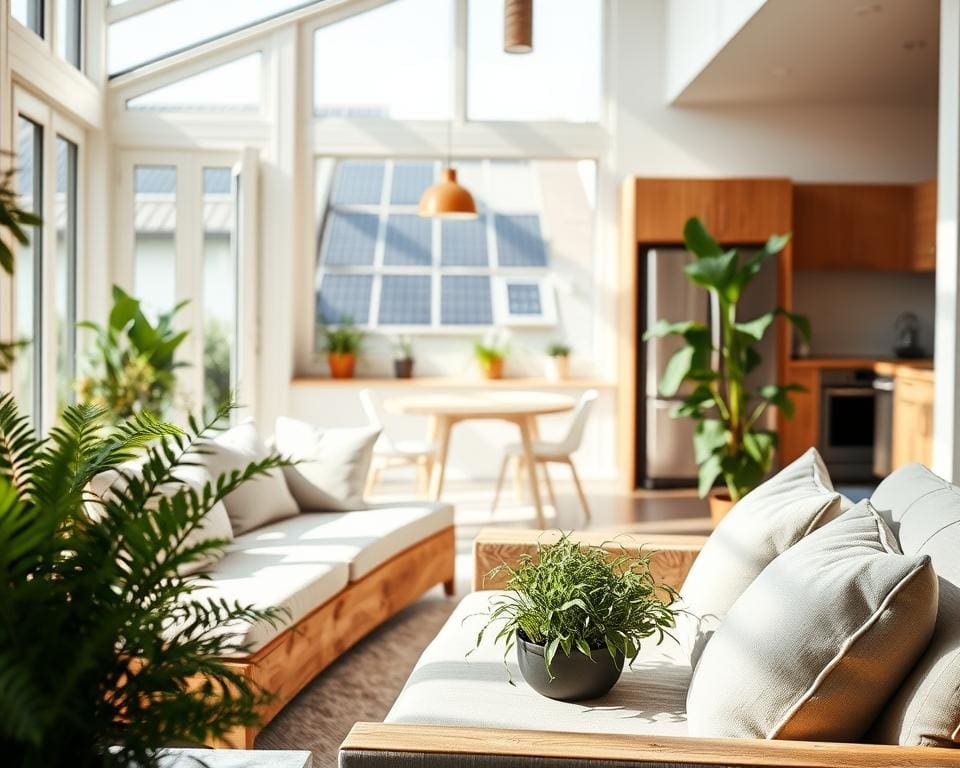
A sustainable home blends smart choices with everyday habits to cut energy and water use, reduce waste, and improve indoor air quality. Practical goals include lower utility bills, greater comfort, and a healthier living space. These sustainable home tips cover both behavior changes and investment-driven green home improvements that pay back over time.
In the United States, familiar touchpoints help guide action: ENERGY STAR ratings for appliances, the federal solar tax credit (ITC), and many state and local utility rebate programs. Climate matters too—priorities in the heating-focused Northeast differ from those in the cooling-heavy Southeast or dry Southwest. Tailoring upgrades by region makes efforts more effective when you aim to reduce home carbon footprint.
Think in stages: assess current impact, prioritize changes by effect and budget, take action on energy and heating upgrades, and adopt everyday practices that stick. Renters can use portable measures and open conversations with landlords, while homeowners can plan retrofits or renewable installations. Small steps compound, whether swapping a leaking faucet, repurposing furniture for storage, or installing efficient insulation.
Ownership is the point. Start with achievable projects, measure results, and iterate for better outcomes. For practical DIY inspiration on low-impact materials and repurposing ideas, see this guide on simple upgrades and reclaimed materials at home upgrade ideas. Your actions today boost resilience, support resale value, and help reduce home carbon footprint for the long term.
How can you make your home more sustainable?
Start with a clear plan that frames your household sustainability goals. A simple home footprint assessment pins down where energy, water, and waste matter most. Use that insight to pick actions that fit your budget and deliver visible results.
Assess your home’s current environmental footprint
Begin with a professional or DIY home energy audit to spot leaks and inefficiencies. Certified Building Performance Institute (BPI) professionals offer blower-door tests and infrared inspections. DIY routes can use smart meter data, a Flir One thermal camera, or an infrared thermometer to find cold spots.
Auditors check insulation levels, air leaks, HVAC performance, ductwork, and windows. Read your utility bills to see seasonal spikes. To track water use, read the water meter with all fixtures off; a moving dial often signals a leak. Smart devices from Flow, Phyn, or Moen can alert you to failures and help you track water usage over time.
Audit waste by sorting one week of trash. Note recyclables, compostables, and donations for Goodwill or Salvation Army. Check local municipal recycling pages and Earth911 for regional guidance. Removing reusable items from waste cuts landfill impact and often lowers costs.
Prioritize changes by impact and budget
Rank options as low-cost sustainable actions or larger investments. Low-cost wins include LED bulbs, smart power strips, low-flow faucet aerators, and weatherstripping. These measures start saving immediately and improve comfort.
Major upgrades like heat pumps, solar PV, or full-wall insulation cost more. Evaluate simple payback times and expected savings. For a remodel, consider sustainable choices early in design and budgeting to shape long-term running costs and comfort. Learn more about integrating sustainable remodeling choices at remodeling guidance.
Behavior shifts matter. Set thermostats a few degrees lower in winter and higher in summer. Run full dishwasher and laundry loads, wash in cold water, unplug idle devices, and line-dry when possible. Small daily habits add up toward your household sustainability goals.
Measure progress and iterate
Use energy monitoring apps and devices to keep score. Sense and Emporia Vue give whole-home views. Nest and Ecobee provide thermostat analytics. Flume and utility portals help you track water and compare months.
Set SMART targets like reducing electricity use by 10% in 12 months or installing low-flow fixtures within three months. Review data monthly and adjust priorities. If audits reveal major insulation gaps or persistent HVAC issues, plan phased upgrades and explore rebates, PACE financing, or tax credits to make projects affordable.
Repeat assessments after changes so you can measure real savings, refine goals, and keep momentum toward a greener, more comfortable home.
Energy and heating upgrades that reduce bills and emissions
Small changes in how a home is insulated, sealed, heated, and powered can cut bills and shrink your carbon footprint. Focus on practical steps that work across climates, from insulation upgrades to smart controls and renewable systems. These moves pay back in comfort, lower energy use, and resilience during outages.
Improve insulation and air sealing
Attic, wall, and floor improvements are the first line of defense. Use fiberglass batts or blown fiberglass in attics for many modern builds. Older houses benefit from cellulose blown insulation to fill irregular cavities. For tight air sealing and high R-value needs, spray-foam—open-cell or closed-cell—works well in cavities and around rim joists. Rigid foam fits rim-joists and foundation walls where moisture control matters.
Follow Department of Energy climate zone guidance for R-value targets. Check attics, rim joists, basements, and ducts in attics or crawlspaces. Uninsulated ducts can lose as much heat as a leaky window on cold nights.
Weatherstripping and caulking reduce drafts and improve comfort quickly. Use foam, V-strip, and door sweeps for doors. Choose silicone or acrylic latex caulk for window and frame gaps. Simple fixes like storm windows, insulating window film, and outlet gaskets stop drafts at low cost. The combined effect of sealing and added insulation often trims heating and cooling bills noticeably.
Switch to efficient heating and cooling systems
Air-source and ground-source heat pumps deliver both heating and cooling with high efficiency. Heat pump benefits include a coefficient of performance that can exceed traditional electric resistance and cut fuel use versus older gas furnaces. Cold-climate heat pumps keep working even in low temperatures, making them viable in many U.S. regions.
High-efficiency gas furnaces still make sense where gas is cheap or in very cold climates. A hybrid setup pairs a heat pump with a gas furnace to maximize efficiency across seasons. Smart thermostats from Nest or Ecobee add savings through scheduling and learning algorithms. Use zoning or multiple thermostats to avoid heating unused rooms.
Adopt practical thermostat setpoints: about 68°F when occupied in winter and 62–65°F when asleep or away, and near 78°F in summer when occupied. Each degree of setback can yield about 1–3% energy savings. Combining setbacks with zoning increases those gains.
Adopt renewable energy and efficient appliances
Solar decisions hinge on roof orientation, shading, and system size relative to household use. Look at net metering rules and local solar insolation. Solar panel incentives include the federal Investment Tax Credit and many state or utility rebates. Payback commonly ranges from five to fifteen years, depending on incentives and local electricity rates. Choose installers with NABCEP certification for quality design and installation.
Replace old appliances with Energy Star appliances to cut ongoing loads. Brands such as Whirlpool, Samsung, and LG offer certified models for refrigerators, washers, and dishwashers. Swap incandescent bulbs for LED lighting from Philips or Cree for long life and low draw. Smart power strips reduce vampire loads from standby electronics.
Consider home battery storage to shift solar output, provide backup power, and manage peak demand. Systems like Tesla Powerwall, LG Chem, and Enphase let you store energy for evening use or outages. Grid-tied homes gain resilience and peak-shaving; off-grid setups suit remote sites. Evaluate lifetime cycles, upfront cost, and time-of-use rates to decide if storage fits your plan.
Everyday sustainable practices for a greener household
Small, consistent changes at home add up. Start by fitting low-flow fixtures such as WaterSense faucets, showerheads, and 1.28 gpf or dual-flush toilets to cut indoor water use. Capture roof runoff in a rain barrel or cistern where allowed, and pair mulching with drip irrigation and smart controllers like Rachio or Hunter Hydrawise to reduce outdoor watering. In drier regions, swap turf for drought-tolerant plants and xeriscaping: prairie grasses and pollinator perennials in the Midwest, succulents in the Southwest, heat-tolerant species in the Southeast, and water-wise ornamentals in California.
Waste habits matter as much as water. Set up home composting with the right greens-to-browns ratio, regular turning, and target temperatures for backyard piles. For apartments, consider vermiculture or bokashi systems to keep food scraps out of landfills and create rich soil amendments. Adopt simple swaps to reduce single-use plastics: Stasher silicone bags, Klean Kanteen bottles, beeswax wraps, and stainless-steel containers make reuse effortless and cut packaging waste.
Choose low-VOC paints and healthier materials when renovating. Brands like Benjamin Moore Natura and Sherwin-Williams Harmony lower indoor emissions, and selecting formaldehyde-free pressed wood and natural fibers improves long-term air quality. Increase ventilation, run kitchen and bathroom exhaust fans, and change HVAC filters on schedule with appropriate MERV ratings. Houseplants can add comfort, but source control and fresh air are the main drivers of healthier indoor air.
Shift consumption toward repairable, durable goods and community solutions. Favor solid-wood furniture and appliances with available parts, consult iFixit for fixes, and explore repair cafes and tool libraries. Embrace sustainable shopping, CSAs, clothing swaps, and Buy Nothing groups to build a circular economy in your neighborhood. Invite friends and neighbors to a household challenge or a block project—collective action multiplies impact and strengthens local resilience.