Choosing durable countertops shapes how a kitchen performs and how a home feels. Homeowners in the United States want surfaces that handle meal prep, cleanup, and everyday wear while still adding value to the house.
Durable kitchen countertops reduce repair costs and lengthen time between replacements. They must resist heat, scratches, stains, and occasional impacts without sacrificing style. This balance of function and beauty is central to kitchen countertop selection.
This article lays out a clear roadmap: we define durability and common usage scenarios, compare top countertop materials like quartz, granite, marble, concrete, stainless steel, and laminates, and offer practical guidance on maintenance and budgeting. Expect honest pros and cons, realistic maintenance notes, and cost context to aid choosing durable countertops.
Material performance can vary by brand and installation quality. Reputable makers include Cambria, Caesarstone, and Silestone for quartz; Cosentino for engineered surfaces; and Formica and Wilsonart for laminates. Local fabricators often handle granite, marble, concrete, and stainless steel; quality installation matters for countertop longevity.
Finally, note legal and safety considerations: untreated concrete needs proper sealing to avoid etching, and softer stones like marble and certain limestones may not suit heavy-use kitchens. With this overview, you’ll be better equipped to answer the core question: How do you select durable kitchen countertops that fit your lifestyle and budget?
How do you select durable kitchen countertops?
Choosing long-lasting surfaces begins with a clear countertop durability definition: a mix of resistance to heat, scratches, stains, impact, and chemical etching, plus sustained performance under daily use with minimal upkeep. Homeowners ask, what is countertop durability? It is the balance between durable surfaces meaning appearance retention and structural strength that stands up to years of cooking, cleaning, and family life.
Defining durability: what it means for countertops
Durability covers measurable properties such as Mohs hardness for scratch resistance, porosity for stain susceptibility, thermal shock resistance for countertop heat resistance, and flexural strength for resistance to cracking. These tests separate superficial durability—how a finish hides marks—from structural durability that prevents chips, cracks, and water damage.
Everyday wear: heat, scratches, stains, and impact resistance
Heat tolerance varies. Granite and stainless steel offer strong countertop heat resistance, while quartz can suffer thermal shock from direct hot pans due to resin binders. Scratch resistant countertops often score high on the Mohs scale, with quartz and granite outperforming softer stones like marble and soapstone.
Stain resistant countertops depend on porosity. Nonporous options such as engineered quartz and stainless steel resist wine and oil, while untreated natural stone and concrete need sealing and prompt cleanup. Impact resistant countertops differ by material: stainless steel dents, concrete may crack without reinforcement, and stone can chip at unsupported edges.
Long-term performance vs. short-term appearance
Countertop long-term performance should guide choices more than initial shine. A polished marble top may dazzle on day one yet show wear sooner than a honed finish that masks scratches. Aging countertops can gain character, like a patina on soapstone or stainless steel, or lose resale appeal if damage accumulates.
Check manufacturer specs and warranties. Some quartz brands offer lifetime limited warranties that reflect expected durability. Ask fabricators about sealing schedules and maintenance to predict lifecycle cost: purchase, installation, upkeep, and likely repair or replacement.
How lifestyle and household use affect durability needs
Countertop selection by lifestyle matters. Family-friendly countertops for homes with kids and pets favor scratch resistant countertops and stain resistant countertops such as quartz or stainless steel. High-use kitchen countertops used for heavy cooking or entertaining may warrant granite or reinforced concrete if hot pans and heavy loads are routine.
For rentals or quick flips, high-pressure laminate or neutral engineered stone give durability with lower cost. Bakers and pastry cooks might choose cool, dense surfaces despite trade-offs, while households that embrace a lived-in look may prefer materials that age gracefully.
Practical habits preserve durability: use cutting boards, avoid sliding cast-iron pans, clean spills fast, and ensure proper edge support. For material comparisons and recommended care, see this guide on what countertop materials offer the best durability: countertop materials and durability.
Top durable countertop materials and their real-world pros and cons
Choose countertops that match daily use and long-term goals. This guide compares popular materials so you can weigh quartz countertops durability against granite countertops durability, marble countertops durability, and other options.
Quartz: engineered resilience and maintenance profile
Engineered quartz is about 90% ground quartz bound with polymer resins and pigments. Leading makers like Cambria, Caesarstone, and Silestone produce consistent slabs with long warranties. The nonporous surface gives excellent stain resistance and strong scratch protection.
For maintenance, clean with mild detergent and a nonabrasive cloth, avoid harsh chemicals, and use trivets. Be aware of the engineered quartz pros cons: great low maintenance but vulnerable to thermal shock and potential fading from extended UV exposure. Cost sits in the mid-to-high range, often comparable to premium natural stone.
Granite: natural strength and sealing considerations
Granite is a dense igneous rock with high hardness and strong heat resistance. Each slab has unique veining and color variation that appeals to many homeowners.
Granite pros cons center on durability versus upkeep. Many slabs have excellent stain resistance, yet natural variability means some require sealing. Sealing granite periodically preserves performance. Chips at edges can occur, but pros can repair or refinish surfaces. Prices vary widely by rarity and quarry.
Soapstone and marble: beauty with trade-offs
Marble, such as Carrara and Calacatta, is prized for classic veining and a cool work surface favored by bakers. Marble countertops durability requires careful cleaning and periodic sealing because acids and stains can etch or discolor the stone.
Soapstone is a softer metamorphic rock that darkens and gains a patina with mineral oil. Soapstone countertops durability shows strength against acids and heat, and scratches can be sanded out. Compare marble vs soapstone when choosing: marble suits aesthetic-focused spaces, while soapstone fits those who want a rustic, aging surface they can maintain.
Concrete and stainless steel: 耐久性 for modern kitchens
Concrete offers customization in shape, color, and finish. Concrete countertops durability depends on proper reinforcement and sealing to avoid hairline cracks and stains. It can be heavy and costly when custom-made.
Stainless steel, used by manufacturers like Franke and Blanco, excels in heat resistance and hygiene. Stainless steel countertops durability shows near-complete resistance to stains and heat, but surfaces scratch and show fingerprints. Buffing and professional repairs restore finish when needed.
Laminate and solid surface options for budget-conscious durability
Laminate surfaces such as Formica and Wilsonart fuse decorative layers to a substrate, offering many looks at low cost. Laminate countertops durability is good for light use, though heat and moisture can cause damage or delamination. Edge chips are common but repairable only to a degree.
Solid surface materials like Corian combine acrylic resins and pigments for a nonporous, repairable top. Solid surface countertops durability allows sanding out scratches and seamless sink integration. Heat resistance is lower than stone, so use trivets and cutting boards. These options suit rental units and budget remodels where repairability and smooth design matter.
Use this comparison to match lifestyle with material traits. Think about everyday cooking, cleanup habits, and whether you prioritize low maintenance, unique natural patterns, or modern durable countertops that stand up to heavy use.
Choosing the right countertop: decision factors, care, and budget planning
Start with a clear checklist of countertop decision factors: durability needs, aesthetic preference, budget, willingness to maintain, resale goals, environmental concerns, and kitchen workflow—where the stove, sink, and prep zones sit. Use this checklist to narrow options and to compare real-world trade-offs between quartz, granite, marble, stainless steel, concrete, laminate, and solid surface.
For countertop budget planning, break costs into material per square foot, fabrication (cutting, edge profiles, sink cutouts), installation, surface sealers or finishes, and long-term maintenance or repairs. Typical tiers run from laminates (lowest), to solid surface and some granites (low-mid), quartz and mid-range granite (mid-high), and custom concrete, premium granite, or stainless steel (high). Get multiple quotes, ask fabricators to show full stone slabs, and factor in long-term costs like resealing or professional repairs.
Countertop care and maintenance vary by material. Clean quartz daily with mild soap, avoid harsh chemicals, and use trivets. Granite benefits from pH-neutral cleaners and periodic resealing; wipe spills quickly. Marble should avoid acids and be sealed often; etching may need refinishing. Soapstone takes mineral oil for patina and sanding for deep scratches. Concrete requires scheduled resealing and prompt crack repair. Stainless steel cleans with soap and water and polishes to hide marks. Laminate and solid surface resist many stains but avoid prolonged heat; solid surface scratches can often be sanded out.
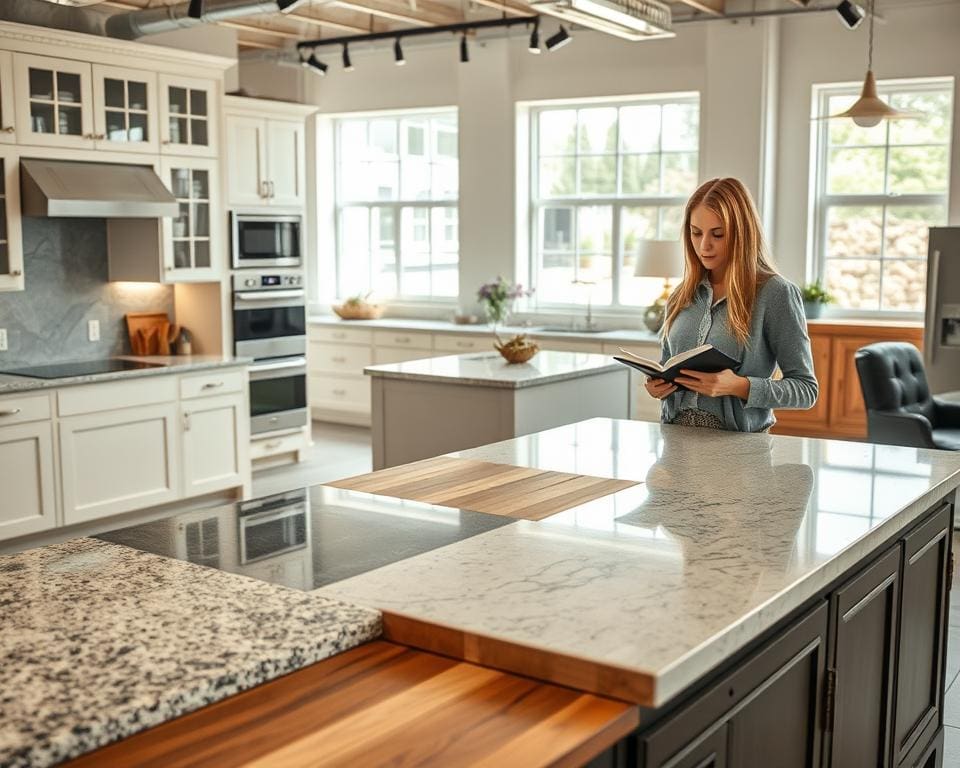
Choose countertop materials by scoring candidates against a weighted list—durability, maintenance, cost, looks, and resale—and pick the surface that best supports daily life while reflecting style. Work with experienced fabricators to place seams, ensure support, and finish edges correctly. Read warranties carefully; many quartz brands offer long coverage but often exclude misuse. Visit showrooms, request samples, and consult trusted installers to turn your plan into a resilient, beautiful kitchen.