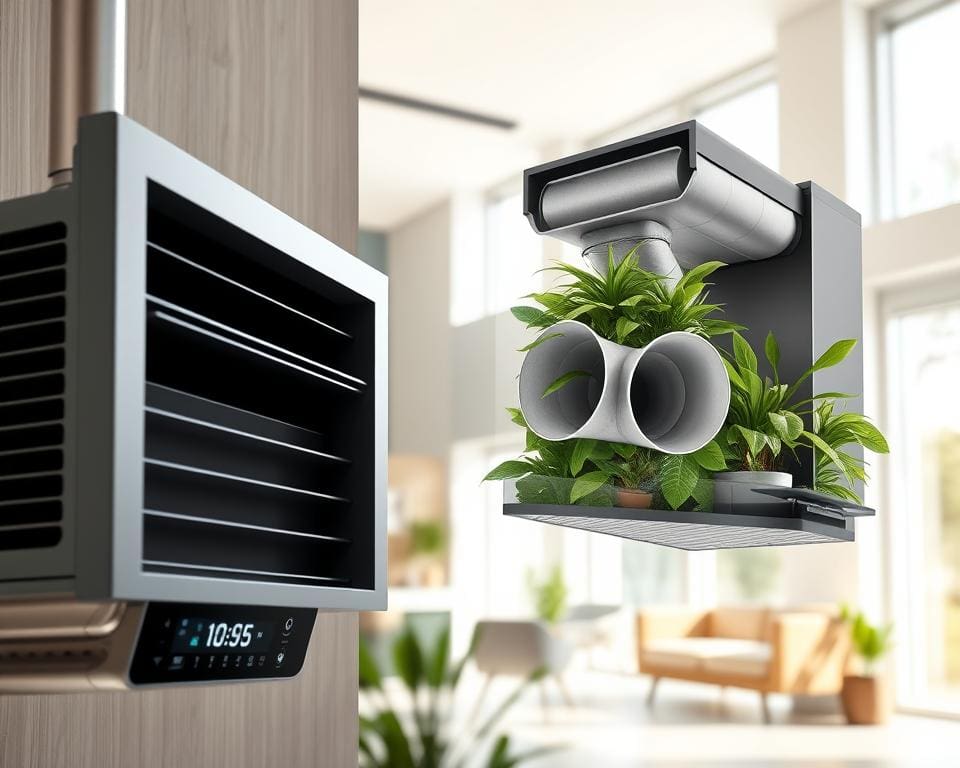
Modern homes need more than good heating to feel comfortable. Poor ventilation causes condensation, mould, lingering odours and elevated CO2. It also allows allergens and fine particulates (PM2.5/PM10) to build up, undermining mechanical ventilation indoor air quality and wellbeing.
The UK context matters. Approved Document F of the Building Regulations and guidance from Public Health England and UK Health Security Agency set expectations for ventilation for health and moisture control. These rules help limit damp and support safe indoor environments in both retrofit and new-build projects.
This article introduces the main system types readers will meet in product reviews: mechanical ventilation with heat recovery (MVHR), mechanical extract ventilation (MEV), decentralised or ductless units, supply-only systems and smart hybrid solutions. Brands such as Nuaire, Vent-Axia, Zehnder and Paul feature regularly in the UK market and will appear in comparison tables and certification checks.
Our aim is simple. We explain the technologies, show which features matter for British homes—energy performance, filtration and smart controls—then assess product-selection criteria like performance metrics, installation and running costs, noise and user experience. The focus is on practical guidance for homeowners and specifiers planning ventilation upgrades.
The review method combines technical-spec comparison, certification checks (SAP, SFP and recognised test standards), real-world performance data and feedback from installers and occupants in UK retrofits and new builds. That mixture gives a reliable picture of MVHR benefits and how modern ventilation systems improve indoor comfort in everyday use.
How do modern ventilation systems improve indoor comfort?
Modern homes need systems that manage air, temperature and moisture with care. Good ventilation improves daily comfort, protects building fabric and supports health. This section outlines key ventilation technologies and explains how mechanical solutions keep humidity in check and deliver steady, healthy air throughout a home.
Modern ventilation technologies that target air quality
Filtration sits at the heart of clean indoor air. Typical stages use G4 and F7/F9 filters for pollen and coarse particles, then HEPA H13 or H14 for fine particulate removal. An F7 filter typically removes about 80–85% of the coarse fraction of PM2.5. HEPA H13/H14 filters exceed 99.95% efficiency at 0.3 µm, making them essential where allergen and particle control matter.
Systems sometimes include active purification adjuncts such as UV-C for microbial control, photocatalytic oxidation and ionisation. These can add protection but demand careful selection. Guidance warns about ozone generation and variable efficacy, so choose certified units and follow manufacturers’ safety advice.
Decentralised ventilation systems offer room-by-room control and low-disruption installation. These units suit retrofits and give targeted filtration where it is most needed. Sensor-driven control using CO2, VOC and PM sensors can adjust fan speeds and trigger boost modes to maintain MVHR air quality without wasting energy.
Role of mechanical ventilation in regulating temperature and humidity
Mechanical ventilation exchanges indoor and outdoor air to control humidity and cut mould risk. Aim to keep relative humidity between 30% and 60% for respiratory comfort and to protect plaster, paint and timber. Good humidity control ventilation reduces condensation on windows and fabric, preventing costly repairs.
MVHR systems use counterflow heat-exchange cores to recover 70–95% of heat from exhaust air. This sensible heat recovery helps maintain perceived warmth, reduces draughts and lowers heating demand while delivering fresh air. Improved MVHR air quality goes hand in hand with energy savings.
By contrast, MEV or extract-only systems are cheaper and simpler. They can depressurise a dwelling, drawing unfiltered air through gaps and offering less precise humidity control. That can lessen comfort and make humidity spikes harder to manage.
How balanced ventilation enhances occupant comfort and health
Balanced ventilation supplies and extracts the same airflow, giving steady movement of fresh air through every room. This approach cuts draughts, evens temperature distribution and reduces CO2 build-up during occupied periods. Fewer odours and more constant indoor conditions follow.
Balanced ventilation health benefits include lower exposure to indoor pollutants, reduced mould-related respiratory irritation and improvements in sleep and cognitive performance linked to lower CO2 and PM2.5. Practical outcomes include less need to open windows for fresh air, which helps with noise reduction and security.
When specifying systems, look for those that combine balanced airflow with HEPA filtration UK standards and effective humidity control ventilation. Such combinations deliver both comfort and measurable improvements in wellbeing.
Key features to look for in ventilation systems for UK homes
Choosing the right system shapes comfort, running costs and indoor air quality. Look for clear metrics on heat recovery, filter performance and smart controls so you can compare units on equal terms. Pay attention to installation detail and commissioning; good design keeps the system working as promised.
Heat recovery and energy efficiency
Heat-recovery figures tell the real story of savings. Sensible recovery efficiency and average thermal efficiency show how much warmth the unit returns to the house. Typical MVHR efficiencies range from about 70% to 95%, depending on core design and the quality of installation.
Specific Fan Power is the key energy metric for fans. SFP UK targets aim for low W/(L/s) values; lower SFP means less electrical use for a given airflow. SAP calculations reward low SFP MVHR units and some systems can improve the Dwelling Emission Rate.
Practical features such as thermal bypass, summer mode and frost protection keep MVHR efficiency steady through seasonal change. Commissioning and correct balancing preserve those efficiency gains and reduce heating bills.
Filtration standards and pollen/PM removal
Understand filter classes and the move from EN779 to EN ISO 16890. The newer standard maps to ePM1, ePM2.5 and ePM10 ratings that reflect particle capture for real-world pollutants.
For allergy sufferers and urban households, strong pollen removal ventilation and robust PM capture matter. A filter rated for ePM1 will trap finer particulates from traffic while higher-class prefilters catch pollen.
Filters need regular attention. Replace intervals, typical costs and the effect of clogged filters on airflow should be part of any purchase decision. Blocked filters raise the effective SFP and reduce ventilation filtration standards in practice.
Airtight ducts and professional commissioning prevent bypass and ensure the designed filtration efficacy reaches every room.
Smart controls and integration with home automation
Sensor-based demand-controlled ventilation adjusts flow to need, using CO2, humidity and VOC sensors to cut wasted ventilation while keeping comfort. This approach saves energy and maintains air quality when rooms are occupied.
Connectivity matters for modern homes. Look for Wi‑Fi, Modbus, KNX or reliable manufacturer apps that allow scheduling, remote monitoring and links to heating controls or smart thermostats.
User-friendly features include boost-by-room, zoning, holiday and party modes plus alerts for filter changes or faults. Check data privacy and cybersecurity for networked units before installation.
Product review considerations: choosing the right system
Choosing ventilation system requires a clear checklist. Start with performance data, then weigh installation, maintenance and user experience. A careful review helps match system strengths to the property and occupants.
Assessing performance metrics and certification
Check declared sensible efficiency, airflow rates and leakage figures. These SAP ventilation parameters feed into Part L and Part F compliance and SAP calculations for new builds and major retrofits.
Look for recognised marks such as Eurovent, BSI or EN standard compliance and Quiet Mark for low-noise models. Seek manufacturer data produced to ISO testing regimes and cross-check declared performance with independent lab or third‑party certificates.
SFP ventilation units ratings matter. Lower SFP values usually mean lower electrical consumption and better running performance. Confirm how values were measured so you compare like for like.
Installation, maintenance requirements and running costs
Whole‑house ducted MVHR will usually need skilled design and a certified installer, which raises upfront cost. Decentralised units and mechanical extract ventilation suit many retrofits and lower installation expense.
Routine ventilation maintenance UK tasks include filter changes every 3–12 months, duct and heat‑exchanger cleaning every 3–5 years, plus periodic fan and sensor checks. Commissioning and handover by an MCS or NICEIC registered installer adds value and reduces future issues.
Estimate ventilation running costs by considering SFP, typical run hours and local electricity prices. Heat recovery cuts net heating demand, offsetting some operating costs and improving payback on higher‑efficiency systems.
User experience: noise levels, controls and aesthetics
MVHR noise levels vary with fan size and flow rate. Check fan dB(A) ratings at stated flows and assess supply/extract terminal noise. Good siting and acoustic attenuators reduce perceived sound in bedrooms and living spaces.
Expect intuitive wall controllers, clear app ergonomics and concise manuals. Poor interfaces often lead occupants to switch systems off, undermining benefits. Installer tuning at handover improves comfort and reduces complaints.
Consider unit footprint and grille design for lofts, cupboards and visible walls. Compact units, minimalist grilles and discreet duct routes work well in both period and modern UK homes.
Benefits beyond comfort: health, energy savings and sustainability
Good ventilation delivers clear ventilation health benefits. By reducing indoor CO2, VOCs and PM2.5, modern systems lower mould risk and cut respiratory irritants that affect people with asthma and allergies. UK public health guidance links adequate ventilation to reduced airborne infection risk, and studies also show better sleep and improved cognitive performance when bedrooms and home offices maintain lower CO2 and particulate levels.
Energy savings MVHR systems with high‑efficiency cores can recover 60–90% of heat from extracted air, cutting net heating demand and reducing bills in well‑insulated new builds. The upfront cost is higher, but lifetime running savings and lower fuel use often give a sensible payback. Pairing MVHR with heat pumps and good insulation, and using smart controls to avoid unnecessary losses, maximises ventilation carbon savings.
Sustainable ventilation UK schemes benefit when units use recyclable cores, EC motors and widely available spare parts to extend service life and reduce waste. Energy‑efficient ventilation helps lower operational carbon and can improve SAP and DER scores, supporting net‑zero targets and building regulations. Choosing reputable brands such as Vent‑Axia, Nuaire, Zehnder or Paul and accredited installers ensures test data, low SFP, suitable filtration and intuitive controls are delivered in practice.
For most homeowners, MVHR suits new builds or airtight retrofits, while decentralised MVHR or MEV often fits older, leakier homes as a retrofit solution. Correct design, installation and regular maintenance are essential to realise the full indoor air quality health, comfort and energy advantages. Thoughtful choices make ventilation an inspiring upgrade for wellbeing and long‑term sustainability.