
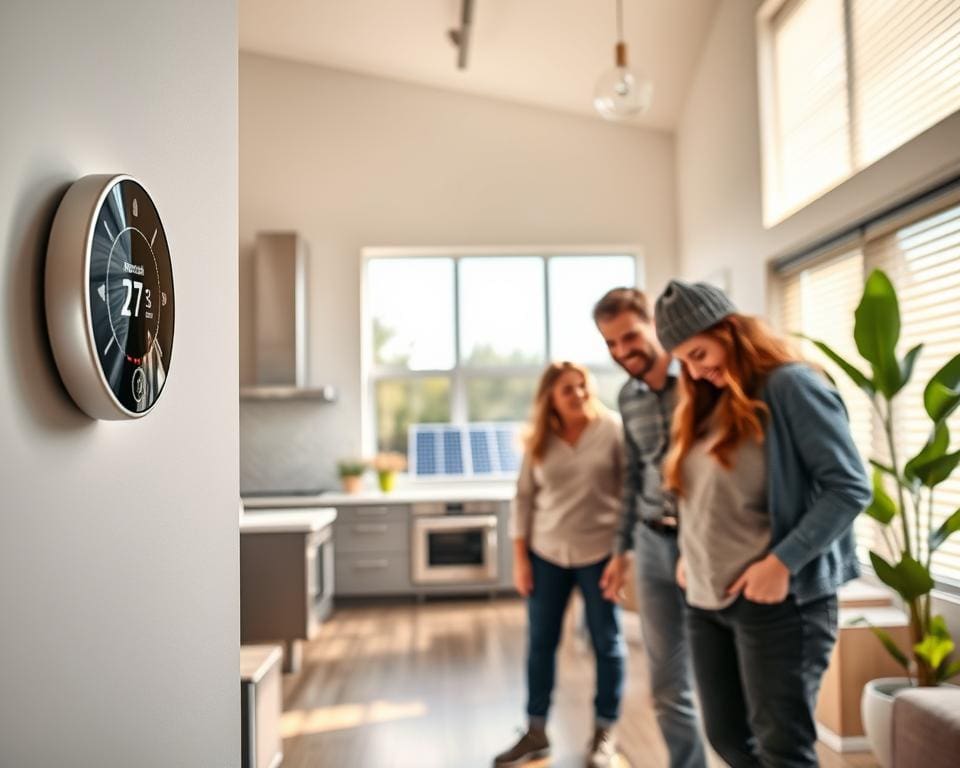
Domestic buildings account for roughly 20–25% of UK greenhouse gas emissions, and household energy use remains a significant slice of national demand, according to BEIS and Committee on Climate Change figures. With energy price volatility and the government’s net-zero targets, homeowners are increasingly asking how does technology make homes more energy efficient in practical, cost‑effective ways.
This article takes a product‑review approach to smart home energy and home energy efficiency technology. It focuses on devices and systems UK households can adopt now—smart thermostats such as Google Nest and Hive, heat pumps from Mitsubishi Electric and Daikin, solar PV from LG or Q CELLS, and home batteries like Tesla Powerwall and Sonnen—rather than academic theory.
We assess performance, cost, integration and typical payback periods in the UK market, and cover eligibility for schemes such as the Boiler Upgrade Scheme and the Smart Export Guarantee. The review looks at how these solutions can reduce energy bills technology-wise and how they suit different property types, from period homes to new builds.
Readers will learn which technologies deliver measurable savings, how they integrate with existing fabric improvements, and where to seek professional installation or self‑install options. It is important to note that outcomes vary by insulation, draught‑proofing, occupancy patterns and local climate; technology complements, but does not replace, loft and cavity wall insulation, double glazing and draught sealing.
Smart heating and climate control for lower bills and greater comfort
The shift to intelligent home heating puts control in the hands of occupants, cuts waste and raises comfort. Products from Google Nest, Hive and tado° illustrate how connected devices can learn household patterns and act before the occupants notice. These systems offer clear routes to heating controls energy savings while fitting a range of UK homes, from combi-boiler flats to heat-pump installations.
Modern thermostats use occupancy detection, geofencing and machine learning to build schedules automatically. A Nest thermostat can sense when a house is empty and lower setpoints, while tado° uses location services to pre-heat as people return. Remote apps let users override schedules from anywhere. Independent trials and consumer body reports typically show 10%–15% heating energy savings compared with manual controls.
Installation is usually straightforward for room-stat replacement on combi boilers. For system boilers or heat pumps, installers wire relays or configure control modules so the smart device communicates with the plant. Privacy statements vary by brand. Many vendors support Amazon Alexa, Google Home and Apple HomeKit, yet firmware updates remain essential to keep interoperability and security current.
Zoning systems to heat only the rooms you use
Smart TRVs and motorised valves let homeowners control heat room by room. Solutions such as Honeywell Evohome and Drayton Wiser add intelligent heads to radiators or use zone controllers to manage multiple areas. In larger houses, zoning heating systems reduce runtime of the central boiler and raise occupant comfort by focusing warmth where it is needed.
Retrofitting smart TRVs is often a simple DIY or installer job. Full multi-zone setups with extra thermostats and motorised valves usually require a qualified plumber or heating engineer to set up the system controller. Trials show multi-zone homes can cut heating use by up to 20% when rooms are heated only when occupied.
Integration with weather data and time-of-use tariffs
Smart platforms draw live weather forecasts into their algorithms to avoid overheating and reduce wasted pre-heating. Systems with thermal modelling can delay heating until a low-cost period and then use stored thermal mass to maintain comfort. That approach works with time-of-use tariffs such as Octopus Energy’s Agile tariff and similar offerings across the UK.
For homes with heat pumps or electric heating, shifting demand into cheaper windows lowers bills and can reduce grid carbon intensity. Owners with solar PV should note how the Smart Export Guarantee affects daytime export economics and the optimum timing for heating. Algorithm modes include pre-heat during low-price windows and limiter modes that avoid peak-price operation.
Real-world energy savings and user experience (UK case studies)
UK pilots and installer reports give practical insight into benefits and barriers. A typical semi-detached retrofit combining a smart thermostat and smart TRVs often yields measurable savings and clearer comfort control. Social housing projects that introduced remote-control heating reported reduced fuel poverty risk when heating could be timed and monitored centrally.
Common user issues include connectivity dropouts and complex initial setup. Accredited commissioning by a Gas Safe or MCS installer helps deliver expected performance. Occupant habits remain a strong determinant of realised savings, so clear guidance and simple app interfaces improve long-term adoption.
- Pros: lower bills, finer scheduling, remote control and data-driven optimisation.
- Cons: upfront cost, dependence on internet, and limited gains where building fabric is poor.
How does technology make homes more energy efficient?
Technology for energy efficient homes works through three clear mechanisms that cut waste, swap fuels and lift appliance performance. Smart controls and sensors stop heating, cooling and lighting running where they are not needed. Zoning, presence detectors and learning thermostats trim runtime and lower bills, producing tangible smart home energy improvements for UK households.
Low‑carbon generation and storage replace grid imports when carbon intensity is high. A typical 4 kW rooftop solar array can supply a large share of daytime power. Pairing that array with a 5–13 kWh battery lets households shift solar output into the evening. This combination shows how technology reduces home energy use UK by moving demand away from peak grid periods.
Appliance upgrades deliver big savings for everyday tasks. A+++ rated washing machines, inverter heat pumps and induction hobs use far less energy than older models. Replacing an ageing gas boiler with an air‑source heat pump can cut heating CO2 emissions markedly, depending on grid carbon intensity. Householders should note higher capital cost and possible radiator upgrades when choosing a heat pump.
System‑level benefits stack up when devices cooperate. Smart demand management shifts consumption to off‑peak hours, helping the grid absorb more renewables and reducing national emissions. Interoperability standards such as OpenCharge and the smart‑meter roll‑out in the UK enable coordinated responses and wider uptake of smart home energy improvements.
Barriers remain: upfront cost, planning limits on listed buildings and unsuitable roofs for PV can block progress. Government incentives like the Smart Export Guarantee and the Boiler Upgrade Scheme act as enablers. Falling component costs and growing installer experience will make technology for energy efficient homes more accessible.
Prioritise measures that give the best returns for your property. Improve insulation first to reduce demand. Add smart controls next to eliminate wasted energy. Consider generation and storage once demand is lower. Seek MCS‑certified installers for renewables and heat pumps to ensure performance and compliance.
Energy generation, storage and smart appliances that cut consumption
Rooftop solar PV UK systems convert daylight to electricity, lowering grid imports and shrinking bills. Typical installs for average homes range from 2–5 kW, with annual yields varying by region — higher in the south‑east and lower in the north‑west. Under present UK conditions, straightforward payback often depends on household consumption, export rates under the Smart Export Guarantee and local irradiance; manufacturers such as Q CELLS, REC and LG offer robust panels and UK installer networks that include warranty support.
Home battery storage captures excess generation for evening use, provides backup and enables peak‑shaving on time‑of‑use tariffs. Market leaders include Tesla Powerwall, LG Chem (RESU) and Sonnen, typically sized between 5–13 kWh with competitive round‑trip efficiencies and multi‑year warranties. For households with an EV or high evening demand, a battery can raise self‑consumption significantly, though payback depends on installed cost per kWh and tariff structure.
Smart appliances energy saving is no longer niche. Brands such as Bosch, Samsung and Miele now offer eco‑modes, delayed‑start scheduling and energy reporting that let owners run dishwashers or washing machines during PV surplus or off‑peak hours. Induction hobs outperform gas for cooking efficiency, and inverter‑driven heat pumps UK models like Mitsubishi Ecodan cut water‑heating losses. An efficient appliances review will usually show that careful scheduling and reduced standby use deliver steady savings.
Whole‑home systems bring these pieces together. A home energy management system can coordinate solar PV, home battery storage, EV charging and smart white goods to maximise self‑consumption and minimise costs. Look for installers and products that support open protocols such as MQTT, Zigbee or Z‑Wave and MCS certification for renewables. Start with an energy audit and fabric improvements, then layer in smart controls, renewable generation and storage to boost resilience, cut bills and help the UK reach net‑zero.