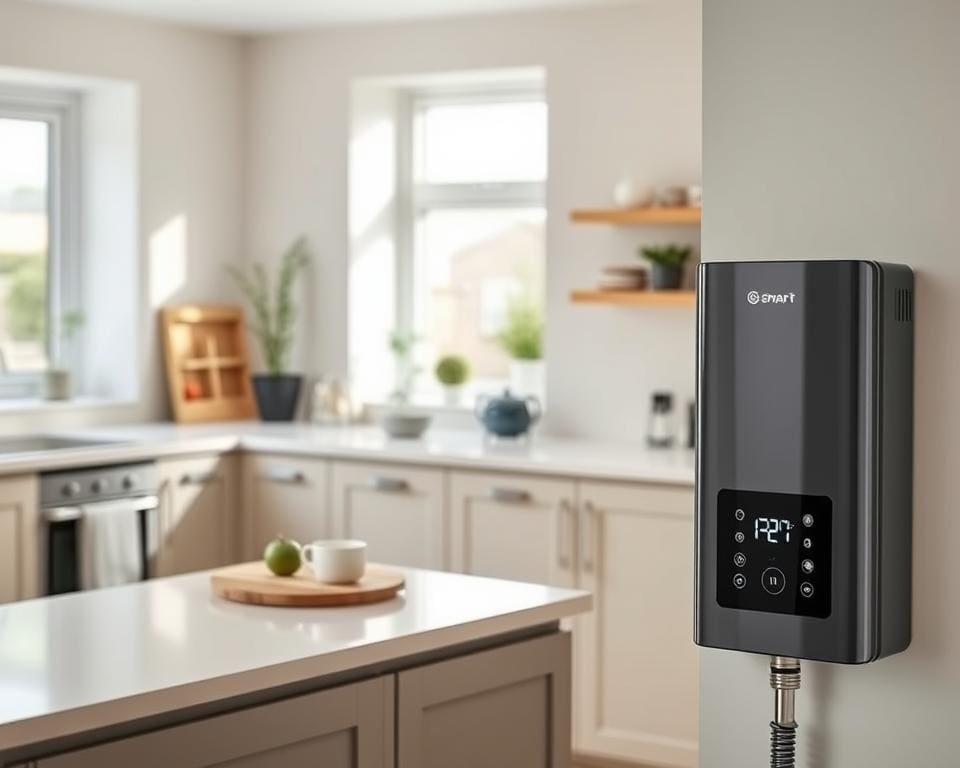
Smart water heating systems are modern hot-water solutions that combine electric, heat pump or hybrid boilers with stored-water cylinders and digital controls. They use connectivity such as Wi‑Fi, Zigbee or Z‑Wave, sensors and software to optimise when and how water is heated and supplied.
Unlike traditional boilers and immersion heaters, smart hot water systems offer data-driven scheduling, remote control, adaptive learning and integration with other smart-home devices. That connectivity enables energy-efficient water heaters to shift heating to cheaper or greener periods and to avoid wasting hot water when it is not needed.
For UK homeowners the intelligent water heating benefits are clear: lower energy bills, better comfort and simpler maintenance. Established manufacturers such as Vaillant, Worcester Bosch and Stiebel Eltron work alongside smart thermostat brands like Hive, Google Nest, Tado and Honeywell Home to deliver compatible controllers and add-ons.
Rising energy prices, growing household solar PV uptake and national decarbonisation goals make smart water heaters UK increasingly relevant. This article will review efficiency and cost savings, health and safety improvements, environmental credentials and practical buying and installation considerations so readers can decide if a smart system is right for them.
What are the advantages of smart water heating systems?
Smart water heating brings clear benefits for modern homes. Small, precise controls cut wasted energy and make hot water ready when needed. A properly set system can deliver both comfort and lower bills while fitting into a low‑carbon household.
Improved energy efficiency and reduced bills
Adaptive scheduling and occupancy detection stop the cylinder from heating when no one is home. Manufacturers and independent tests report reductions in hot‑water energy use of 10–30% depending on household routines.
Features such as hot‑water timers, eco‑modes and intelligent boost heat only when required. Brands such as Tado and Hive offer systems that adapt schedules to daily life, while Worcester Bosch and Vaillant provide smart‑compatible cylinders and controls that improve modulation and minimise standby losses.
Tariff optimisation lets systems favour off‑peak electricity like Economy 7/10 or modern time‑of‑use rates. Pairing a smart water heater with a thermal store or storage heaters can shift consumption to cheaper periods and lower bills further.
Remote control and convenient scheduling
App‑based interfaces on iOS, Android and web portals give homeowners the power to turn heating on or off, start a manual boost or set weekly programmes from anywhere. That makes it easy to prepare for late returns, unexpected guests or holidays.
Voice and smart‑home integration with Alexa, Google Assistant and Apple HomeKit allows hands‑free commands and routines such as “turn on hot water for 30 minutes”. Systems with adaptive learning refine routines over time to preheat water when needed and avoid running during predictable absences.
Remote hot water control adds peace of mind. A smart thermostat hot water control can combine presence data and user preferences to schedule hot water with minimal fuss and maximum convenience.
Integration with renewable energy and smart grids
Smart units can be set to favour on‑site solar PV, heating water when panels produce surplus electricity. This increases self‑consumption and cuts grid imports while making the most of renewable output.
As the UK expands smart meters and dynamic tariffs, a smart grid compatible water heater can act as a flexible load. Systems can soak up low‑cost, low‑carbon electricity and help balance demand on the network, creating potential savings under time‑of‑use pricing.
Compatibility with heat pumps and hybrid arrangements is common in modern designs. A smart controller optimises COP and coordinates water heating with space heating, giving efficient operation across the home energy system.
Health, safety and reliability benefits for homeowners
Smart water systems lift everyday comfort by making hot water reliable and predictable. Precise temperature control and predictive heating reduce cold shocks at showers and baths. A consistent hot water smart heater holds target temperatures more accurately than basic mechanical controls, so family routines run without interruption.
Owners can set temperature zones and priorities to match daily habits. Morning showers, evening baths and dishwasher cycles can be scheduled so the house always has enough hot water. This level of control improves comfort while cutting wasted energy.
Safety upgrades make modern systems safer to live with. Remote leak detection works when paired with sensors from brands like Honeywell Home, Fibaro and Aqara. Anti-scald limits are configurable via an app to protect children and older adults. Automatic frost-protection actions guard pipes in cold weather.
Smart controllers provide automated diagnostics that spot faults early. Platforms such as Worcester Bosch Wave and Vaillant vSMART report error codes and performance anomalies to the homeowner. Prompt maintenance alerts water heating systems receive can speed up engineer visits and reduce the chance of breakdown.
Centralised logs and time-stamped data simplify compliance and warranty claims. When a system records correct operation, installers and manufacturers can review the evidence. That makes warranty smart hot water support smoother for both homeowners and service teams.
Gentler modulation and fewer on/off cycles lower wear on pumps, valves and heating elements. This optimisation improves longevity smart boilers and cuts long-term repair costs. Some manufacturers extend warranty smart hot water or offer service plans when systems use approved smart controls or certified installers.
Routine care remains essential. Regular descaling in hard-water areas and annual checks keep performance high. Firmware updates pushed remotely keep control software current and help prevent issues before they start.
Environmental advantages and sustainability credentials
Smart water heating brings clear environmental benefits for UK homes. By cutting energy use through precise schedules and adaptive control, households can reduce CO2 emissions. A typical saving of 10–30% on water heating energy can lower annual emissions notably, especially where electric heating powers the hot water.
Raising solar self‑consumption for water heating reduces reliance on grid electricity at peak times. When panels heat a hot‑water cylinder during daylight, fewer grid‑sourced kilowatt‑hours are needed. The result is cleaner, low carbon hot water and a smaller household footprint.
Smart controllers pair well with low‑carbon heating technologies. Air‑source and ground‑source heat pumps from manufacturers such as Mitsubishi Electric, Daikin and Stiebel Eltron often support smart integration. This smart heat pump compatibility helps optimise coefficient of performance, schedule defrost cycles and avoid costly peak rates.
Controllers can also manage thermal stores and hot‑water cylinders to use low‑temperature heat efficiently. That improves overall system performance and lowers primary energy demand. Householders seeking sustainable water heating will see benefits in both efficiency and comfort.
At scale, smart demand flexibility supports national decarbonisation. Aggregated smart loads balance variable renewable supply and cut the need for fossil‑fuel peaking plants. This household contribution feeds into broader net-zero home heating ambitions.
UK policy nudges this shift. The Boiler Upgrade Scheme and related grant programmes encourage heat‑pump uptake. While grants may not always fund smart controllers directly, choosing smart‑compatible systems makes an application more future‑proof. Homeowners should check eligibility for government green incentives water heating and consider devices that support dynamic tariffs and demand‑side response rewards.
Buying and installing smart water heating systems: what to consider
Start by sizing the system to match your household patterns. Count bathrooms and consider simultaneous showers to decide between instant electric combi‑style units, stored hot‑water cylinders or heat‑pump water heaters. Heat‑pump cylinders usually need more space and often an outdoor unit. Consult manufacturers’ sizing guides from Worcester Bosch, Vaillant or Stiebel Eltron, or use an MCS‑approved heat‑pump installer to confirm capacity before you buy smart water heater UK.
Check compatibility smart controller options early in the process. Some boilers and cylinders require manufacturer modules such as Worcester Bosch Wave or Vaillant vSMART, while third‑party platforms like Tado and Honeywell Home support many models but may not offer every advanced feature. Also verify interoperability with Alexa, Google Home or Apple HomeKit if voice control or routines matter to you when you install smart hot water system.
Choose certified installers for safety and warranty protection. Use Gas Safe engineers for gas appliances and MCS‑certified teams for heat pumps and renewables. Many manufacturers insist on authorised installation to validate extended warranties or grant eligibility. Request a written quotation that lists the exact equipment, smart controller, commissioning and network integration from any smart water heating installer you consider.
Plan for costs and future support to protect your investment. Factor hardware, controllers, sensors and labour into the cost of smart water heater; heat pumps carry higher upfront cost but lower running costs. Calculate payback with local energy prices and available grants such as the Boiler Upgrade Scheme. Finally, favour products with regular firmware updates, clear data‑privacy policies and expandability for leak sensors, solar PV or EV charging so your system stays useful and efficient.