Connected home systems are reshaping how UK households approach energy management. With rising energy prices and the UK’s net-zero targets, smart home energy solutions now matter for both wallets and the planet.
At their core, connected home systems are integrated networks of devices and platforms. Think Google Nest and Hive thermostats, Smart Metering Implementation Programme-compatible meters, Philips Hue lighting, smart plugs and home energy management systems that talk over Wi‑Fi, Zigbee, Z‑Wave or Thread.
Energy management here means optimising consumption, cost and carbon through monitoring, control and automation. The measurable outcomes are clear: reduced consumption, lower bills, improved comfort and smaller carbon footprints.
This article takes a product-review approach, assessing device categories and system functions. We cover practical integration for UK homes — boiler and heat pump compatibility, tariff links and demand response — and present evidence-based benefits, including typical savings estimates from trials and studies.
Context comes from industry reports and government guidance on smart meters and the Smart Systems and Flexibility Plan, while manufacturer specifications from Google Nest, Hive, Tado and Honeywell Home show features such as learning algorithms, geo‑fencing and scheduling. Academic work from the UK Energy Research Centre and field trials provide quantified savings for heating and appliances.
This guide is aimed at UK homeowners and renters weighing investment in energy-saving technology. Expect inspirational insight paired with concrete product and performance detail to help you improve home energy efficiency and create a more efficient UK smart home.
How do connected home systems improve energy management?
Connected home technologies combine sensors, smart actuators and cloud platforms to make everyday energy use more efficient and visible. A clear smart energy overview shows how temperature sensors, motion detectors and smart valves feed data to hubs and apps. Common communication standards include Wi‑Fi, Zigbee, Z‑Wave and Thread, which let devices from manufacturers such as Google Nest, Hive and Tado work with platforms like Amazon Alexa, Apple HomeKit and Google Home.
Overview of connected home systems and smart energy
The typical connected home architecture pairs local controllers with cloud services. Smart meters and tariff integrations link to energy suppliers such as Octopus Energy and British Gas, enabling time‑of‑use features and tariff optimisation. Third‑party home energy management systems (HEMS) aggregate device data and present a simple dashboard for occupants.
Security and privacy are central to UK deployments. Encrypted connections, two‑factor authentication and regular firmware updates protect devices. Clear data‑sharing notices meet UK data‑protection expectations and build trust between consumers and platform providers.
Core mechanisms that drive energy savings
Automation and smart schedules remove human error. Thermostats can lower temperatures overnight and TRVs target heating to occupied rooms. Learning algorithms, like those used by some thermostats, adapt to routines and improve efficiency over time.
Real‑time feedback encourages change in how people use energy. In‑app notifications and consumption graphs highlight peaks and suggest simple actions to reduce waste. Demand‑side flexibility shifts use to cheaper, lower‑carbon periods through time‑of‑use tariffs or demand response programmes.
Precise control reduces losses. Zonal heating, smart plugs and appliance scheduling cut standby waste and avoid heating empty rooms. This mix of automation, visibility and control forms the core energy‑saving mechanisms in modern homes.
Quantifying benefits for UK households
Studies and trials show typical ranges for savings. Smart thermostats and optimisation often reduce heating energy use by about 10–20%. Smart lighting and appliance control can trim electricity use by roughly 5–15%, depending on behaviour and appliance mix.
Translated to bills, a 10–15% cut in space heating can make a noticeable difference on the average UK gas bill, especially during winter. Results vary with building fabric, existing controls and the heating type, whether a gas boiler, electric heating or a heat pump.
Combined systems tend to deliver larger gains than isolated devices. When optimisation, tariff switching and proper installation come together, the smart home benefits multiply and offer realistic household energy savings UK residents can measure and build on.
Smart thermostats, heating controls and efficient space heating
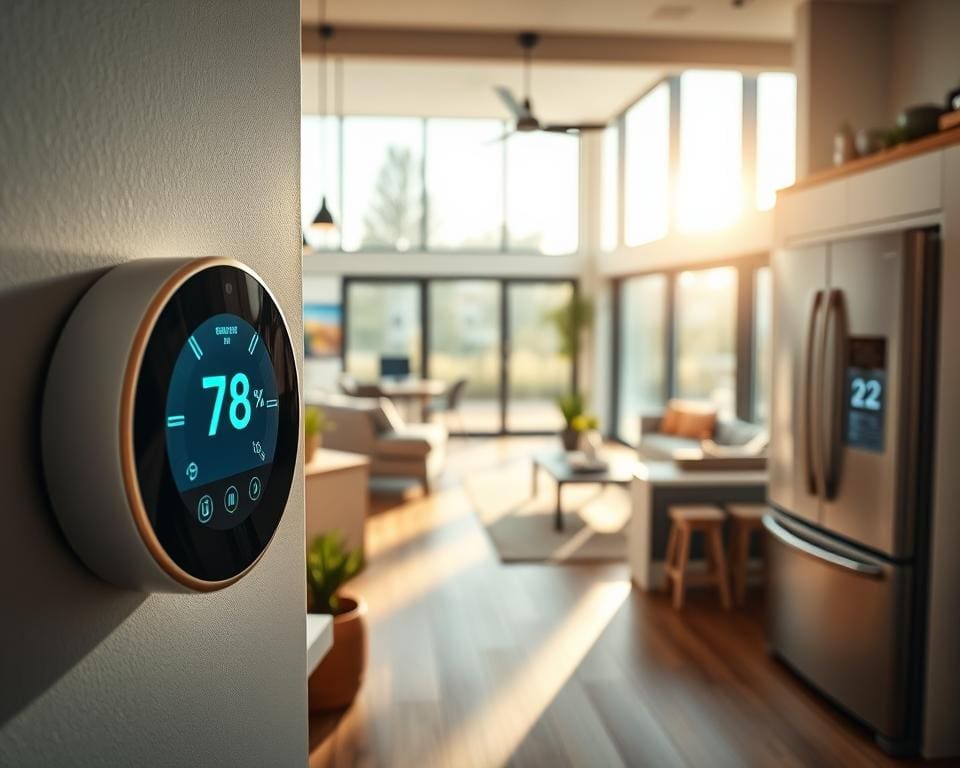
Smart thermostats are changing how households manage warmth. They pair precise temperature control with adaptive schedules to cut waste and boost comfort. Brands such as Google Nest, Hive, Tado and Honeywell Home show how learning algorithms, open-window detection and occupancy sensing stop unnecessary heating while keeping rooms cosy.
How smart thermostats reduce heating waste
Modern devices adjust boiler runtime by learning daily routines and tuning set-points. Zonal heating with smart TRVs, for example Danfoss Ally and Tado smart radiators, warms only occupied rooms. Trials report reduced boiler runtime and steadier indoor temperatures, which lowers fuel use and carbon emissions.
Users gain steady target temperatures and the convenience of voice control through Alexa and Google Assistant. Mobile apps let homeowners fine-tune heating controls remotely for comfort and savings.
Integration with weather and tariff data
Many systems pull local weather forecasts to pre‑heat before a cold snap or delay cycles during warm spells. This improves efficient space heating while keeping the home comfortable.
Thermostats from Tado and Nest can interface with smart heating tariffs and time‑of‑use plans such as Octopus Agile. They shift heating to lower‑cost periods, which helps electric heating and heat‑pump households cut bills. Connectivity with smart meters and supplier APIs makes tariff‑aware automation more reliable.
Devices can also join demand response programmes, receiving signals to reduce load during peak grid stress in return for incentives.
Compatibility with existing boilers and heat pumps
Most smart thermostats in the market support standard combi and system boilers using conventional wiring or a relay. Manufacturers publish compatibility lists and installation guides to simplify retrofit installs.
Heat pump modes are now common, designed to avoid short‑cycling and protect compressor efficiency. Installers should check thermostat compatibility for flow‑temperature control and defrost cycles before fitting.
Professional support from Gas Safe registered engineers and MCS‑accredited installers ensures correct configuration, protects warranties and keeps work aligned with UK building regulations and boiler‑manufacturer requirements.
Smart lighting, appliance control and demand response
Smart LED bulbs and whole-home lighting systems from Philips Hue, LIFX and IKEA Trådfri cut wasted light through motion sensors, schedules and daylight sensing. Motion-triggered scenes and dimming use less power than full-brightness settings. Lifespan benefits of LEDs lower replacement frequency and reduce environmental impact.
Presence detection pairs with natural-light sensors to adjust levels automatically. That keeps rooms bright when needed and dark when empty. In the UK, smart lighting UK setups can trim lighting bills while improving comfort and convenience.
Smart plugs such as TP-Link Kasa, Eve Energy and Hive Active Plugs put appliance control into every socket. They record consumption and switch off devices that draw power in standby. That standby power reduction typically saves a few percent of household electricity use.
Scheduling moves washing machines, dishwashers and EV chargers into cheaper windows. Tied to local dynamic tariffs, those schedules lower bills and smooth demand on the grid. Voice assistants and hubs make these automations easy to set up and to trigger by simple commands.
Households can join demand response programmes through suppliers or aggregators like Octopus Energy and EDF. Participating consumers earn incentives for shifting or lowering use at peak times. Automated responses from smart chargers, thermostats and batteries reduce load without manual action.
Practical scenarios show the value: an EV charger pauses during a high-price slot; a washing machine waits for an off-peak window; a battery discharges to avoid imported grid power. Reliable connectivity and clear, opt-in controls build user trust and boost uptake.
- Smart lighting UK: motion sensors, dimming, daylight integration
- Appliance control: smart plugs, consumption monitoring, scheduling
- Demand response: automated reductions, incentives, use of dynamic tariffs
Monitoring, analytics and user engagement for smarter consumption
Real-time energy monitoring turns data into daily habit. Apps and consumption dashboards from suppliers and third-party platforms such as Home Assistant collate smart meter data and device feeds to show both live and historical use. That visibility helps households see which appliances drive costs and where simple changes deliver immediate wins.
Device-level monitoring via smart plugs complements whole-home systems like Sense or Smappee that use clamp sensors to identify appliance signatures. Home energy analytics combine these inputs to spot inefficiencies and flag anomalies. Predictive alerts can recommend actions — replace an ageing boiler, fix a leaking pump or seal draughts — before bills rise.
Lasting energy behaviour change depends on clear feedback, achievable goals and timely nudges. Gamification, carbon-equivalent metrics and savings forecasts sustain user engagement more effectively than raw numbers. Supplier apps that show week-on-week comparisons or give personalised tips have repeatedly increased active participation and saved energy.
When evaluating platforms look for clarity, strong integrations with smart meters, thermostats, EV chargers and battery systems, and compatibility with HomeKit, Alexa or Google. Octopus Energy’s integrations, Tesla and sonnen setups for battery management, and dedicated monitors like Sense and Smappee illustrate how monitoring, analytics and automation can together cut costs and boost flexibility. Start small — smart thermostat and basic monitoring — then layer TRVs, smart plugs and battery or EV charging control, ensuring professional installation and robust data-security policies throughout.