
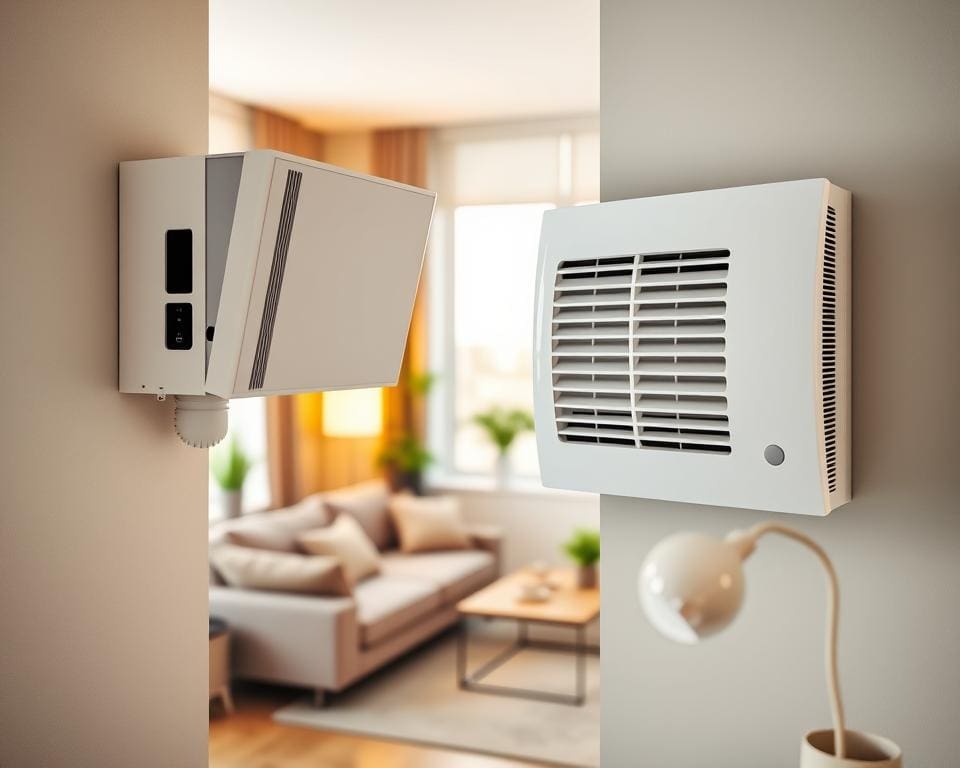
Good ventilation matters in British homes. Modern, airtight building fabric improves energy efficiency but traps moisture and pollutants. A properly specified home ventilation unit helps control humidity, reduce condensation and mould, and remove CO2, VOCs and cooking odours.
This guidance suits a wide range of properties. It applies to Victorian terraces, semi‑detached and detached houses, flats and new‑build homes. Older dwellings with single‑skin walls or poor insulation may need different solutions from highly insulated, airtight new builds.
Typical ventilation system components include a fan or MVHR unit with a heat exchanger, supply and extract terminals, ducting, filters, controls and condensate drainage. Installers often site plant in lofts, utility cupboards or external plant rooms, with terminals in kitchens, bathrooms and habitable rooms.
The benefits are clear: better indoor air quality, less damp and mould, and potential heating savings where MVHR installation recovers heat. Drawbacks include initial cost, ongoing electricity use, regular maintenance such as filter changes and occasional cleaning, and possible noise if the system is poorly installed.
Quick checklist for homeowners: consider property airtightness, overall budget (purchase, installing ventilation unit, running and maintenance), planning or conservation area limits, disruption tolerance, desire for smart controls, and access to loft space for ductwork.
For reliable advice consult Building Regulations Part F, CIBSE and BRE guidance, and manufacturer literature from brands such as Nuaire, Zehnder and Vent‑Axia when planning ventilation for UK homes. This ventilation system guide and domestic ventilation advice will help you make an informed decision.
What should you know about installing a home ventilation unit?
Choosing the right ventilation approach shapes comfort, energy use and compliance. This section outlines common system types, how UK rules affect installation and the key performance factors to weigh before you commission work.
Understanding types of home ventilation systems
Supply ventilation systems draw fresh air into habitable rooms and rely on passive or trickle extract vents to remove stale air. Supply ventilation can create slight positive pressure to reduce ingress of external pollutants. It is simpler and cheaper than balanced options but gives limited control over extract and less effective heat management.
Extract-only ventilation covers traditional extractor fans in kitchens and bathrooms. These remove moist or odorous air and are often intermittent or continuous trickle extract. They are low cost and simple to fit. Extract ventilation can create negative pressure, which may draw cold air through gaps and increase heat loss.
Balanced ventilation, including MVHR systems, supplies and extracts equal volumes of air while recovering heat from outgoing air. The balanced ventilation explanation centres on steady whole-house control, reduced drafts and filtration of incoming air. MVHR is most effective in airtight, well-insulated homes where heat recovery efficiency returns real savings.
Planning and regulations in the United Kingdom
Building Regulations Part F requires adequate ventilation in dwellings in England and Wales. The rules set minimum extract rates for kitchens and bathrooms and require appropriate background ventilation in habitable rooms. Scotland and Northern Ireland use comparable functional standards; always check local building control for precise UK ventilation regulations.
Some installations trigger building control notification. MVHR in new-builds, major renovations or any fixed mechanical system that alters the dwelling ventilation strategy will often need sign-off. A competent installer registered with a recognised scheme and clear commissioning records help demonstrate compliance and meet expectations for evidence.
Planning permission ventilation and conservation area ventilation constraints can affect where terminals, grilles and plant are placed. In listed or conservation properties, external grilles and roof penetrations may be restricted. Consider decentralised units, discreet terminal locations and early liaison with planning or conservation officers to avoid delays.
Key performance factors to consider
Airflow rates m3/h are the basic sizing measure. Match capacity to dwelling size and occupancy. Under-sized systems under-ventilate while oversized systems waste energy and noise. Use Part F and CIBSE guidance for recommended rates in kitchens, bathrooms and whole-house background ventilation.
Heat recovery efficiency denotes the proportion of sensible heat transferred in MVHR units. Good units often achieve 70–95% recovery. Real-world performance depends on installation quality, duct insulation and commissioning. Higher recovery reduces heating demand in well-sealed homes.
SFP specific fan power measures electrical efficiency. It is expressed as watts per litre per second or similar units. Lower SFP means lower running costs. Compare SFP specific fan power between models when estimating energy use.
Ventilation noise levels matter for comfort. Aim for unit sound levels below about 25–30 dB(A) in habitable rooms. Duct design, anti-vibration mounting and acoustic attenuators reduce perceived noise and avoid low-frequency tonal issues.
Ventilation filters remove dust, pollen and pollutants. Common classes include G4 and F7. Replace filters every 3–12 months depending on grade and local air quality. Clogged filters raise energy use and reduce airflow.
Durability and service support influence long-term value. Brands such as Vent-Axia, Zehnder and Nuaire supply units, spares and local service networks in the UK. Well-insulated, airtight ducts and correct condensate management protect performance and hygiene.
Energy consumption depends on duty cycles, SFP, heat recovery efficiency and any pre- or post-heating. In airtight, well-insulated homes a well-specified MVHR can offset its higher upfront cost through lower heating bills. For less airtight properties, balanced or supply systems may offer a better compromise.
Choosing the right ventilation unit and assessing product reviews
Picking a ventilation unit for your home means weighing technical performance, real-life feedback and long-term costs. Focus first on core MVHR specifications such as ventilation unit capacity m3/h, heat recovery percentage and SFP values. Clear ventilation controls and smart ventilation options help tailor flow to occupancy and reduce wasted energy.
Evaluating product features and specifications
Compare declared capacity in m3/h against your property’s needs and check SFP values to estimate electricity use. Look for published heat recovery percentage and acceptable duct diameters for your planned layout. Note filter class, frost protection, summer bypass, condensation management and accessory choices such as silencers or attenuators.
Check service access and modular design so filters and fans are easy to reach. Confirm left/right duct orientations and spare parts availability in the UK. Brands to consider include Vent‑Axia (Sentinel Kinetic MVHR), Zehnder (ComfoAir range) and Nuaire (EcoVent/EcoAir), which offer tiered MVHR specifications and varying warranty terms.
How to read and trust product reviews for ventilation units
Start with professional test reports from BRE, CIBSE or reputable trade magazines and compare those findings with ventilation reviews UK and MVHR reviews on retailer sites. Give weight to verified purchaser comments and installer feedback ventilation from experienced HVAC contractors.
Spot real-life noise reports, long-term reliability notes, after-sales service experiences and practical energy consumption figures that match SFP values in use. Be wary of manufacturer-sponsored testing with unclear methods and review clusters of identical five-star posts that look incentivised.
Budgeting and value for money
Estimate ventilation unit cost UK for the unit itself, typically £1,000–£3,000 for whole-house MVHR, plus installation costs often from £1,000–£3,000. Simple extractor fans sit in the low tens of pounds range. Factor in MVHR running costs and filter replacements, perhaps £20–£100 a year, plus occasional servicing at £100–£300.
Assess cost-benefit ventilation by modelling saved heating demand from heat recovery percentage against electricity use implied by SFP values. In airtight, well-insulated homes payback is more likely. In draughty or poorly insulated properties, extract-only solutions may be more economical.
Check warranty length and scope, confirm authorised UK service engineers and review current ventilation grants UK and retrofit schemes that might lower upfront outlay. Combine trustworthy product reviews with installer feedback ventilation to make a confident purchase that balances performance, cost and future running costs.
Preparing for installation and maintaining your ventilation unit
Before any work starts, arrange a ventilation site survey so the installer can assess layout, loft space and external terminal positions. Prepare a simple floor plan, note existing ventilation and flag nearby bedrooms or neighbour-facing walls for noise consideration. A clear survey prevents surprises during installation planning ventilation and helps identify condensation risk areas and safe access for maintenance.
Site survey, duct routing and necessary structural considerations
Good duct routing MVHR aims for short, straight runs and insulated rigid ducting to avoid heat loss and condensation. Where ducts pass through floors or compartments, fire-stopping is essential and drilling through external walls or roofs must follow building control guidance. For listed or conservation properties, ask about discreet external terminals and less intrusive loft installation ventilation to preserve historic fabric.
Working with installers and health & safety
Choose an accredited ventilation installer UK or members of recognised bodies such as FETA and check references, insurance and past projects. Ask ventilation installer questions about airflow rates, noise in dB(A) at 3m, commissioning procedures and sample commissioning certificates. Electrical work should be by a qualified electrician and safe working at height, dust control and correct disposal of materials are core ventilation safety measures during the typical 1–3 day installation for straightforward homes.
Filter, maintenance schedules and long-term running tips
Follow an MVHR maintenance schedule with filter replacement MVHR typically every 3–12 months depending on grade and location. Keep a record of ventilation servicing UK visits, commissioning paperwork and any balancing reports to protect warranties and resale value. Monitor performance by checking grilles for dust, watching for mould or odd noises, and use boost modes when cooking or showering to maintain air quality and efficiency.