
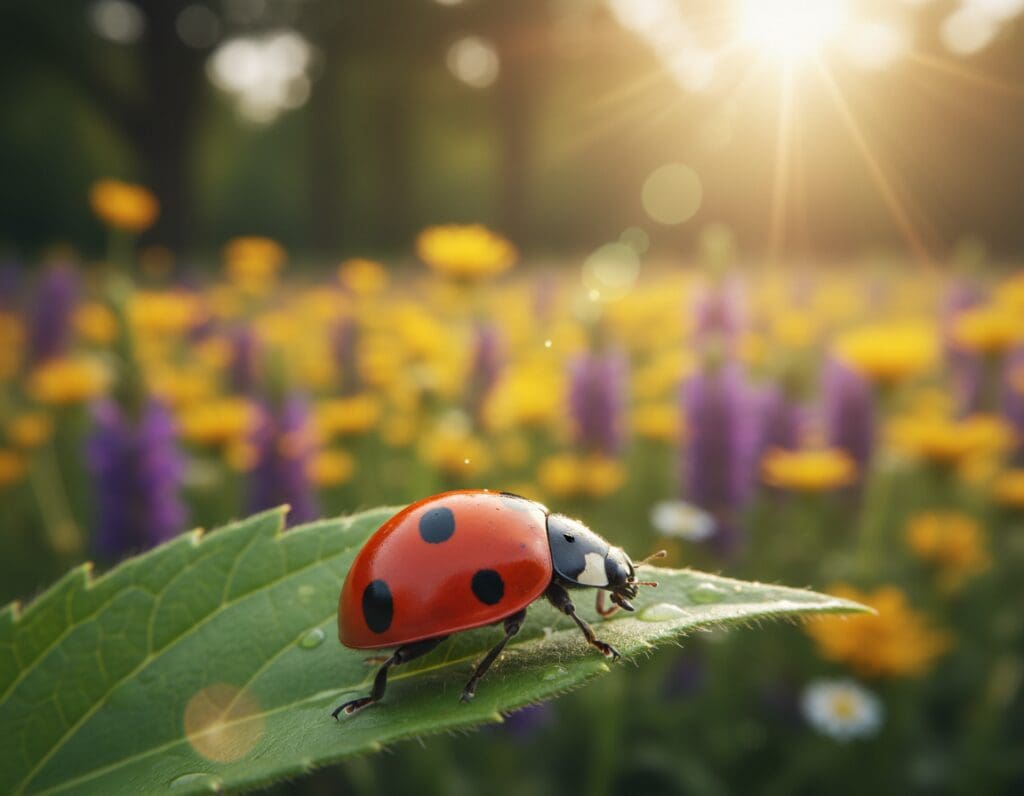
Spotting a ladybug — or ladybird, as many in the United Kingdom prefer — often feels like a small, hopeful interruption in the day. This opening section asks the simple question: what seeing a ladybug means. It sets an inspirational tone and explains that the article will explore cultural, historical, spiritual and practical angles on the meaning of ladybug sighting.
The insects belong to the Coccinellidae family and are common in UK gardens, hedgerows and fields. You are more likely to notice them in spring and summer, while they seek shelter to hibernate in autumn and winter. Their bright colouring and useful role as aphid predators make ladybirds easy to spot and easy to admire, which helps explain why so many people ascribe special meaning to an otherwise ordinary encounter.
Throughout the article we will examine ladybird symbolism from folklore and religion, consider the ladybug spiritual meaning people report, and offer practical ways to respond to a good luck ladybug when it appears. If you have recently had a sighting, read on for interpretations and evidence that blend history, psychology and everyday practice, and reflect on what that moment might mean for you.
what seeing a ladybug means: cultural and historical symbolism
The small, spotted beetle has carried stories for centuries. In many parts of Britain and across the continent, sightings have been folded into everyday life as hopeful signs or weather warnings. These threads of meaning form a tapestry that links past customs to present-day feelings about the insect.
Folk tales and rural sayings
Across villages in England, Wales and Scotland, a ladybird alighting on clothing or skin was taken as a stroke of fortune. Children learnt rhymes that counted a ladybird’s spots to predict years of good luck or to make wishes come true. Gardeners and farmworkers treated ladybirds as welcome helpers, knowing they ate aphids and signalled a likely good season for crops.
Different regions had unique twists. Some rural proverbs warned that large numbers of ladybirds might presage wet weather, while coastal communities sometimes read their arrival as a change in wind or tide. These variations make ladybird beliefs Europe rich and varied in detail.
Religious and mythic threads
The English name “ladybird” links to the Virgin Mary, giving the beetle a protective, kindly aura in Christian storytelling. The red shell was likened to the Madonna’s cloak and the spots to her joys or sorrows, which encouraged reverence rather than fear.
Pre-Christian Europe left other marks. Small beetles were common motifs for fertility, the return of life in spring and household safeguarding. Outside Europe, bright beetles also appear in tales that treat tiny, colourful insects as bearers of luck or guardians, yet care is taken to distinguish long-standing myth from recent reinterpretation. These mythological ladybird meanings span belief systems while keeping local colour intact.
From old stories to modern symbols
Historical symbolism ladybug has moved into everyday culture. Greeting cards, children’s toys and nursery rhymes borrow the friendly image to express protection and cheer. Urban life has softened literal superstition into symbolic gestures; a ladybird on a windowsill now prompts a smile rather than an omen read aloud at the hearth.
Growing interest in ecology has bolstered this shift. Conservation groups and gardening guides stress the insect’s role in pest control, so past folk esteem meets scientific respect. The result is a layered modern attitude where heritage, religion and natural history combine to shape what people feel when a ladybug appears.
Spiritual and emotional significance of ladybugs
A fleeting red dot on your sleeve can feel like more than chance. Many people report an instinctive uplift when a ladybird appears. This section explores why encounters with these insects carry weight for so many and how simple psychology and sincere belief both shape those responses.
Ladybugs as symbols of luck, protection and blessing
Across the UK, folk practices treat a ladybird landing as a good omen. Children are taught to make a wish, families display ladybird motifs for reassurance and carers sometimes sew ladybird patches onto baby clothes for comfort. These customs reinforce the idea of ladybug luck and protection through ritual and repetition.
Psychology helps explain the effect. Positive reinforcement and confirmation bias make lucky interpretations feel true when wishes seem to come to pass. That does not erase genuine spiritual conviction. Many faiths and folk traditions accept such signs as tokens of blessing or guardian presence.
Messages about transformation, renewal and life changes
The ladybug’s life cycle from egg to larva to pupa to adult offers a natural metaphor for growth. Spiritual readers point to this journey as symbolic ladybird transformation that mirrors human reinvention and gradual emergence.
Seasonal patterns add meaning. When ladybirds reappear after winter, people link that return to fresh starts and personal renewal. Encountering a ladybird during job change, relationship shifts or grief can feel like an encouraging nudge to embrace new chapters.
Interpreting personal encounters: synchronicity and intuition
Synchronicity with ladybugs is best seen as a meaningful coincidence that prompts reflection. Carl Jung coined the term to describe events that seem connected by meaning rather than cause. Noting a ladybird at a pivotal moment can spark insight or calm.
To find balanced meaning, keep a brief note of sightings. Jot the date, emotion and life context. Look for patterns before drawing firm conclusions. A simple journal helps separate chance from a repeated sign that truly resonates with you.
- Trust intuition when it feels grounded and steady.
- Question bias if every sighting is taken as proof of a desired outcome.
- Blend reflection with practical thought to stay centred.
Practical ways to respond when you see a ladybug
When a ladybug crosses your path, start by pausing and breathing. Take a moment to observe its colouring and movement, make a quiet wish if that feels right, or take a photo to keep the memory. For safe, respectful interaction, avoid handling unless necessary; if you must move it, cup the insect gently on a finger or a leaf and let it walk away on its own.
Consider simple garden actions that support these beneficial insects. Ladybugs eat aphids and help keep plants healthy, so adopt ladybird garden tips such as planting sweet alyssum, fennel, dill and marigold, reducing pesticide use and adding mulch or an insect hotel for shelter. Be mindful of seasonal needs: in autumn, avoid disturbing hibernating groups and follow guidance from the Royal Horticultural Society and local Wildlife Trusts for best practice.
Finally, blend symbolic and practical responses. Create a small ritual—light a candle, jot a note in a gratitude journal or add a tiny ladybug token to a keepsake box—to honour the moment. Balance these personal practices with tangible ladybug encounter actions that care for habitat and biodiversity; tending your garden is a grounded way to respect both meaning and ecology.
FAQ
What does seeing a ladybug (ladybird) generally mean?
Seeing a ladybug, often called a ladybird in the United Kingdom, is commonly experienced as a small, meaningful moment. It can be read culturally as a sign of good luck or protection, rooted in folk and religious traditions. Practically, it also reflects a healthy garden ecosystem since ladybirds are natural predators of aphids. Encountering one may simply prompt reflection, a wish, or appreciation for nature’s cycles.
Why are ladybirds associated with luck and protection?
The association comes from centuries of European folk belief and Christian symbolism. In Britain the name “ladybird” links the insect to the Virgin Mary, lending a protective and blessed connotation. Rural proverbs and children’s rhymes reinforced ideas that a landing predicts good fortune or a fulfilled wish. Those traditions, together with the insect’s bright red colouring and helpful role in gardens, shaped a persistent lucky-image in modern culture.
Are ladybird beliefs the same across Europe and the UK?
There are many regional variants. Across Europe, a ladybug landing on a person is often seen as a positive omen, and some traditions count spots to predict years of luck or wishes. In parts of rural Britain, farmers and gardeners long regarded ladybirds as signs of a good harvest. At the same time, local weather lore or cautionary tales exist in some places, so meanings can vary by community and custom.
How does the ladybug’s life cycle contribute to its symbolic meaning?
The ladybird’s transformation from egg to larva to pupa to adult offers a vivid metaphor for renewal and personal growth. Its seasonal emergence from hibernation in spring aligns with ideas of fresh starts and revival. People often interpret sightings during life changes—career shifts, relationship transitions, bereavement—as gentle encouragement to embrace transformation and hope.
Can a ladybird sighting be a spiritual message or synchronicity?
Many people experience such sightings as meaningful coincidences or synchronicities. Noticing a ladybird can act as a prompt for reflection or intuitive insight. To discern personal meaning, it helps to note the life context, your emotions at the time, and any repeated patterns. Keeping a brief journal of sightings can clarify whether they feel significant or are delightful, chance encounters.
How should I respond in the moment if a ladybird lands on me?
Pause and breathe to savour the moment. If it feels right, make a wish or say a short affirmation. Observe its colour and behaviour, or take a photograph to keep the memory. Be gentle: avoid squeezing or prodding the insect. If you must move it, cup it on a finger or leaf and place it somewhere safe outdoors.
What practical steps can I take to encourage ladybirds in my garden?
Encourage them by planting nectar- and insect-friendly plants such as sweet alyssum, fennel, dill and marigolds. Reduce pesticide use, provide shelter with mulch or an insect hotel, and leave some overwintering spots undisturbed in autumn. These actions support their role as aphid predators and strengthen garden biodiversity. The Royal Horticultural Society and The Wildlife Trusts offer UK-specific guidance.
Are there any respectful ritual or personal practices linked to sightings?
Yes. Many people create small, meaningful responses: add a ladybird token to a keepsake, note the sighting in a gratitude journal, or light a candle and say a brief affirmation. These rituals can be simple and uplifting while being balanced by practical conservation—caring for nature honours the spirit of the encounter and helps real wildlife.
Could psychology explain why ladybugs feel significant?
Psychological factors like positive reinforcement and confirmation bias make lucky interpretations feel compelling. If you expect good fortune, you’re likelier to remember events that confirm it. That said, sincere spiritual beliefs and cultural conditioning also shape experience. Blending intuition with reflective practice allows you to value the moment without over-interpreting it.
When are you most likely to see ladybirds in the UK?
Sightings peak in spring and summer when adults are active and breeding. In autumn many species gather to hibernate, often seeking sheltered spots, and are less visible in winter. Typical habitats include gardens, hedgerows, meadows and agricultural margins where their prey—aphids—is present.
Do different species or spot patterns carry different meanings?
Folk traditions sometimes ascribe meanings to spot counts or colours, but scientifically spot number mainly identifies species rather than predicting fortune. Notable UK species include the seven-spot (Coccinella septempunctata) and the fourteen-spot (Propylea quatuordecimpunctata). Appreciating variety is useful for naturalists; symbolic interpretations remain a matter of personal or cultural preference.