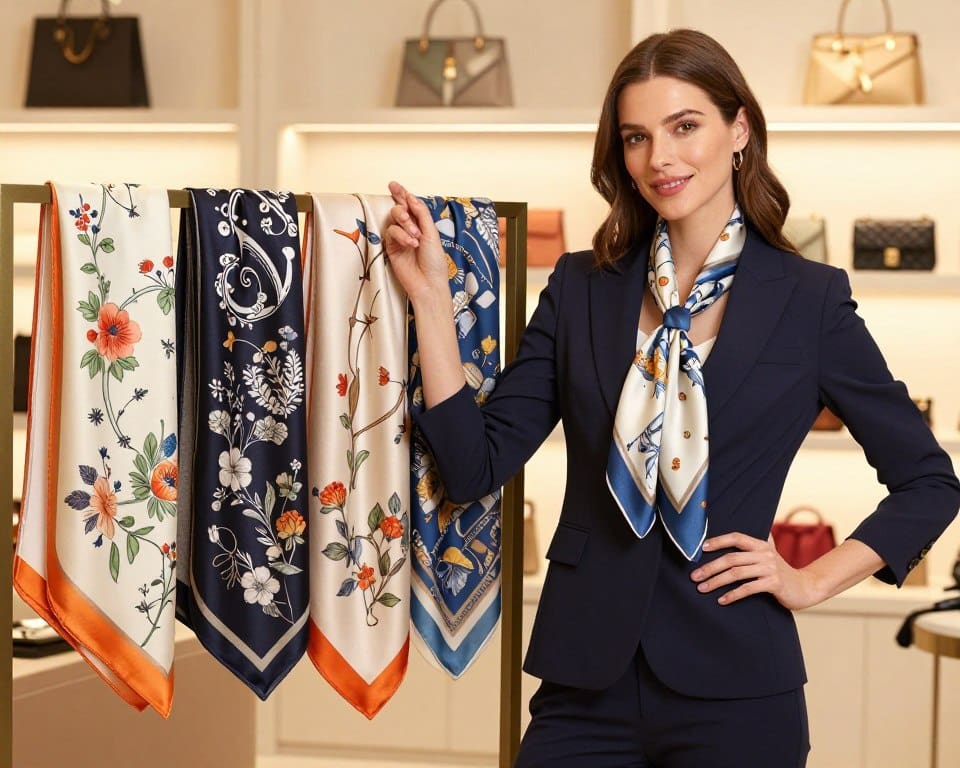
Scarves are one of the easiest ways to elevate outfit with scarf flair, whether you wear Marks & Spencer tailoring or a Liberty London silk on weekends. In a few simple moves a scarf can add colour, texture and proportion to jeans and a tee or to a trench coat on a drizzly day.
This piece answers the question how do you style scarves to upgrade your outfit and offers practical scarf styling tips for the changeable British weather. Expect quick scarf outfit ideas UK readers can use now: how to choose a fabric for the season, the best knots and drapes, and ways to pair scarves with blazers, knitwear and dresses.
Whether you want bargain finds from John Lewis or a statement piece from a smaller artisan label, these approachable suggestions will help you style scarves with confidence. Try a couple of looks, adapt the ideas to your wardrobe, and see how a simple scarf can refresh your daily outfits.
How do you style scarves to upgrade your outfit?
Scarves can transform the simplest look into something deliberate and polished. They work as a focal accessory, draw the eye and change perceived proportions. That is one of the key scarf benefits; a narrow face can appear framed, a long torso can look balanced and a plain knit can feel curated with a single knot.
Understanding the transformative power of a scarf
A well-chosen scarf shapes mood as much as silhouette. Think of Audrey Hepburn’s silk around the neck or David Beckham’s relaxed wraps; each example shows why wear scarves to signal style intent. A soft cashmere adds romance to tailoring, while a bright silk square injects playfulness into a plain blouse.
Versatility is central to the appeal. Use scarves as neckwear, headwear, a belt or a bag accent. In summer, a large square can even become a top. These options show why scarves remain a go-to accessory across wardrobes and lifestyles.
Choosing the right scarf for the occasion
Match fibre and form to context. For daytime casual, pick cotton or modal in relaxed knots for errands or coffee dates. For work and smart-casual, select silk squares or fine wool in restrained patterns to complement blazers without overpowering them.
Evening calls for silk twill, satin or embellished designs to elevate formalwear; metallic threads and monochrome wraps look particularly polished. For travel and outdoor use, oversized wool or cashmere blends offer warmth and layering ease on blustery days.
Practical points matter: consider length and width, print scale relative to your frame and how the piece sits with collars or coats. These small choices make the most of scarf occasions and ensure the accessory lifts rather than clashes with an outfit.
Quick visual recipes: simple knots and drapes to try
Few techniques deliver fast results. The European loop (fold in half, pull ends through) is neat and ideal with coats. The classic drape (hang over the shoulders) showcases patterned scarves with minimal fuss.
Try the loose knot for tees and knitwear: wrap once and tie a single, relaxed knot. For smarter looks, the ascot tuck—wrap and tuck ends into a shirt or sweater—appears tidy under blazers. The headscarf or bandana fold (triangle fold, tie at nape or side) offers a summer-ready, retro-chic finish.
- Scarf knots: place the knot relative to the neckline to control proportion. A higher knot suits crew necks; a lower tie flatters V-necks.
- Scarf drapes: heavy fabrics sit better with looser drapes to avoid bulk; fine silks take smaller, tighter knots for structure.
- Troubleshooting: use a small pin or a discreet scarf ring to prevent slipping. If bulk forms under collars, reduce length or choose a slimmer fold.
Learning a handful of styles will let you elevate outfit with scarf every day. Practice these visual recipes and the accessory will soon feel like second nature.
Choosing scarves by fabric and season for maximum impact
Picking the right piece can lift an outfit. Think about scarf fabrics and seasonal scarves as tools that change texture, colour and silhouette. A light silk breathes on warm days. A chunky wool gives structure when it is cold.
Lightweight silks and chiffons for spring and summer
Silk twill and chiffon feel cool on the skin and show scarf patterns clearly. They drape well, so a Liberty London silk square or a Silk Laundry piece adds polish without weight.
For silk scarf styling, try a loose neckerchief with a T‑shirt, knot one to a handbag handle or wear it as a headscarf. Small knots let the fabric move; tight retro ties sit neatly under collars.
Wools and cashmere for warmth and texture in autumn and winter
Merino, lambswool and cashmere trap heat while adding tactile luxury. Blanket scarves and oversized wraps create drama over coats. Thin cashmere scarves work with tailored outerwear for a refined look.
When buying, weigh cost-per-wear. Marks & Spencer offers good wool blends. For premium cashmere, Johnstons of Elgin is a trusted source. Learn cashmere scarf care: store in breathable bags and use cedar or lavender to deter moths.
How prints, colours and patterns influence your overall look
Scarf colour theory helps you plan outfits. Use contrast to liven a neutral base. Choose tonal layers for harmony. A single uniting shade can pull diverse pieces together.
Match pattern scale to frame and setting. Small prints suit formal looks. Large motifs make a statement over a plain coat. When mixing prints, vary scale and keep one linking colour.
Seasonal scarves often follow prints: florals for spring, nautical stripes for summer and tartans for autumn and winter. Classic checks and heritage tartans suit many British wardrobes.
Care and storage tips to keep scarves looking their best
Always follow labels. Hand‑wash silk with a mild detergent or use a specialist cleaner. Dry clean wool and cashmere when recommended. Use a steamer to ease creases without flattening texture.
Fold silk squares to avoid creases and roll lightweight scarves to save space. Store cashmere flat in breathable bags, with cedar balls or lavender to prevent moth damage. For knit pulls, use a small crochet hook to ease the yarn back gently.
Styling techniques to elevate specific outfits and silhouettes
Scarves transform simple silhouettes into considered ensembles. Use small, intentional gestures to lift a look without overwhelming it. The examples below focus on practical techniques you can try today.
Using scarves to add interest to plain tops and tees
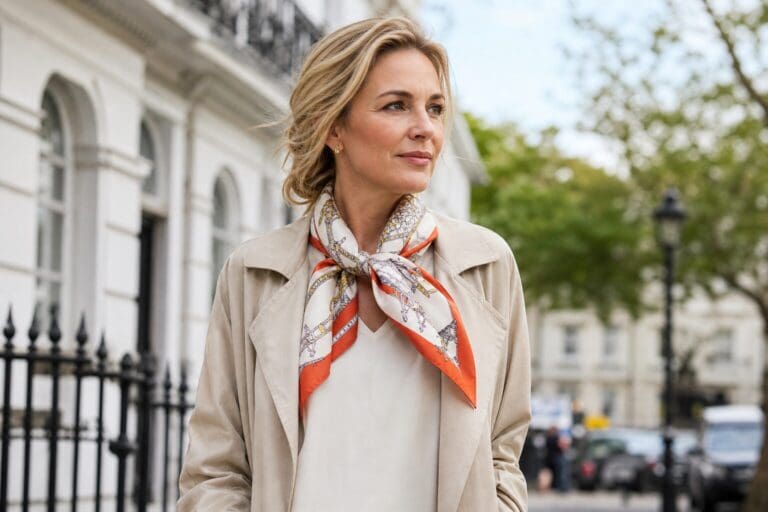
A silk square knotted at the throat gives a plain white tee a Parisian spin. Try a bandana fold for a casual edge or a long skinny scarf tied loosely to create vertical lines that lengthen the torso.
Pair a white tee and denim with a patterned silk kerchief for an effortless daytime outfit. For cooler days, a neutral knit with a colourful cashmere scarf adds texture and warmth.
- Keep necklines simple when the scarf is busy.
- Choose complementary metals for jewellery to keep the look cohesive.
- Experiment with scarf with t-shirt combos to find the scale that flatters your frame.
How to pair scarves with blazers and tailored coats
For office polish, tuck a slim tie under the collar or use a European loop for a neat finish. A long drape beneath a blazer looks sleek and intentional.
On weekends, drape an oversized wrap over the shoulders of a tailored coat for relaxed tailoring. Match scarf texture to coat weight: silk for lightweight blazers, wool for heavy overcoats.
- Avoid bulk under fitted collars by choosing thinner scarves or tucking ends neatly.
- Opt for subdued patterns and colours to maintain authority at work.
- Use a scarf with blazer pair to signal refinement without shouting.
Ways to balance scarves with dresses and evening wear
A shoulder wrap keeps you warm without swallowing the dress shape. Knot a slender scarf as a sash to accentuate the waist.
Choose scarves with a subtle sheen or a touch of metallic thread for evening events. Keep other accessories minimal when the scarf is the statement piece.
- Bandana-style neck scarves suit summer dresses.
- Cashmere stoles work well with winter eveningwear.
- Use a scarf for dresses that complements the gown rather than competes with it.
Accessorising with multiple scarves without overwhelming your outfit
Limit combinations to two scarves at most. Vary scale and texture, for example a thin silk neckerchief paired with an oversized wool wrap.
Layer a thin scarf close to the neck and a larger one as an outer wrap, or knot a small scarf to a handbag while wearing a larger scarf around the neck.
- Keep colours harmonious to avoid visual clutter.
- Ensure the focal point remains clear by avoiding clashing patterns.
- Practise multiple scarf styling in front of a mirror to check proportions.
Practical styling tips, outfit examples and shopping guidance
Begin with a neutral base and add one statement scarf to lift the look. Use scarves to introduce colour, texture or pattern without replacing wardrobe staples. Adjust knot height to change the perception of your neckline: a higher knot shortens the neck while a long drape lengthens it. Think of function as well as form — a merino wool for warmth, a silk neckerchief for modesty or a large cashmere wrap for sun protection on holiday.
For commuter dressing, pair a trench with a merino wool scarf and Chelsea boots; use a neat European loop for warmth and polish. For weekends try a Breton tee, denim and a bright silk neckerchief knotted at the side for playful detail. The office edit works well with a navy blazer, white blouse and a muted silk scarf tucked into the collar for a tidy finish, while evening outfits gain drama from a satin shawl draped across the shoulders.
When shopping, look for quality fibres and finishes. High street and mid-range options such as Marks & Spencer, John Lewis and Next offer reliable mid-priced pieces. For investment buys, consider Liberty London prints, Burberry checks and Johnstons of Elgin cashmere. Explore sustainable and artisan choices on Notonthehighstreet or Etsy, and check production ethics and fibre content before you buy.
Adopt a simple scarf styling guide: pick three scarves — a silk square, a medium wool and an oversized cashmere or blend — and practise three knots or drapes to see immediate uplift. Balance price against cost-per-wear; pay more for silk and cashmere, or choose blends for durability. Visit department stores and independent boutiques across the UK to feel fabrics, test proportions and find the best scarves to buy that suit your life and style.