
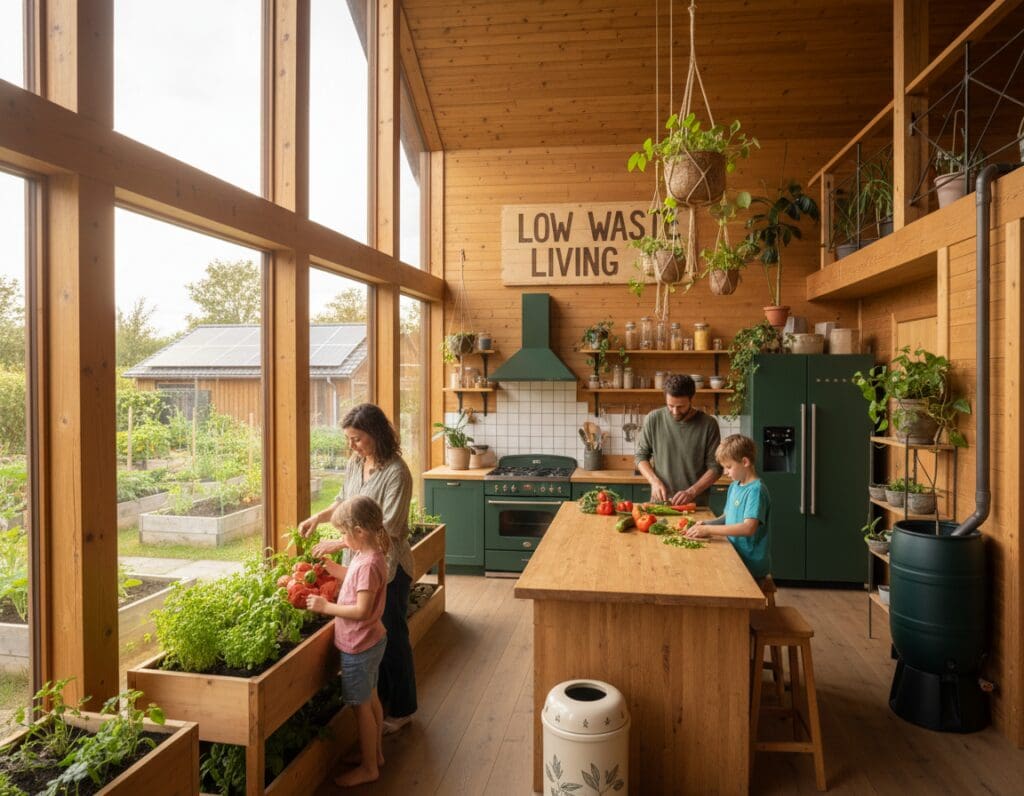
Sustainable home living means changing everyday habits, making practical home improvements and choosing products that lower your environmental impact. It covers small actions, like switching to LED bulbs, and larger steps, such as improving loft insulation or installing solar panels. These moves can cut household emissions, reduce bills and make homes more resilient to changing weather.
Why it matters in the UK is clear. Domestic energy use and water consumption are major parts of a household carbon footprint. The UK Government and the Climate Change Committee both point to home efficiency and waste reduction as some of the most cost‑effective ways to shrink emissions. Better efficiency also improves indoor air quality and long‑term comfort.
The rest of this article follows simple guiding principles: reduce energy demand through efficiency and behaviour, switch to low‑carbon energy, minimise waste by reducing, reusing and upcycling, conserve water and adopt design and lifestyle changes that last. These principles make a low-carbon home practical for flats in London, terraces in Manchester or cottages in the Cotswolds.
This guide is aimed at UK homeowners, renters and anyone planning renovations. It mixes easy wins—everyday eco-friendly home tips you can use tomorrow—with long‑term investments such as better insulation or renewable tariffs from firms like Octopus Energy and Bulb. Where helpful, it draws on trusted UK sources such as the Energy Saving Trust, Ofgem and National Trust advice, and on appliance guidance from British Gas to keep choices realistic and effective.
Practical energy-saving tips for homes
Small changes can cut bills and shrink your carbon footprint. This section sets out clear, practical steps for better home performance, from improving insulation to adding renewable home energy systems. Use these tips to make fast wins and plan larger upgrades that boost comfort and value.
Improve insulation and draught-proofing
Adding cavity wall insulation or loft insulation reduces heat loss and can improve typical U-values, cutting energy use and lowering bills in line with Energy Saving Trust guidance. Solid-wall insulation gives bigger gains in older homes and often larger bill savings.
There are grants and schemes that help pay for work. The Boiler Upgrade Scheme supports low-carbon heating and some local authorities offer grants for low-income households. Check eligibility before you commit.
Practical draught-proofing tips include sealing gaps around windows and doors with draught excluders, fitting secondary glazing or heavy curtains and insulating floors and skirting boards. Common sources of draughts are letterboxes, keyholes and poorly sealed window frames. Simple fixes such as foam strips, brush seals and door thresholds deliver quick comfort and savings.
Airtightness must be balanced with ventilation. Without fresh air you risk damp and poor indoor air quality. For deep retrofits, consider mechanical ventilation with heat recovery (MVHR) to retain warmth while keeping air healthy.
Efficient heating and cooling strategies
Heating makes up the largest share of UK household energy use. Smart thermostat programming with systems like Hive or Nest and zoning the house to heat only occupied rooms will reduce waste and improve control.
Upgrading to a high-efficiency boiler or choosing a low-carbon alternative such as an air-source or ground-source heat pump UK installers can fit will cut emissions. The Boiler Upgrade Scheme offers support and MCS accreditation shows installers follow industry standards.
Small behaviour changes matter. Lowering the thermostat by 1°C often trims bills, thermostatic radiator valves help control room temperatures and annual servicing keeps systems efficient. For cooling, use passive methods such as shading, reflective blinds, planting and cross-ventilation before turning to energy-intensive air conditioning.
Choose energy-efficient appliances and lighting
Use the current UK energy labels to pick top-rated models. High-impact items include fridge-freezers, washing machines, tumble dryers and dishwashers. Brands such as Bosch, Siemens and Samsung offer efficient ranges available from major UK retailers.
Adopt energy-wise habits: run full loads at 30°C, use eco cycles, line-dry where possible and defrost freezers regularly. These steps extend appliance life and cut consumption.
Switch to LED lighting for lasting savings. LED lighting uses far less energy and lasts longer than older bulbs. Add smart lighting controls and sensors to avoid wasted light in empty rooms.
Incorporate renewable energy
Roof-mounted solar panels UK systems provide on-site generation and pair well with battery storage to increase self-consumption. Solar thermal can help with hot water. Payback depends on roof orientation, household demand and system size.
Community energy projects and local authority schemes let households without suitable roofs access renewable home energy through cooperatives or shared installations. These models widen access to benefits.
Current export options include the Smart Export Guarantee where suppliers may pay for exported electricity. Always use MCS-accredited installers and consult your energy supplier when planning a system. Pairing solar with a home EV charger and battery storage can reduce transport emissions and make the most of daytime generation.
sustainable home living
Living sustainably at home starts with small, practical changes that add up. Focus on day-to-day choices that cut waste, lower bills and protect local water supplies. These steps fit easily into family routines and work with UK systems and services.
Reduce, reuse and upcycle within the household
Begin with the waste hierarchy: refuse what you do not need, reduce what you buy and repair items before replacing them. Aim to buy less packaged goods and select durable products that last. Follow your local council guidelines for recycling and separation to maximise the benefits of curbside collections across the UK.
Use upcycling ideas UK to give furniture a second life. Paint dressers, fit new handles and reupholster chairs to avoid landfill. Visit a Repair Café or donate to the British Heart Foundation to extend an item’s life and keep quality goods in circulation.
Prevent food waste by planning meals, batch-cooking and using apps such as Olio or Too Good To Go for surplus items. Compost kitchen scraps at home or use the council food waste collection to create garden-ready compost rather than sending organics to landfill.
Mindful consumption and purchasing choices
Buy second-hand from charity shops, eBay, Vinted or Facebook Marketplace to reduce demand for new production. Choose products with trusted ecolabels like FSC for timber and Soil Association for food. These choices support lower embodied carbon and longer product lifecycles.
For clothing, favour natural fibres and repair garments rather than discarding them. Use local textile recycling points and charity schemes to pass on unwanted items. When redecorating, pick low-VOC paints from brands such as Little Greene or Farrow & Ball to improve indoor air and extend the life of walls.
Adopt sustainable shopping for food by buying seasonal, local produce and cutting meat consumption. Support community-supported agriculture (CSA) and certified organic producers to strengthen local supply chains and reduce transport impacts.
Water conservation at home
Household water use can be cut dramatically through simple habits. Take shorter showers, turn off taps while brushing and run washing machines only with full loads. These actions are core to creating a low-water household and cost very little to implement.
Fit water-saving devices such as aerated taps, low-flow showerheads and dual-flush or 4/2 litre toilets. Brands like Twyford and Aqualisa supply widely available options for UK homes. Small fixes, like cistern displacement devices, bring immediate savings.
Consider rainwater harvesting for garden use and explore greywater reuse UK where regulations and space allow. Proper installation matters, so consult certified installers and check local building rules before adapting systems.
In the garden, favour drought-tolerant planting, use mulch to retain soil moisture and employ smart irrigation. These steps cut mains water demand while keeping outdoor spaces healthy and resilient.
Design and lifestyle changes to support long-term sustainability
Adopt a whole-house approach when planning a low-carbon home renovation. Start with fabric improvements — solid insulation, draught-proofing and high-performance windows — then address heating, ventilation and finally renewables. Refer to recognised UK standards such as Passivhaus, BREEAM Domestic Refurbishment and retrofit guidance from the Centre for Sustainable Energy to shape effective decisions.
Choose materials with low embodied carbon and proven lifecycle benefits. Timber from certified sustainable sources, recycled cellulose or mineral wool insulation, and low‑VOC paints help create a healthy indoor environment. Follow UK Green Building Council recommendations and consider lifecycle assessment when selecting finishes and furnishings for eco-friendly interior design.
Design homes to reduce travel and share resources. Fit secure bike storage, plan for homeworking space and favour locations with good public transport to lower commuting emissions. Get involved in community energy projects, tool libraries and car clubs to amplify local impact and make a long-term sustainable lifestyle easier and more affordable.
Embed new habits that lock in savings: meal planning, efficient laundry routines and regular servicing of heating systems all compound benefits. Check available UK incentives such as the Energy Company Obligation and the Boiler Upgrade Scheme, and study case studies from the National Trust and the Centre for Alternative Technology for practical examples of sustainable home design and passive house UK projects. Start with one or two actions and build steadily towards a resilient, low-carbon home.