
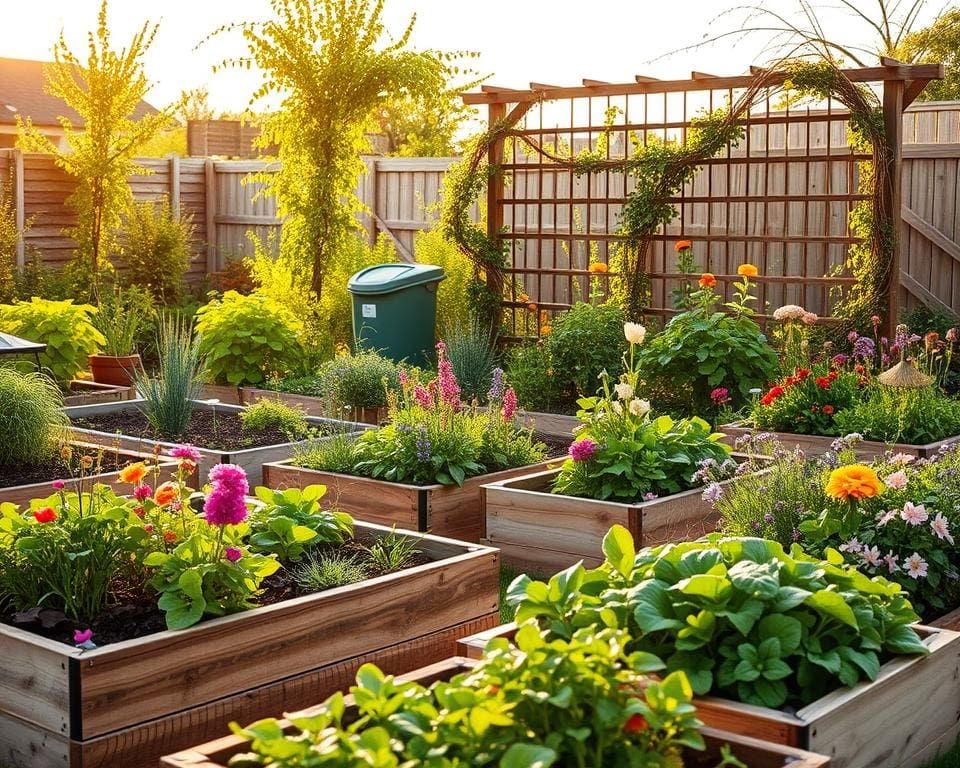
Making your garden more eco friendly is about small changes that add up. This guide offers practical, inspirational green garden tips for gardeners across the United Kingdom. It focuses on sustainable gardening UK practices that support wildlife, conserve resources and create a lovely outdoor space year-round.
UK gardens sit in a temperate maritime climate, so native species such as hawthorn (Crataegus monogyna), silver birch (Betula pendula) and native wildflowers do particularly well. The Royal Horticultural Society and the Woodland Trust both recommend native hedging and wildlife-friendly planting to boost biodiversity in towns and suburbs. These sources inform the environmentally friendly garden approaches we outline here.
There are clear benefits to low-impact gardening. You can attract pollinators, birds and amphibians, reduce your carbon footprint by mowing less and using fewer chemicals, save water and improve soil health. Research from the RHS and The Wildlife Trusts highlights how domestic gardens form vital links in urban biodiversity networks and improve wellbeing through contact with nature.
This article is arranged in four parts: sustainable planting choices, waterwise and soil-friendly maintenance, natural pest management and garden features that enhance biodiversity. That order helps you move from initial planting decisions to long-term care and habitat creation.
To begin, do a quick site audit of light, aspect and soil type. Map features to keep, such as mature trees and hedges, and spot microhabitats like sunny borders or corners suitable for a pond. Set one achievable goal, for example converting a lawn strip to a wildflower patch this year. These simple steps are effective first moves toward sustainable gardening UK and other eco friendly garden ideas.
The tone here is practical and encouraging. Try incremental change, join local seed swaps or wildlife groups, and buy from trusted British native plant nurseries or consult RHS plant lists. With modest effort and the right green garden tips, any plot—large or small—can become an environmentally friendly garden that supports nature and delights the household.
Practical eco friendly garden ideas for sustainable planting
Creating an eco friendly garden starts with clear, practical steps you can take this season. Choose plants that suit your soil and aspect, plan for structure across the year and invite pollinators in. These sustainable planting ideas help gardens thrive while supporting local wildlife.
Native species matter because they are adapted to the UK climate and soils and provide familiar food and shelter for native insects and birds. The RHS and The Wildlife Trusts recommend native hedging such as hawthorn, blackthorn and hazel and native trees like oak and birch for long-term benefit.
Match plants to garden conditions. For shady corners try foxglove, primula vulgaris and wood anemone. For sunny dry soils choose wild thyme, knapweed and scabious. For wet or boggy patches consider marsh marigold and meadowsweet.
Source stock from reputable native-plant nurseries and use the RHS plant selector to avoid invasive non-natives. Be cautious with species known to spread, such as montbretia and some non-native cotoneaster.
- Buy plug plants or small plugs for rapid establishment.
- Use wildflower seed mixes matched to soil type.
- Establish hedgerows rather than fencing to create wildlife corridors.
Creating layered planting and year-round habitats
Layered planting copies natural systems by combining canopy trees, shrubs, herbaceous plants, groundcover and climbers. This layered planting gives nesting, foraging and shelter at many heights for birds and invertebrates.
Plan for seasonal provisions. Include spring blossom such as hawthorn and blackthorn, summer nectar sources like lavender and buddleia lochinch, and autumn fruit from holly or cotoneaster alternatives. Add winter berries such as rowan and pyracantha for scarce months.
For year-round garden habitats keep some structure in winter. Use evergreen hedges for shelter, seed-bearing perennials and native grasses for winter food, and early bulbs like snowdrops and native crocus for late-winter pollinators.
- Group plants in drifts to make foraging efficient.
- Create shelter belts and log piles for invertebrates.
- Allow dead wood and leaf litter in parts of the garden to support fungi and decomposers.
Planting for pollinators and beneficial insects
A pollinator-friendly garden needs continuous forage from early spring to late autumn. Plant a succession of blooms including native spring-flowering species, long-blooming perennials and nectar-rich shrubs.
Choose strong performers such as borage, lavender, foxglove, verbena bonariensis, red campion and comfrey. Herbs like thyme and rosemary are excellent for bees and hoverflies.
Provide nesting and shelter. Install bee hotels for solitary bees, leave patches of bare ground for ground-nesting species and keep undisturbed grass margins for beetles and spiders. Include a shallow water source for butterflies and hoverflies.
- Avoid double-flowered cultivars that lack pollen and nectar.
- Adopt pesticide-free management to protect beneficial insects.
- Combine these approaches for a cohesive, wildlife-friendly planting scheme that meets sustainable planting ideas across every season.
Waterwise gardening, soil health and eco-friendly maintenance
Small changes in how you manage water, soil and pests can transform a garden into a resilient, wildlife-rich space. Embrace practices that save water, build living soil and favour natural pest control to create a productive plot that suits the UK climate.
Rainwater harvesting and efficient irrigation
Capture roof run-off with water butts linked to downpipes. A 200–300 litre butt suits most homes. For larger needs, consider a tank positioned near vegetable beds to cut pumping costs and runoff. Check UK Building Regulations and local council grants for permitted installations and possible financial help.
Use drip irrigation or soaker hoses on raised beds to deliver water straight to roots. Mulch beds with bark or leaf mould to reduce evaporation. Water at dawn or dusk and use a simple soil moisture meter to avoid overwatering. In exposed sites, plant drought-tolerant perennials and reduce lawn area to support waterwise gardening UK.
Design rain gardens or swales in low spots to hold stormwater temporarily. Fill them with moisture-loving native plants to filter pollutants and help groundwater recharge. Permeable paving and green roofs play a role in slowing runoff and supporting a healthy urban water cycle.
Building healthy soil naturally
Soil is the foundation of any thriving garden. Good structure, high organic matter and active life—from earthworms to microbes—improve nutrient cycling and drought resilience. Healthy soil cuts the need for artificial fertilisers.
Add quality compost regularly and sow green manures such as clover or vetch to fix nitrogen. Mulch with shredded bark or leaf mould and adopt no-dig or reduced-dig methods championed by gardeners like Charles Dowding, which preserve soil life and structure.
Test texture and pH with simple kits before adding lime or sulphur. Use organic-approved feeds such as bone meal or seaweed when required. Home composting and local schemes help close the nutrient loop; many councils promote composting UK options, and Bokashi works well in flats for kitchen waste.
Natural pest management and reduced chemical use
Follow integrated pest management (IPM) principles: prevent problems, monitor regularly and choose physical or biological controls before chemicals. Rotate crops in vegetable plots and interplant to break pest cycles and confuse hungry insects.
Attract predators like ladybirds and lacewings with insectary plants such as umbellifers and cosmos. Provide refuges for frogs and hedgehogs to boost biological control. Use pheromone traps, netting or fleece as targeted physical barriers.
When treatment is needed, pick targeted, UK-approved options such as neem oil, insecticidal soaps or Bacillus thuringiensis for caterpillars. Reduce pesticides by tolerating minor leaf damage and mowing less to increase wildflowers that feed beneficial insects.
These combined approaches support waterwise gardening UK, strengthen soil with healthy soil tips and favour natural pest control. They lead to gardens that need fewer inputs and offer richer habitats for wildlife.
Garden features that enhance biodiversity and reduce environmental impact
Adding a pond for wildlife instantly lifts garden biodiversity features. Even a small wildlife pond or container pond attracts amphibians, dragonflies and water beetles, and offers drinking water for birds. Design shallow edges for hatchlings, plant native marginals such as iris, water mint and marsh marigold, and avoid stocking fish that will eat invertebrates. Fill with rainwater when you can and disturb the margin as little as possible; trim invasive species in season and leave some vegetation to overwinter insects.
Native hedgerows and living fences outperform close-board panels for wildlife garden features UK. Mix hawthorn, blackthorn, field maple and hazel and plant in staggered rows to build structure over time. Include hedgehog highways — 13 by 13 cm holes in boundary fencing — to let mammals move between gardens, and link green corridors with neighbours or community projects supported by the Woodland Trust to boost connectivity.
Structural shelters and nest sites are key to a thriving plot. Fit bird and bat boxes to RSPB and Bat Conservation Trust guidance, siting them at the right height and aspect and avoiding direct sun. Create log piles, brash heaps and rockeries to host fungi, beetles and centipedes; vary the stage of decay to support many species. Add invertebrate hotels and bare soil patches for solitary bees and ground-nesters, but maintain and replace bee hotels correctly to prevent parasite build-up.
Sustainable garden design reduces carbon and protects nocturnal life. Choose permeable paving, reclaimed stone and FSC-certified timber for decking and seating, and prefer low-carbon paving where possible. Cut night-time lighting, use motion-sensor LEDs if needed, and power pumps with solar where practical. Join local wildlife gardening groups, take part in Plantlife surveys or use iNaturalist to monitor change — community action and citizen science help measure how garden biodiversity features convert good intentions into lasting gains.