
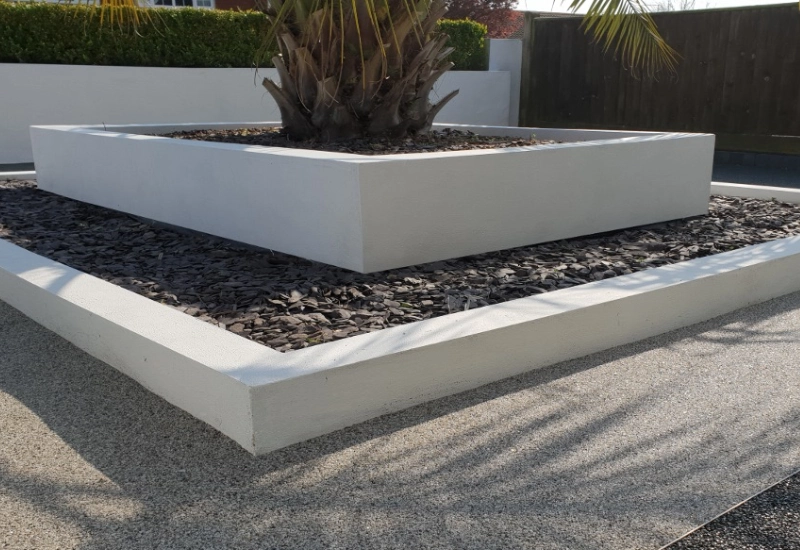
A pour on gravel binder is a liquid resin system designed to stabilise loose gravel by binding individual stones together on site. In practice, installers pour or trowel a measured resin solution for binding stones over a prepared aggregate bed. As it cures, the mix forms a durable, wear‑resistant matrix that keeps the natural texture and colour of the chosen stone while creating a flatter, more stable plane.
The main benefits are clear: a long lasting resin bound gravel finish that limits stone migration and dust, improves accessibility for wheelchairs and pushchairs, and cuts ongoing maintenance such as regrading or topping up. Correctly specified and installed, the surface looks like compacted natural gravel locked in situ and suits driveways, garden paths, patios and low‑traffic communal areas.
Suppliers and specialist installers listed on theresinbondedslabcompany.co.uk provide materials and guidance across the UK. UK formulations take account of cooler temperatures and wet weather, so cure times and mixing ratios are adjusted seasonally to ensure reliable performance. Remember that base preparation, accurate resin‑to‑stone ratio and suitable PPE and mixing equipment are essential for a successful installation.
Pour on gravel binder
A pour on gravel binder is a fluid resin formulated to seep into loose aggregate and lock stones together as it cures. Its core purpose is to stabilise gravel surfaces while keeping the natural look of loose stone. This approach suits driveways, garden paths and patch repairs where you want less dust and reduced stone scatter without a full surface replacement.
Definition and core purpose
The product is usually a low-viscosity, two-part resin designed to penetrate contact points between stones. Once mixed and poured, the resin hardens to bind the aggregate, reducing potholing and rutting. It protects the sub-base from contamination and creates safer walking areas while preserving permeability when the formulation and stone grading allow.
How pour on systems differ from resin bound gravel and resin bonded finishes
Resin bound gravel involves pre-mixing resin and aggregate to create a fully coated, interlocked surface with a smooth, anti-slip feel. Resin bonded finishes see loose stones broadcast onto a resin-coated base, leaving many stones only superficially attached. Pour on systems sit between those methods. A low-viscosity resin solution for binding stones is poured over laid aggregate so that contact points are coated and stabilised without fully encapsulating every piece.
This middle ground can retain a looser visual texture than resin bound gravel while offering stronger adhesion than typical resin bonded finishes. Work can be faster and less costly than a full resin bound installation, making pour on systems a practical remedial option for scattered or patchy areas.
Common materials and formulations used in pour on gravel binder solutions
Typical binder chemistries include polyurethane resins, epoxy-resin blends and specialised aliphatic formulations tuned for UV stability and flexibility. Suppliers supply two-part kits with clear guidance on pot life and cure times. Single-pack products exist for small repairs and pour on gravel binder DIY on theresinbondedslabcompany.co.uk gives basic options for homeowners, though performance varies with product choice.
Aggregates are usually washed crushed stone, pea shingle or angular gravels graded to about 2–6 mm for good interlock and permeability. Additives such as flow modifiers, UV stabilisers and curing agents help tailor performance for external conditions. Following technical data sheets and manufacturer instructions ensures consistent results and long-term durability.
How a pour on gravel binder works to stabilise loose gravel surfaces
Understanding how a pour on gravel binder transforms loose stone into a durable surface starts with preparation. The right base and edging keep the system locked in place. Correct mixing and application let the resin bind the aggregate and create a stable, long‑lasting finish suitable for driveways, paths and patios.
Preparation steps for a stable base
Begin by assessing the existing surface for contaminants, organic matter and weeds. Measure aggregate depth and check whether the sub‑base needs repair. A compacted Type 1 MOT or crushed stone sub‑base is typical for domestic driveways and should be compacted with a plate compactor to achieve uniform levels and falls for drainage.
Install robust edge restraints such as concrete kerbs, timber edging or factory resin borders to prevent lateral movement. Place graded, frost‑resistant aggregate at the recommended depth and compact lightly so the bed is firm yet porous enough for the resin to penetrate. Prime porous or contaminated substrates to prevent resin loss and ensure a consistent cure.
Application process: mixing, pouring and levelling
Two‑part resins require accurate proportioning and thorough mechanical mixing. Use slow‑speed mixers to reduce air entrainment and follow manufacturer ratios to avoid uncured pockets. Work in manageable bays determined by pot life and ambient temperature.
Pour the mixed resin evenly across the prepared aggregate. Use squeegees, trowels or spiked rollers to work the resin into stone interstices, checking that the surface stays level and the texture remains consistent. Remove excess resin where needed to maintain the desired finish.
Observe health and safety rules. Wear gloves, eye protection and suitable respirators when specified. Ensure good ventilation and follow COSHH guidance for hazardous components during any DIY gravel binder for landscaping project.
Curing, permeability and long-term performance
Cure times vary with formulation, temperature and humidity. Tack‑free times can range from one hour to a day. Full mechanical strength may take several days. Refer to supplier cure charts to plan access and vehicle use.
Permeability depends on aggregate grading and resin volume. When specified correctly, a pour on gravel binder can create a permeable surface that allows surface water to drain through to the sub‑base, helping meet SuDS requirements in the United Kingdom.
Long‑term performance hinges on preparation and resin quality. Premium aliphatic polyurethanes and high‑grade epoxies resist UV, freeze–thaw and oil staining better than lower‑end chemistries. Routine sweeping and occasional local topping extend service life.
Typical failures and how correct application prevents them
Common problems include de‑bonding, surface cracking, stone loosening and sinkage. These often stem from poor sub‑base work, inadequate edging, wrong resin‑to‑stone ratios or application in unsuitable weather.
Prevention is straightforward. Follow manufacturer guidance for base preparation, use the correct aggregate grading, keep mixing ratios accurate and only install within recommended temperature ranges. Robust edging and proper drainage reduce lateral movement and settlement. Skilled installers cut the risk of failure, but a careful DIY pour on gravel binder installation can produce equally reliable results when the steps are followed precisely.
Benefits and applications for driveways, paths and patios
Stabilising loose stone transforms a messy forecourt into a purposeful surface. A pour on gravel binder gives a neat finish that looks intentional and lasts.
Durability and long lasting resin bound gravel finish advantages
A cured resin surface spreads loads and cuts wear compared with loose gravel. That means fewer hollows, less stone scatter and reduced trip hazards under normal domestic traffic.
Professional installations of pour on or resin-bound systems can endure for many years. Lifespan depends on resin quality, correct installation and how much traffic the area sees.
Homeowners can choose from many aggregates and colours to match local architecture. The result is a bespoke long lasting resin bound gravel finish that suits traditional or contemporary schemes.
Permeable gravel surface system and drainage benefits
When graded and laid properly, a permeable gravel surface system lets rainwater pass through into a permeable sub-base. This reduces surface run-off and lowers pressure on sewers.
Permeable installations support SuDS aims and cut standing water, which helps prevent freeze–thaw damage. Better drainage prolongs the surfacing and keeps paths safer in winter.
Eco friendly gravel binder solution considerations
Choose resins with low VOCs and UV-stable chemistry to reduce environmental impact. Some suppliers provide mixes that use recycled aggregate to lower embodied carbon.
Stabilising existing stone avoids full removal and replacement. This saves materials, reduces waste and is an effective eco friendly gravel binder solution for many garden projects.
Dispose of unused resin and contaminated waste according to local hazardous-waste rules. Suppliers such as those serving UK contractors offer guidance on safe handling and compliance.
Use cases: gravel binder for driveways and paths, garden paths and patios
- Driveways: improved tyre traction, reduced stone scatter and support for cars and light vans when built on a proper sub-base with gravel binder for driveways and paths.
- Garden paths and patios: safe, attractive walking surfaces that are simple to maintain using gravel binder for garden paths and patios.
- Communal and commercial areas: suitable for low-traffic shared spaces and landscaped forecourts where a natural stone look is needed.
- Remedial projects: pour on gravel binder works well for patch repairs without full resurfacing, making targeted upgrades quick and cost-effective.
DIY considerations and professional options, with local resources
Deciding between a DIY gravel binder for landscaping and hiring experts depends on skill and scale. Small repairs and test patches suit a competent DIYer, but full driveways or areas with steep falls, heavy vehicle use or detailed drainage should be left to professional gravel binder installers. Assess your confidence with measuring, mixing and working to pot life before you commit to a larger job.
Tools and safety matter. DIYers need accurate scales, mechanical mixers, squeegees, spiked rollers, compaction equipment and appropriate PPE. Choose purpose-made pour-on kits and read the technical data sheets; single-pack products can be easier but often trade off longevity compared with two-part systems. For step-by-step advice and product options, resources on theresinbondedslabcompany.co.uk explain kit choices and provide supplier contact details.
When a site is complex, accredited installers bring value. They can specify and construct the correct sub-base, handle drainage design and carry public-liability insurance. Look for installers with trade membership, solid portfolios and clear warranties. Request site visits and quotes from professional gravel binder installers to compare costs for labour, base-work and edging against the price of DIY kits.
Practical preparation and planning improve outcomes. Always run a small trial patch to check colour and cure, schedule work for a dry, mild weather window, and set a simple maintenance plan of regular sweeping and debris removal. For training, installation guides and lists of approved contractors, check theresinbondedslabcompany.co.uk and the technical helplines of leading resin manufacturers before you start.