Converting an attic into living space transforms unused volume into practical rooms. Homeowners across the UK choose attic conversion to add bedrooms, a home office, playroom, ensuite or rental accommodation without the upheaval of moving.
Attic renovation often costs less than full ground-floor extensions and can be completed faster. A well planned loft conversion UK can boost resale value, increase usable floor area and, when insulated correctly, improve thermal performance.
Not every loft is ready to convert. Suitability rests on head height, whether the roof has rafters or trusses, access options and the floor’s load-bearing capacity. Early feasibility checks by a structural engineer or experienced builder save time and expense.
Typical approaches include rooflight or Velux-style conversions, vertical or horizontal dormers, mansard conversions and hip-to-gable extensions. The right choice depends on roof form, planning constraints and the internal volume you want to create.
Costs vary: a straightforward rooflight conversion sits at the lower end, while full dormer or mansard conversions demand higher budgets and longer timescales. Simple projects can take a few weeks; complex works with structural changes and services may take several months.
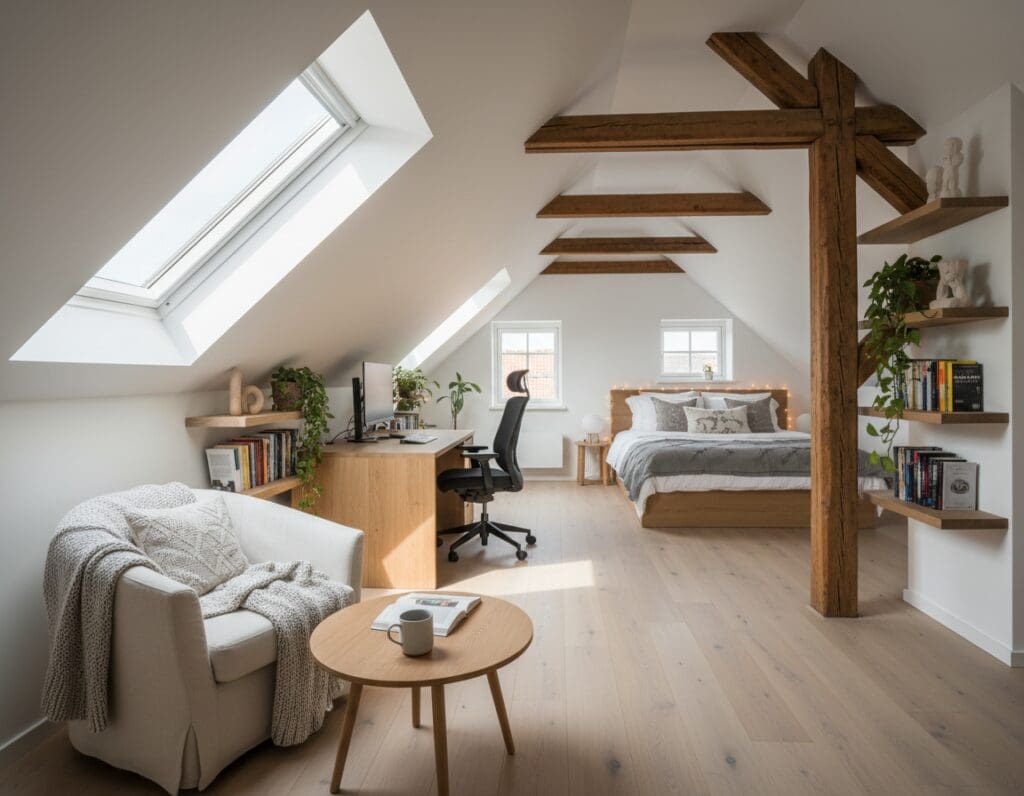
Think of an attic as an opportunity to create light-filled, characterful rooms tailored to lifestyle needs. Whether you want a calm study, a luxurious master suite or flexible family space, the right loft extension ideas can make the most of that hidden storey.
attic conversion ideas for maximising space and light
Transforming an attic into usable living space calls for a clear plan that balances structure, daylight and comfort. Start by measuring loft head height and mapping beam positions. Those early checks shape whether you can maximise attic space with simple roof windows or need larger interventions such as dormers or a mansard.
Assessing head height and structural suitability
Building regulations and practical guidance suggest a minimum loft head height of around 2.2–2.3 metres for comfortable living zones. You can still make lower sections useful for storage, seating or built-in beds to avoid wasted volume.
Distinguish between trussed roofs and rafter roofs. Trussed roofs often limit floor layout and may require cutting and strengthening. Rafter roofs tend to be easier to convert, with fewer structural changes.
Stairs need careful placement to meet headroom rules above steps. Loft ladders are unsuitable for permanent living spaces. Expect to strengthen floors and add joists or steels to meet floor loading and to allow for heating, plumbing and electrics.
Choosing the right roof window and dormer options
Roof windows offer a less invasive route to extra light. They preserve the external look, cost less and suit projects with limited headroom. Brands such as VELUX provide a wide range of roof windows with integrated blinds and ventilation options.
Dormer ideas include flat-roof, gable-fronted and hipped dormers. Dormers increase floor area and headroom, create space for seating or storage and improve usable layouts. Larger solutions such as mansard or hip-to-gable conversions maximise floor area but often need planning permission and greater structural work.
Place windows to capture morning or evening sun while avoiding overheating. Remember means of escape and ventilation rules when choosing sizes and positions.
Open-plan layouts versus compartmentalised rooms
An open-plan loft feels spacious and lets daylight travel from roof windows across the floor. An open-plan loft suits living, study and sleeping zones if acoustic and heating strategies are planned.
Compartmentalised rooms work better for bedrooms, nurseries and bathrooms where privacy is crucial. Use partial-height partitions, pocket doors or fitted furniture to keep a sense of openness without full enclosures.
Hybrid solutions give the best of both worlds. Sliding screens, shelving and small level changes define zones while preserving airflow and light.
Using light colours, mirrors and glazing to enhance brightness
Choose pale, warm neutrals and reflective paints to bounce daylight into corners. Satin or eggshell finishes produce subtle depth without glare.
Place mirrors opposite roof windows to double perceived window area and to channel light into darker recesses. Reflective surfaces on cabinetry and tiles help distribute brightness further.
Select slim-profile frames and low-iron glass for clearer views. Glazed partitions keep rooms bright while maintaining thermal efficiency. Ensure glazing solutions include thermal breaks to meet energy-efficiency standards for a successful light loft design.
Practical considerations: planning, insulation and building regulations
Turning an attic into a comfortable living space feels exciting. Pause to check the rules, safety needs and technical details that will shape your project. Early planning saves time, keeps costs down and protects neighbour relationships.
Understanding permitted development and planning permission in the UK
Many loft works fall within permitted development, yet larger dormers, mansard conversions or projects on protected land often need formal planning permission. Restrictions include no extension beyond the plane of the existing roof slope on the principal elevation facing a highway and volume limits that vary by house type.
Check current local guidance before you start. Speak to your local planning authority early and consult the Planning Portal for up-to-date advice. Use pre-application meetings to clear likely obstacles and to speed up decision times.
Fire safety, means of escape and party wall issues
Fire safety must guide design choices. Building regulations for lofts require fire-resistant doors, protected stair routes and interlinked mains-powered smoke and heat alarms. Fire-stopping between joist cavities reduces spread and preserves escape routes.
Means of escape may demand rooflights sized and sited for secondary escape or a protected route to a final exit. Stair geometry should follow building control guidance to avoid costly retrofits.
Works that affect shared walls or structural elements often fall under the Party Wall etc. Act 1996. If the party wall act applies, serve notices, appoint a surveyor and agree a party wall award before starting onsite work.
Insulation, ventilation and condensation control
Meeting thermal standards calls for the right choice of loft insulation. Options include warm roof insulation within the roof structure, cold roof insulation between ceiling joists and insulated dormer cheeks and roofs. Typical materials are PIR, mineral wool and specialist spray foams where suitable.
Ventilation plays an equal role. Trickle vents and mechanical extract for kitchens and bathrooms reduce condensation risk. In airtight designs, MVHR systems can balance heat recovery with fresh air supply.
Use continuous vapour control layers to avoid interstitial condensation and eliminate cold bridges at junctions. Where a cold roof is chosen, ensure adequate eaves and roof ventilation to protect timber and insulation performance.
Hiring structural engineers and qualified contractors
A structural engineer produces calculations, specifies steels and checks foundations for dormers or mansard conversions. Their drawings are essential for building control approval and safe construction.
Choose contractors who belong to recognised trade bodies such as the Federation of Master Builders or hold TrustMark endorsement. Verify Public Liability and Employers’ Liability insurance, request references and view recent loft conversion work before you appoint a team.
Building control can be handled through the local authority or an approved inspector. Expect inspections at foundation, structural, fire escape and insulation stages, with a final completion certificate once the building regulations loft checks are satisfied.
Designing comfortable attic living spaces and specialist ideas
A comfortable attic bedroom can be both practical and poetic. Position plumbing stacks close to existing soil pipes for attic ensuite ideas and choose compact sanitaryware to save space. Walk-in showers or wet-room finishes work well where slight floor gradients can be accommodated, and recessed lighting plus skylights keep the space bright and calm.
Built-in storage is essential in lofts. Use recessed wardrobes, under-eaves drawers and bespoke cabinetry as small loft storage solutions that follow sloping ceilings and free up floor area. Tailored joinery makes a master suite feel organised and luxurious without losing head height or light.
For work and creative life, plan a thoughtful loft office design or studio. Locate rooflights to maximise daylight, especially north-facing glazing for steady artist-friendly illumination, and add acoustic treatments such as insulated partitions and floating floors. Integrate data points, ample sockets and heating so a home office stays comfortable year-round.
Consider specialist loft concepts for extra income or family flexibility. Self-contained units with separate access, a compact kitchenette and an ensuite can function as rental pods or annexes, subject to planning and Building Regulations and Council Tax rules. For intergenerational living, use flexible partitions, adaptable furniture and strong sound insulation to balance privacy with shared household needs.
Finally, choose heating, lighting and finishes to enhance comfort. Extend central heating or add underfloor systems where possible, or opt for heat pumps and electric radiators if easier. Layer lighting with ambient downlights, task lamps and LED accent strips, and favour lightweight engineered timber or insulated boards with soft carpets for warmth and sound control. A bespoke, site-specific approach — exposed timbers, feature rooflights and curated storage — turns constraints into a cosy, light-filled retreat.