You are witnessing a rapid shift in the future of retail as in-store technology changes how you shop and how retailers operate. From contactless payments to smart mirrors, the retail technology trends of 2026 and beyond are already visible in stores across the United Kingdom and worldwide.
The scope of this article covers four practical areas you will notice in stores: the in-store customer experience, back-of-house efficiency, data and AI-driven personalisation, and omnichannel integration with IoT and sustainability measures. We focus on technologies already in commercial use or at an advanced pilot stage, such as contactless payments, smart mirrors, inventory robots, automated warehouses, customer data platforms and IoT-enabled energy management.
Market signals explain why these retail innovations UK matter. Mobile commerce and contactless adoption surged during COVID-19, and UK government statistics show continued growth in digital payments. Major retailers including Tesco, Sainsbury’s and John Lewis are investing in pilot projects, while shoppers expect greater convenience and tailored offers.
For you, the expected outcomes are tangible: faster, more seamless checkout; improved stock availability and fewer out-of-stocks; personalised promotions and smarter recommendations; and lower operational costs through automation. Retailers also aim to reduce their carbon footprint with efficient energy use and smarter supply chains.
There are regulatory and privacy considerations you should know. Data protection under UK GDPR, Payment Services Regulations for payments, and accessibility rules shape how in-store technology can be used, and transparent consent is essential when customer data is collected or analysed.
The next sections will examine in-store experience technologies, automation and back-of-house innovations, data and AI capabilities, and omnichannel IoT and sustainability strategies in detail, so you can see how retail tech 2026 will affect both shoppers and the industry.
Retail technology trends transforming the in-store experience
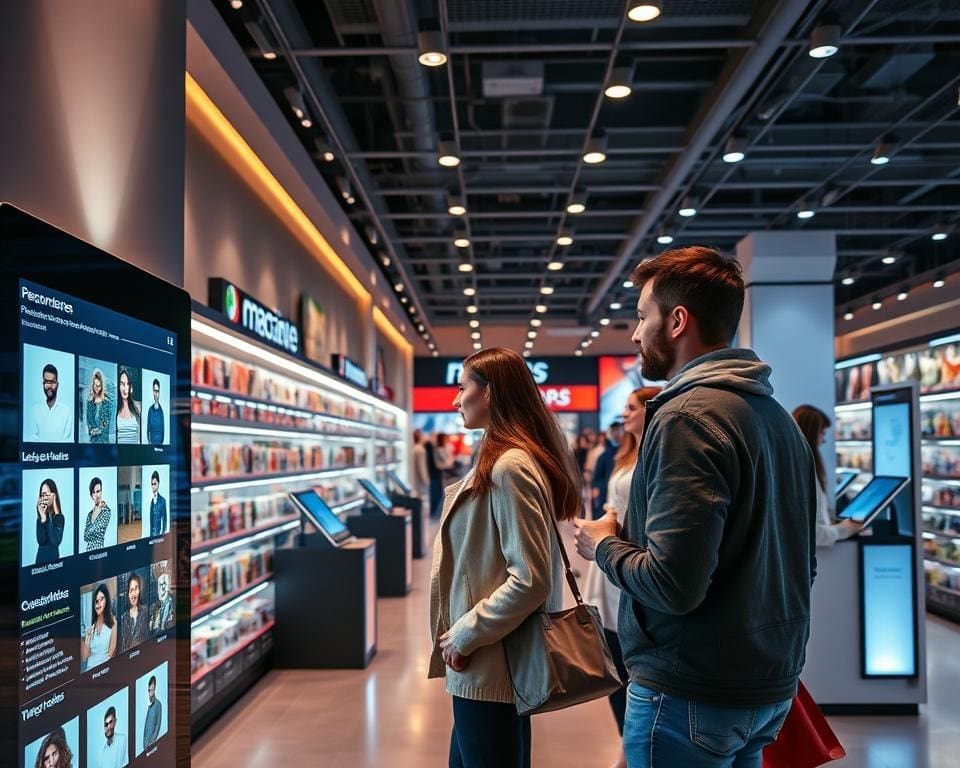
You are seeing a wave of practical tech that changes how you shop. Retailers in the UK blend fast payments, immersive trials and smart guidance to make visits quicker and more personalised. These trends cut friction at the till, improve confidence when you try products and help staff focus on service.
Contactless payments and mobile wallets
Contactless payments UK are now routine across supermarkets, high street stores and independents. Apple Pay, Google Pay and Samsung Pay speed transactions and meet expectations for fast, hygienic checkout. You benefit from reduced queue times, higher basket turnover and fewer abandoned impulse buys.
Wearables that pay, tokenisation for security and NFC-linked loyalty are the next steps. Retailers must update terminals to EMV standards and tune fraud controls. Integration with loyalty and CRM systems helps you apply offers automatically at the point of sale.
Smart mirrors and virtual try-on
Smart mirrors retail deployments let you mix garments or test make-up without touching products. Zara and Sephora have trialled systems that overlay looks using in-store cameras and augmented overlays.
You get faster decisions and less handling, which cuts returns and improves store hygiene. Retailers gain data on fit and preferences, but they face hardware costs and privacy questions. Staff training and links to inventory are needed so you can reserve items or buy instantly from the fitting room.
Augmented reality for product visualisation
Augmented reality retail tools let you place furniture and décor in your home via an app or in-store tablet. Solutions used by global brands allow you to preview scale and style before you commit, increasing purchase confidence and lowering returns.
AR works best when 3D models are accurate and environment mapping performs on common UK devices. Retailers combine online previews with in-store confirmation or QR-triggered experiences on packaging for a smooth omnichannel journey.
In-store navigation and personalised promotions
In-store navigation now uses Bluetooth beacons, Wi‑Fi RTT and visual markers to guide you to products and trigger targeted offers. Supermarkets and large retailers trial aisle locators and wayfinding to save time and direct you to deals.
Personalised promotions rely on location signals plus your profile to push relevant discounts or show dynamic offers on shelf-edge screens. Clear opt-in and gentle messaging are essential for trust. When done well, measurement shows uplift in dwell time, average order value and cross-sell rates.
Automation, robotics and back-of-house efficiency
You will find that retail automation is reshaping the back of store operations. Robots and automated systems tackle repetitive tasks so your staff can focus on service and exception handling.
Inventory robots and shelf-scanning systems
Autonomous devices from vendors such as Bossa Nova and Simbe autonomously patrol aisles to perform shelf scanning. These inventory robots check stock levels, spot misplaced items and verify pricing faster than manual rounds.
In UK shops you can schedule routine daytime or nightly scans to get near-real-time visibility. Alerts to your inventory management system or ERP trigger replenishment, cutting out-of-stocks that dent sales and customer trust.
Metrics such as scan accuracy, shelf uptime and labour hours saved demonstrate ROI. Integration with existing systems supports automated purchase orders and tighter forecasting.
Automated warehouses and fulfilment centres
Fulfilment centre robotics, including Autostore-style grids and shuttle systems inspired by Amazon Robotics, speed picking for click-and-collect and home delivery. Conveyor networks and robotic shuttles increase throughput while using less floor space.
Major UK fulfilment operators and supermarkets invest in automated warehouses UK to handle surges in e-commerce. The outcome is faster order fulfilment, lower error rates and improved storage density.
You should weigh capital expenditure, retrofit complexity and workforce reskilling when planning a rollout. Hybrid workflows work well: robots handle storage and transport while people perform complex picks and quality checks.
Self-service kiosks and cashierless checkouts
Self-service kiosks and cashierless checkout technologies remove friction at the till. Touchscreen kiosks, self-service checkout islands and computer-vision or RFID-driven cashierless checkout let customers leave without a traditional transaction.
Benefits include lower labour costs, faster throughput and extended service hours. Retailers such as Sainsbury’s have trialled cashierless concepts in convenience formats to test customer acceptance.
Challenges remain around theft prevention, accessibility and adoption among older shoppers. Clear signage and visible staff support help ease the transition as customer service roles shift from scanning to assistance.
Data, AI and personalisation in retail
You can unlock richer customer journeys by bringing data, machine learning and in-store systems together. A clear strategy starts with a single view of the customer, then uses retail AI to serve timely offers and accurate forecasts that reduce waste and raise sales.
Customer data platforms and unified profiles
A customer data platform UK helps you merge interactions from point of sale, e-commerce, loyalty schemes and marketing into one unified profile. Vendors such as Salesforce, Adobe and Treasure Data are used by large retailers to manage identity resolution, matching email, phone and loyalty IDs so you see a complete picture.
With clean, GDPR-compliant data and consent management, you can activate real-time experiences on the shop floor and via email. The unified view makes cross-channel offers more relevant and improves lifetime value measurement.
AI-driven recommendations and dynamic pricing
Recommendation engines use machine learning to suggest products based on browsing, purchase history and contextual signals like seasonality and location. Retailers such as ASOS and Next use personalised suggestions online and in marketing to lift conversion.
Dynamic pricing systems adjust prices near real-time using demand, inventory and competitor data. You can apply this to promotions, markdown optimisation and yield management for perishables in supermarkets. Maintain transparency and comply with UK consumer rules to avoid unfair or discriminatory pricing and protect brand trust.
Predictive analytics for demand forecasting
Predictive analytics demand forecasting blends past sales, promotions, weather and local events to forecast SKU-level demand for each store and day. Accurate forecasts cut overstocks and stockouts, so you order smarter and reduce waste in fresh categories.
Better forecasts improve lead-time planning, dynamic safety stock and omnichannel fulfilment accuracy. Focus on data quality, explainable models for planners and smooth integration with replenishment systems to make forecasts operational and trusted.
Omnichannel integration, IoT and sustainability
You expect a seamless experience whether you browse online or visit a High Street store. Omnichannel retail now ties together click-and-collect UK, ship-from-store and returns-in-store so inventory visibility and pricing feel consistent. Unified commerce platforms, API-driven inventory services and order orchestration engines make that possible, and you’ll notice stores like John Lewis and Boots leaning on these models to speed fulfilment.
Your local store increasingly acts as a fulfilment hub. Staff receive multichannel training, KPIs shift toward fulfilment speed and accuracy, and IT teams focus on real-time stock visibility. These operational changes reduce missed sales and let you choose the most convenient fulfilment option without friction.
IoT retail tools improve both operations and the customer experience. Fridge and freezer sensors keep temperature logs for compliance, smart shelving detects stock by weight and Philips Hue-style lighting systems feed into smart energy management. Electronic shelf labels and smart signage allow centralised price updates and faster promotions while network segmentation and patch management keep devices secure.
Technology also advances retail sustainability. Better demand forecasting and route optimisation cut waste and emissions, while smart energy management and LED controls reduce consumption. Supermarkets use dynamic markdowns and donation partnerships to limit food loss, and fashion retailers integrate repair and resale services into their commerce systems to support circular retail. Measurement of Scope 1–3 emissions and clear reporting help you see real progress and reward greener choices.
Combined, omnichannel integration, IoT and a focus on retail sustainability form a virtuous cycle: improved data and automation lower costs and environmental impact while enhancing the experience you receive in-store and online. Prioritise interoperable systems, GDPR-compliant data handling and inclusive design so technology benefits all shoppers across the United Kingdom.