
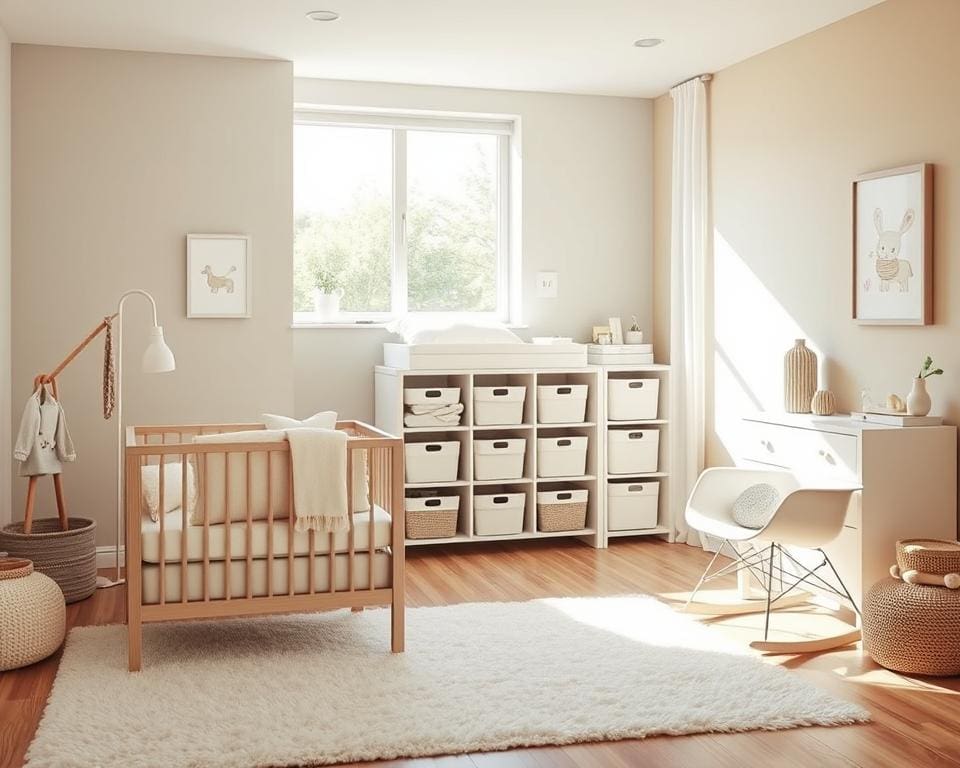
Creating a modern nursery that looks calm and functions well matters for new parents across the UK. Clean lines, muted palettes and Scandinavian or mid-century touches are hallmarks of stylish nursery design, but style must sit alongside practical nursery storage to make daily life easier.
This short guide helps you assess your space, pick adaptable furniture and style storage so it stays attractive. You will learn nursery storage ideas for newborns and toddlers, and how to maintain good nursery organisation UK‑wide.
Babies come with many small items: clothes, nappies, feeding kit, toys and blankets. Storage needs change quickly, so choose accessible, washable and safe solutions to cut stress and save time.
In British homes you often work with smaller rooms than in some new builds elsewhere. Maximising vertical space, opting for compact pieces and following child‑safety guidance—such as anchoring tall units to walls—are key considerations.
Follow this simple action plan as you read on: assess your needs, choose furniture that adapts, style storage to match your décor and apply space‑saving solutions for small nurseries. These steps will help you build a practical nursery storage system that also feels like a stylish nursery design.
Essentials of planning a modern nursery with storage in mind
Good nursery planning starts with clear measurements and a simple plan. Take the room’s length, width and ceiling height, note windows, doors, radiators and sockets, then mark safe walkways. Photograph cupboards and drawers to spot shortages. Use a tape measure and a quick sketch or an app template to record where natural light falls so you can place activity areas with ease.
You should complete a storage assessment to list items and how often you use them. Count daily essentials such as nappies and wipes, feeding kit and clothing changes. Note larger items like a pushchair, Moses basket or car seat and group toys by frequency of use. Decide what needs immediate access and what can be archived in boxes for out-of-season clothes or keepsakes.
Think about how needs change as your child grows. Newborns require frequent changes and small clothes. Toddlers need more toy and book storage. Plan modular solutions that adapt over time so you avoid buying everything twice.
Assessing your space and storage needs
Start with a room survey. Measure and map sockets, windows and radiators. Mark safety zones and escape routes. Note where daylight falls during different times so you can set nursery zones that make sense.
Inventory stored items by quantity and frequency. Use separate lists for daily essentials, feeding and larger equipment. Photograph problem areas to help with later decisions. That visual record guides a focused storage assessment and reduces impulse buys.
Setting a storage-first layout: zones for sleeping, changing and play
Create clear nursery zones for sleeping, changing and play. Position the cot away from windows and draughts. Place the changing area near nappies, wipes and spare clothing so you cut motion and time.
Keep a comfy feeding chair within sight of the cot. Put toy storage in view so you can supervise play. For small square rooms, place the cot on the longest wall and the changing table by the door. In narrow rooms, put the cot at the far end and use vertical storage along one wall. For attic rooms, fit low units under the eaves and add wall shelves higher up.
Always maintain clear escape routes and avoid blocking radiators. Use sockets with shutters near feeding chairs and secure cords out of reach for added safety.
Budgeting for built-in versus freestanding storage
Decide between built-in vs freestanding storage by weighing cost, flexibility and look. Fitted joinery maximises space and gives a seamless finish. It suits awkward alcoves but costs more and cannot be moved.
Freestanding pieces from retailers like IKEA, John Lewis or Habitat are more affordable and adaptable. Basic dressers and shelving can start from £50–£250. Higher-quality multifunctional items such as cot beds and changing dressers often range from £200–£800. Fitted projects may cost several hundred to several thousand pounds depending on scale.
Consider a hybrid approach. Invest in a solid, convertible cot or a durable changing dresser and complement them with affordable bins, wall shelves and a flat-packed wardrobe. Think about resale value when you choose solid wood items.
Plan purchases around your nursery budget UK. Prioritise safety and multifunctionality. Buy essentials first and phase additional storage as your needs become clearer.
Smart furniture choices for a modern nursery
Choosing smart furniture makes your nursery feel calmer and works better for daily life. Pick items that grow with your child, save floor space and hide clutter. Below are practical options to consider when you plan layout and purchases.
Convertible and multifunctional pieces
Investing in convertible nursery furniture extends the life of key items. A cot bed from brands like Stokke, Silver Cross or Mamas & Papas will convert from a cot to a toddler bed and sometimes to a day bed. This gives better value than a single-use cot and reduces waste.
Changing dressers that combine drawers with a secure changing top save space by consolidating storage and changing needs in one footprint. You can find sturdy options at IKEA, John Lewis and Next. When buying, check the cot bed UK models meet British Standard BS EN 716, look for adjustable mattress heights and confirm conversion kits and instructions are included.
Choose FSC-certified wood or sustainably sourced materials where possible. Pick non-toxic finishes and verify paints meet safety standards. For changing dressers, make sure changing tops attach securely and surfaces are easy to clean.
Choosing compact seating with hidden storage
You will spend time feeding and settling your baby, so seating comfort matters. Select nursery seating with storage to keep blankets, burp cloths and nappies close at hand. Storage ottomans, benches with lift-up lids and armchairs with under-seat compartments reduce clutter.
Look for compact gliders or rocking chairs with slim arms and practical dimensions for smaller rooms. Retailers such as DFS, Marks & Spencer and Loaf offer upholstered benches and ottomans. Nursery specialists like Little Green Sheep and Snuz provide gliders and nursing chairs designed for feeding comfort.
Prioritise removable covers, washable fabrics or wipe-clean upholstery to cope with spills. Stain-resistant finishes and zip-off cushions make maintenance simple.
Wall-mounted options to free floor space
Wall-mounted nursery storage keeps the floor clear and creates a neater feel. Consider floating shelves for books, wall-hung cabinets, peg rails and rail systems with hanging baskets. Low-level shelves help toddlers reach books independently.
Installation needs care. Use fixings suited to stud or plasterboard walls and anchor heavier units to studs. Secure shelving with child-safe brackets and respect load limits. Avoid placing heavy items above the cot or changing area to reduce risk.
Shop modular systems from Muuto or String for a Scandinavian look, use affordable IKEA pieces like the LACK shelf or KALLAX with wall mounting, or commission bespoke joinery for awkward spaces. Wall-mounted nursery storage works well near changing stations when paired with a wall rail for nappies and creams.
Styling tips that keep storage practical and attractive
Good nursery styling balances calm aesthetics with everyday function. Choose a restrained palette and tactile finishes so your storage blends into the scheme while staying hard-wearing. Small choices make routines quicker for you and gentler on the room as your child grows.
Colour palettes and finishes that disguise clutter
Pick neutral, muted tones such as soft greys, warm beiges, sage greens or dusky pinks. These colours create a peaceful backdrop and disguise clutter by reducing visual contrast.
Use high-contrast accents like navy or ochre sparingly to add character without drawing attention to mess. Textured paints, matt finishes and washable emulsion hide marks better than glossy surfaces.
Consider laminate or lacquered finishes on lower furniture for easy wiping. Subtle geometric or botanical wallpapers distract the eye from small untidiness. Natural fibres such as rattan and seagrass bring warmth and conceal dust and wear.
Follow popular British trends such as Scandinavian-minimal and Japandi, choosing tones that match multifunctional furniture to extend the look as the child grows.
Using baskets, bins and boxes as decorative storage
Woven seagrass baskets, fabric collapsible bins and clear lidded boxes cover most needs. Open baskets keep daily items handy, while covered boxes store bulky bedding or seasonal clothing.
Place a nappy caddy in easy reach at the changing area and use stackable boxes inside drawers to sort tiny clothes. Reserve larger covered bins for blankets and out-of-season items to reduce visual clutter.
Natural fibre baskets add texture but can fray; fabric bins in cotton or canvas are machine-washable or wipeable. Clear plastic options from brands such as Really Useful Boxes let you spot contents fast and are widely available in the UK.
For decorative storage with retail options, check John Lewis, Dunelm, The Basket Company and MADE for styles that suit modern nurseries.
Label systems and easy-access organisation for busy parents
Simple nursery labelling speeds up routines and helps partners or carers find items quickly. Label systems prevent overfilling and make rotation easier when clothes no longer fit.
Use washable marker labels on fabric bins and adhesive vinyl labels on clear boxes. Chalkboard stickers suit changeable contents. A compact label maker from Dymo or Brother creates neat printed tags.
Create practical zones by grouping items by function and frequency: daily, weekly and archive. Build a ready nappy kit for each changing station and keep an out-the-door container for dummies, muslins and a spare outfit.
Set phone reminders for laundry rotation and clothing checks so storage stays accurate. These small habits improve organisation for parents and keep your decorative storage working beautifully.
Space-saving storage solutions for small nurseries
Make the most of every centimetre by planning vertical nursery storage first. Fit full-height shelving or a tall slim wardrobe to free floor space, and always anchor tall units to the wall to meet safety guidance. Use floor-to-ceiling peg rails, ladder shelving or open shelves for lightweight items, keeping heavier boxes lower down to reduce the risk of tipping.
Under-cot storage is an easy win in a nursery for small rooms. Choose purpose-built under-cot drawers or low-profile rolling boxes and check mattress‑height settings so storage does not affect safety or airflow. Clear rolling boxes from IKEA or storage drawers found on Amazon make contents visible, while fabric drawer organisers help separate clothes by size. Brands such as Snuz offer nursery-specific under-crib drawers if you prefer a tailored option.
For tiny rooms, select dual-purpose and hidden solutions to cut clutter. Consider slim-profile cot beds with integrated drawers, fold-down changing shelves, hanging wardrobes and over‑the‑door organisers for nappies and wipes. Install a slim shelving tower between studs or a radiator-top shelf to use narrow gaps, and use the back of doors for hanging organisers to keep essentials within reach.
Optimise corners, eaves and awkward angles with corner shelving, triangular book nooks or corner-mounted baskets. For sloped ceilings, adapt modular systems such as IKEA BESTÅ or KALLAX into bespoke low units that fit beneath the slope. Keep things manageable with practical maintenance: declutter every three months, rotate toys, use washable liners and label clear containers. Quick checklist: measure and plan vertical first, exploit under-cot and corner areas, choose multifunctional pieces and maintain a seasonal rotation to avoid storage overload.