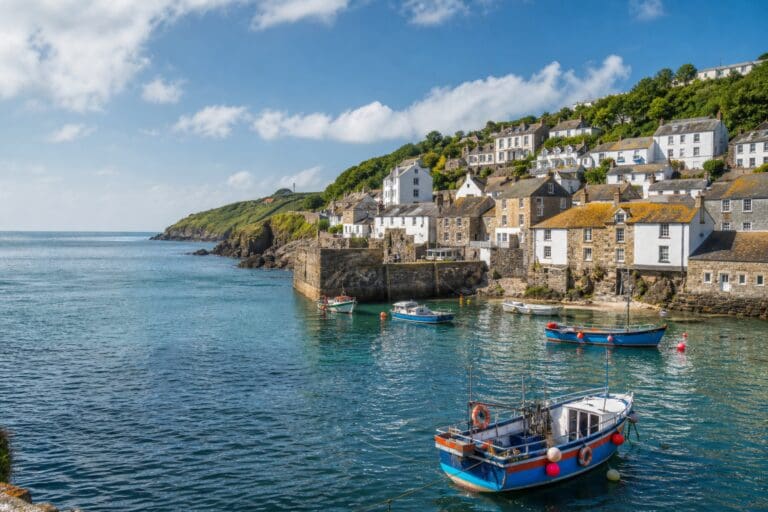
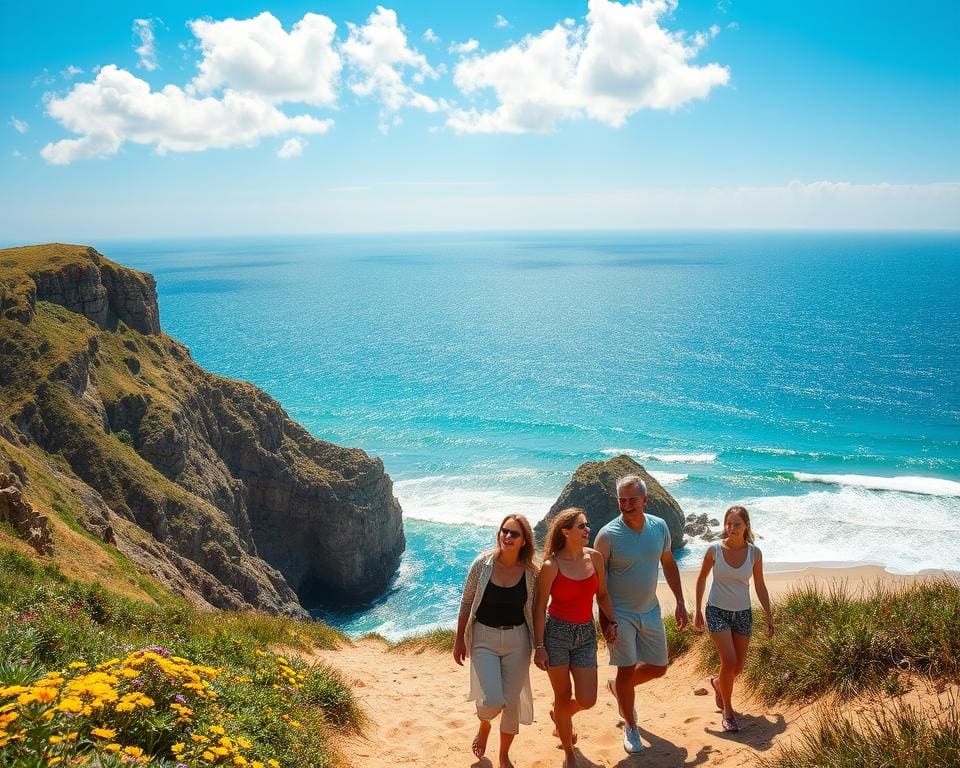
Cornwall is a top choice for coastal holidays Cornwall lovers cherish. With over 400 miles of coastline, you can move from long sandy bays to dramatic cliffs and secret coves in a single day. The Gulf Stream keeps the climate milder than much of the UK, so your Cornwall beaches stay inviting for longer into spring and autumn.
You will find something for every taste. Families can pick safe bathing beaches, couples can enjoy golden sunsets, and surfers can test world-class breaks. Walkers will love the clifftop paths while wildlife fans can watch seals and seabirds. Coastal seaside breaks here combine relaxed days on the sand with cultural draws such as the galleries and maritime museums of St Ives.
Getting here is straightforward. Direct trains run to Penzance and the St Ives branch line offers a scenic approach, while the A30 and A39 connect key towns. Ferries link to the Isles of Scilly in summer. Accommodation ranges from campsites and self-catering cottages to boutique hotels and cosy B&Bs, so your Cornwall holiday guide will help you pick what suits your group and budget.
Seasons change the mood. Summer is best for swimming and watersports, spring and autumn are quieter for walking and wildlife, and winter brings dramatic storm-watching and snug pubs. Travel off-peak if you want fewer crowds and better value for your Cornwall seaside breaks.
In short, Cornwall offers variety, easy access and genuine English coastal charm, making it a reliable choice for memorable coastal holidays Cornwall visitors return to again and again.
Cornwall coastal holidays: beaches, bays and surf
Cornwall’s coastline offers a mix of golden sands, sheltered bays and wild headlands. This makes it easy to pick a shore that suits your plans. You will find calm coves for paddling, blue-flag stretches with cafes and lively breaks for surfing.
Top beaches for families and peace-seekers
Fistral Beach at Newquay is famous for waves and surf culture, yet it still has long sand stretches and good facilities. Newquay Surf School and local hire shops make Cornwall surfing accessible for learners.
Perranporth provides vast sand for sandcastles and paddling, with vehicle access on parts of the beach. Watergate Bay has wide sands, family-friendly cafés and activities suitable for all ages.
Gyllyngvase Beach in Falmouth sits in a sheltered harbour with a promenade and amenities that appeal to family visitors. Kynance Cove on the Lizard Peninsula feels remote in shoulder seasons, offering pebble shelves and tidal pools to explore.
Praa Sands and Porthcurno are excellent for calmer water and dramatic scenery. Porthcurno lies near the Minack Theatre, making it easy to combine beach time with culture. Before you travel, check tide times and on-site facilities such as parking, toilets and cafes to plan a smooth day out.
Surfing, water sports and activity centres
Newquay and Watergate Bay are national hubs for Cornwall surfing, with established surf schools and rental shops. You can book lessons and hire boards quickly in peak season.
Stand-up paddleboarding and sea kayaking are popular around St Ives and Padstow, where calmer waters suit beginners. Coasteering often runs from Polzeath and north-coast locations for adventurous groups.
You can find sea-fishing charters from Padstow, Falmouth and Newlyn. Many centres run RYA courses and provide safety briefings, so you gain confidence before heading out. If you want lessons or kit hire in July and August, book ahead to avoid disappointment.
Safety, lifeguards and best times to visit
Look for beaches with RNLI patrols and swim between the red and yellow flags. Lifeguards Cornwall-wide mark safe zones in summer. Learn to spot rip currents and ask lifeguards about local hazards before entering the water.
Check RNLI notices, Met Office weather updates and tide forecasts before you go. Late spring to early autumn, May–September, offers warmer sea temperatures and more services. For fewer crowds with mild weather pick April–June or September–October.
Winter draws visitors who want storm-watching and dramatic seas, but lifeguard cover is limited and some facilities close. When to visit Cornwall coast depends on your priorities: calmer family days or big-surf thrills. Plan bookings for surf lessons and kit hire well in advance if you travel in high season.
Explore coastal towns and picturesque villages
You can base your holiday in a lively harbour or a quiet fishing village. St Ives Cornwall blends golden beaches like Porthminster with a thriving arts scene and Tate St Ives. Wander boutique shops, see galleries and eat by the harbour for a cultured seaside break.
Padstow Cornwall is famous for its food. The harbour remains at the heart of town life. You can book a seafood meal, join a boat trip or enjoy seasonal food events that celebrate local crab and lobster.
Falmouth Cornwall offers deep maritime roots and family attractions. The National Maritime Museum Cornwall sits beside a vibrant harbour. Sailing, tidal walks and nearby beaches such as Gyllyngvase give you plenty of daytime choices.
Newquay acts as Cornwall’s surf hub. Surf schools and a lively nightlife make it a natural pick for younger groups and active visitors. Expect packed beaches in summer and a friendly, sporty atmosphere year-round.
For a quieter pace, explore coastal villages Cornwall such as St Mawes and Fowey. These harbour towns Cornwall provide ferry links, boutique shops and access to the Roseland Peninsula. You can combine short walks with relaxed dining and local craft stalls.
Traditional fishing settlements like Mousehole, Port Isaac and Polperro show Cornwall’s old charm. Narrow streets, scenic harbours and coastal paths make these spots ideal for short excursions and photography.
Plan for practicalities. Parking can be limited at popular harbours in peak season. You will find useful bus services from First Kernow and seasonal ferries between towns such as Fowey to Polruan. Bike hire is widely available if you prefer to cycle between nearby villages.
Food and culture enrich your stay. Try a Cornish pasty, a cream tea or locally caught seafood. Visit markets, art galleries and maritime museums to learn about fishing heritage and local crafts while you explore.
Wildlife, nature reserves and scenic coastal walks
Cornwall is rich in biodiversity, with a network of Cornwall nature reserves, SSSIs and marine conservation areas that bring the coast to life. You can expect dramatic cliff-top views, sheltered estuaries and peaceful heathland where wildlife thrives. Use local reserve guides to plan short visits or longer walks and choose routes that suit your energy and time.
Where you go matters for what you will see. The South West Coast Path links many key sites and makes wildlife viewing easy on well-marked trails. Coastal walks Cornwall range from steep cliff routes to flat estuary promenades suitable for families and less-experienced walkers.
Keep layers to hand and wear sturdy footwear for uneven ground. Some sections of the South West Coast Path are exposed and rough. Check daylight hours, carry water and download offline maps when cell signal is patchy.
Birdwatching, seal colonies and marine life
For birdwatching Cornwall offers excellent spots managed by RSPB and local trusts. Visit the Lizard and Gwithian saltmarshes for waders and seabirds during migration. Goonhilly fringe areas hold scarce species on quiet days.
Seal colonies Cornwall are best seen at Godrevy and around the Isles of Scilly. Boats to St Mary’s often note regular haul-outs of grey seals on remote rocks. You can spot porpoises, common dolphins and basking sharks offshore in summer, while intertidal rockpools at St Agnes, Kynance and Porthcurno reveal a microcosm of marine life at low tide.
Conservation groups such as Cornwall Wildlife Trust and local marine centres run guided cruises and displays. These offer safe, educational ways to encounter local species without disturbing habitats.
Famous coastal paths and gentle walks for all abilities
The South West Coast Path includes many accessible sections. Try St Ives to Zennor for a moderate day out with views and birdlife. Falmouth to St Mawes can be paired with a short ferry crossing to break the route into manageable stages.
Padstow to Rock follows a flatter estuary line that suits families and casual walkers. On the Lizard Peninsula you will find circular routes that are shorter and less exposed. Town promenades at Fistral and Falmouth offer gentle, surfaced walks with services close by.
The Camel Trail repurposes a former railway into a mainly level route for walkers and cyclists. It’s ideal if you prefer steadier ground and easier gradients.
Best seasons for wildflower displays and wildlife spotting
Spring, from April to June, brings a wealth of wildflowers Cornwall-wide. Cliff-top thrift, gorse and early heathers brighten trails while migrant birds arrive in numbers. Days are mild and fields scent the air.
Summer is prime for marine mammal sightings and strong wildflower displays. Paths are busier, so start early if you want quieter sections. Insects are active and rockpools teem at low tide.
Autumn offers calmer paths and excellent birdwatching Cornwall for passage migrants. Late-flowering plants extend displays into October and light is softer for photography.
Winter suits those who prefer solitude and dramatic seas. Storm-watching brings seabirds close to shore and seals can be more visible. Note that some reserves limit access seasonally; guided trips run at different times of year, so check availability before you travel.
Practical tips for planning your Cornwall coastal holidays
When planning Cornwall holiday trips, book accommodation and popular activities well before July and August. If you can travel in May, June or September you’ll often find better value, fewer crowds and pleasant Cornwall weather. Bear in mind bank holidays in late May and August bring peak demand for cottages, campsites and ferry crossings.
Decide where to stay in Cornwall based on your priorities. Coastal cottages and boutique hotels suit beach access and views, while holiday parks and campsites work well for families. Town bases such as St Ives, Newquay, Padstow and Falmouth offer amenities and transport links; choose quieter spots like The Lizard or St Mawes for tranquillity and easy walking starts.
Use Cornwall transport tips to plan routes and parking. The A30 is the main driving approach but expect narrow lanes and limited village parking. Rail services reach Penzance, Truro, St Ives and Falmouth, and some towns run park-and-ride schemes. Local buses, seasonal ferries and cycle hire — with traffic-free paths such as the Camel Trail — make car-free exploration realistic.
Follow a simple Cornwall packing list for comfort and safety: layers, waterproofs, sturdy walking shoes, sun protection, swimwear and a basic first-aid kit. Check tide tables and surf forecasts via Magicseaweed or the Met Office, and heed RNLI advice before swimming. Download offline maps and save emergency contacts for coastguard and lifeboat services.
Money and connectivity are practical considerations. Many rural businesses accept cards, but small cafés and car parks may prefer cash. Mobile signal can be patchy along the coast, so plan for that when arranging meeting points or navigation. Use these Cornwall travel tips to reduce stress on the move.
Travel responsibly: leave no trace, keep your distance from nesting birds and seal haul-outs, and follow byelaws in nature reserves. Respect dog restrictions on some beaches in summer and support local fishmongers, cafés and shops to help communities prosper.
Final planning checklist for you: book accommodation and activities early for peak periods; pick a base that matches your interests; check Cornwall weather, tides and lifeguard cover; pack from the Cornwall packing list; follow Cornwall transport tips; and respect wildlife and local rules for a smoother, more enjoyable trip.