You are likely hearing more about digital twins because they change how engineering work gets done.
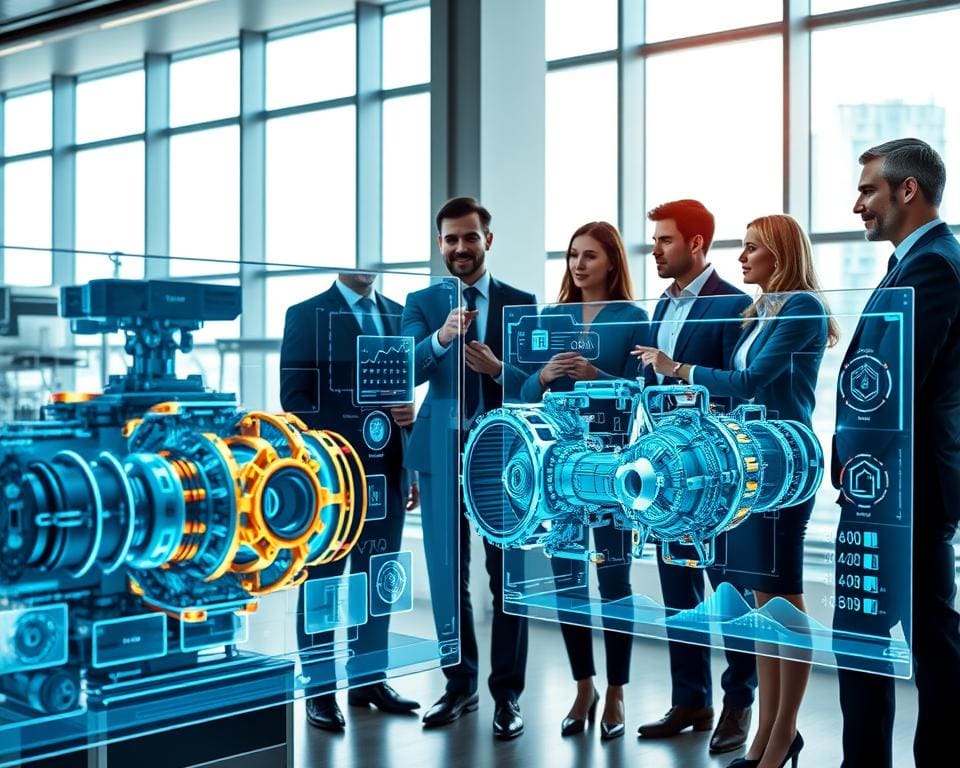
A digital twin is a dynamic, virtual representation of a physical asset, system or process. It mirrors real-world conditions by using sensor data, historical records and simulation models to stay synchronised with its physical counterpart.
For your projects, digital twin technology moves teams from reacting to issues towards proactive, model-driven decisions. That shift supports lifecycle thinking — from design and construction through operation and decommissioning — and reduces silos between disciplines.
In the UK, business drivers include cutting delays and cost overruns, meeting net-zero commitments, improving resilience to climate risks and satisfying building regulations and safety legislation. Public-sector schemes for transport and utilities increasingly reference engineering digital twin cases to show value-for-money.
Major vendors such as Siemens, Dassault Systèmes, Bentley Systems and Autodesk, and firms like Arup, Balfour Beatty and National Grid, are investing in platforms and pilots. Rapid uptake is visible in power generation, rail, airports and large-scale construction.
The digital twin benefits you can expect include faster decisions, fewer design reworks, better asset reliability, measurable energy savings and stronger assurance for stakeholders and regulators. Case studies report lower whole-life costs and improved KPIs such as availability and mean time between failures.
This article will next explain how digital twins change design and planning, the operational advantages you can realise, the technical components and data architecture behind engineering digital twin deployments, and the practical challenges, best practices and future trends to watch in the digital twin transformation.
How digital twins change design and planning workflows
Digital twin design reshapes how you move from concept to construction. By linking live data to design models, you speed up decisions, reduce rework and maintain a single source of truth for teams and contractors across a project lifecycle.
You can create high-fidelity models and test many alternatives without building physical prototypes. Virtual prototyping lets you explore structural, thermal and fluid behaviours early. This reduces cost, shortens schedules and helps you validate manufacturability before site work begins.
Virtual prototyping and rapid iteration
With virtual prototyping you run multiple design iterations quickly. Parametric tools and generative design expand the design space so you find optimal solutions within constraints.
Multi-disciplinary simulation exposes trade-offs between strength, comfort and cost. For example, wind-loading studies for bridges or thermal comfort for offices become part of routine checks, not late-stage surprises.
Digital models also lower handover friction. You can validate installation sequences and prefabrication virtually, so the workforce sees fewer clashes on site and fewer instruction queries during construction.
Integration with BIM and CAD systems
Digital twins extend BIM and CAD platforms by attaching operational metadata to static geometry. BIM integration keeps design revisions and as-built records synchronised so everyone works from the same dataset.
CAD interoperability with tools such as Revit, AutoCAD and MicroStation relies on open standards like IFC and COBie. Vendor connectors and APIs reduce manual transfers and preserve model fidelity across teams.
In UK projects, where BIM Level 2 is often required, these links help continuity from design into long-term asset management and regulatory reporting.
Scenario modelling for risk and compliance
Scenario modelling lets you simulate extreme events and regulatory cases before construction. You can test flooding, equipment failure and overheating to build resilience into the design.
Compliance modelling supports safety cases, environmental assessments and planning submissions with clear visualisations and evidence. Probabilistic analyses, such as Monte Carlo runs, quantify uncertainty and guide contingency planning.
Using scenario outputs helps you shorten approval cycles and present regulators and clients with transparent, data-backed assurance that the design meets sector standards and statutory requirements.
Operational benefits you gain from implementing digital twins
When an asset moves from commissioning to daily use, digital twin operations become central to keeping it reliable and efficient. You gain live visibility into performance, clearer routes to reduce costs and tools that help you plan work with confidence. Small, steady improvements add up across the lifecycle.
Digital twins ingest telemetry from sensors and condition-monitoring systems so you can move from calendar-based servicing to condition-based strategies. Machine learning models forecast failure modes and remaining useful life for critical parts. That lowers unscheduled downtime, extends asset life and reduces maintenance spend.
Integration with asset management platforms such as IBM Maximo or SAP EAM automates work orders and spare-parts provisioning. Rail operators and wind-farm managers use these links to schedule targeted interventions rather than broad overhauls.
Performance optimisation and energy efficiency
Continuous simulation and feedback loops let you tune plant and building systems for real operating conditions. You can model HVAC, lighting and process flows to spot inefficiencies and to apply control strategies that cut consumption and carbon output.
Commercial building managers and data centre teams report measurable reductions in energy intensity after applying insights from a digital twin. These gains support compliance with net-zero targets and strengthen business cases for retrofit investments.
Data-driven decision support for stakeholders
Digital twins give owners, operators, contractors and regulators a shared, metric-rich view to evaluate trade-offs. Dashboards and interactive visualisations make complex data accessible to non-technical decision-makers.
You can run what-if scenarios to compare whole-life costs, forecast ROI for upgrades and produce audit-ready records for procurement or insurers. Clear decision support improves transparency, raises asset availability and helps you demonstrate measurable KPIs for investment approval.
Technical components and data architecture behind digital twins
You need a clear map of the technical building blocks to deploy a reliable digital twin. This overview explains how device-level sensing, data models and compute layers fit together in practical deployments without getting lost in jargon.
Sensor networks and connectivity
Your twin depends on diverse sensor networks that capture temperature, vibration, strain, power, LIDAR scans and GPS. You will choose wired industrial buses or wireless links such as Wi‑Fi, 4G/5G and LoRaWAN depending on range, power and latency needs.
Edge gateways perform local filtering and aggregation to reduce noise and bandwidth. Secure device identity, TLS/DTLS encryption and segmented networks protect operational technology from unauthorised access.
Semantic models and interoperability
Canonical schemas and semantic data models let systems speak the same language. Standards such as IFC for buildings, OPC UA for automation and ISO 15926 for process plants create consistency across geometry, telemetry and maintenance records.
APIs, middleware and message brokers connect BIM, SCADA, EAM and GIS systems so your applications can interoperate. Robust governance for taxonomy, provenance and versioning keeps the twin trustworthy over decades.
Cloud, edge computing and real-time analytics
Cloud platforms like Microsoft Azure and Google Cloud offer scalable storage and cloud analytics alongside specialised services such as Azure Digital Twins. You can run machine learning at scale and keep long-term history in managed stores.
Edge computing complements cloud services when you need low-latency control or local anomaly detection. Streaming stacks using MQTT or Kafka and time-series databases deliver near real-time insight for operational teams.
Design your digital twin architecture for resilience, security and data sovereignty. Hybrid models let you balance multi-tenant cloud collaboration with private edge deployments to meet UK public-sector constraints.
Challenges, best practices and future trends for digital twins in engineering
You will face a set of common digital twin challenges when you start. Data quality and fragmentation from legacy systems can make models unreliable. Integration complexity arises as you link BIM, CAD, SCADA and enterprise platforms, often requiring bespoke connectors. Organisational resistance and skills gaps slow adoption; you must tackle culture change for cross-disciplinary collaboration.
Security and cost add further pressure. Connecting operational technology increases the attack surface, so robust cybersecurity and incident response are essential. Initial investment in sensors, platforms and change management can be high, which is why early wins matter to prove ROI and sustain momentum during engineering digital transformation.
Follow proven digital twin best practices to improve success rates. Start with clear use cases and measurable KPIs, such as predictive maintenance on high-value assets or energy optimisation at major sites. Adopt open standards and modular architectures—IFC, OPC UA and open APIs—to reduce vendor lock-in. Invest in digital twin governance, data ownership and routine model maintenance to keep outputs reliable.
Blend physics-based models with machine learning for more robust and explainable results. Build cross-functional teams of domain engineers, data scientists and IT/OT specialists to bridge gaps between operations and analytics. These steps make deployments practical, secure and scalable across the asset lifecycle.
Look ahead to the digital twin future trends shaping engineering practice. Expect deeper AI/ML for prescriptive maintenance and automated root-cause analysis. Federated city-scale twins will support urban planning and resilience, while marketplaces will emerge for simulation models and validated component twins. Standardisation and possible regulation, especially in the UK, will push interoperability and safety, and AR/VR will enable immersive field inspection and training.
As actionable next steps, identify a high-impact pilot, secure executive sponsorship, choose interoperable tech and define clear KPIs. Plan for scale by embedding digital twin governance, cybersecurity and skills development early, so your investment delivers sustained value across assets and projects.