
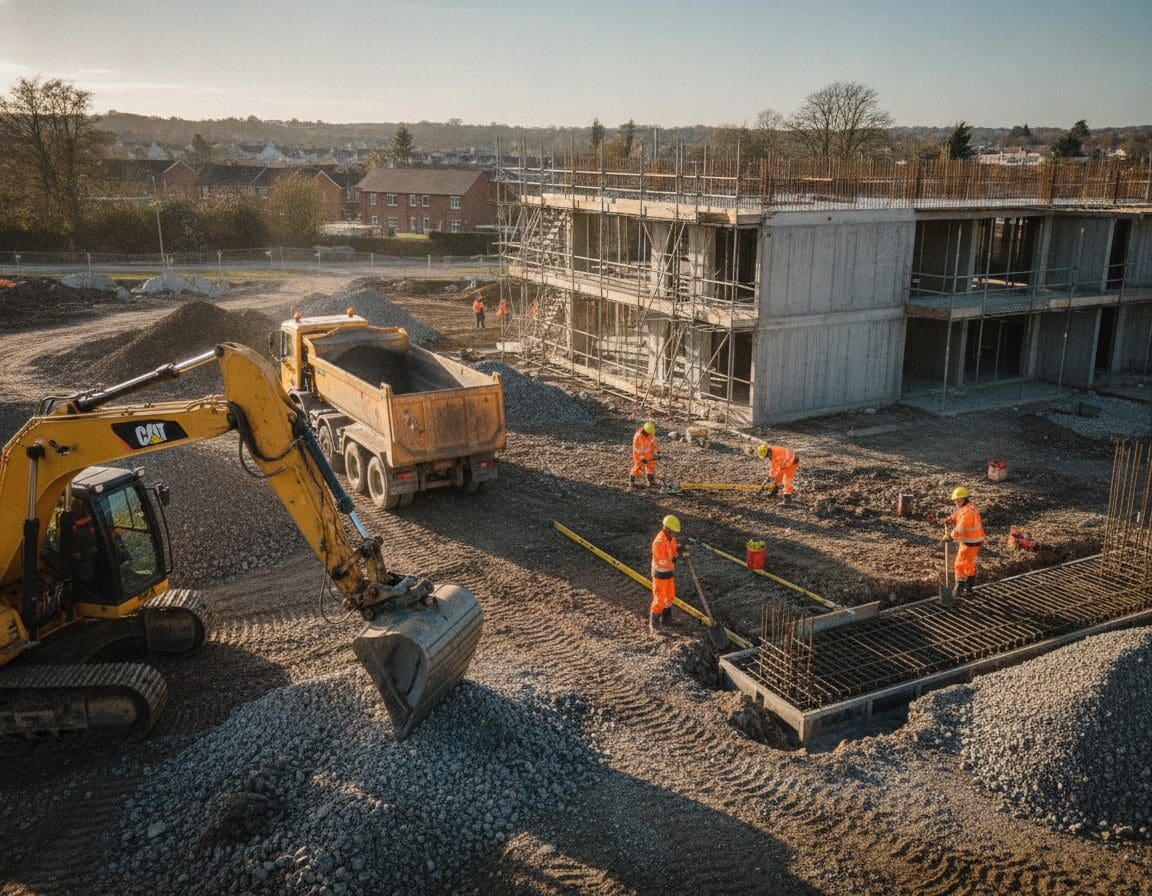
Every successful construction project starts with solid groundworks. Whether you’re building a new home, extending an existing property or developing a commercial site, the quality of the groundwork has a direct impact on the safety, stability and long-term performance of the project. From excavation and drainage to foundations and underground utilities, every stage needs to be completed with care and precision.
Choosing experienced professionals for your groundworks in Wrexham helps reduce the risk of delays, unexpected costs and structural issues later in the project. Local contractors understand the area’s ground conditions, planning requirements and construction standards, allowing work to progress efficiently while meeting all relevant regulations.
In this article, you’ll learn what professional groundwork services typically include, why they are essential for residential and commercial developments, and what you should look for when selecting a reliable contractor. You’ll also discover how careful planning and experienced workmanship create a strong foundation for every successful build.
Key services offered by professional groundworks teams
You need a clear picture of the main services that make a build reliable and on schedule. Professional groundworks teams deliver a range of tasks that set the stage for every phase of construction. These services protect budgets, reduce delays and help ensure compliance with local building regulations and drainage requirements.
Whether you’re planning a residential or commercial project, choosing experienced specialists in groundworks Wrexham provides the confidence that your site has been prepared correctly from the very beginning. From excavation and foundations to drainage and utility installation, every stage plays an important role in the long-term success of your project.
Site preparation and excavation works for new builds
- Vegetation removal, topsoil stripping and bulk excavation to formation levels.
- Creation of stable working platforms, temporary works such as shoring and battering, and accurate setting out to the engineer’s levels.
- Use of tracked excavators, dumpers and piling rigs where required, with responsible disposal or reuse of arisings to cut costs and carbon.
- Health and safety controls including exclusion zones, temporary fencing and contamination checks where applicable.
Strong foundations for every construction project
- Choice of foundations driven by the ground report: strip, raft or piled foundations, plus ground improvement techniques such as vibro‑replacement or stone columns.
- Work includes excavation, blinding, reinforcement, concrete pours, curing and backfill to structural engineer drawings and British Standards such as the Eurocodes.
- Finished outcomes manage load transfer, reduce settlement risk and provide moisture protection and damp‑proof courses when needed.
Underground utility installation and civil engineering
- Installation of foul and surface water drainage, sewer connections, potable water mains, gas and electricity ducts, telecoms ducts and attenuation systems for stormwater.
- Coordination with statutory undertakers like Welsh Water, National Grid and Openreach for connections, wayleaves and diversions, plus provision of as‑laid drawings for adoption.
- Civil tasks such as highway tie‑ins, kerbing, access road sub‑base and SUDS to control surface water and protect long‑term performance.
Concrete crushing and site clearance
- On‑site concrete crushing to produce reusable Type 1 sub‑base, segregated waste management and fewer skip movements to lower haulage costs and carbon output.
- Removal of redundant structures and foundations, contamination remediation where required, and careful handling of controlled waste under the Environmental Protection Act and Waste Duty of Care.
- Quality assurance through compaction testing, concrete strength checks and drainage hydraulics, with test certificates and commissioning reports supplied to support adoption and handover.
What you need to know about groundworks in Wrexham
Before any construction project begins, it’s important to understand what the groundwork involves. Local ground conditions, planning requirements and seasonal weather can all influence how a project is prepared and carried out. Having the right information from the start helps you avoid delays, control costs and keep your build on schedule.
This guide explains what to expect from groundworks in Wrexham, including the key factors that affect site preparation and why choosing experienced professionals is essential for both residential and commercial developments.
Local regulations and planning considerations
Wrexham County Borough Council planning and building control set key conditions that affect groundwork activity. Typical requirements include contaminated land assessments, flood risk assessments, tree protection orders and archaeology investigations. You should expect requests for evidence before approval is granted.
Permits and consents can be necessary at different stages. Planning permission or building regulation approval is often required for new builds. Highway licences cover skips and plant on public roads. Discharge permits or abstraction consents may be needed for site drainage works. Compliance with UK Building Regulations and relevant British Standards is mandatory.
Adoption and handover follow precise steps when roads or sewers are offered to Welsh Water or the highways authority. You will usually supply as‑built drawings, test certificates and maintenance records. Early discussion with the council and statutory bodies reduces delays and costly redesigns.
Ground conditions and trial hole investigations and ground surveys
Good decisions start with geotechnical site investigation. Trial hole investigations and ground surveys, such as trial pits and rotary boreholes, reveal soil layers, groundwater levels and contamination. Laboratory testing confirms strength and compressibility.
In Wrexham you may find variable soils: alluvium in low‑lying ground, glacial till or clay, and made ground on brownfield sites. High water tables or organic layers can force deeper foundations or ground improvement. A clear report should list soil stratigraphy, groundwater data, contamination screening and recommended foundation types.
Results directly influence cost and programme. Unforeseen ground conditions can mean piling, remediation or extended drainage works. You should build contingency for alternative foundation designs and extra time in your contract.
Seasonal and weather-related expectations for construction in Wrexham
The Welsh climate affects excavation, concrete curing and drainage tasks. Winters tend to be wetter and shoulder seasons can be changeable, so you need realistic schedules and buffers for weather delays.
Practical measures reduce risk. Dewatering pumps, temporary drainage, protective coverings and weather‑resistant materials help keep work moving. Contractors should plan sequencing to protect exposed soils and allow proper curing.
You should expect your groundwork team to present a site‑specific risk register and contingency plans that address seasonal and weather-related expectations for construction in Wrexham. That approach helps keep projects on track and supports the delivery of reliable groundwork services for residential and commercial sites.
What to expect from a reliable groundwork contractor
You should expect clear proof of professional qualifications, insurance and health & safety before work starts. Look for operatives with CSCS cards, NVQs for supervisors and evidence of CITB-related training. Ask for structural engineer input and CDM competent person details when design or principal contractor duties are involved.
Check that public liability, employers’ liability and professional indemnity cover are in place. Request written guarantees for workmanship and materials. Insist on site inductions, method statements, risk assessments and regular toolbox talks to show a contractor takes health and safety seriously.
Transparent quotes, timescales and communication should be part of every tender. A good quote lists preliminaries, plant and labour rates, material costs, disposal allowances and any provisional sums. It should state exclusions so you can compare like for like.
Agree realistic programme milestones up front and ask how the contractor manages dependencies such as utility connections or adverse ground conditions. Confirm variation procedures and how change control affects the programme and budget.
Expect a single point of contact, regular progress updates, photographic records and clear invoicing tied to completed milestones. When you compare tenders, check scope alignment, specification detail and included testing or certification to avoid hidden costs.
Groundwork solutions from J Wilson Contractors Ltd should cover small domestic extensions through to commercial developments. Services commonly include site clearance, excavation, foundations, drainage installation, concrete crushing and reinstatement.
Choose a contractor with local experience in groundworks in Wrexham to benefit from knowledge of planning expectations, common ground conditions and established supply chains. That local familiarity helps streamline delivery and reduce risk.
Ask for as-built drawings, test certificates and assistance with adoption processes at handover. Customer-focused aftercare and clear warranties give you confidence that reliable groundwork services for residential and commercial sites will be completed to a high standard.
Choosing the right groundworks contractor in Wrexham
Professional groundworks provide the foundation for every successful construction project. From site preparation and excavation to drainage, utility installation and site clearance, each stage plays an essential role in ensuring a safe, stable and efficient build. Investing in quality groundwork from the outset helps minimise delays, reduce long-term costs and protect the value of your development.
When selecting a contractor for groundworks in Wrexham, look for experience, recognised qualifications, comprehensive insurance and a strong commitment to health and safety. A reliable contractor will carry out thorough site investigations, provide a clear programme of works and take local planning requirements and ground conditions into account before construction begins.
Before making your final decision, compare detailed quotations, review completed projects and ask for references where possible. Established companies such as J Wilson Contractors Ltd offer a comprehensive range of groundwork services for residential and commercial developments, backed by the experience and expertise needed to deliver projects safely, efficiently and to a high standard. Choosing the right groundwork specialist gives your project the best possible start and provides a solid foundation for long-term success.