The right planter does far more than hold soil. It shapes the look of your garden, terrace, balcony or living room, and it can also support healthier plant growth. If you want to buy planters in the UK, it is worth looking beyond colour and style. Size, material, drainage, weight and the type of plant all matter. A beautiful planter should suit your space, but it should also make everyday plant care easier.
Why the Right Planter Matters
A planter is part container, part design feature and part growing environment. Choose well, and it can lift a dull corner, frame a doorway, soften a patio or bring structure to an open garden. Indoors, planters help houseplants feel more intentional, turning greenery into part of your interior style rather than an afterthought.
Practical details are just as important. A planter that is too small may restrict root growth or dry out too quickly. One without suitable drainage can leave roots sitting in water. A very heavy planter may be ideal for a windy terrace, but awkward if you like to rearrange your balcony each season.
Before choosing, think about three simple questions: where will the planter go, what will grow in it, and how much maintenance do you want? These answers will guide almost every decision that follows.
Match the Planter to Your Space
The best planter for a spacious garden may be completely wrong for a narrow balcony or warm conservatory. Start with the location, then choose shape, scale and finish.
For Gardens, Patios and Terraces
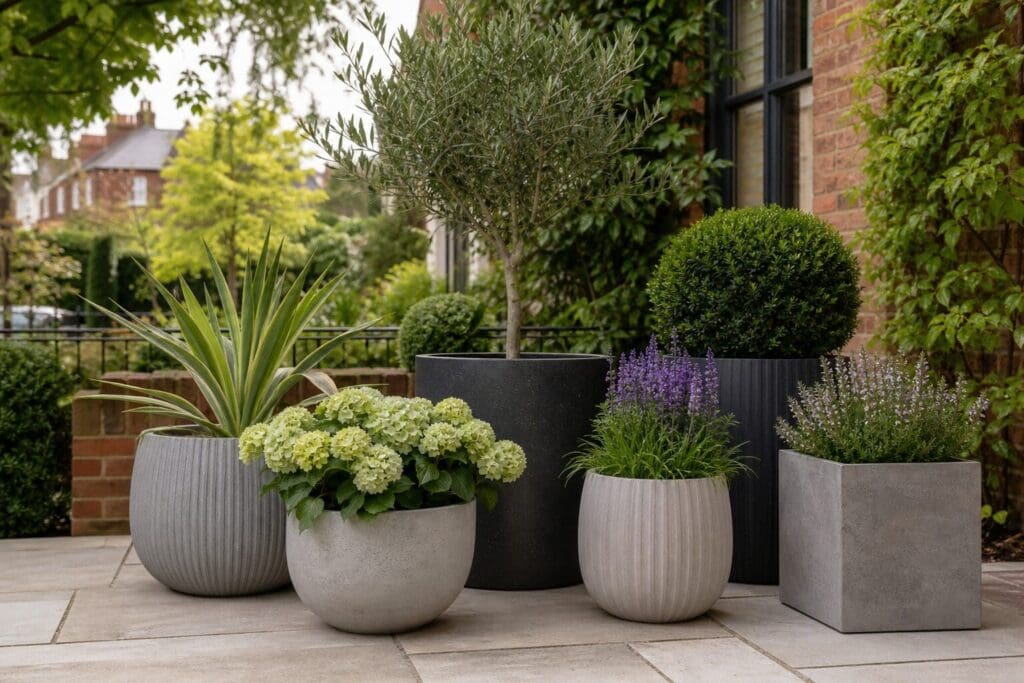
Outdoor planters need to work with the weather and the size of the surrounding area. Large gardens can carry bigger shapes, including tall planters, square planters and troughs. These can create borders, divide seating areas or give height to planting schemes.
On patios and terraces, planters are often close to furniture, doors and pathways. Leave enough room to move comfortably. A planter should enhance the space, not become an obstacle. Taller designs can add drama beside entrances, while long troughs work well along walls, fences or the edge of a seating area.
For exposed spots, consider stability. Larger, heavier planters may be useful where wind is a concern. If you are planting small trees, large ornamental grasses or bold shrubs, you will also need enough depth and width to support the roots and keep the plant balanced.
For Balconies and Small Outdoor Areas
Balconies call for careful planning. Every centimetre counts, so choose planters that give impact without crowding the space. Slim troughs, square designs and taller planters can provide greenery while keeping the floor area usable.
Weight also matters on balconies. Lightweight materials can make planters easier to move, but they should still feel stable once planted. If you like to refresh your balcony through the year, choose shapes that are simple to reposition and easy to clean.
For smaller spaces, repeat one planter style in two or three sizes. This creates a calmer look than mixing too many colours, shapes and finishes.
For Indoor Rooms
Indoor planters should suit both the plant and the room. A ceramic planter can feel elegant in a sitting room, while a simple modern design may suit a hallway, kitchen or home office. Think about the surrounding textures: wood, stone, fabric, paint colours and flooring all affect how the planter appears.
Indoors, drainage needs extra attention because water damage can affect floors and furniture. If the planter has a drainage hole, use a saucer or inner pot system. If it does not, be careful not to overwater and consider using it as a decorative outer container for a nursery pot.
Choose the Right Material
Material affects weight, durability, care and appearance. There is no single best choice for every home or garden. The right one depends on how and where you will use it.
Ceramic planters are popular for their polished finish and decorative appeal. They can bring colour, shine or texture into both indoor and sheltered outdoor spaces. They often feel substantial, which can be useful for stability, though larger ceramic pieces may be heavy.
Plastic planters are practical and usually lighter than many other materials. They can be useful where you need flexibility, such as balconies, rented homes or spaces that change with the seasons. They are also generally easy to clean and move.
Polystone planters offer a modern look and can suit contemporary gardens, patios and interiors. They are often chosen for their clean lines and stylish finishes, helping to create a smart, architectural effect.
Fiberstone planters are another option for indoor and outdoor use. They can provide the appearance of a solid, high-end planter while remaining practical for many settings. This makes them useful when you want a strong visual feature without unnecessary complication.
When comparing materials, consider:
- Weight: Will you need to move the planter regularly, or should it stay firmly in place?
- Maintenance: Do you want something easy to wipe clean and care for?
- Appearance: Should the planter blend in, add contrast or become a focal point?
- Durability: Will it stand outdoors, indoors or in a sheltered position?
- Plant size: Will the material and shape support the plant as it grows?
Select the Best Size and Shape
A planter should be in proportion to both the plant and the space around it. A tiny pot can make a large plant look unstable, while an oversized container may overwhelm delicate flowers.
Large ornamental grasses, small trees and substantial shrubs need bigger planters with enough room for roots. They also benefit from a shape that feels stable. Tall, narrow planters can look striking, but they must still suit the plant’s height and spread.
Flowering plants and smaller houseplants often work well in medium or smaller planters. Grouping several planters together can create a fuller display without forcing one container to do all the work.
Common planter shapes include:
- Tall planters: Ideal for entrances, corners and adding height to a scheme.
- Square planters: Versatile for patios, terraces, balconies and modern interiors.
- Troughs: Useful along walls, railings, paths or seating areas.
- Round planters: Soft and classic, suitable for many indoor and outdoor styles.
- Self-watering planters: Helpful for busy households or plants that prefer steadier moisture.
As a general rule, choose a planter that allows the plant to grow comfortably rather than one that only fits it today. This is especially important for plants that will stay in place for several seasons.
Drainage and Watering: Do Not Skip the Basics
Drainage is one of the most important parts of planter choice. Roots need water, but they also need air. When excess water cannot escape, plants may suffer.
For outdoor planters, drainage holes are usually essential. Rainfall can quickly fill a container, especially in the UK. A planter with good drainage helps prevent water from collecting at the base. If you place a planter on paving or decking, think about where the water will go after it drains.
Indoor planters need a slightly different approach. You may prefer to keep the plant in a plastic nursery pot and place it inside a decorative planter. This makes watering easier because you can remove the plant, let it drain, then return it once excess water has gone.
Self-watering planters can be a good choice if you travel, have a busy routine or want a more consistent watering method. They are not a replacement for checking your plants, but they can make care more convenient.
Style Ideas for a Co-ordinated Look
A planter should complement your home and garden rather than compete with everything around it. Start with the mood you want to create. Do you prefer calm and minimal, bright and decorative, classic and formal, or natural and relaxed?
For a modern terrace, try repeated planters in the same finish. This creates a clean, organised look. For a cottage-style garden, mix flowering plants with softer shapes and natural tones. In a contemporary interior, a single large planter with a sculptural houseplant can make a strong statement.
Colour matters too. Neutral shades are easy to use and rarely date quickly. Dark planters can add contrast against pale walls or bright foliage. Lighter finishes can make small areas feel more open.
If you are unsure, keep the planter simple and let the plant provide the colour. This approach works particularly well with seasonal flowers, textured grasses and lush indoor foliage.
Where to Buy Planters in the UK for Indoor and Outdoor Spaces
When deciding where to buy planters in the UK, look for a retailer with variety, practical guidance and options for different spaces. A wide range helps you compare sizes, shapes and materials without compromising too early.
GetPotted is a British specialist in planters and garden accessories for both private customers and professional users. Its range includes indoor and outdoor planters in many sizes, shapes and materials, including tall planters, square planters, troughs and self-watering models. This makes it easier to choose a planter for a specific plant, room, balcony, patio or garden design.
Helpful guidance also matters. Buying a planter is easier when you can explore practical garden guides and inspiration, especially if you are unsure about material, drainage or scale. A good choice should feel attractive on arrival and continue to perform well as your plant grows.
Common Mistakes to Avoid
Even a stylish planter can disappoint if it is not practical. Avoid choosing only by appearance. A lovely finish is important, but size, use and watering needs should come first.
Do not underestimate mature plant size. A small tree or large ornamental grass may look neat when young, yet need far more root space later. Planning ahead can save repotting work and help the plant settle.
Avoid placing indoor-style planters outside unless they are suitable for outdoor use. Weather, moisture and temperature changes can affect materials differently. Also, do not forget to check the base. A planter may look perfect from the side, but still need suitable drainage or a protective saucer.
Finally, measure your space. Doorways, paths, balcony floors and corners can look larger than they are when empty. A quick measurement helps you choose confidently.
Frequently Asked Questions
What size planter should I choose for a new plant?
Choose a planter that gives the roots room to grow without overwhelming the plant. Consider the plant’s likely mature size, not only its current nursery pot.
Are lightweight planters suitable for outdoor use?
Lightweight planters can be suitable outdoors, especially on balconies or flexible spaces. In exposed areas, make sure the planted container remains stable and well positioned.
Do all outdoor planters need drainage holes?
Outdoor planters generally need good drainage because rainwater can collect quickly. Without drainage, roots may sit in excess water for too long.
Which planter material is easiest to maintain?
Plastic and some modern composite-style planters are often easy to clean and move. The best choice still depends on your space, plant and preferred appearance.
Can I use an outdoor planter indoors?
Some outdoor planters can work indoors if the style and size suit the room. Always protect floors and furniture by managing drainage and excess water carefully.
Next step: choose high-quality planters for your home or garden
Whether you are refreshing a small balcony, redesigning your garden or looking for stylish indoor planters, choosing high-quality products makes a lasting difference. Explore the extensive collection at GetPotted.com to buy planters in the UK and find durable, beautifully designed planters for every indoor and outdoor space.