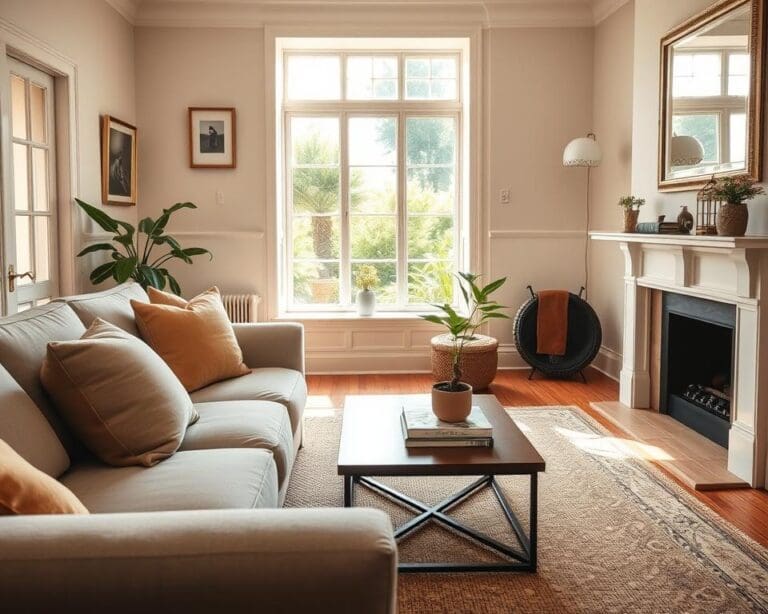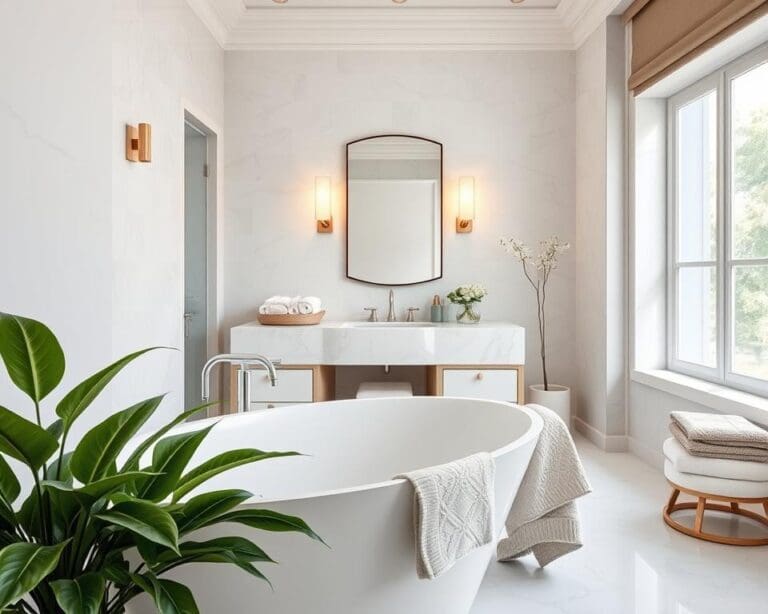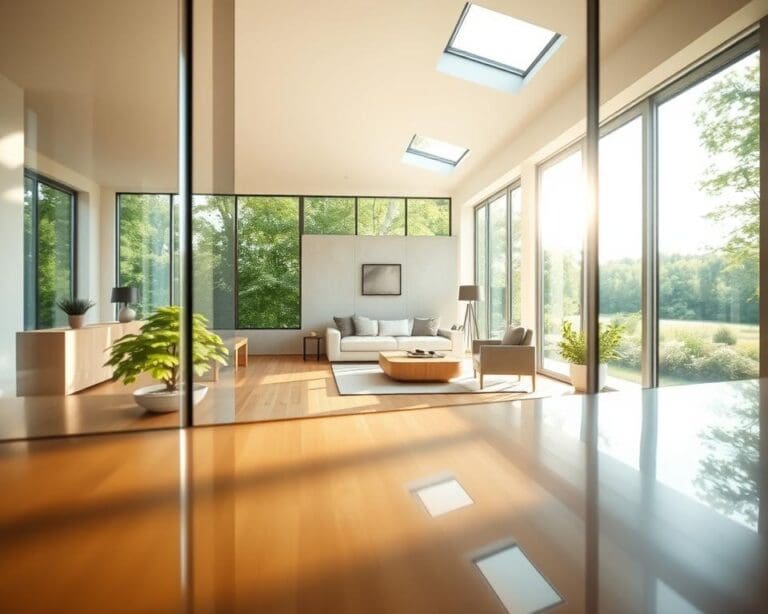
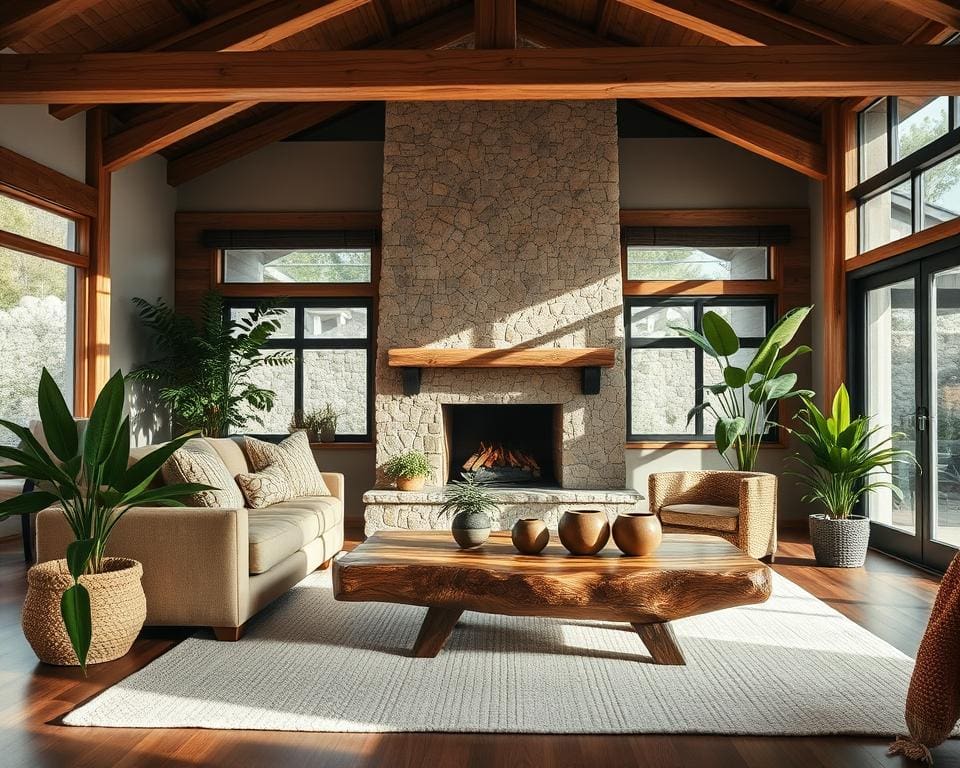
Natural interior design combines the clean look of contemporary spaces with the warmth and character of nature. Wood, stone, linen, wool, cotton, rattan, bamboo and clay can stop your home from feeling cold or overly uniform.
These materials add more than visual appeal. Timber shows its grain, stone brings gentle variation, and woven fibres create depth. Soft textiles and earthy colours also make warm modern interiors feel calmer and more inviting.
You can keep clean lines, practical layouts and uncluttered rooms while choosing finishes that feel tactile and lived in. For useful ideas, explore this guide to using natural materials in your interior.
Natural finishes can also support thoughtful modern home design. Durable pieces may age gracefully, develop a rich patina and adapt as your taste changes. Responsible sourcing, strong construction and low-waste choices can further support a more sustainable interior design approach.
In the following sections, you will discover how to create warmth, compare suitable materials, add texture and style a welcoming organic interior style.
How natural interior design creates warmth in a modern home
Warmth comes from more than colour. In a warm modern home, visual softness, tactile comfort, natural colour and well-planned lighting work together. This approach gives contemporary interior design a relaxed character without losing its clean, ordered feel.
Why natural materials soften contemporary spaces
Modern rooms often feature glass, metal, polished concrete and painted walls. These surfaces create a sharp, precise look. Timber, woven fibres and honed stone bring a gentler balance through grain, weave and subtle variation.
Warm whites, oat, sand, mushroom, clay, olive and muted brown add depth to a calm palette. These shades support a fresh room without making it feel stark. Repeating two or three tones helps the space feel cohesive.
Natural finishes can soften a room without making every item rustic. Streamlined cabinetry can sit beside a hand-finished bench or a woven pendant. The contrast gives the room character and keeps the design refined.
Using texture to make minimalist interiors feel inviting
Texture gives minimalist interiors interest without a need for excess decoration. A smooth plaster wall beside roughly grained timber creates a clear contrast. This simple pairing stops the room from appearing flat.
Layer tactile materials in restrained colours. You might pair a boucle or wool chair with a linen curtain, a timber side table and a stone tray. Each surface feels different, yet the limited palette keeps the setting composed.
Organic textures can be introduced through a large rug, a woven basket or a softly folded throw. Proportion matters. A substantial rug or timber table can anchor the room, while smaller pieces add warmth without crowding the space.
Lighting forms part of the material scheme. Warm-toned bulbs, shaded lamps and indirect light reveal the grain of wood and the weave of fabric after dark. They can make pale walls and stone surfaces feel softer in the evening.
Balancing clean lines with organic shapes and finishes
Modern architecture often relies on straight lines and simple silhouettes. Curved furniture, irregular ceramics and rounded lamps can balance this precision. Their softer profiles create movement and make a room feel more comfortable.
Try a curved armchair near a linear sofa, or place a rounded lamp on a rectangular sideboard. These small changes can shape the room without disrupting its structure. They work well in living spaces, bedrooms and open-plan kitchens.
Many modern living room ideas depend on controlled contrast. Combine simple cabinetry with naturally varied timber, a smooth floor with a textured rug, or a crisp sofa with a clay vessel. Repeat selected materials and colours across the room rather than choosing a different finish for every area.
This measured approach lets your home feel personal and inviting. Natural elements provide warmth, while clean forms preserve the clarity expected from contemporary design.
Wood, stone and other natural materials for modern interiors
Wood gives you a warm, adaptable base for modern rooms. In wood in interior design, oak, ash, walnut and reclaimed timber suit floors, doors, shelving, cabinetry and dining tables. You can use timber for a feature wall or a simple built-in unit.
Each species has a distinct look. Pale oak helps a room feel bright and fresh, while walnut brings deeper contrast. The cut, treatment and finish change the grain. Choose matt oils, clear finishes or low-sheen lacquers when you want the natural character to remain visible.
Stone gives modern rooms a sense of strength. Limestone, travertine, marble, slate and granite work well for worktops, fireplaces, splashbacks, flooring and feature walls. These stone interiors can feel calm or dramatic, based on their colour, pattern and level of visual movement.
A polished surface reflects more light and creates a formal mood. A honed finish feels softer and quieter. Before choosing stone for a busy area, check its sealing needs, moisture resistance, durability and cleaning instructions.
Hard surfaces need softer layers. Linen and wool can bring comfort through curtains, upholstery, bedding, cushions, throws and rugs. Cotton offers a light, practical choice for everyday use. Natural flooring made from timber, cork or other renewable materials can add warmth underfoot.
Woven details add texture without making a room feel crowded. Rattan furniture and cane panels suit dining chairs, cabinet fronts, screens, headboards and lampshades. Their open weave lets light pass through, which helps a compact space feel more spacious.
Bamboo interiors can include flooring, blinds, furniture and small decorative pieces. Bamboo grows quickly, yet quality varies between products. Check the manufacturing process, surface treatment and care guidance before buying.
Clay accessories introduce earthy colour and a handmade feel. Try terracotta planters, textured vases, tiled splashbacks, pendant lights or sculptural objects. Warm shades such as clay, mushroom and soft ochre work well with wood and stone. You can explore current natural home décor trends for further inspiration.
Expect natural materials to show variation. Knots, grain changes, stone veining, uneven colour and woven texture are signs of character, not faults. You can create balance by pairing warm timber furniture with solid stone, soft textiles, woven accents and tactile clay pieces.
Ways to introduce natural texture, colour and character
Natural materials can make a modern room feel warmer without weakening its clean form. Start with a simple palette of timber, soft fabrics and earthy accents. Repeat a few finishes across connected rooms to create a calm, considered flow.
Choose texture with care rather than filling every surface. A mix of smooth, woven and slightly irregular materials gives your home depth. Keep the colours close in tone, so the room feels restful rather than busy.
Choosing timber flooring, furniture and wall details
Timber flooring ideas can establish a warm visual base across the whole room. Wide boards show more of the natural grain and suit a modern setting, especially with a matt finish. Laying boards along the longest wall can make a narrow room feel more spacious.
Consider the room’s size, daylight, existing joinery and level of foot traffic before choosing a timber shade. Pale oak can lift a darker space, while smoked or honey tones add depth to a large, bright room. A durable matt seal helps protect the surface without hiding its character.
Use wooden furniture to add warmth through a few well-proportioned pieces. A dining table, bench, coffee table, console or bedside table can anchor the scheme. Open shelving can display books and ceramics without making the room feel crowded.
Timber wall details work best when used with restraint. Slatted screens, slim panelling, shelves or a small inset feature can add depth and show craftsmanship. Keep the surrounding walls plain to preserve a clean overall composition.
Layering linen, wool and cotton for comfort
Linen works well for curtains, blinds, bedding, cushions and upholstery. Its relaxed weave brings gentle movement to a room, while natural creasing creates a relaxed, lived-in feel. Linen curtains can filter daylight without making the space feel heavy.
Wool is warm, resilient and naturally tactile. Wool rugs can define a seating area and soften echoes on hard floors. Add a wool throw to an armchair or sofa for extra comfort during cooler months.
Cotton is breathable and versatile. Use cotton soft furnishings for cushions, bed linen, lampshades and lightweight curtains. Its smoother surface creates a useful contrast against coarse wool, boucle and woven fibres.
Layer textiles by changing scale and surface rather than adding many competing colours. A flatweave rug, chunky wool throw, linen curtains and cotton cushions can work well in related neutral tones. This approach gives the room interest while keeping the scheme controlled.
Adding stone, rattan, bamboo and clay accents
Stone introduces weight and a sense of permanence. A coffee table, hearth, worktop, shelf, tray or lamp base can provide a strong focal point. One substantial stone feature often has more impact than several small pieces.
Rattan and cane bring an open, crafted quality to storage, seating, lighting and screens. Their woven structure adds texture while allowing light and air to pass through. Use rattan accessories beside smooth timber to create a pleasing material contrast.
Bamboo offers a lighter alternative to heavily finished materials. Blinds, trays, baskets, furniture and small objects can bring a fresh organic note to a modern interior. Bamboo décor works well with pale walls and warm timber tones.
Clay and terracotta add earthy colour and handmade irregularity. Group clay home accessories in different heights and forms, such as a low bowl, a tall vase and a rounded vessel. Leave space around the display to avoid visual clutter.
Repeat selected materials across connected areas to make the home feel deliberately coordinated. You might use timber in the hallway, woven lighting in the dining area and linen in the living room. Protect each finish with suitable care.
- Seal porous stone to reduce marks and staining.
- Use coasters beneath drinks and warm objects on timber.
- Follow the care instructions for natural textiles.
- Keep natural fibres away from excess moisture and prolonged direct sunlight where needed.
How to style natural materials for lasting modern design
Lasting style depends on balance, quality and flexibility, not short-lived trends. Start with durable home materials such as timber, stone and metal. Keep the base calm with neutral colours, then add personality through furniture, artwork, textiles, ceramics and plants. This approach supports timeless natural interiors and makes future changes simple.
Choose fewer, better-made pieces where possible. A well-built timber table, hard-wearing upholstery or durable stone console can serve you for years. Consider scale and proportion, too. Pair substantial furniture with woven chairs, linen curtains or slim metal lighting. Contrast matte and smooth finishes, pale and dark timber, soft fabrics and solid stone for a calm yet defined cohesive interior scheme.
Repetition helps varied materials work together. Repeat one or two wood tones, textile colours or woven finishes across the room. Leave space around furniture so each surface remains visible. For useful modern styling ideas, explore interior styles that stand the test of. Add plants that suit your room’s light and upkeep needs, using simple clay, ceramic or woven planters.
Use removable layers to keep your layered interior design flexible. Wool throws and heavier rugs suit colder months, while linen, cotton and lighter textures feel fresh in summer. Support sustainable home décor through responsible sourcing, certified timber, reclaimed wood, durable natural fibres and locally made ceramics. Regular dusting, quick spill treatment and suitable cleaning will help natural finishes last, creating a modern home that feels warm rather than rustic or stark.