The story behind the classic Beef Wellington is part culinary history, part legend, and part theatre. Few dishes arrive at the table with quite the same sense of occasion: a golden pastry crust, tender beef at the centre, and a rich mushroom layer hidden inside. It feels unmistakably British, yet its roots reach into French technique, grand dining rooms, and changing tastes in what a “special” meal should be.
The story behind the classic Beef Wellington: a dish with debated origins
Beef Wellington is often linked with Arthur Wellesley, the 1st Duke of Wellington, who defeated Napoleon at the Battle of Waterloo in 1815. The popular tale suggests the dish was named in his honour, either because he liked beef wrapped in pastry or because the finished shape was thought to resemble a Wellington boot.
It is a neat story, but food history is rarely that simple. There is no clear contemporary evidence showing that the Duke regularly ate the dish, requested it, or had it created for him. As a result, many food historians treat the connection as uncertain rather than proven.
What is easier to trace is the cooking idea behind it. Wrapping meat in pastry was already well established in European kitchens. French cuisine had long used preparations such as beef fillet in pastry, often called boeuf en croûte. This means “beef in a crust”, and it describes the core technique more directly than the British name does.
So, the classic Beef Wellington may be best understood as a British name attached to a refined European method. It combines prestige ingredients, skilled preparation and a dramatic reveal, which explains why it has stayed in the public imagination.
What makes a Beef Wellington classic?
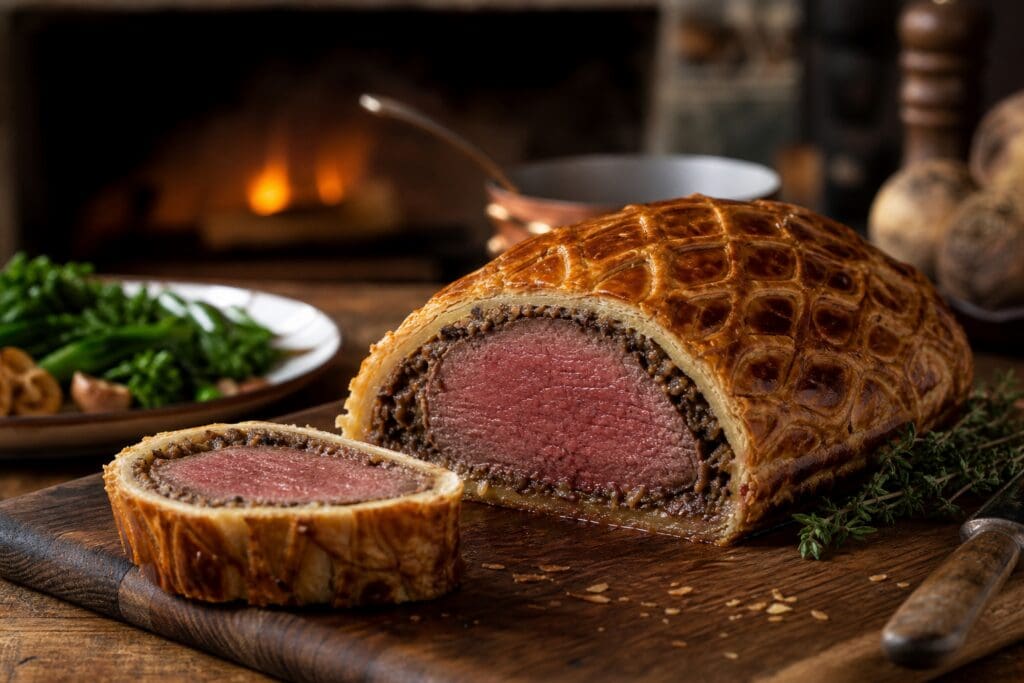
At its heart, Beef Wellington is a whole piece of beef fillet wrapped in layers, then baked until the pastry is crisp and the meat remains tender. The contrast is the point. You cut through flaky pastry, meet a savoury mushroom layer, and reach soft, pink beef.
The classic version is built from several key parts:
- Beef fillet: prized because it is tender, lean and well suited to quick roasting.
- Mushroom duxelles: finely chopped mushrooms cooked down with shallots, butter and seasoning until concentrated and dry.
- A wrapping layer: often pancakes, crêpes, Parma ham or similar, used to protect the pastry from moisture.
- Puff pastry: rolled around the beef and sealed to form a golden crust.
- Egg wash: brushed over the pastry to help it bake to a glossy finish.
The mushroom layer is especially important. It adds depth, savouriness and moisture, but it must be cooked carefully. If the mushrooms are too wet, the pastry can become soggy. This is one reason Beef Wellington has a reputation for being demanding: it is not only about expensive ingredients, but also about control.
Another traditional addition is pâté, sometimes including foie gras in very luxurious versions. Modern British recipes often leave this out or replace it with extra mushrooms, herbs or a thin layer of mustard. These choices change the richness, but the structure remains recognisable.
From French technique to British dining room
The pastry-wrapped meat at the centre of Beef Wellington belongs to a long tradition of decorative, protective cooking. Before modern ovens and temperature probes, pastry could help shield meat from harsh heat while creating an impressive case for serving.
In formal dining, appearance mattered. A dish that arrived whole, burnished and sealed looked generous and carefully made. Slicing it at the table added ceremony. Guests could see the layers at once, and the cook’s skill was visible in every portion.
The French influence is important because British upper-class and restaurant cooking drew heavily on French methods for centuries. Menus in grand hotels, clubs and country houses often used French names and techniques. A British-sounding dish could still be French in construction.
That is why Beef Wellington sits in an interesting place. It feels patriotic because of its name and its association with a national military figure, yet its method reflects the cross-Channel exchange that shaped much of British fine dining. Rather than making it less British, this mixture makes it more revealing. British food has often borrowed, adapted and renamed ideas, turning them into something familiar at home.
Why Beef Wellington became a special-occasion dish
Beef Wellington has never been an everyday supper for most households. Beef fillet is one of the more costly cuts, and puff pastry requires care if made from scratch. Even with ready-made pastry, timing the dish well takes attention.
Its special-occasion status comes from several qualities. It looks impressive without needing elaborate decoration. It can feed a table from one centrepiece. It also carries a sense of confidence: the cook must trust the oven, the seal, the resting time and the carving knife.
During the twentieth century, Beef Wellington became associated with hotel dining, dinner parties and celebratory menus. It suited an era when entertaining often meant presenting a main course with flourish. The dish looked formal, but it was also comforting: beef, mushrooms and pastry are familiar flavours, arranged in an elevated way.
It has also endured because it photographs and serves beautifully. The neat slice, with a ring of pastry around beef and mushroom, is instantly recognisable. In a world where many classic dishes have faded from home cooking, Beef Wellington still signals effort and generosity.
The challenge behind the perfect slice
The reason Beef Wellington can go wrong is the same reason it is admired when it goes right. Several ingredients with different needs must finish cooking at the same time.
The beef needs heat, but not too much. The pastry needs enough time to rise, crisp and brown. The mushroom duxelles must be savoury and dry. The outer layer must be sealed, or steam and juices may escape. After baking, the Wellington needs to rest, but not so long that the pastry loses its best texture.
A successful Wellington is therefore a balancing act. The cook often sears the beef first to build flavour and start the cooking process. The mushrooms are cooked until their water has evaporated. The wrapped beef may be chilled before baking so the pastry stays firm and easier to handle.
There is also the carving moment. A very hot Wellington can spill juices when cut too soon. A properly rested one should slice more cleanly, revealing the layers without collapsing. That is part of the drama: the result is hidden until the knife goes in.
Modern versions and changing tastes
Today, Beef Wellington appears in both traditional and updated forms. Some cooks keep it close to the classic style, using beef fillet, mushroom duxelles and puff pastry. Others adapt it for different budgets, diets or occasions.
Individual Beef Wellingtons are popular because they feel restaurant-like and avoid the difficulty of carving a large joint. Some versions use a smaller piece of beef for each person, wrapped separately. This can make serving simpler, although timing still matters.
There are also vegetarian and vegan interpretations, often using mushrooms, beetroot, squash, lentils or nuts as the centrepiece. These are not Beef Wellington in the strict sense, but they borrow the same idea: a savoury filling wrapped in pastry and served as a main event.
The classic dish has also become more relaxed in home kitchens. Ready-rolled puff pastry is widely used. Pâté is often optional. Some cooks add mustard to the beef for sharpness, while others use herbs such as thyme to lift the mushrooms. These changes show how a grand dish can survive by becoming adaptable.
Why the name still matters
Names shape how we feel about food. “Beef in pastry” sounds plain, while “Beef Wellington” carries history, elegance and expectation. Even if the exact origin of the name is uncertain, it gives the dish a story.
The Wellington name connects the food to British identity, military victory and nineteenth-century grandeur, whether or not the link is literal. It makes the dish feel older and more ceremonial than many everyday roasts. That sense of heritage is one reason it remains a favourite for Christmas, New Year, anniversaries and dinner parties.
Yet the name also hides a more interesting truth. Beef Wellington is not the product of one simple invention. It is the result of layered influences: French culinary technique, British naming, restaurant fashion, luxury ingredients and home-cooking ambition. In that way, its history mirrors the dish itself. Every layer matters.
Frequently Asked Questions
Was Beef Wellington really named after the Duke of Wellington?
It may have been, but there is no firm evidence proving the Duke inspired the dish. The connection is a popular explanation rather than a settled historical fact.
Is Beef Wellington the same as boeuf en croûte?
They are very closely related. Boeuf en croûte simply means beef in a crust, while Beef Wellington usually refers to the British-style version with mushroom duxelles.
Why is mushroom duxelles used in Beef Wellington?
Mushroom duxelles adds deep savoury flavour and helps create the classic layered texture. It must be cooked until dry so the pastry does not become soggy.
Can Beef Wellington be made without pâté?
Yes, many modern recipes leave out pâté entirely. Extra mushroom duxelles, mustard or herbs can provide flavour without making the dish quite as rich.
Why is Beef Wellington considered difficult to cook?
It is difficult because the beef, pastry and filling all need different treatment. Good results depend on dry mushrooms, careful wrapping, correct baking and proper resting before slicing.