The Visiting Tailor understands that a well-made suit is about far more than choosing a pleasant colour or an attractive cloth. For many people, the difference between bespoke and off-the-rack tailoring becomes clear the moment they put the garment on. One is built around an individual body, posture and purpose. The other is made to fit as many people as possible.
Both options have their place. An off-the-rack suit can be convenient, accessible and suitable for many everyday situations. A bespoke suit, however, offers a different level of fit, personalisation and refinement. It is designed from the beginning for the person who will wear it.
Bespoke vs off-the-rack: the core difference
An off-the-rack suit is made in standard sizes before a customer ever tries it on. It may be available in short, regular or long fittings, and it can often be altered afterwards. These alterations might improve sleeve length, trouser hems or the jacket waist, but the suit’s basic structure already exists.
A bespoke suit starts in the opposite way. There is no finished garment waiting on a rail. The tailor begins with the client’s measurements, shape, posture and preferences. The pattern is created for that person, rather than adapted from a standard size.
This distinction affects almost every part of the finished suit:
- The way the jacket sits on the shoulders
- The balance between chest, waist and hips
- The length and drape of the trousers
- The comfort of movement when sitting, walking or standing
- The harmony between fabric, cut and occasion
In simple terms, off-the-rack clothing asks the wearer to fit the suit. Bespoke tailoring asks the suit to fit the wearer.
Fit, proportion and posture
Fit is the most obvious difference, but it is also the most misunderstood. A suit can be slim without fitting well. It can also feel comfortable while still looking unbalanced. True fit considers the whole body, not just chest size or trouser waist.
Why standard sizing has limits
Standard sizing is based on average proportions. That means an off-the-rack jacket might assume that someone with a certain chest measurement also has a certain shoulder width, arm length and posture. In real life, bodies are far more varied.
One person may have square shoulders, while another has sloping shoulders. Some people stand very upright; others lean slightly forward. A person may have a broad chest and narrow waist, or strong thighs that make standard trousers difficult to wear comfortably.
Alterations can help, but they cannot completely change the foundation of a ready-made garment. If the shoulder line is wrong, the jacket may never sit naturally. If the balance is incorrect, the front may pull or the back may crease.
How bespoke tailoring works with the body
Bespoke tailoring considers these details from the start. Measurements are only one part of the process. The tailor also observes how the client stands, moves and carries themselves.
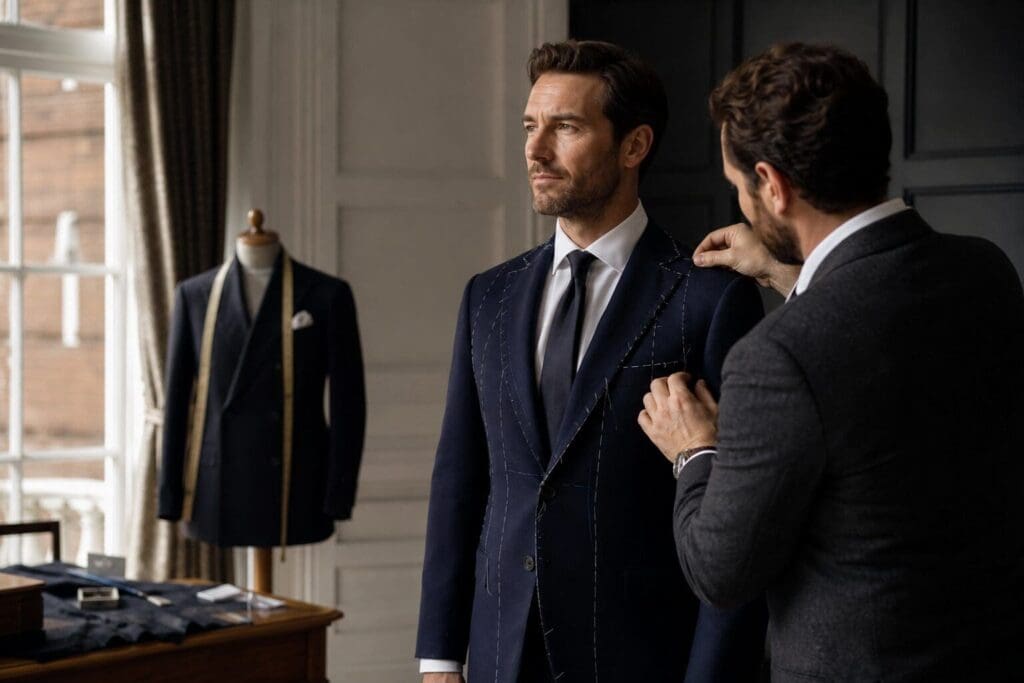
This matters because a good suit should look composed without feeling restrictive. It should support the wearer’s natural shape rather than forcing it into a standard form. Several fittings allow the tailor to refine the silhouette before the garment is completed.
Small adjustments can make a visible difference. A sleeve can be shaped to hang more cleanly. A jacket can be balanced to prevent pulling. Trousers can be cut to suit the client’s seat, thigh and preferred break over the shoe.
Fabric, season and personal style
Fabric choice is another area where bespoke tailoring offers greater depth. Off-the-rack suits are usually available in a limited selection of cloths chosen for broad appeal. Bespoke tailoring allows the client to consider how the suit will be worn, where it will be worn and what it should communicate.
Wool remains a classic choice because it is versatile, breathable and available in many weights and weaves. Lighter cloths can feel more comfortable in warmer months, while heavier fabrics may provide structure and warmth in colder seasons. Texture also matters. A smooth worsted wool gives a polished business appearance, while a more textured cloth can feel softer and less formal.
Colour plays a role too. Navy, charcoal and mid-grey are popular because they suit many professional and formal settings. Darker shades often feel more traditional, while subtle patterns can add personality without becoming distracting.
How The Visiting Tailor approaches bespoke tailoring
The Visiting Tailor provides British bespoke tailoring across Switzerland, with appointments at the client’s preferred location. This reflects an important modern shift: the craft remains traditional, but the process can be more flexible.
Rather than requiring every consultation and fitting to happen in a conventional showroom, the service can take place at a home, office or hotel. This is particularly relevant for professionals and international residents who value quality clothing but have limited time for repeated atelier visits.
The process includes personal consultation, precise measurements, fabric selection and several fittings before the finished garment is delivered. More than 2,000 fabrics from established textile houses are available, covering businesswear, formal clothing, tuxedos, tailored shirts and wedding suits.
This approach keeps the personal nature of bespoke tailoring while making the experience easier to fit around a busy schedule.
Details that shape the finished suit
A bespoke suit is not only about measurements. It is also about choices. Some details are practical, while others are expressive. Together, they influence how formal, modern, traditional or relaxed the suit appears.
Common bespoke details include:
- Lapel style, such as notch, peak or shawl
- Button choice, including colour, material and arrangement
- Pocket style, such as flap, jetted or patch pockets
- Lining colour and pattern
- Trouser shape, rise and pleat preference
- Cuff, hem and waistband details
- Jacket vents and internal pocket layout
These choices should not feel overwhelming. A good tailoring consultation helps translate preferences into a coherent garment. The aim is not to add details for their own sake, but to create a suit that suits the wearer, the occasion and the intended level of formality.
For example, a wedding suit may allow for a richer lining or more distinctive cloth. A business suit may benefit from restrained elegance, reliable fabric and a cut that remains sharp through a long working day. A tuxedo requires its own set of conventions, especially around lapels, cloth contrast and eveningwear proportions.
The role of fittings in bespoke tailoring
Fittings are one of the clearest differences between bespoke and off-the-rack suits. With ready-made clothing, the garment is already complete. Any changes are corrective. With bespoke tailoring, fittings are part of the construction process.
During fittings, the tailor can assess how the suit behaves on the body. The cloth may reveal where it needs more shaping, more room or a cleaner line. This stage is especially valuable because the suit can be refined before it reaches its final form.
A first fitting may focus on the overall structure and balance. Later fittings can refine sleeve pitch, waist suppression, trouser line and jacket length. These adjustments help the finished suit feel more natural and look more precise.
The process also gives the client time to consider details. Sometimes a preference becomes clearer once the garment begins to take shape. That gradual refinement is part of what makes bespoke tailoring distinct.
When is bespoke worth considering?
Bespoke tailoring is especially relevant when the suit needs to perform well in an important setting. That might mean a wedding, a formal event, a senior business role or regular professional wear. It can also be useful for people who struggle with standard sizes.
A bespoke suit may be worth considering if:
- Off-the-rack jackets never sit correctly on your shoulders
- Trousers often fit at the waist but feel wrong through the thigh or seat
- You want a suit for a wedding, tuxedo event or important business setting
- You prefer specific fabrics, linings or design details
- You value comfort as much as appearance
- You want clothing that reflects your personal style without looking excessive
This does not mean every suit must be bespoke. Many wardrobes include a mix of ready-made, made-to-measure and bespoke garments. The key is understanding what each option can realistically provide.
Bespoke tailoring without the traditional showroom visit
A bespoke suit should be built around the person wearing it, not around a standard size. The Visiting Tailor brings the tailoring process directly to homes, offices and hotels across Switzerland, allowing consultations, fabric selection and fittings to take place around the client’s own schedule. At thevisitingtailor.ch, traditional British tailoring is combined with a personal service designed for modern professional life.
Frequently Asked Questions
Is a bespoke suit the same as a made-to-measure suit?
No. Made-to-measure usually adapts an existing pattern, while bespoke tailoring creates a pattern around the individual wearer.
How long does a bespoke suit usually take?
The timescale can vary because several fittings and construction stages are involved before the garment is fully finished.
Can an off-the-rack suit be altered to fit like bespoke?
Alterations can improve an off-the-rack suit, but they cannot fully change its original structure or proportions.
What occasions are best suited to bespoke tailoring?
Bespoke tailoring is well suited to businesswear, weddings, formal events and clothing intended for frequent use.
Does fabric choice really affect comfort?
Yes. Fabric weight, weave and texture can influence warmth, breathability, movement and comfort across different seasons.
Where bespoke tailoring makes the difference
The main difference between bespoke and off-the-rack tailoring is the starting point. Off-the-rack suits begin with standard sizing. Bespoke suits begin with the person. That difference influences fit, comfort, fabric choice, proportions and the small details that make a garment feel personal.
A good suit should do more than look smart on a hanger. It should work with the body, suit the occasion and feel natural throughout the day. For people who value precision, personal style and long-lasting refinement, bespoke tailoring offers a level of consideration that ready-made clothing cannot fully match.