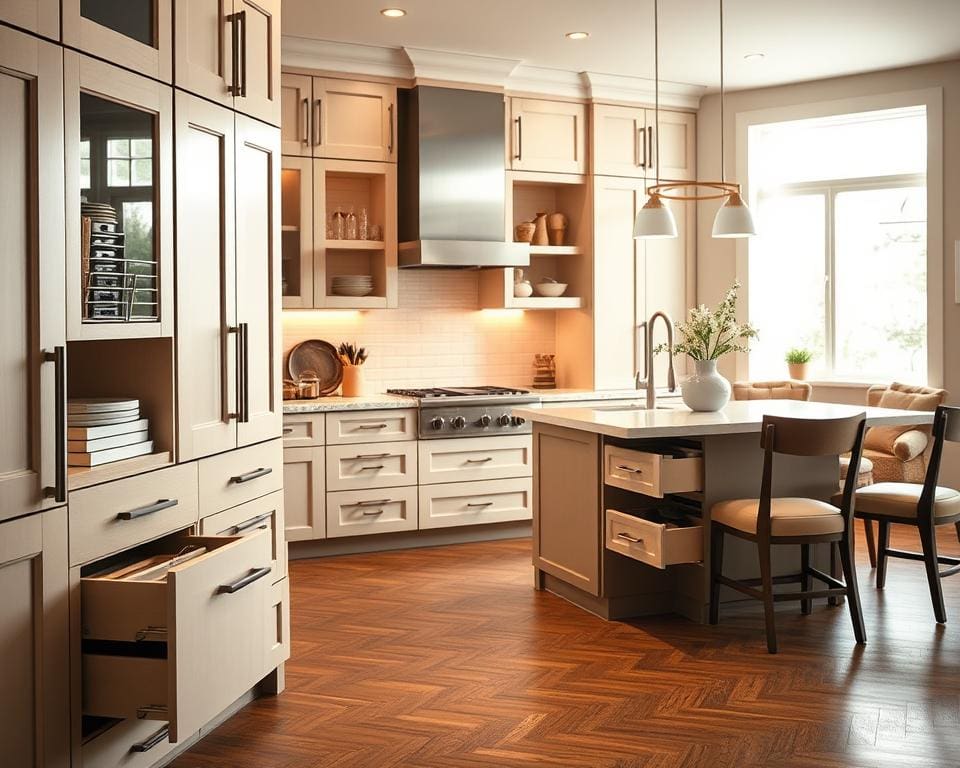
Custom cabinetry turns awkward corners and wasted gaps into practical, attractive storage. By commissioning tailor-made pieces from cabinetmakers, fitted kitchen specialists or independent joiners, homeowners can transform compact rooms into orderly, usable spaces.
At its core, custom cabinetry means furniture made to precise dimensions, finishes and functions. Makers such as Howdens, specialists using Blum or Hettich fittings, and bespoke joiners create built-in cabinets and space-saving furniture that fit sloping ceilings, narrow alcoves and under-stair voids.
The benefits are clear. Bespoke storage solutions maximise usable volume, remove wasted gaps and improve access with clever internal layouts. Thoughtful kitchen cabinetry and bedroom fitted wardrobes enhance organisation, increase perceived space and can lift long-term property value in older UK homes with irregular plans.
This article will show practical steps to measure and plan for awkward spaces, explore smart hardware and internal organisers, and outline materials and finishes that make rooms feel larger. It will also cover lifestyle gains and resale advantages, so you can consider whether to measure your rooms yourself or book a consultation with a local fitted furniture showroom or joiner.
How can custom cabinetry maximise storage space?
Custom cabinetry turns awkward corners into useful places. Thoughtful design and careful measuring for cabinets let you plan storage that fits both the room and your needs. Start with a clear brief, note future items you might store and picture how each area will be used.
Designing for every inch: measuring and planning for awkward spaces
Take measurements at several points for height, width and depth. Older homes often have uneven walls and floors. Use a spirit level and laser measure, then record variations to the nearest millimetre.
Allow tolerances and plan reveals or trim to hide small differences. Arrange a site survey with an experienced joiner or surveyor to verify final dimensions before ordering. Consider door swings, appliance clearances, heating vents, skirting, plumbing and electrics when you sketch a layout.
Draw simple scaled sketches or use CAD tools in fitted kitchen showrooms to visualise placement. Think ahead for larger cookware or growing linen collections so the design stays useful for years.
Built-in solutions for under-stairs, alcoves and eaves
Under-stairs storage can be pull-out drawers beneath treads or bespoke cubbies for shoes and coats. Compact home-office nooks sit neatly in a recess. Shallow shelving works well for display or books in narrow alcoves.
For sloping ceilings, choose stepped or sloping-front cabinets, drawer banks or bespoke wardrobes to use lower headroom. Integrate ventilation and make sure fire safety and access to meters or boilers comply with building regulations when altering under-stairs areas.
Vertical storage: taller cabinets and stackable options
Floor-to-ceiling units increase volume without expanding footprint. Tall cabinets create uninterrupted sightlines and free up lower units for everyday items. Use full-height pantry units in kitchens to store bulk goods and seasonal cookware.
Plan for safe access with stable ladders or library steps. Consider demountable top units for cleaning and choose stackable modules to adapt storage as needs change. Many UK manufacturers offer standard heights and bespoke tall unit options to match room proportions.
Custom shelving depths and spacing to suit your items
Match shelf depth to purpose: 150–250mm for spices and small jars; 250–300mm for books and displays; 350–450mm for pots, pans and storage boxes. Measure favourite items like dinner plates and casserole dishes to set sensible shelf heights.
Use adjustable shelving systems with pegged or slotted uprights for flexibility. Select strong materials and reinforcement based on load: solid timber, quality plywood, metal brackets or support rails for heavy utility shelving. This keeps aesthetics neat and performance reliable.
Smart storage features to increase capacity and accessibility
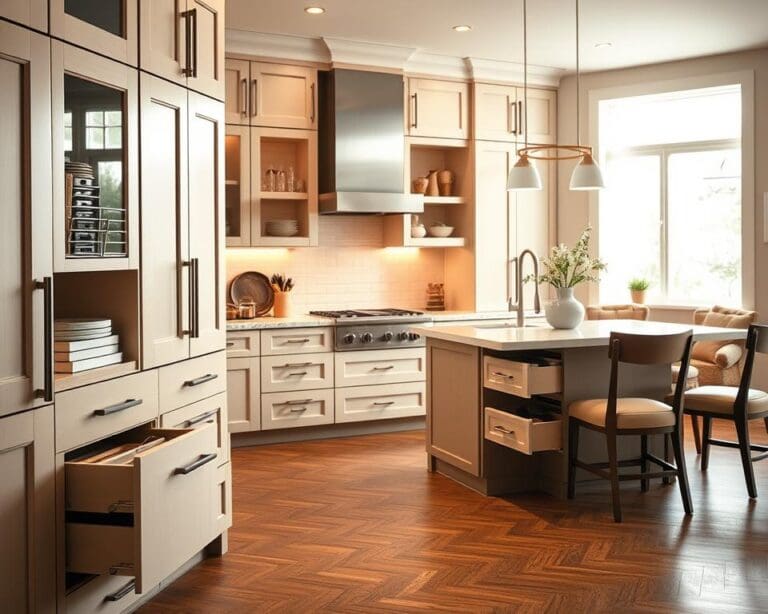
Thoughtful fittings transform cabinets into practical, everyday helpers. The right mix of pull-out drawers and wire baskets makes items visible and easy to reach. Deep, full-extension drawers turn lower cupboards into organised stores. Solid-bottom drawers with anti-slip liners keep crockery safe. Steel wire baskets add ventilation in pantries and utility rooms, stopping damp smells and keeping foods fresh.
Tray systems and tiered pull-outs suit small items and spices. They stop stacking and save time searching. Compared with fixed shelving, these systems bring contents forward so nothing gets lost at the back. Choose robust runners from trusted brands such as Blum, Hettich or Häfele for long-lasting performance.
Corner cabinet solutions reclaim awkward spaces. A revolving lazy Susan gives continuous access to tins and jars. Pull-out kidney-shaped trays and blind-corner pull-outs recover storage once wasted behind doors. Swing-out shelves act like drawers, offering clear access for heavier loads. Match each option to cabinet size, expected load and the mobility needs of householders.
Integrated organisers keep kitchens calm and efficient. Cutlery inserts and utensil dividers tidy drawers. Door-mounted spice racks free shelf space. Vertical dividers hold baking trays upright. Appliance garages with retractable doors hide kettles and toasters while leaving them ready to use.
Careful linen storage needs simple systems. Roll organisers, labelled baskets and staff-fold techniques make seasonal rotation effortless. For appliance storage, plan cable management, integrated sockets and ventilation. Pull-out charging drawers prevent trailing leads on worktops and keep devices organised.
Soft-close runners and full-extension drawers improve everyday use. Soft-close hinges and runners stop slams and reduce wear. Full-extension runners let users reach the back of drawers without bending or stretching. This makes cupboards friendlier for older or less mobile family members, cutting strain and making retrieval safer.
Specify premium runners with clear load ratings and warranties. Heavy-duty soft-close systems tolerate frequent use in busy kitchens. Investing in quality hardware pays back through durability and better accessible storage for years to come.
Materials, finishes and layout choices that enhance perceived space
Thoughtful material and finish choices can make a small room feel larger and calmer. Bright, reflective surfaces and careful layout keep sightlines clear. Use these strategies to balance openness with practical storage.
Light-reflecting finishes such as glossy lacquer, high-gloss acrylic or reflective glass doors bounce daylight and artificial light across a room. This simple trick gives the impression of depth and airiness. Use glossy cabinet finishes sparingly on upper runs to avoid glare and pair them with matt textures below for balance.
Glass-fronted cabinets and open shelving keep sightlines open while offering display space for favourite pieces. Limit the number of open shelves to reduce dust and clutter. Combine closed cupboard banks with a few glass-fronted cabinets so display areas sit alongside practical storage.
Lighting complements finishes. Under-cabinet LED strips, interior cabinet lighting and spotlights add depth and focus. Well placed light makes reflective finishes and glass-fronted cabinets feel intentional rather than busy.
Durable cabinet materials let designers specify slimmer profiles without losing strength. Engineered plywood and aluminium frames provide structural rigidity while allowing narrow stiles and slimline cabinetry that increase usable internal volume.
MDF with durable veneers and moisture-resistant options suit kitchens and utility rooms. Choose engineered boards with PVC or laminate finishes where water resistance matters. Solid timber works well in feature areas but is heavier and may need thicker profiles.
Steel or aluminium frames are ideal when you want modern, slimline cabinetry and a lighter visual touch. Strong materials support full-extension runners and heavy drawers while keeping face frames tidy.
Cabinet colour schemes influence how much space a room appears to have. Light neutrals—whites, soft greys and pale greiges—reflect light and expand small rooms visually. A tonal approach that matches cabinetry to walls creates continuity and flow.
Contrast can be useful. Darker base units with lighter uppers ground the layout while keeping the eye moving upwards. Keep contrasts restrained so they do not fragment the room.
Hardware choices help to minimise visual clutter. Integrated or recessed handles, push-to-open systems and slim bar handles interrupt surfaces less than ornate pulls. Consistent handle finishes and matched joinery lines create a calm, uncluttered field.
Small details matter. Seamless end panels, aligned grain and consistent flush joints make cabinets read as a single plane. This cohesion helps to minimise visual clutter and reinforces a sense of spaciousness.
How custom cabinetry improves lifestyle and long-term home value
Fitted cabinetry benefits daily life by creating order and saving time. Tailored storage turns cluttered counters into tidy workspaces, so meal preparation is quicker and family routines run more smoothly. Lifestyle storage solutions such as bike racks in a utility cupboard, a dedicated pet area or built-in home-office units reduce the time spent searching for items and make everyday tasks less stressful.
Accessibility is a core advantage of bespoke furniture investment. Adjustable shelving, pull-out systems, lower worktops and soft-close fittings support ageing-in-place and help occupants with reduced mobility. Touchless or easy-grip fittings and full-extension runners improve reach and visibility, making rooms more usable for longer and supporting independent living.
Bespoke cabinetry also delivers emotional and aesthetic benefits. Well-crafted units create calm, ordered interiors that enhance wellbeing and present a strong first impression to viewers. In the UK market, quality fitted kitchens, bespoke wardrobes and integrated storage are proven to increase buyer appeal and can boost resale value; purchasers often pay a premium for durable, professionally installed systems and reputable components such as Blum fittings or trade-grade worktops like Silestone and Caesarstone.
To protect long-term value, prioritise durable materials and neutral, timeless design while allowing small personalised touches through handles or accessory colours. Seek multiple quotes from reputable local joiners or fitted furniture providers, view past projects and check guarantees. Consider a phased approach—start with the kitchen or wardrobe—and maintain units with simple care: lubricate hinges, check runners, avoid overloading shelves and clean finishes with manufacturer-approved products to extend lifespan and preserve home value.