Kerb appeal is the immediate visual attractiveness of a property when viewed from the street. For homeowners, landlords and estate agents across the UK, a striking front garden shapes the home first impression and can quickly boost property attraction UK.
Landscaping brings together planting, hard landscaping, lighting, layout and simple maintenance to create a coherent look. Good kerb appeal landscaping signals care and value, and it helps a house sit comfortably within its neighbourhood.
Evidence from the Royal Institution of Chartered Surveyors and leading estate agents shows that well-presented exteriors can speed up sales and improve offers. Beyond resale, thoughtful front garden improvement raises everyday satisfaction by improving outdoor living, privacy and ease of upkeep.
There are also clear environmental and practical gains. Sensible planting and surfacing improve drainage, increase biodiversity and can lower energy use by providing shade and wind protection.
This article will set out visual tactics, planning steps, plant and material choices, maintenance strategies and lighting and sustainability measures tailored to UK conditions and planning rules. After reading, try one achievable change — plant a feature shrub or install path lighting — to begin boosting kerb appeal today.
How can landscaping improve kerb appeal?
Landscaping can transform a front garden into a clear invitation that lifts a property’s character. Simple choices in colour, structure and proportion create an instant attraction that guides the eye from the pavement to the front door. Small interventions offer big returns when they focus on a strong visual line and balanced planting.
Immediate visual impact
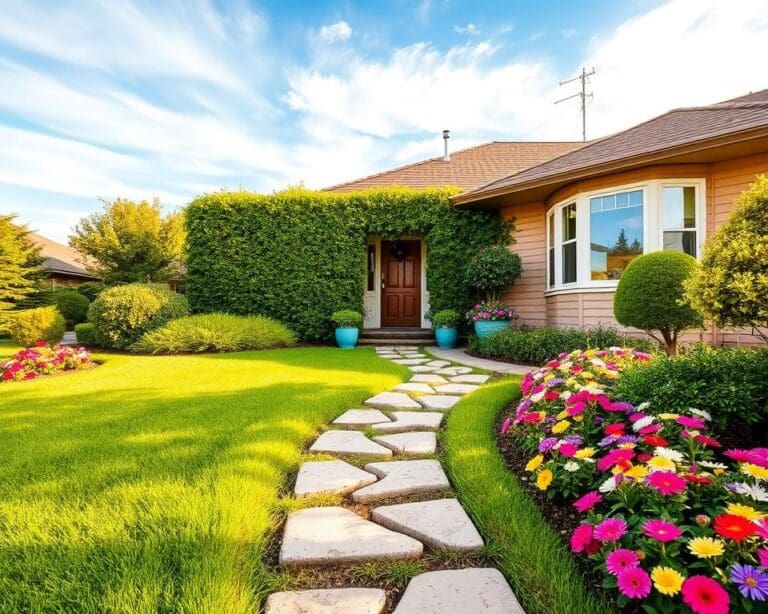
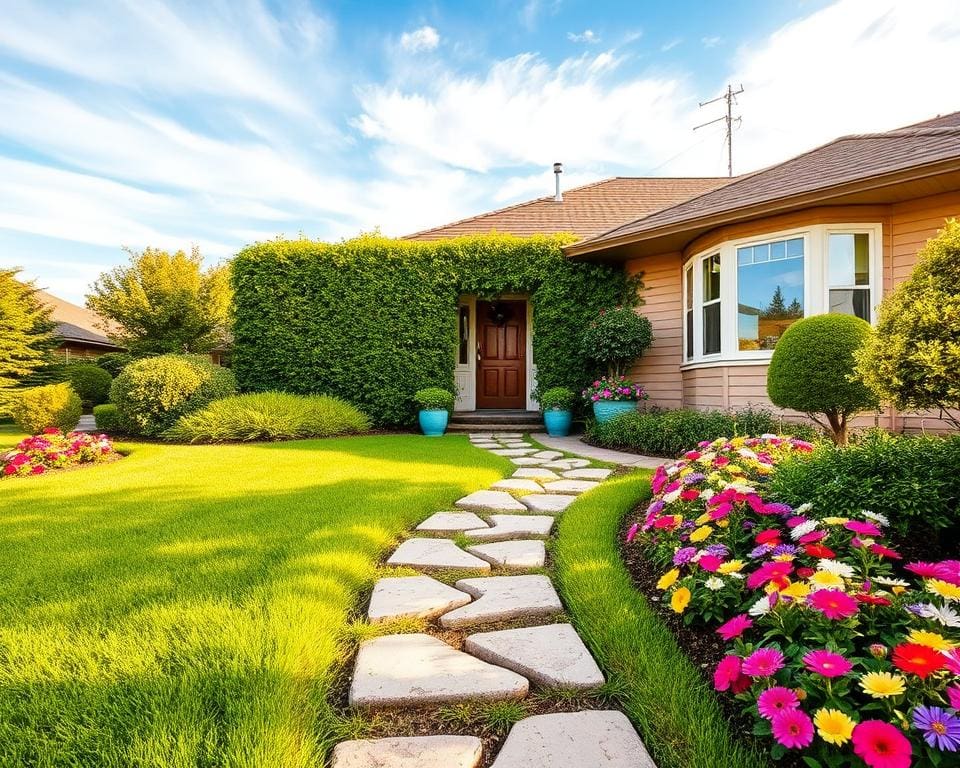
Colour and symmetry deliver an immediate response. Seasonal flowers, clipped hedges and a tidy path form a coherent visual impact garden design that draws attention. Use window boxes, a fresh paint on the front door and a neat pathway to achieve rapid change.
Scale matters. Match planting and features to the house size: restrained schemes suit terraces, while period homes take bolder architectural elements. The Royal Horticultural Society offers practical guidance on plant placement and visual structure that helps with balance and sightlines.
Value perception and marketability
A well-kept exterior alters first impressions and affects emotions. Estate agents say a tidy front garden creates trust and desire, which improves property marketability UK. Buyers often make fast judgments from the outside, so a strong front garden first impression can support higher asking prices.
Spend where it counts. Entrance upgrades, trimmed lawns and attractive beds typically give the best return on investment. Thoughtful choices protect value while making homes more appealing to a wider range of buyers.
Practical benefits beyond looks
Good design brings useful gains. Improved access, better drainage and clearer sightlines increase daily comfort and safety. Permeable surfaces and SuDS reduce runoff and help with climate resilience across British streets.
Planting for biodiversity delivers environmental benefits and lower upkeep. Choose native, drought-tolerant plants to cut water use and maintenance costs. Well-lit paths and cleared borders reduce hiding spots and lift perceived security, adding to the landscaping practical benefits of a considered front garden.
Planning your front garden for maximum kerb appeal
A thoughtful plan brings clarity. Start with simple observations of light, wind and soil. Note how the house sits on the plot and what the street character feels like. This groundwork will help you plan front garden kerb appeal with confidence and purpose.
Assessing your property’s style and neighbourhood context
Make a quick site analysis. Record orientation, sun patterns and drainage. These facts guide plant choice and layout so planting thrives.
Match materials and colours to the home’s era. For a Victorian terrace, choose period-appropriate ironwork and brick tones. For a modern build, select clean lines and restrained planting. This approach makes garden design UK feel coherent with the property.
Check local rules before you alter the frontage. Many councils and conservation areas have restrictions. Research permitted development rights to avoid costly revisions.
Think about the wider street. Neighbourhood context landscaping is about complementing nearby homes rather than competing with them. A harmonious approach keeps the street inviting.
Choosing a focal point
Pick one strong element to draw the eye. A specimen tree, a bold planter or a striking path can act as a focal point front garden visitors remember.
Match your focal choice to the plot size. Small frontages suit compact specimens like an ornamental apple or Japanese acer. Larger sites absorb architectural elements such as low walls or sculptural pots.
Use repetition and rhythm to lead the eye. Repeating a material or plant creates cohesion and guides attention toward the focal point.
Practical layout considerations
Design clear, safe routes to the door. Choose non-slip, permeable surfaces that cope with wet weather and deliveries. Aim for sensible widths and gentle gradients.
Plan maintenance access. Leave room for mowers and pruning and group plants by care needs so tasks stay manageable.
Layer planting for depth and year-round interest. Use low edging, mid-height shrubs and taller backdrop plants to create structure without overcrowding.
Sort drainage and soil early. Simple SuDS features like gravel trenches and permeable paving reduce runoff. Improve poor soil with organic matter so plants establish quickly.
Map power for lighting and hide bins and bike storage where they will not spoil the view. Small practical choices make a big difference to front garden layout tips and long-term appeal.
Planting, materials and maintenance strategies that elevate kerb appeal
Careful choices in planting and surfaces make a front garden feel inviting and well cared for. Start with a clear plan that pairs plant palettes with appropriate hard landscaping materials to create balance and long-term charm.
Plant selection for year-round interest
Build structure with evergreens such as Buxus and Euonymus to give form through winter. Add spring bulbs like daffodils, summer perennials such as lavender and hardy geraniums, and autumn colour from Sorbus or Berberis to secure year-round garden interest UK.
Choose native and pollinator-friendly plants like buddleia, hebe and wildflower mixes to support biodiversity. Native hedging species such as hawthorn and field maple suit many sites and comply with local guidance.
Match planting to microclimate and soil. Use hellebores and Sarcococca in shady northern corners. For sunny, exposed spots select drought-tolerant lavenders and rosemary. Prepare soil, mulch well and space plants to encourage health and reduce weeds following RHS planting principles.
Hard landscaping and surface materials
Select hard landscaping materials that complement the architecture. Reclaimed brick or natural stone flatters period homes. Contemporary houses pair well with porcelain slabs or resin-bound gravel. These choices lift planting for kerb appeal when chosen to match style and scale.
Consider permeable options for SuDS compliance. Resin-bound gravel, permeable block paving and porous concrete help manage runoff while meeting planning expectations. Choose boundaries—low hedges, rendered walls, timber fencing or metal railings—to balance privacy with street appeal.
Prioritise durable finishes that cope with UK weather. Non-slip surfaces and frost-resistant, UV-stable products give safe, long-lasting access. Invest in durable paving UK to avoid frequent repairs and preserve a polished entrance.
Low-maintenance designs that stay attractive
Design a low-maintenance front garden by choosing longer-lived perennials, using gravel or modern mulches, and installing simple irrigation like drip systems and water butts. Automated timers for watering and lighting keep routines simple while maintaining impact.
Follow a light seasonal maintenance schedule: prune at recommended windows, apply fertiliser sparingly and adopt basic pest checks. These measures extend plant health and reduce emergency work.
Consider cost-effective, lasting investments. Quality hard landscaping cuts repeat costs. For turf, explore seeded lawn mixes or reputable artificial turf where suitable. Hire professionals for complex stonework or drainage; check credentials such as British Association of Landscape Industries membership and visit local garden centres like Dobbies for plant advice.
Enhancing kerb appeal with lighting, accessories and sustainability
Thoughtful outdoor lighting front garden schemes extend impact after dusk and make a home feel welcoming. A layered approach — path lights for guidance, uplights to show off brickwork or trees, downlights to reduce glare and discreet step lighting — improves safety and mood. Choose LED fittings or solar-powered options with IP44 or higher ratings to keep running costs low and ensure durability in UK weather.
Well-chosen front garden accessories lift character without clutter. A stylish set of house numbers, quality door furniture, coordinated planters and neat bin or bike screens add polish. Seasonal displays in window boxes and hanging baskets refresh the entrance through the year, while simple, restrained personal touches help the frontage feel individual rather than crowded.
Sustainable landscaping UK principles should guide material and planting choices. Use reclaimed stone or certified timber, fit water butts and rain gardens, and favour permeable surfaces to manage runoff. Native hedges, log piles and insect hotels support pollinators and urban wildlife, while climate-adapted planting increases long-term resilience against wetter winters and drier summers.
Combine garden lighting kerb appeal with eco-friendly garden design to create a frontage that looks good and does good. Start with one focal improvement, add appropriate outdoor lighting front garden layers and pick a few sustainable upgrades. Small, well-planned changes accumulate to transform first impressions and preserve value for years to come.