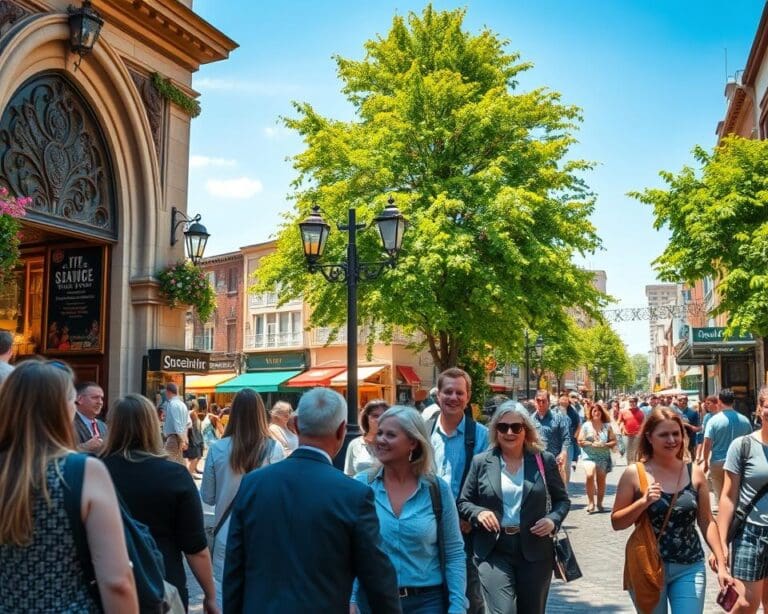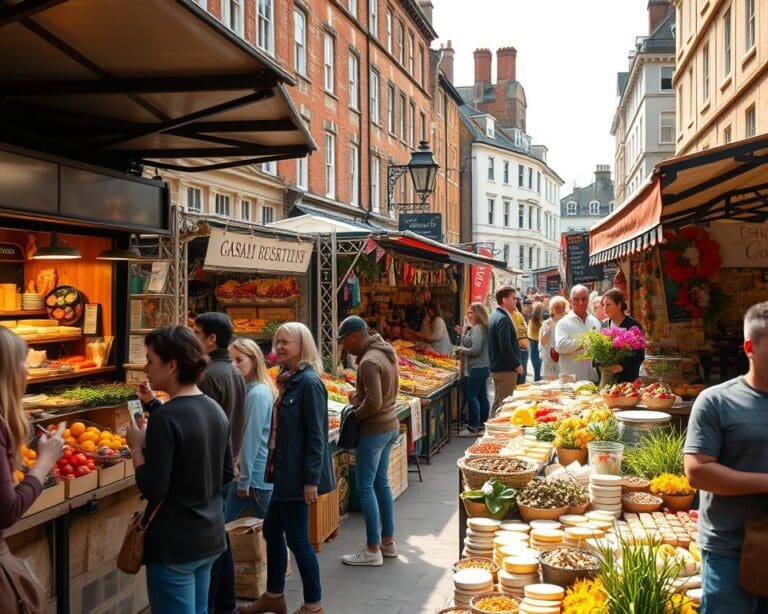
Walking tours unlock a city’s secrets by slowing the pace and sharpening the senses. They let you discover hidden city gems such as intimate courtyards, mural-covered alleyways, independent cafés, family-run workshops and forgotten monuments that rarely make guidebook pages.
Compared with buses or taxis, walking tours UK offer a scale that invites serendipity. Sensory engagement — the smell of fresh bread at Borough Market, the texture of Victorian brick in Salford’s industrial quarter, the colour-saturated walls of Shoreditch — turns ordinary streets into layers of meaning.
Cultural walking tours range from heritage trails and industrial histories to contemporary street-art routes in Bristol’s Stokes Croft and culinary walks in Edinburgh’s Grassmarket. Neighbourhood-led community walks, such as those in Notting Hill, bring local voices and daily life into view.
These walks appeal to many audiences: tourists seeking authenticity, locals who want to rediscover their town, photographers and writers after evocative scenes, and teachers using urban spaces as living classrooms. Later sections explain how to plan discovery-focused routes, the best times and gear for urban exploration UK, and how guides and apps can deepen what you find.
How can walking tours reveal hidden city gems?
Walking invites a close look. A short stroll through lesser-known districts can reveal layers of history, new flavours and local craft that you miss from a car or bus. Neighbourhood walking tours make this slow discovery feel like a series of small revelations.
Neighbourhoods off the beaten track
Explore former industrial quarters turned creative hubs, such as Manchester’s Ancoats and Glasgow’s Merchant City. These areas show rapid change: mills become studios, warehouses become cafés. A pedestrian route unfolds the city grid one block at a time, revealing shopfront details, paving textures and subtle shifts in building scale.
To find hidden neighbourhoods UK visitors should consult local council cultural guides, community blogs and entries on sites like Atlas Obscura. Business Improvement District pages and VisitBritain suggestions often point to streets where local life is most vivid.
Stories behind façades and monuments
Façades and monuments carry layered narratives that a tour can explain. Look for English Heritage blue plaques and local registers that mark people, events and architecture. Architectural plaques UK often flag a starting point for deeper inquiry.
A skilled guide transforms names and dates into human stories. Walking routes can link shipbuilding in Newcastle to Liverpool’s waterfront warehouses, or trace suffragette activity across central London. That context makes memorials emotionally resonant.
Meeting artisans and small businesses
Walking routes thread through micro-economies. You may meet bespoke shoemakers, print studios, family bakeries and independent bookshops. These encounters bring urban stories to life and offer chances to talk with makers and shopkeepers.
Respect matters: check opening times, ask before photographing interiors or people, and consider buying a small item to support local trade. Programmes like London’s Craft Central open studios, Manchester Makers Markets and Edinburgh Open Doors let walkers access workshops and meet creatives.
- Carry a map or app that highlights local events and markets.
- Plan brief stops to speak with owners without disrupting service.
- Note architectural plaques UK and blue plaques as prompts for further reading.
Planning a walking tour to uncover secret spots
A little planning lifts a good stroll into a revealing city hunt. Use a mix of primary sources and community wisdom to shape discovery walking routes that feel fresh. Historic maps from the National Library of Scotland, old Ordnance Survey sheets, local archives, community Facebook groups and curated apps such as Komoot or MapMyWalk all help to surface overlooked lanes and former industrial plots.
Researching routes that prioritise discovery
Think thematically to give a walk coherence. Trace a material such as brick or cobbles, follow an industry like textiles, track a notable resident or spot a repeating motif such as street art. This method steers you to hidden courtyards, small workshops and quiet terraces.
Use waypoints rather than rigid itineraries. Mark cafés, viewpoints and likely detours so the route allows spontaneous stops. Community blogs and local history groups often name sites that guidebooks miss.
Choosing the right time and pace
Time of day changes what you find. Early mornings reveal bakeries, markets and peaceful vistas. Late afternoons sharpen light for photos and bring long shadows. Evenings show pubs, live music and a different social rhythm.
Season affects the mood too. Spring and summer suit outdoor markets and festivals. Autumn offers warm light and fallen leaves. Winter gives atmospheric streets with fewer tourists. Pick the best time to walk cities based on the experiences you want.
Pace matters for discovery. Allow extra time for conversations, sketches or small museums. Typical discovery-focused walks span two to four miles with frequent stops, letting curiosity set the tempo.
Essential gear for exploratory walks
Prepare with practical walking tour gear that copes with UK weather. Comfortable waterproof footwear such as leather boots from Clarks or Danner will help on wet streets. A lightweight waterproof from Berghaus, a small daypack, refillable water bottle and a compact first-aid kit keep you moving.
Carry tools that aid exploration: a smartphone with offline maps, a compact camera or phone with stabilisation for low light, a pocket notebook and pen, plus a power bank. An umbrella and a portable seat pad add comfort for longer stops.
Remember accessibility and flexibility. A foldable walking stick and pre-checking gradients and surfaces help those with mobility needs. Plan start and finish points near National Rail, TfL or local bus links so you can adapt the route midwalk.
Use these slow travel tips UK to turn simple routes into slow, attentive journeys. Thoughtful planning walking tours unlock quieter corners and a fuller sense of place.
How guides and technology combine to enhance discovery
Guides and digital tools work together to deepen what you notice on a walk. Trained local guides bring archival fact and lived experience into one narrative. They offer pronunciations, contested histories and personal anecdotes that enrich a route. Look for recognised professionals such as Blue Badge guides or schemes listed by the Association of Professional Tourist Guides and VisitBritain when you want reliable context.
Local guides as storytellers
An experienced guide links official records with folklore and present-day life. Independent guides, City of London guides and museum volunteer walk leaders point out tiny details you would miss alone. Many specialise in social history, architectural conservation, culinary heritage or street art. Their specialisms give each walk a distinct interpretative lens and suggest off-route stops to explore.
Apps, audio tours and augmented reality
Walking tour apps and curated audio tours UK let you explore at your own pace. Platforms such as izi.TRAVEL and StoryTourist provide narrated routes while PocketGuide and custom Google Maps help with orientation. Augmented reality tours from TimeLooper and pilot AR projects overlay old photos or 3D reconstructions on the street to show how places have changed.
Use digital tools as companions rather than replacements for observation. Download offline maps to save data and battery. Be mindful when using AR in busy or sensitive heritage sites, and check app reviews for up-to-date accuracy before you trust a route.
Community-led and independent walking groups
Community walking groups and rambling clubs often reveal memories not recorded in archives. Local heritage walks, Ramblers Association outings and meetup groups highlight community gardens, allotments and memory walks for older residents. Smaller groups encourage deeper conversation and give access to personal histories.
To join, check council events pages, community centres, Meetup and Eventbrite. Friends of Parks groups and local archives often publish open invitations. Participation can lead to volunteering, oral-history projects and a stronger sense of place.
Turning discoveries into meaningful experiences
Turn fleeting finds into lasting memories by recording them simply and honestly. Keep a digital journal or blog, make a photo essay, or compile a small scrapbook with tickets and sketches. Use Google My Maps to pin places and build a personal route; this helps you make walking tours meaningful for future visits and for others who follow your trail.
When you tell the story of a place, focus on sensory detail and context. Note smells, textures and local voices, and — with permission — record quotes from residents. Link observations to larger histories such as industrial change, migration or conservation. Cross-check facts with trusted sources like Historic England or the National Trust to add depth and accuracy to your narrative.
Practise ethical tourism UK principles as you explore and share. Respect private property and local privacy, avoid drawing crowds to fragile sites, and follow conservation guidance at sensitive monuments. Support the local economy by buying from artisans and independent cafés, and consider donating to local museum funds or civic trusts rather than leaving informal gifts at sites you visit.
Share walking discoveries thoughtfully to help community knowledge grow. Leave constructive reviews on Google Maps, contribute photos to heritage projects, or volunteer with groups collecting oral histories and cataloguing monuments. Publish curated itineraries that include access details, best times to visit and sensitivity notes so others can replicate respectful discovery. Walk with curiosity, listen well and commit to actions that preserve hidden gems for everyone.