Smart home upgrades make modern living simple and within reach across the United Kingdom. From a single smart bulb to whole-house systems, home automation can be scaled to suit any budget and level of technical confidence.
Improved broadband and affordable connected home devices from Philips Hue, Google Nest, Hive, Ring, Yale and Amazon Echo have driven rapid adoption of smart home UK technology. That momentum sits alongside government and industry pushes for energy efficiency and net-zero targets.
The benefits are clear: greater convenience, remote control, automated routines, stronger security and measurable savings on energy bills. Many devices now integrate with smart meters, solar PV and modern boilers to optimise performance and cut waste.
This article is written for homeowners and renters in the UK seeking inspirational yet practical guidance. It covers options for DIY installers and those who prefer accredited electricians, heating engineers or professional tradespeople.
Over five short sections we explain why to modernise home with smart technology, outline essential devices, guide planning and installation, and show how upgrades can boost energy efficiency and sustainability. Each section builds on the last so you can plan phased, sensible upgrades that suit your home and lifestyle.
Why modernise your home with smart technology for convenience and lifestyle
Smart upgrades reshape daily life by streamlining control and creating comfort tailored to your household. The benefits of smart home systems reach beyond gadgets, offering genuine smart home convenience that fits busy UK routines. Many homeowners find connected living advantages in how devices work together to reduce fuss and save time.
Everyday benefits of connected living
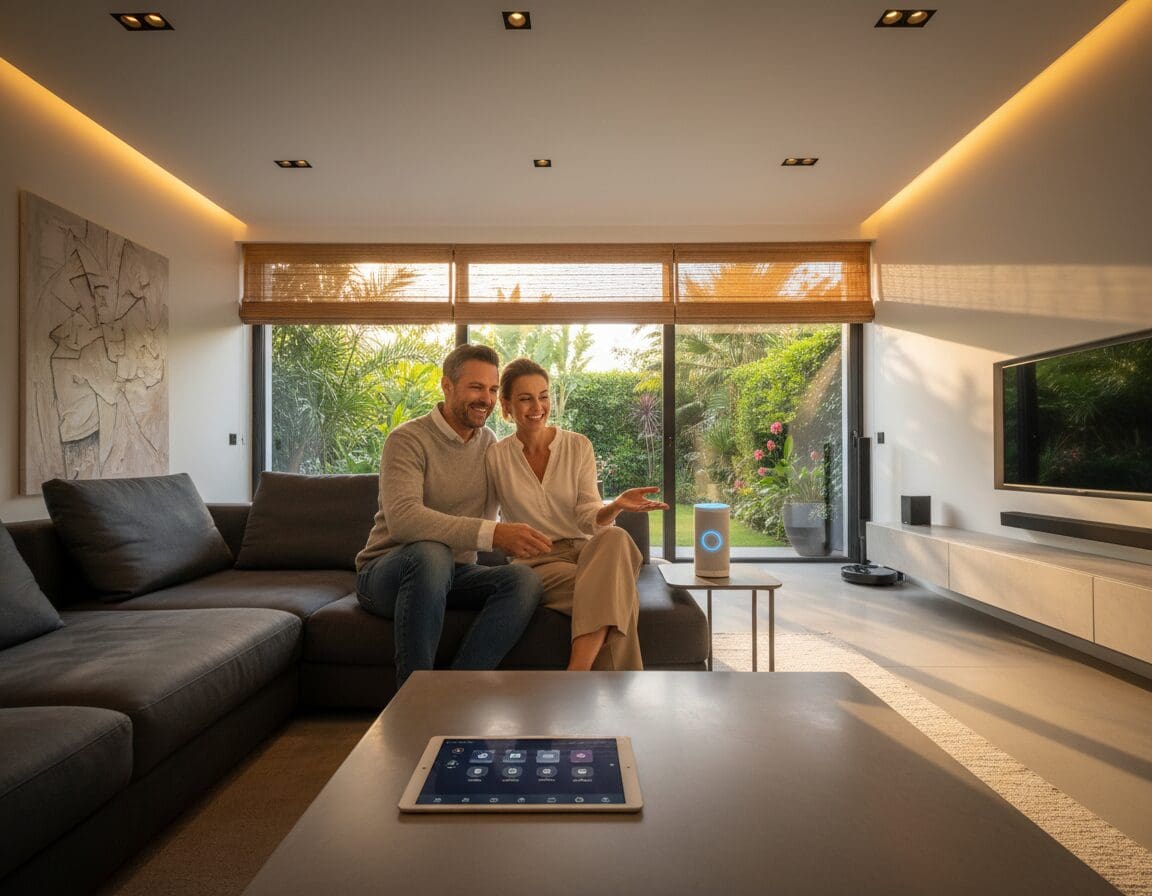
Smart devices centralise control through apps, voice assistants and schedules so lights, heating, blinds and entertainment act as one. You can arrive to a warm home with lights already on, check cameras while away, receive delivery alerts and keep an eye on elderly relatives with discreet sensors. Integration with BT, Sky Q and Smart Meter (SMETS2) compatibility means many UK systems plug into existing services. Common protocols such as Wi‑Fi, Zigbee and Z‑Wave help devices from brands like Philips Hue and Sonos cooperate smoothly.
How smart upgrades save time and simplify routines
Automation removes small, repetitive tasks by using schedules, geofencing, occupancy detection and triggers. For example, lights switch off and the thermostat lowers when the last person leaves. Morning routines can open blinds and start a kettle via a smart plug. Bedtime scenes lock doors and reduce heating automatically. Smart fridges and inventory apps can prompt grocery lists so shopping takes less mental energy.
Creating personalised scenes for mood and comfort
Personalised scenes combine lighting colour and brightness, thermostat setpoints, music and shading to craft modes such as Relax, Movie or Work. Systems from Philips Hue, LIFX, Sonos and Amazon Alexa support multi-device routines, while Home Assistant and IFTTT enable advanced automations. These home automation benefits improve accessibility by offering presets for mobility or sensory needs, letting people live more independently and with greater dignity.
smart home upgrades: essential devices and systems to consider
Modernising a house begins with choosing the right essential smart devices. Pick upgrades that offer clear day‑to‑day benefits and play well together. Below are practical options to transform comfort, safety and control without overwhelming a household.
Smart lighting gives instant impact. Smart bulbs from Philips Hue and LIFX suit simple retrofits, while in-line smart switches and dimmers provide whole-circuit control. Tunable white and colour bulbs help set circadian lighting, cut energy use with LED tech and create mood scenes for living rooms and bedrooms.
Motion-triggered lighting works well for hallways and stairs. Check wiring before fitting; some smart switches need a neutral wire. Use bulbs where wiring changes are impractical.
Heating is another high-impact upgrade. Leading smart thermostats such as Google Nest, Hive, Honeywell Home and Tado learn routines, offer zoning and support hot-water control. Geofencing and open-window detection help avoid wasted heating.
Compatibility with UK systems matters. Combi boilers, system boilers and heat pumps behave differently. Always consult a Gas Safe registered engineer for wiring or boiler interface work. Smart radiator valves from Danfoss and Tado extend control to individual rooms.
Air quality adds a layer of comfort. Devices from Awair and Netatmo monitor humidity, CO2 and VOCs so you can act on ventilation and keep family health in mind.
Connected security keeps homes safer. Doorbell cameras and outdoor units from Ring, Arlo, Nest and Eufy offer motion zones, person detection and two-way audio. Decide between cloud and local storage while weighing data privacy under UK law.
Smart locks from Yale, August and Nuki provide keyless entry and temporary codes for guests or tradespeople. Check compatibility with multipoint-locking doors before buying.
Alarms and sensors round out protection. Hybrid alarm systems, wireless PIRs and contact sensors can be self-monitored or professionally monitored by providers such as ADT or Verisure. Review GDPR and data security when selecting cloud-monitored services.
Voice control and central hubs bring everything together. Amazon Alexa, Google Assistant and Apple HomeKit each have strengths and device partners in the UK market. Choose one primary ecosystem early to reduce fragmentation.
Home hubs such as Samsung SmartThings or Home Assistant on a Raspberry Pi unify Zigbee, Z‑Wave and Wi‑Fi devices. Local-control solutions favour privacy and keep basic functions working if the internet drops.
Plan upgrades in layers: begin with smart lighting and smart thermostats for comfort and savings, add smart security for peace of mind, then introduce voice assistants and home hubs for seamless control.
Practical steps to plan, install and future-proof your upgrades
Modernising a home begins with a clear, room-by-room audit. Note security blindspots, chilly zones and poor lighting. That simple check helps you plan smart home upgrades that deliver daily benefits and add resale appeal.
Set realistic budget tiers before buying. A starter pack might include smart bulbs and a speaker. An intermediate tier can add a smart thermostat and security cameras. An advanced approach covers whole-house automation, NAS-backed storage and professional installation for complex systems.
Assessing your home, budget and priorities
Walk each room and list pain points. Prioritise items that improve safety, comfort or energy use. Consider accessibility for residents and what future buyers may value, such as smart heating and strong security systems.
Match upgrades to budget tiers. Choose a single high-impact device first, then expand. That keeps early spending modest while proving the value of smart home installation.
Choosing compatible ecosystems and open standards
Learn the main protocols: Wi‑Fi, Zigbee, Z‑Wave, Thread and Matter. Devices that support Matter or open standards give better smart home compatibility and smoother cross-brand operation.
Map devices to one primary control method, such as a central hub or a single voice assistant. Check whether manufacturers promise local control and long-term cloud support. In the UK, ensure broadband is reliable and consider a mesh system like Google Nest Wi‑Fi, Eero or Netgear Orbi for full coverage.
DIY versus professional installation: what to expect
Many upgrades suit a DIY smart home approach. Smart plugs, bulbs, cameras and voice assistants are quick to fit and simple to configure. More complex tasks, such as wiring light switches, integrating boilers or fitting multi-room speakers, may need a qualified electrician, a Gas Safe-registered engineer or an AV installer.
When hiring professionals, ask for references and confirm certifications such as NICEIC or Part P for electrical work and Gas Safe for gas appliances. Request written quotes and check warranties before any smart home installation.
Maintaining devices and ensuring regular firmware updates
Ongoing care keeps systems secure and reliable. Schedule monthly connection checks and quarterly firmware updates. Replace door-sensor batteries annually and back up automation settings on platforms like Home Assistant.
Adopt strong passwords, enable two-factor authentication and place IoT devices on a separate VLAN or guest Wi‑Fi where possible. Keep router firmware current and review cloud-storage subscriptions and privacy settings regularly.
- Monthly: check device connectivity and app access.
- Quarterly: run firmware updates and review permissions.
- Annually: replace batteries, test alarms and backup configurations.
These practical steps make smart upgrades resilient and future-ready. Thoughtful planning, attention to compatibility and a mix of DIY and professional installation will protect your investment and keep your home working for years.
Smart upgrades that enhance energy efficiency and sustainability
Smart upgrades can cut household energy use and carbon emissions by optimising heating, lighting and appliance use. Smart thermostats such as Nest and Hive, combined with smart radiator valves, create temperature zones and learn occupancy patterns to avoid heating empty rooms. Many households report smart thermostats energy savings of around 10–15% on heating bills when used with sensible controls and scheduling.
LED smart lighting, tunable white fittings and presence sensors reduce wasted lighting and improve wellbeing through adaptive colour and brightness. Motion sensors and daylight harvesting ensure lights operate only when needed. Smart plugs and energy monitors from brands like TP-Link Kasa and Sense make appliance scheduling and monitoring straightforward, cutting standby draw and allowing off-peak operation to lower running costs.
Home energy management systems link smart meter integration, solar PV and battery storage to prioritise self-consumption. These systems can schedule dishwashers, washing machines and EV charging for times of surplus solar or lower grid carbon intensity. Dashboards and real-time monitors turn consumption into clear feedback, helping households track cost and carbon savings and encouraging lasting behavioural change.
Smart controls also smooth the shift to low-carbon heating such as air-source heat pumps by enabling precise zoning and flow-temperature optimisation. Work with qualified heating engineers to ensure compatibility and best performance. Start with high-impact, low-cost measures and phase investment; sustainable smart upgrades deliver immediate convenience and meaningful long-term energy efficiency for any UK home.