
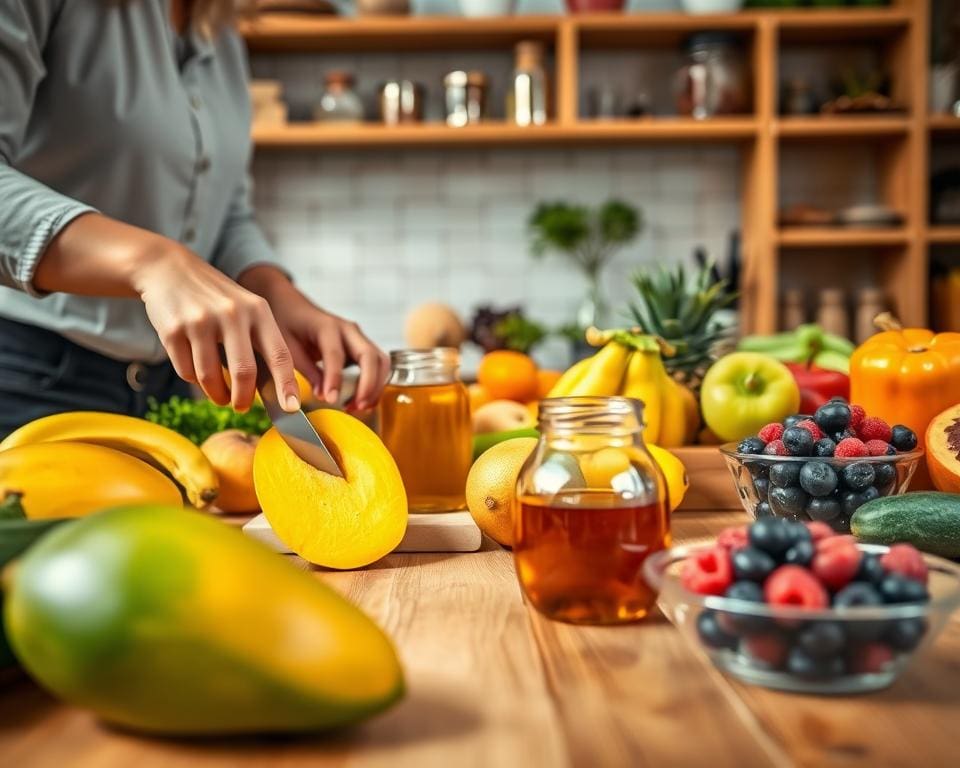
Cutting sugar doesn’t mean joyless eating. This guide shows how to reduce sugar intake naturally with simple, evidence-based steps you can use in everyday life across the UK.
We aim to provide practical sugar reduction tips UK shoppers can trust. Expect product reviews of items sold at Tesco, Sainsbury’s, Waitrose and Marks & Spencer, and brands such as Meridian, Alpro, Rude Health and Nākd. The focus is on realistic swaps, label-reading skills and natural sugar reduction that fit busy routines.
The article combines lifestyle advice with product evaluation. It will outline how to cut sugar naturally through lower-sugar breakfasts, drink alternatives, and better snack choices. You’ll also find guidance on natural sweeteners, how to lower sugar consumption without feeling deprived, and recipes to help sustain change.
Public health guidance underpins the suggestions. The NHS recommends adults limit free sugars to around 30g a day; high free sugar intake links to tooth decay, excess weight and higher type 2 diabetes risk. We advocate gradual change rather than abrupt restriction for lasting results.
Over eight sections we cover sugar basics, practical swaps, label literacy, craving management, sweetener pros and cons, meal planning and product recommendations, plus lifestyle habits for long-term success. Use these steps to reduce sugar intake naturally and build a sustainable approach to lower sugar consumption.
How can you reduce sugar intake naturally?
Cutting back on sugar need not feel like punishment. Small, steady changes bring clear wins for wellbeing and make a gradual sugar cut manageable. Below you will find a plain explanation of types of sugar, the health benefits low sugar can offer and practical ways to set sugar reduction goals you can keep.
Understanding added sugar versus natural sugars
The NHS describes free sugars as those added to food and drink by manufacturers, cooks or consumers and sugars naturally present in honey, syrups and fruit juices. These contrast with intrinsic sugars found within whole fruits and milk. Knowing the difference helps when choosing snacks and drinks.
Whole fruit contains fibre, water and phytonutrients that slow sugar absorption and blunt spikes in blood glucose. Fruit juice or refined sugar lack these features and behave more like free sugars in the body. Common UK sources of added sugar include soft drinks, sweetened yoghurts, breakfast cereals, confectionery, sauces such as ketchup and barbecue, plus many baked goods.
Health benefits of reducing sugar in daily life
Lowering intake brings measurable improvements. Better dental health is one immediate gain. Many people find steady energy and mood swings become less frequent.
Evidence links reduced added sugar to lower markers for type 2 diabetes and non-alcoholic fatty liver disease, plus easier weight management through a reduced calorie load. Skin and sleep can improve when diets contain fewer free sugars NHS guidance warns against.
Authoritative guidance from the British Nutrition Foundation supports balanced diets that limit free sugars and prioritise whole foods.
Setting realistic goals for gradual reduction
Use SMART goals to make change stick: specific, measurable, achievable, relevant and time‑bound. For example, cut sugary drinks from daily to twice weekly over four weeks. Reduce sugar in tea from two teaspoons to one within two weeks.
Track progress with tools such as MyFitnessPal or the NHS Food Scanner, or keep a simple food diary. Kitchen scales help with portion awareness, while counting teaspoons gives a quick visual of intake.
Personalised targets matter. Age, activity level and medical conditions like diabetes affect what is safe and sensible. Speak to a GP or a registered dietitian when needed to tailor sugar reduction goals to your health.
Practical swaps and food choices to lower sugar
Small swaps make a big difference when you want to reduce sugar without missing out on flavour. Start by choosing simple, satisfying options that fit into your daily routine. This keeps changes sustainable and makes the swap sugar UK approach realistic for families and busy workers.
Replacing sugary drinks with better alternatives
Many people underestimate how much sugar drinks add to a day. A 330ml regular cola can contain about 35–39g of sugar. Swap that for sparkling or still water, such as Highland Spring or Buxton, or make fizz at home with a SodaStream and a splash of 100% fruit juice for taste.
Unsweetened tea or coffee are easy choices and Ringtons teas are widely available. Try cold-brewed green tea or iced black tea with lemon. Unsweetened almond milk, like Alpro Unsweetened, works well in lattes. Check kombucha and premixed drinks, because many include added sugar; compare labels before you buy.
Lower-sugar breakfast and snack ideas
Swap sugary cereals and flavoured yoghurts for porridge made with rolled oats, cinnamon and a handful of berries. Natural Greek yoghurt topped with chopped nuts and seeds gives protein and crunch without excess sweeteners.
For snacks choose whole fruit such as apples or pears, vegetable sticks with hummus, or a handful of unsalted almonds or walnuts. Oatcakes with cottage cheese make a filling option. Look for lower-sugar bars from UK brands such as Nākd and Trek, but check sugar per serving before you buy.
Try simple recipes: overnight oats with chia and raspberries or Greek yoghurt with fresh raspberries and a teaspoon of honey if you want a touch of sweetness. These low sugar breakfast ideas and healthy low sugar snacks support steady energy and reduce cravings.
Choosing whole foods over highly processed options
Whole foods deliver fibre, vitamins and satiety while cutting hidden sugars. Choose whole grains like brown rice and wholewheat pasta, tinned beans with no added sugar, and fresh seasonal vegetables and fruit.
When shopping, read ingredient lists and pick minimally processed brands. Tin tomatoes without added sugar, savoury crackers with few ingredients, and mayonnaise or dressings with lower sugar formulations are practical choices. Emphasising whole foods over processed items makes the switch lasting and enjoyable.
Reading labels and recognising hidden sugars
Knowing how to read a label gives you control over what you eat. Start by scanning the ingredient list and the nutrition panel sugar figures. Small changes in choices can lead to big improvements in daily intake.
Common names for sugar on ingredient lists
- Sucrose, glucose, fructose and maltose — basic sugar names ingredients you will see often.
- Dextrose, inverted sugar, corn syrup and glucose‑fructose syrup — frequent in processed foods.
- High fructose corn syrup, barley malt, malt extract and molasses — used for sweetness and colour.
- Maple syrup, agave nectar, honey and fruit juice concentrate — natural options treated as free sugars by the NHS.
How to compare products for lower sugar content
Use a two-step approach to compare low sugar products. First, check sugar per 100g to compare similar items on the same basis. Next, look at sugar per serving to reflect how you actually eat the product.
- Read the per 100g value on the nutrition panel sugar section to rank options quickly.
- Then check serving size sugar to see the real impact for a typical portion.
- Use traffic light guidance: low (green), medium (amber) or high (red) sugar per 100g to make quick decisions.
- Compare similar items, for example cereals and yoghurts, and favour the lower sugar per 100g choice.
Apps and supermarket filters speed up the process. Try the NHS Food Scanner app or online filters from Tesco and Sainsbury’s to sort by sugar content when you shop.
Understanding nutrition panels and portion sizes
The label shows values per 100g and per serving. Per 100g lets you compare products consistently. Per serving shows the likely amount you will consume.
Watch for misleading packs. A product may look low sugar per 100g yet contain a large serving. Desserts, smoothies and ready meals can hide concentrated sugars when portion size is ignored.
Keep a short hidden sugars list in your head and check sugar names ingredients on every label. That habit helps you compare low sugar products fast and control serving size sugar at each meal.
Adjusting taste preferences and cravings
Changing how your food tastes takes patience and small steps. The brain’s taste system adapts when you cut back on sweetness. With consistent effort many people begin to notice less need for sugary treats within two to six weeks. These shifts make it easier to retrain palate sugar and enjoy naturally sweet foods.
Strategies to retrain your palate
Start by reducing sugar gradually rather than removing it all at once. Try halving the sugar in tea, coffee and porridge, then lower it again after a week. Dilute fruit juice with water and move to unsweetened varieties. Pick plain yoghurt instead of flavoured options to relearn what plain tastes like.
Expect changes in taste sensitivity. If you persist with lower sweetness you will notice flavours becoming brighter and sugar less overwhelming. This approach helps retrain palate sugar without feeling deprived.
Managing cravings with protein, fibre and healthy fats
Use balanced snacks to manage sugar cravings. Protein, fibre reduce cravings by slowing digestion and stabilising blood glucose. Combine foods for greater effect: an apple with Meridian natural peanut butter, or Greek yoghurt mixed with chia seeds.
Keep UK pantry staples on hand: rolled oats, canned legumes such as Heinz beans or supermarket brands, linseed and chia, tinned tuna, olive oil and natural peanut butter. A boiled egg with wholegrain toast makes a filling option that helps manage sugar cravings between meals.
Mindful eating practices to reduce impulsive sugar consumption
Pause before reaching for a sweet. Breathe, ask if you are truly hungry or simply bored, then decide. Keep a short craving log for a week to spot patterns and triggers. If a craving is brief try a distraction: walk for five minutes or drink a glass of water.
Make small environmental changes. Store high-sugar items out of sight and adopt a “one treat” rule with set portion size and timing. When you do have a sweet, savour it slowly to increase satisfaction. These mindful eating sugar reduction habits build control and reduce impulsive snacking.
Sweeteners and natural substitutes: benefits and drawbacks
Choosing alternatives to sugar can feel empowering. This short guide explains common options, how they behave in the body and practical ways to use them while lowering your overall taste for sweetness.
Overview of natural plant-derived options
Stevia and monk fruit are plant-derived non-nutritive sweeteners that offer near-zero calories. They are widely sold in the UK in sachets and tabletop blends from brands such as SweetLeaf and Splenda Stevia. Many people choose these natural sweeteners stevia monk fruit when they want to cut kilojoules without raising blood glucose.
Taste varies between products. Some users notice a mild bitter aftertaste with stevia. Trying small amounts in drinks or baking helps find a preferred brand and balance.
Impact of sugar alcohols and low-calorie sweeteners
Sugar alcohols include xylitol, erythritol and sorbitol. They provide fewer kilojoules than sugar because they are partially absorbed. That partial absorption tends to lower glycaemic impact compared with sucrose.
Eating large amounts of sugar alcohols xylitol erythritol can cause bloating or diarrhoea for some people. Xylitol is highly toxic to dogs, so pet owners must keep it out of reach.
Artificial low-calorie sweeteners such as aspartame, sucralose and saccharin appear in many diet drinks and tabletop packets. Food authorities such as EFSA regard them safe within set daily limits. Debate continues about long-term effects on appetite and the gut microbiome, so moderation matters.
How to use substitutes without perpetuating sweet preferences
Using sweeteners responsibly means viewing them as a stepping stone, not a permanent fix. Start by swapping one sugary item for a lower-calorie option, then reduce sweetness over weeks.
- Reduce portions and dilute sweetened drinks gradually.
- Combine small amounts of sweetener with cinnamon, vanilla or citrus zest to boost perceived sweetness from flavour, not sugar.
- Reserve low-calorie sweeteners UK products for occasional treats rather than daily staples.
Spices and natural extracts help retrain the palate. Over time, less-sweet versions of familiar foods will feel satisfying without relying on sweeteners.
Meal planning, recipes and product recommendations
Planning meals with low sugar in mind makes healthy eating feel achievable. Start with simple, tasty recipes and a shopping list that suits UK kitchens. This approach helps when building a weekly meal plan low sugar and keeps temptation at bay.
Quick recipe ideas
- Porridge with cinnamon and Tesco Frozen Mixed Berries. Use Quaker rolled oats and top with a few berries for sweetness without added sugar.
- Roasted salmon with quinoa and steamed greens. Buy quinoa from Sainsbury’s or Waitrose for reliable quality.
- Chickpea and vegetable curry with brown basmati rice. Use Napolina tinned chickpeas or supermarket own brands for convenience.
- Greek yoghurt and nut parfait. Choose Fage or Tesco Greek Style and add chopped nuts for texture.
- Avocado on wholegrain toast with chilli flakes and lemon. Simple, filling and free from added sugars.
Shopping list for these recipes
- Quaker rolled oats
- Tesco Frozen Mixed Berries
- Napolina tinned chickpeas or supermarket brands
- Sainsbury’s or Waitrose quinoa
- Fage or Tesco Greek Style yoghurt
Build a weekly plan
Choose three to four breakfasts, four lunches and four dinners for variety. Add healthy snacks so you do not reach for sugary options. Batch-cook grains, roasted vegetables and proteins at the weekend to speed up weeknight meals.
Portion meals into airtight containers for grab-and-go lunches. Prepare boiled eggs, chopped veg and hummus as quick snacks. Keep emergency low-sugar options like tinned tuna and oatcakes in the cupboard.
How to review products
When carrying out a low sugar product review, check sugar per 100g and per serving. Look for free sugars such as fruit juice concentrate on the ingredients list. Prefer items with higher fibre and protein to boost satiety.
Assess taste and texture in small packs before buying larger sizes. Compare Weetabix or porridge oats for breakfast, Alpro Unsweetened plant milk for cereals, Meridian natural nut butters for spreads, Fage Total or Skyr for low-sugar yoghurts and dark chocolate 70%+ for occasional treats.
If you want guidance on the best low sugar products UK, focus on simple ingredient lists and reliable brands. Reading consumer reviews helps confirm whether a product delivers on flavour as well as nutrition.
Lifestyle habits that support long-term sugar reduction
Poor sleep and high stress change hormones such as ghrelin and cortisol, which increase appetite for quick energy and sweet foods. Aim for seven to nine hours of sleep and use simple stress management techniques like mindfulness, breathing exercises or short walks. NHS Every Mind Matters offers practical tips that are free and accessible across the UK to help tackle sleep stress sugar cravings.
Regular physical activity improves insulin sensitivity and can curb cravings; meeting the UK guideline of 150 minutes of moderate aerobic activity per week plus a couple of strength sessions is a realistic goal. Exercise classes at local leisure centres or brisk daily walks are practical ways to make exercise reduce sugar cravings UK. Keep hydrated with water, herbal teas or sparkling water to help stabilise appetite between meals.
Create a supportive environment by involving household members and choosing lower‑sugar options at gatherings. When dining out, check menus in advance and ask for sauces on the side. Use behavioural tools like habit stacking — link a low‑sugar swap to an existing routine — and non‑food rewards to reinforce change. Weekly check‑ins help maintain momentum and measure progress for long term sugar reduction.
If you have diabetes, metabolic conditions or a history of an eating disorder, seek advice from a GP or a registered dietitian. Use UK resources such as the British Dietetic Association to find a specialist, and consult Diabetes UK for condition‑specific guidance. Small, consistent steps, informed choices and steady lifestyle habits reduce sugar naturally and make sustainable change feel achievable rather than perfect.