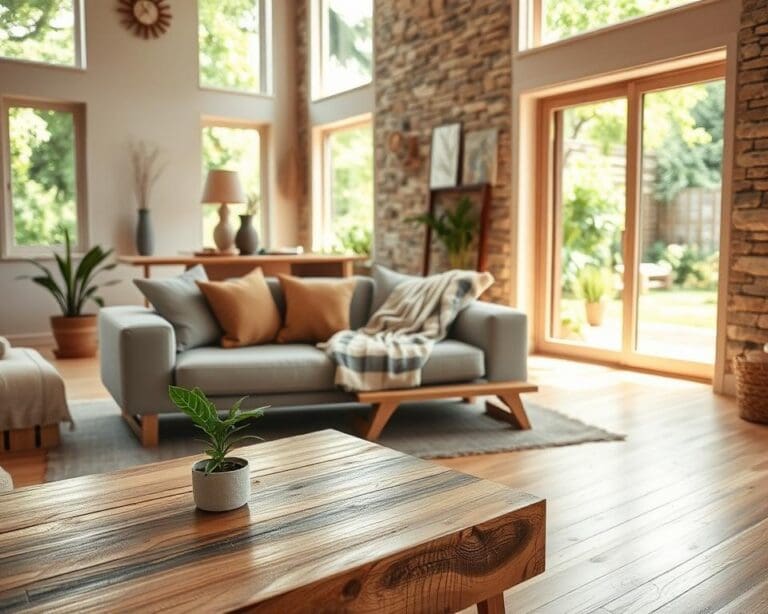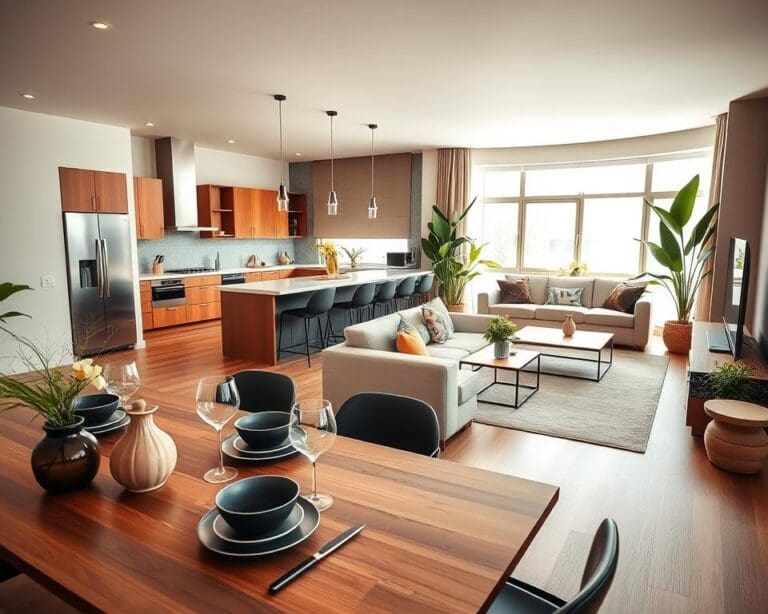
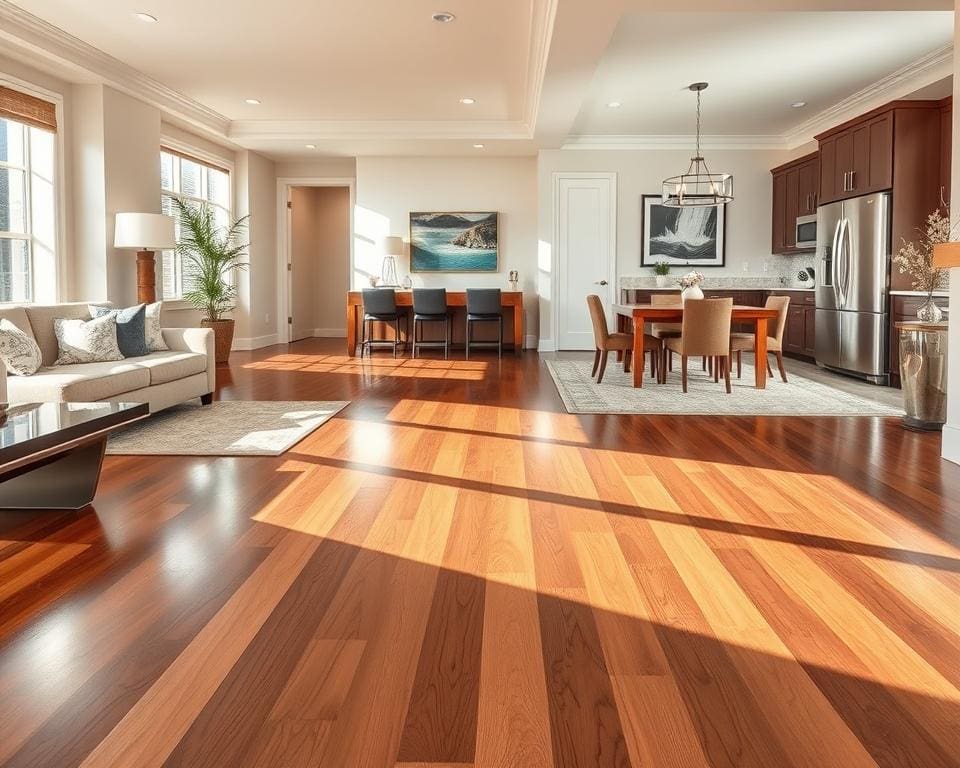
Flooring upgrades can revitalise a home in a single gesture. Replacing worn carpet or dated laminate with solid hardwood, porcelain tile or luxury vinyl instantly refreshes rooms and helps transform home décor with flooring that suits modern tastes.
By “flooring upgrade” we mean replacing or significantly improving floorcoverings — examples include engineered wood, natural stone, LVT, laminate and renewed carpets. These choices shape mood, guide colour schemes and set the tone for furniture and lighting decisions.
The interior design flooring impact is immediate and long term. New floors offer an instant visual refresh, better flow between rooms and a perception of higher value. They can correct outdated looks—such as orange-toned laminates—and introduce contemporary trends like wide-plank oak or large-format porcelain.
Practical floor renovation benefits also support aesthetics. Improved light reflection, reduced echo, greater wear resistance and easier cleaning help floors retain their appearance and keep design intent intact for years.
For UK homeowners, the right selection matters. Period terraces, open-plan refurbishments and dim flats each demand different solutions. Thoughtful flooring upgrades UK can brighten small rooms, respect heritage features or unify split living areas for a coherent look.
This article will guide readers through the visual impact of new floors, how to choose materials, and how colour, pattern and finish shape light and space, concluding with practical considerations to ensure lasting style.
How do flooring upgrades change interior aesthetics?
New floors can shift a room’s mood at once. The visual impact of new flooring is immediate: swapping worn carpet for pale oak or large-format porcelain alters light, scale and focus. Wide planks make narrow rooms feel wider. Large tiles cut visual clutter and create a seamless backdrop for furniture.
Immediate visual impact of new flooring
Choose tone and finish to control brightness and reflection. Pale, matt oak lifts north-facing living rooms common across the United Kingdom. Satin finishes bounce light without glare, keeping contrast gentle. In practice, replacing dark carpet with light engineered wood often boosts perceived ceiling height and brightness.
Stylistic cohesion and design direction
Flooring sets the scene for paint, furniture and soft furnishings. Neutral oak or a grey luxury vinyl tile supports both classic and contemporary schemes. Using the same material through an open-plan layout enhances flooring style cohesion and makes transitions feel intentional.
Historic properties benefit from reclaimed or engineered wood that respects period detail. Modern loft conversions gain edge from porcelain or polished concrete. Brands such as Amtico, Karndean and Quick-Step influence available finishes and steer design direction.
Practical aesthetic benefits
Durable surfaces preserve the look of a room under daily use. Trusted makers like Tarkett and Forbo supply hardwearing options suited to busy UK hallways. Flooring practical benefits include stain resistance and easy care, which keep interiors looking fresh in homes with pets or children.
Consider thermal and acoustic gains too. Underfloor heating-compatible boards and tiled systems maintain aesthetic intent while adding comfort. A thoughtful floor transformation before after can raise resale appeal and signal quality to prospective buyers.
Choosing flooring materials to define room character
Choosing flooring sets the tone for a room. A careful pick can add warmth, introduce elegance or bring practical style that suits family life. Below are three paths to shape character through material, finish and function.
Hardwood and engineered wood for warmth and timeless appeal
Solid oak, maple or walnut give an authentic feel with rich grain and depth. When you weigh hardwood vs engineered wood, remember engineered planks cope better with UK humidity and work well over underfloor heating.
Finish choice changes mood. Oiled oak highlights texture. Matte lacquer reads contemporary. Smoked or whitewashed boards soften a room’s tone.
Maintenance differs. Sandable solid floors can be refreshed many times. Engineered options from makers such as Junckers and BOEN offer durable wear layers for busy households.
Tile and stone for elegance and durability
Porcelain, limestone, slate and travertine create a refined look that lasts. Many homeowners opt for large-format porcelain as it mimics natural stone while cutting porosity.
Tile and stone flooring UK options suit wet rooms such as kitchens and bathrooms and pair well with underfloor heating for comfort underfoot.
Good installation matters. Prepare the subfloor correctly and use a specialist tiler. Natural stone will need sealing from time to time to protect appearance.
Luxury vinyl and laminate for versatile style and practical living
Luxury vinyl tile copies wood, stone and patterned designs with impressive durability. Consider luxury vinyl flooring benefits if you need water resistance for kitchens, conservatories or rental flats.
Laminate offers quick installation, affordable visuals and a wide range of laminate flooring styles. High-definition printing now produces convincing timber grain and pattern options.
Both choices suit busy homes. Look for strong wear layers, click-install systems and credible certifications such as FSC or EPDs when you choose flooring for room character.
Colour, pattern and finish: shaping light and space
Choosing the right floor changes how a room feels. Light plays with colour, pattern and finish to alter scale and mood. A careful palette and considered layout help you make small rooms feel airier or large rooms feel warmer. Below are practical ideas to guide decisions about flooring colour and light, flooring patterns and layouts, finish and texture flooring and how flooring shapes space.
How colour palette affects perceived space and light
Light-toned floors such as pale oak or bleached finishes reflect daylight and make north-facing or compact UK rooms feel larger. Dark walnut and wenge add drama and anchor furniture, but need lighter walls and fabrics to avoid a closed-in effect. Warm tones like honey oak create a cosy setting, while cool greys offer a modern, minimalist backdrop.
Match skirting and stair treads to create continuity, or choose a contrast to highlight architectural detail. Small adjustments in tone will shift perception of depth, so test samples in each room at different times of day.
Pattern and layout as design statements
Classic herringbone, chevron and parquet bring period character and visual motion. Straight-laid planks give a clean linear flow that suits contemporary schemes. Tile patterns such as brick bond, grid and basketweave set rhythm and scale, influencing how the eye moves through a space.
Feature insets or contrasting borders define zones in hallways and receptions. Keep practicalities in mind: complex patterns may need more material and skilled installation, and existing subfloor geometry can affect feasibility.
Surface finish and texture influencing ambience
Matt finishes read as modern and understated. Satin offers a soft sheen that hides small marks, while high gloss reflects more light and shows wear. Textured surfaces like hand-scraped wood, brushed finishes or honed stone add tactile depth and conceal daily imperfections.
Consider slip resistance for bathrooms and kitchens; textured LVT and honed stone provide grip without sacrificing style. Directional lighting emphasises grain and texture, changing perceived warmth and depth and showing how finish and texture flooring interact with light.
When you combine palette, pattern and finish thoughtfully, you control how flooring shapes space and set the scene for every interior style.
Practical considerations that support lasting aesthetics
Start with the subfloor: a level screed, correct moisture barriers and the right underlay or adhesive are the foundations of a good result. Poor preparation causes hollow spots, warped boards and grout failure, so follow flooring installation considerations closely and use installers with TrustMark or recognised trade association credentials when possible.
Match materials to the home and heating. Underfloor heating and flooring compatibility differs by product; engineered wood, porcelain and many luxury vinyl tiles tolerate warmth better than solid timber. Check manufacturer guidance to avoid thermal mismatch and minimise expansion, especially in older, draught-prone properties.
Plan maintenance from day one to protect your investment. Simple flooring maintenance UK routines—daily sweeping, microfibre mopping and pH-neutral cleaners for sealed stone—preserve finish and colour. Add protective measures such as felt pads, door mats and rugs in high-traffic zones to extend life and reduce surface damage.
Think long term about cost, sustainability and resale. Durable flooring solutions like quality hardwood or natural stone can be refinished and add real flooring for resale value, while LVT offers lower upfront cost and easy upkeep for rental properties. Choose responsibly sourced materials, low-VOC adhesives and check warranties and environmental declarations to align aesthetic ambition with practical resilience.