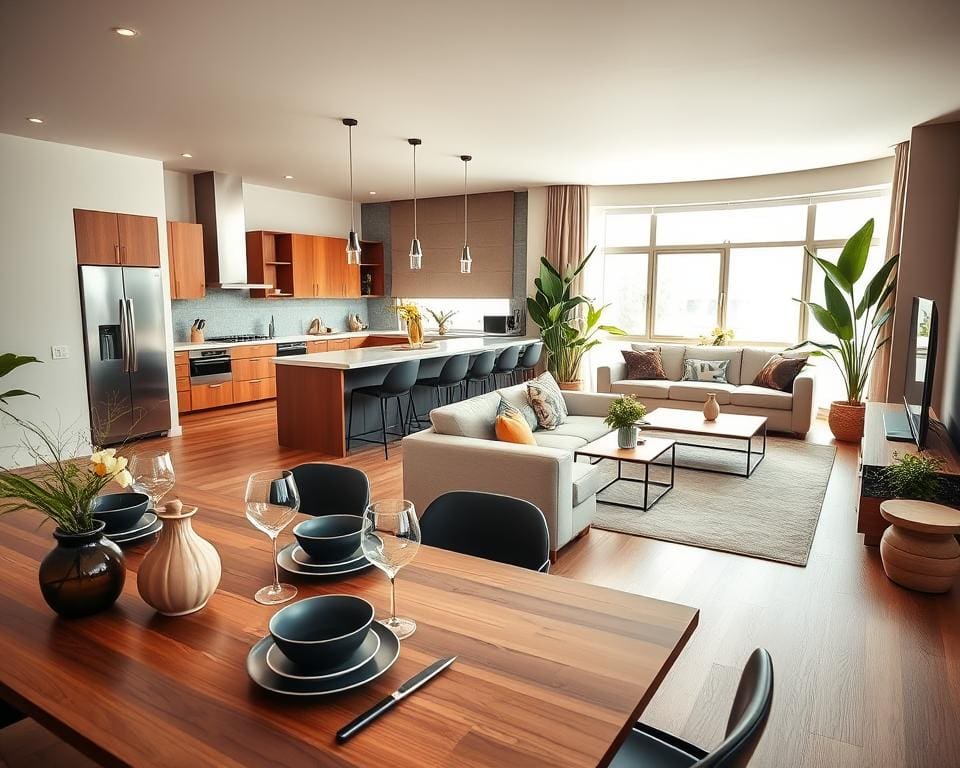
Open-plan layouts remove the traditional dividing walls between kitchen, dining and living areas to create one continuous, flexible living zone. In practice, open-plan living lets sightlines run freely, brings more natural light into the heart of the home and gives rooms a breathable, modern feel.
Across the UK, contemporary architecture and interior design trends have made open-plan homes UK increasingly popular. Developers and self-builders favour these layouts in urban flats and suburban houses to maximise perceived space. At the same time, a cultural shift towards informal family life and flexible working has accelerated demand for the benefits of open-plan design.
This article will explore how open-plan layouts transform living spaces in practical and visual ways. Expect to read about enhanced sightlines and daylight, social changes such as easier entertaining and family interaction, and the rise of remote working in communal zones. We will also cover design strategies to keep aesthetic cohesion and material flow, alongside practical matters like acoustics, storage and planning considerations.
Our audience includes homeowners planning renovations, new-build buyers, interior designers and renters seeking styling ideas for rented flats. Later sections will balance inspirational styling ideas with pragmatic advice for British homes, from Victorian terraces to modern apartments.
Where walls are removed, homeowners should be aware of load-bearing investigations and building regulations approval. This introduction sets the scene for practical guidance on costs and renovation steps in later sections.
How do open-plan layouts transform living spaces?
Removing dividing walls immediately alters how a home feels. Open-plan benefits show up in unbroken sightlines that connect kitchen, dining and living zones. A kitchen island can act as a visual anchor while a consistent floor finish links each area, giving a greater sense of flow.
Immediate visual impact and sense of space
When walls come down, natural light travels much further. Positioning glazed doors or tall windows lets daylight flood deep into the plan. Internal glazed screens and frosted partitions keep light moving while offering subtle separation where needed.
Design tricks boost perceived space. Continuous flooring, low-profile furniture and pale wall colours reduce visual breaks. Mirrors and glossy surfaces reflect light and extend views, making even modest rooms feel larger than their actual square footage.
Social and lifestyle transformations
Open plans encourage social living by keeping family and guests connected. Kitchens become hubs where cooking and conversation happen at the same time. Hosts can prepare food and remain part of the gathering, which changes how people use their homes.
Flexible furniture supports varied routines. Extendable tables, sofa beds and storage benches let a single area serve dining, play, work and rest. Many households now carve out work nooks within the open plan to support remote work without losing the communal feel.
Modern living patterns favour adaptable spaces. Blended schedules for homeworking and childcare benefit from layouts that allow supervision and ease of movement. Wireless speakers and integrated charging points help technology sit comfortably within social zones.
Aesthetic cohesion and material flow
Using a consistent palette unites separate functions into cohesive interiors. Timber tones, stone worktops and brass or matte black fittings create harmony across zones. Repeating materials keeps the eye moving and prevents the scheme from feeling fragmented.
Anchors give each area identity without walls. A fireplace, a large rug or a striking island can define a zone while preserving openness. These focal points guide circulation and ground furniture arrangements.
Layering texture adds depth and comfort. Rugs, cushions and varied finishes delineate areas while retaining the open feel. For British homes, consider oak floors, slate hearths, woven rugs and linen curtains to balance warmth with restraint.
Design principles for successful open-plan living
Good open-plan design begins with clear thinking about how each part of a home will be used. These principles help create spaces that feel connected yet purposeful. Apply simple strategies for layout, movement and comfort to make open-plan living both beautiful and practical.
Spatial zoning without walls
Create distinct areas by arranging furniture to form natural boundaries. Place sofas back-to-back or facing a fireplace to mark a living zone. Position the dining table close to the kitchen to form a dining area. Use open shelving or a console to separate an entrance without blocking sightlines.
Rugs, lighting and ceiling treatments reinforce zones. Area rugs anchor seating groups. Pendant lights highlight dining islands. Exposed beams or a lowered ceiling over a sitting area offer subtle separation while keeping the plan open.
Built-in storage keeps clutter out of view and preserves free movement. Full-height joinery, kitchen pantries and concealed benches provide practical storage. British joinery workshops and brands such as deVOL or Magnet offer bespoke options that fit period or modern homes.
Circulation and flow
Plan routes so people move easily between kitchen, dining and lounge. Keep main walkways around 800–1000mm where traffic is busiest to avoid bottlenecks. Leave clear access beside islands and between seating groups.
Balance private and communal spaces by locating bedrooms and bathrooms away from main living zones. Corridors, pocket doors and glazed screens help protect quieter areas. Place work nooks where background noise is low to reduce interruptions during calls.
Acoustic and privacy considerations
Use sound-absorbing materials to control reverberation. Thick curtains, upholstered furniture and rugs cut echo. Acoustic wall panels and bookcases help dampen noise between zones. These are practical acoustic solutions that blend with décor.
For occasional separation, choose sliding doors, folding screens or glazed pocket doors. They keep visual continuity when open and provide privacy when closed. Select discreet hardware and finishes that suit both Victorian terraces and contemporary new builds.
Where needed, integrate mechanical systems to support comfort and privacy. Zoned heating and ventilation keep different areas comfortable without noisy radiators. Underfloor heating frees wall space and maintains a clean, uninterrupted aesthetic.
Practical benefits and challenges for homeowners
Open-plan living brings clear practical gains for family life and long-term value. Use this section to weigh the everyday benefits open-plan schemes deliver against common issues and the renovation costs you should expect in the UK context.
Benefits to everyday living
Families enjoy better connectivity. Parents can supervise children while cooking and keep an eye on homework at the dining table. Shared space encourages informal meals and simpler routines that knit daily life together.
Natural light often improves across the whole ground floor, cutting reliance on artificial lighting. Simple upgrades such as double-glazing, insulated flooring and LED lighting boost energy efficiency and help lower bills.
A well-executed open plan lifts property appeal. Many buyers in UK markets prefer bright, flexible layouts. Thoughtful design and quality finishes can raise marketability, though poor execution may harm value.
Common challenges and how to overcome them
Noise can be an issue in busy homes. Create quiet zones for work or reading and use soft furnishings, acoustic panels and rugs to absorb sound. Set routines so noisy activities do not clash.
Tidiness is essential when rooms are visible at once. Fit practical storage such as boot rooms, utility cupboards and integrated bins. Simple habits, like clearing surfaces each evening and rotating chores, keep the space welcoming.
Heating an open area needs careful planning. Zoning with thermostatic radiator valves, multi-zone controls or underfloor heating keeps comfort consistent. Ensure boilers or heat pumps are sized correctly for the larger volume.
Cost and renovation considerations
Removing walls may be structural work. Load-bearing walls often require calculations and a steel beam or RSJ, plus Building Control approval under UK building regs. Appoint a structural engineer and engage building control or a certified inspector early.
Budget for finishes, joinery and acoustic treatments as well as the structural bill. Typical cost areas include structural works, new flooring, bespoke kitchens, joinery, lighting and soundproofing. Allow a contingency of 10–20% and get multiple quotes from reputable tradespeople.
Planning permissions and listed-building rules can affect scope. Alterations in conservation areas or to listed buildings may need listed-building consent or planning permissions. Contact your local planning authority at the start to learn permitted approaches and acceptable materials.
Styling tips and inspirational ideas for UK homes
Start with neutral backdrops to unify an open-plan living area. Use off-whites, soft greys and warm beiges on walls and large pieces to create calm. Add personality with accent colours in cushions, artwork, ceramics or painted cabinetry; these touches are easy to swap seasonally to refresh the scheme without a full redecoration.
Choose natural materials for longevity and warmth. Oak flooring, ash-veneered joinery, stone or composite worktops and tactile textiles such as wool and linen build a cohesive look. Source from British suppliers and local joiners or reclaimed timber specialists to honour craft traditions and ensure authentic finishes that age well.
Plan layered lighting to shape mood and function. Combine ambient illumination with task lights over worktops and reading corners, and use accent lamps for art or architectural features. Statement pendants above an island or dining table define zones, while integrated LED downlights give even coverage; include dimmable circuits to adapt atmosphere.
Adapt solutions to property type: for small flat solutions, pick space-saving furniture, built-in storage and light-reflecting finishes to maximise footprint. In period home conversions, open up rooms sensitively, retain cornices and fireplaces, and consult conservation officers before structural change. For family homes, create durable zones with washable fabrics, smart play storage and a modest home-office corner with sound-dampening options.
Practical takeaways are simple: harmonise flooring, establish a clear focal anchor such as an island or sofa arrangement, install layered lighting with dimmers, and invest in smart storage to keep the open-plan styling calm and orderly. Work with experienced interior designers, architects or certified builders and use mock-ups or 3D visualisations before committing to major changes.