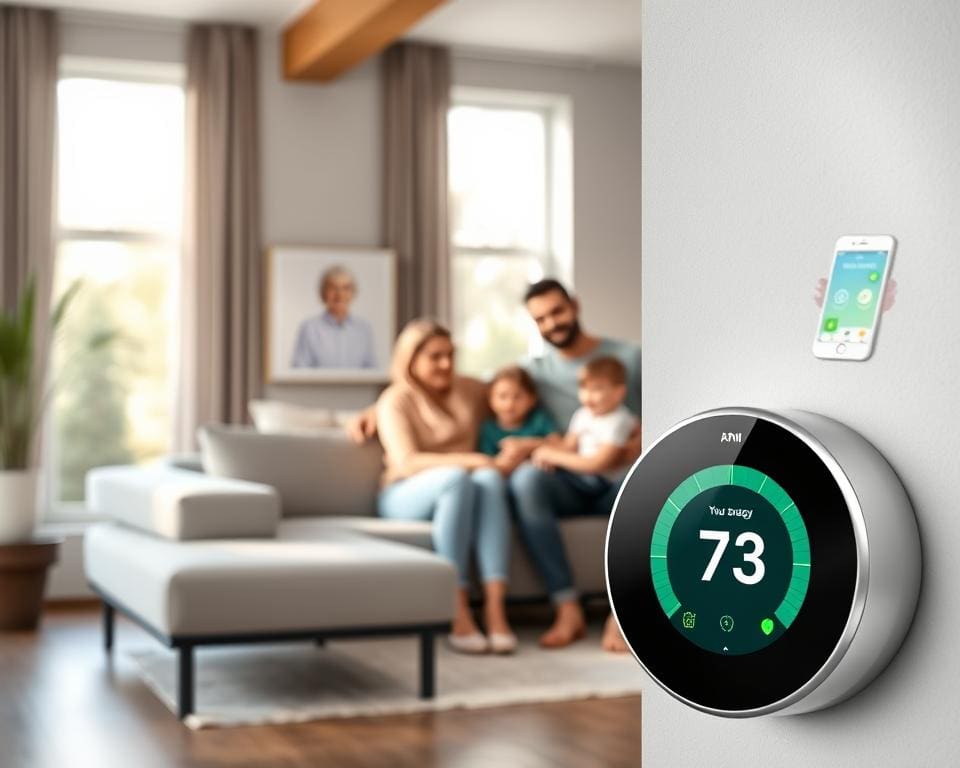
Smart thermostats are connected, programmable HVAC controllers that use sensors, algorithms, and internet connectivity to keep homes comfortable while cutting waste. Brands like Google Nest, ecobee, and Honeywell Home combine motion sensors, learning software, and remote access to deliver smart thermostat benefits that matter to modern U.S. households.
These energy-saving thermostats reduce heating bills and reduce cooling bills by automating schedules, learning occupant patterns, and using presence detection such as geofencing. They also link to weather forecasts and adjust setpoints before hot or cold days arrive. Remote control and integrations with smart home ecosystems boost smart home efficiency and let homeowners fine-tune savings in real time.
Adoption is rising across the United States thanks to utility rebate programs, ENERGY STAR guidance, and federal and state incentives for energy-efficient upgrades. Many consumers choose smart thermostats to lower bills, gain convenience, and support sustainability goals.
Viewed as a small, accessible step toward a greener household, a smart thermostat can deliver measurable drops in energy use and carbon emissions when paired with good habits and reliable devices. Manufacturer specifications from Nest and ecobee, utility program data, and Department of Energy estimates back these claims and help set realistic expectations for savings.
How do smart thermostats save energy?
Smart thermostats cut energy use by matching heating and cooling to real life. They learn habits, react to presence, let you change settings from anywhere, and tie into broader smart home systems. These four approaches keep homes comfortable while trimming wasted runtime on HVAC equipment.
Adaptive learning and personalized schedules
Learning models like Google Nest watch temperature changes, occupancy patterns, and manual overrides. Over time the device creates personalized temperature schedules that require little to no manual programming. Rule-based units from ecobee and Honeywell let users build custom weekday and weekend setback profiles for predictable households.
Both approaches reduce HVAC runtime by avoiding unnecessary conditioning during empty periods or sleep. Many manufacturers and studies report single-digit to double-digit percent reductions in HVAC energy use, depending on climate and prior behavior.
Geofencing and presence detection
A geofencing thermostat uses a smartphone’s location to flip between home and away modes automatically. Multi-occupant detection and motion sensors, such as ecobee SmartSensor, stop false away triggers when someone is still inside.
This setup triggers immediate setbacks when the last person leaves and preconditions the house before return. The result is less wasted conditioning and a comfortable home on arrival.
Remote control and real-time adjustments
Mobile apps and voice control through Amazon Alexa, Google Assistant, or Apple HomeKit let homeowners change settings from anywhere. On-the-fly adjustments, scheduling tweaks, and system monitoring are all available via smartphone.
Apps provide real-time alerts for extreme temperatures and equipment issues so users can stop energy waste from stuck cycles. Many dashboards offer weekly or monthly summaries that nudge users toward smarter habits through clear usage analytics.
Integration with smart home ecosystems
Thermostats that support smart home integration coordinate with smart vents, sensors, lighting, and automation platforms to form energy-saving scenes. An away scene can lower HVAC activity and shut off lights at once.
Integration extends to utility programs for demand response and time-of-use pricing, enabling setpoint shifts during peak grid events for financial incentives. Look for interoperability across Wi‑Fi, Zigbee, Z‑Wave, and Thread and compatibility with major platforms to ensure seamless automation.
Explore how learning schedules and geofencing work in real homes with practical examples from tado° and Google Nest on this guide: how smart home technology improves daily.
Energy-saving features and technologies to look for
Smart thermostats bring multiple tools that cut energy use while keeping comfort. Look for systems that act when you are away, adapt to weather, and learn your habits. The right mix saves money and reduces strain on HVAC equipment.
Auto-away, eco modes, and smart scheduling
An auto-away thermostat detects no occupancy and shifts to energy-saving setpoints after a set time. This prevents heating or cooling empty rooms and trims runtime on weekends and workdays.
An eco mode thermostat holds wider setpoint bands to reduce HVAC cycling. Use eco modes during daytime work hours or overnight to lower bills with minimal comfort loss.
Smart scheduling goes beyond one daily program. Choose thermostats that support multi-zone scheduling, gradual ramps, vacation modes, and separate comfort profiles for sleep and active hours. These options let you lower heat by 7–10°F while away or overnight and raise AC setpoints a similar amount, yielding meaningful savings without discomfort.
Weather forecasting and temperature setback
A weather-responsive thermostat pulls local forecasts to make smarter choices. It can preheat before a cold snap or cool ahead of a hot afternoon to use less energy during peak demand.
Temperature setback strategies should consider a home’s thermal inertia. Adaptive setbacks precondition the space so less energy is used overall while comfort is retained during peak conditions.
Utilities sometimes pair with smart thermostats for grid-friendly programs. During high demand, thermostats may nudge setpoints to ease load, helping prevent outages and lowering system stress.
Learning algorithms versus rule-based controls
True learning thermostats infer patterns over time and can build schedules with little input. Nest is a well-known example that reduces setup work. These systems suit homeowners who prefer set-and-forget simplicity.
Rule-based controls follow explicit schedules or triggers. Many ecobee and Honeywell models offer predictable control and strong multi-zone coordination. These systems let users create tight schedules and custom sensor networks.
Choosing between learning thermostat vs programmable models comes down to preference. If you want automatic adaptation, pick a learning option. If you value explicit control and multi-occupant coordination, select a programmable, rule-based thermostat with sensor ecosystems.
Cost savings, efficiency gains, and environmental impact
Smart thermostats deliver clear value for homeowners who want lower bills and a greener footprint. Real-world results depend on climate, home insulation, and how the household used the old thermostat. ENERGY STAR and many manufacturers report typical thermostat energy savings of 8–15% for heating and 10–12% for cooling for many users. These ranges help set realistic expectations when comparing models and rebates.
Estimating energy and bill savings
Estimate savings by comparing baseline runtime with projected runtime after installation. Use on-device energy reports, manufacturer calculators, or utility rebate estimators to get tailored numbers. Key factors include baseline thermostat habits, local energy rates, HVAC efficiency ratings such as SEER and AFUE, and whether the utility uses time-of-use pricing.
As an example, a moderate U.S. home that cuts HVAC runtime by 10% might see a noticeable drop in annual bills. Calculate savings by multiplying the percentage reduction in runtime by your annual HVAC energy cost. This method gives a practical dollar estimate without claiming a universal figure.
Impact on HVAC lifespan and maintenance
Optimized runtime reduces unnecessary start-stop cycles, which can help extend HVAC lifespan and lower repair frequency. Fewer cycles put less stress on compressors and furnaces, so a well-programmed thermostat can extend HVAC lifespan when paired with proper system sizing and staging.
Some systems can suffer from aggressive cycling or mismatched setpoints. A professional HVAC evaluation ensures compatibility, correct wiring, and optimal staging for multi-stage systems. Smart thermostat apps often provide maintenance reminders and preventative alerts that prompt timely filter changes and system checks.
Carbon footprint reduction and sustainability benefits
Lower energy use from a smart thermostat reduces household CO2 emissions from electricity and natural gas. Participation in demand response programs can cut reliance on peak fossil-fuel generation and support grid stability. On a community scale, wide adoption contributes to broader emissions reductions and programs from utilities aimed at decarbonization.
Homeowners can quantify impacts by applying local grid emission factors to estimated energy reductions. This approach turns thermostat energy savings into a measurable environmental benefit and ties home upgrades to sustainability home energy goals.
Installation, compatibility, and choosing the right smart thermostat
Start by confirming thermostat compatibility with your HVAC system. Many Wi‑Fi models require a C-wire requirement for continuous power, and support varies for heat pumps, multi-stage HVAC thermostat setups, and 120/240V electric systems. Use manufacturer tools like the Nest Compatibility Checker or ecobee compatibility guides, or call a licensed HVAC technician to verify wiring and system match before purchase.
Decide whether to do a DIY smart thermostat installation or hire a pro. Many homeowners can complete a simple low-voltage install in 30–90 minutes, but professional services from HVAC contractors or retailer programs add peace of mind. Expect potential extra costs such as a C‑wire adapter, professional labor, or smart sensors for multi-zone coverage.
Choose features that fit your household. Prioritize presence detection and multi-sensor support for larger homes, learning algorithms for hands-off control, or robust scheduling and remote control for busy families. Also consider interoperability: if you use Apple HomeKit, Amazon Alexa, or Google Home, pick a model verified to work with those ecosystems and check if your utility accepts the device for rebates or demand-response programs.
Factor incentives and payback into the decision. Federal, state, and utility rebates can lower upfront costs; ENERGY STAR–certified smart thermostats often qualify for instant rebates. Combine purchase price, installation, annual savings, and rebates to estimate payback—many households recoup costs within 1–4 years. Before installing, audit insulation and HVAC efficiency, then check compatibility, evaluate features against lifestyle, seek rebates, and choose DIY or professional install to maximize savings and comfort.