Creating a harmonious home environment involves an intricate dance between style and function. In the world of home design, it is essential to cultivate stylish living spaces that not only capture your personal aesthetic but also serve practical purposes. Through thoughtful planning and execution, you can discover how to blend style and function to achieve a beautifully cohesive atmosphere.
Emphasising the importance of functional spaces encourages you to consider how your unique tastes can merge with your daily needs, resulting in a home that is both inviting and efficient. From selecting the right furnishings to implementing savvy interior design tips, each decision contributes to the overall experience of your living area. By embracing the synergy between comfort and style, you can create spaces that echo your individuality while maintaining a functional appeal. Explore further insights on how to harmonise these elements effectively in your home by visiting this guide.
Understanding the Importance of Style and Function
In the realm of home design, grasping the importance of style and function is essential. Style embodies the visual aesthetics, such as colour schemes and decor, creating a distinctive identity for a space. Function, in contrast, refers to the effectiveness of a space in fulfilling its intended purpose. Achieving a harmonious blend of these elements ensures a dwelling is both inviting and practical.
Defining Style and Function in Home Design
Style is often described as the soul of a home. It is the interplay of colours, textures, and furnishings that together, present a cohesive aesthetic appeal. Meanwhile, function relates to home functionality, highlighting how a room accommodates daily activities and lifestyles. Understanding this duality provides insight into creating a space that reflects personal taste while promoting efficiency.
The Balance Between Aesthetics and Usability
Striking a balance between aesthetics and usability in design is vital. A room can display striking beauty yet lack the essential features for comfortable living. Successful designs consider both aesthetic appeal and usability, paving the way for spaces that serve everyday needs without sacrificing visual charm. This equilibrium encourages creativity in home layouts, leading to environments that inspire and function seamlessly.
How do you combine style and function at home?
Creating a harmonious blend of style and function at home involves careful consideration of both furniture choices and materials. Emphasising practical solutions can lead to stylish home environments that do not sacrifice usability.
Incorporating Multi-Purpose Furniture
Multi-purpose furniture is a fantastic way to optimise space while maintaining aesthetic appeal. Options like a sofa bed can transform a living area into a cozy sleeping space without cluttering the room. Similarly, a coffee table with built-in storage provides a stylish solution to keep essentials tucked away, allowing for a tidy atmosphere. These functional furnishings demonstrate that pieces can serve multiple roles, allowing homeowners to maximise their space effectively.
Choosing the Right Materials for Style and Durability
The selection of durable materials significantly influences both the longevity and visual charm of furnishings. For instance, opting for solid wood instead of veneer not only enhances durability but also imbues a warmth that elevates the overall decor. Materials that combine strength with beauty create stylish home solutions that withstand the tests of time and lifestyle. Investing in quality materials ensures that your home remains both inviting and functional for years to come.
Creating a Cohesive Colour Palette
A thoughtfully designed cohesive colour palette plays a critical role in elevating home decor. By selecting colours that not only complement each other but also enhance the functionality of spaces, one can create an inviting atmosphere that resonates with personal style while serving practical needs. Different areas of a home call for specific hues that can influence mood and energy, enabling a perfect blend of aesthetics and usability.
Selecting Colours that Complement Functional Spaces
Understanding how to choose colours that harmonise with the intended purpose of each room is vital in crafting a cohesive colour palette. Consider these points when selecting colours:
- Warm colours, such as reds and yellows, can energise communal spaces like living rooms or kitchens, promoting an inviting ambience.
- Cool colours, like blues and greens, suit relaxation areas such as bedrooms and bathrooms, fostering a serene environment.
- Neutral shades can serve as a backdrop, allowing vibrant hues to stand out without overwhelming the senses.
Using Accent Pieces to Add Personality
Incorporating accent pieces enhances the overall charm of a space while maintaining a cohesive colour palette. These elements serve as focal points and can easily be changed to refresh the decor. Smart choices include:
- Textiles like cushions or throws that introduce patterns and textures without clashing.
- Artwork that reflects personal taste and can inject colour while remaining in tune with the room’s palette.
- Decorative items, such as vases or sculptures, that bring a touch of individuality and flair, complementing the surrounding colours.
Maximising Space Without Compromising Design
In the realm of efficient home design, maximising space becomes a priority, especially within smaller homes. Creative solutions can redefine how one perceives and utilises their surroundings. Small space tips invite innovative thinking, converting limitations into opportunities for stylish living.
Tips for Small Spaces
Embracing the characteristic of compact environments can lead to stunning transformations. To optimise the area, consider these small space tips:
- Utilise vertical shelving to draw the eye upwards, creating a sense of height.
- Incorporate multi-functional furniture, such as a sofa bed or an ottoman with storage.
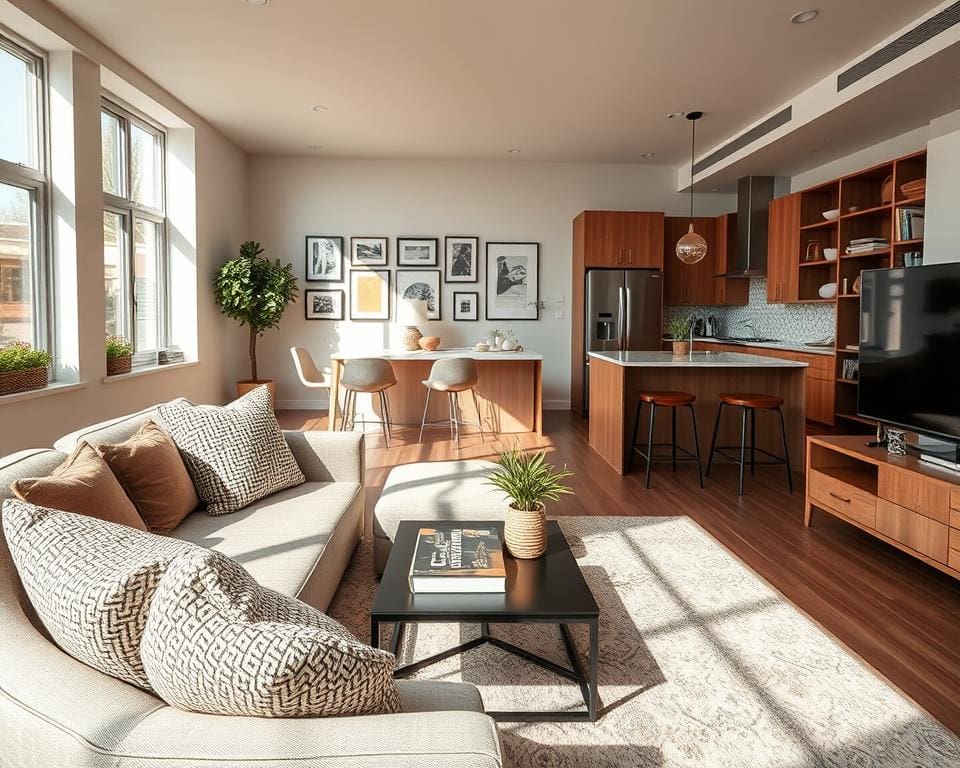
- Allow for open layouts which enhance airflow and develop an inviting atmosphere.
Integrating Storage Solutions Stylishly
When it comes to stylish storage, the focus often shifts towards aesthetics without sacrificing functionality. Adopting methods for seamless storage integration can greatly enhance any small space. Consider these strategies:
- Decorative baskets or boxes that blend with your decor can help organise items discreetly.
- Built-in cabinetry provides a tailored look and maximises the use of every corner.
- Utilising under-bed storage will keep belongings hidden yet accessible.
Personalising Your Home without Losing Functionality
Incorporating a personal touch into your living space allows you to infuse your home with character while ensuring stylish functionality. Decorative elements such as handmade art, cherished family heirlooms, or travel souvenirs can serve as vibrant focal points, perfectly blending into your practical home design. The key lies in selecting pieces that not only resonate with your personal style but also complement the overall functionality of the space.
Maintaining a sensible layout is essential for promoting ease of movement throughout your home. By ensuring that each decorative element is strategically placed, you can create a harmonious balance between elegance and practicality. This approach allows for personal expression without sacrificing the usability that is vital in everyday living. Remember, a well-curated space not only reflects individuality but also supports a cohesive, functional environment.
As you embark on your design journey, consider how you can curate your surroundings to echo your unique tastes. The goal is to find your ideal blend of stylish functionality, fostering a space that is as sophisticated as it is welcoming. For more insights on achieving this balance, explore practical home design tips that inspire and guide you in crafting a home that tells your story.