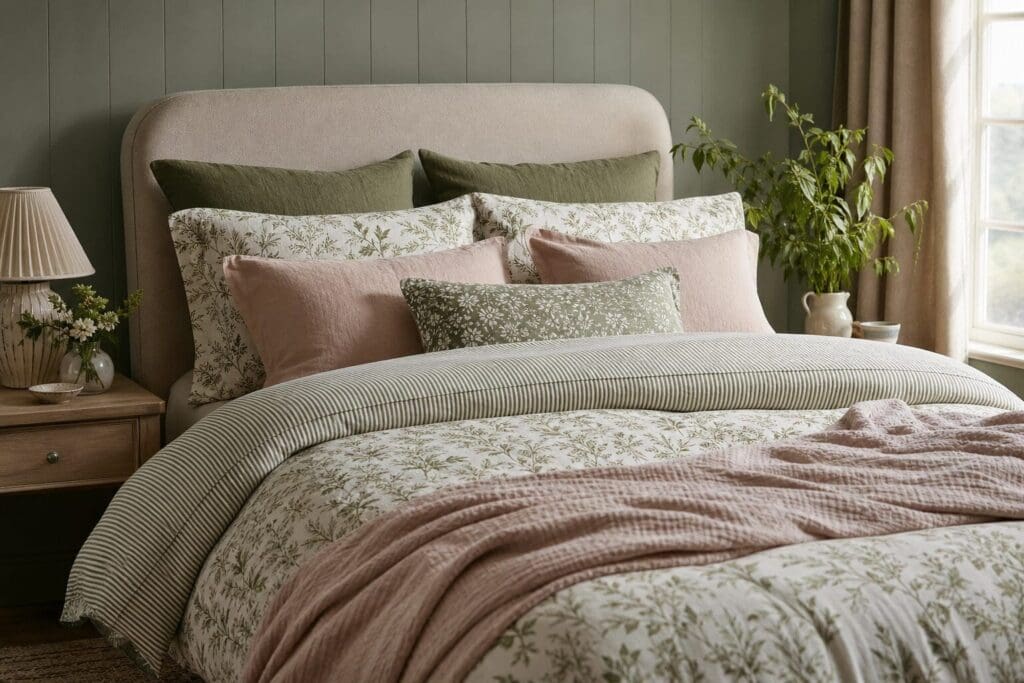
A bed looks best when every layer has a reason to be there. Colour matters, but so do size, fabric, texture, mattress depth and the way each piece feels in daily use. Instead of choosing sheets, duvet covers and pillowcases in isolation, it helps to build a complete bedding combination from the mattress upwards.
How mix and match bedding helps a bed feel complete
Mix and match bedding gives you more freedom than a standard fully matching set. Rather than making every item identical, you can combine shades, textures and fabrics in a way that feels calm, personal and practical. The result can still look coordinated, but with more depth and character.
This approach works especially well when you want the bed to suit both the room and your sleeping habits. A fitted sheet may need to be durable, secure and easy to care for, while the duvet cover and pillowcases often carry more of the visual style. By treating them as connected parts of one scheme, you can avoid a bed that looks attractive but feels awkward to use.
A good bedding combination usually balances three things: correct sizing, comfortable fabric and a colour palette that belongs in the room. When these elements work together, the bed feels considered rather than accidental.
Start with the bed size and mattress depth
Before choosing colours or finishes, check the practical measurements. Bedding that does not fit properly can affect comfort, appearance and how easy the bed is to make. A fitted sheet that slips off the corners or pulls too tightly will quickly become frustrating, even if the fabric looks beautiful.
Snoozyn offers bedding for standard UK Single, Double, King and Super King sizes. These size categories are a useful starting point, but the depth of the mattress matters too. Many modern mattresses are deeper than older styles, especially when toppers are added.
Check the fitted sheet first
The fitted sheet sits directly on the mattress, so it needs to do the hardest practical job. It should sit securely around the edges without riding up or bunching underneath you. If the sheet is too shallow, the corners may lift. If it is too loose, the surface can wrinkle and move during the night.
When choosing a fitted sheet, consider:
- The UK mattress size, such as Single, Double, King or Super King.
- The mattress depth, including any topper or protector.
- The fabric feel against the skin, especially if you sleep warm or cool.
- The colour, as it may show beneath the duvet when the bed is turned down.
Getting this layer right gives the rest of the bedding a better foundation.
Match the duvet to the bed
The duvet cover should correspond with the duvet size and the bed size. A duvet that is too small can make the bed look underdressed, while one that is too large may hang awkwardly or feel heavy. The cover also has a major effect on the finished look because it covers the largest visible area.
Pillowcases complete the main structure. Standard pillowcases can be used across many bed sizes, but the number of pillows and their arrangement changes the final look. A simple pair may feel clean and minimal. Extra pillows can create a fuller, hotel-inspired effect, provided they do not make the bed feel cluttered.
Choose fabrics that suit the way you sleep
Fabric is not only a style decision. It changes how bedding feels, how it drapes and how it behaves through the seasons. Natural fabric options, including cotton and linen, are popular because they offer comfort and a familiar feel against the skin.
Snoozyn’s bedding ranges include Plain Cotton, Cloud Cotton, Silky Cotton and French Flax Linen. Each finish can create a different mood, even when used in similar colours.
Cotton for everyday comfort
Cotton is a versatile choice for many bedrooms. It can feel crisp, smooth or soft depending on the weave and finish. Plain Cotton can suit a simple, clean bedroom style, while Cloud Cotton suggests a softer and more relaxed surface. Silky Cotton may be chosen when a smoother, more refined feel is preferred.
Cotton also works well for layering. For example, you might choose a neutral fitted sheet and introduce colour through the duvet cover or pillowcases. This helps the bed feel fresh without making every piece compete for attention.
Linen for relaxed texture
French Flax Linen brings a naturally textured look. It can soften the overall feel of a room and works particularly well when you want bedding that looks relaxed rather than perfectly pressed. Linen can also add visual interest without needing bold patterns.
In a mix and match bedding scheme, linen pairs well with cotton when the colours are chosen carefully. A linen duvet cover with cotton sheets can create contrast between texture and smoothness. Alternatively, linen pillowcases can add a casual accent to a mostly cotton bed.
Build a colour palette, not a colour block
A fully matching bed can look neat, but it is not the only way to create a coordinated result. A more flexible approach is to build a small colour palette. This helps the bed feel layered while still belonging to the room.
Start by looking at the fixed features: wall colour, flooring, curtains, furniture and any rugs. Bedding does not need to copy these exactly, but it should sit comfortably beside them. If the room is already busy, calmer bedding may work best. If the room is simple, bedding can introduce more warmth or contrast.
Useful combinations include:
- A white or natural fitted sheet with a muted duvet cover and tonal pillowcases.
- A deeper fitted sheet with a lighter duvet cover for contrast.
- One main colour, one neutral and one accent shade across the bed.
- Cotton sheets with linen pillowcases for a gentle texture change.
- Similar shades in different fabrics for a calm, layered effect.
Try not to include too many strong colours at once. Three well-chosen tones usually look more considered than several unrelated shades.
Use texture to make simple bedding look styled
Texture is one of the easiest ways to make bedding feel more complete. Even when the colours are quiet, different surfaces can add depth. A smooth cotton sheet, a softer duvet cover and a linen pillowcase can all sit within the same colour family while still looking distinct.
Texture also affects the mood of the bed. Crisp fabrics tend to feel cleaner and more tailored. Washed or relaxed textures feel softer and more informal. A bedroom does not need to follow one strict style, but the layers should make sense together.
If you prefer a minimal room, choose subtle texture rather than strong contrast. If you like a more collected look, combine slightly different finishes while keeping the palette controlled. The aim is not to make every layer stand out, but to let them support one another.
When a duvet set with fitted sheet makes sense
A duvet set with fitted sheet can simplify the process because the key pieces are selected together. This is useful if you want coordination without spending too much time comparing separate items. It can also reduce the risk of choosing colours or fabrics that almost match but do not quite work in the room.
However, a set should still be judged by practical details. The fitted sheet must suit the mattress dimensions and depth. The duvet cover must fit the duvet correctly. Pillowcases should support the look you want, whether that is simple, layered or more decorative.
Snoozyn’s custom bedding option is designed around mattress depth and colour preferences. This makes it easier to coordinate the individual parts of the bed more precisely, rather than relying only on standard pre-selected combinations.
Common mistakes to avoid when combining bedding
The most common bedding mistakes are usually practical, not decorative. A beautiful colour will not compensate for a sheet that does not stay in place or a duvet cover that feels wrong for the season.
Avoid these problems where possible:
- Choosing a fitted sheet without checking mattress depth.
- Buying a duvet cover based only on colour, not size.
- Mixing too many unrelated colours in one bed scheme.
- Forgetting that pillowcases strongly affect the finished look.
- Choosing fabric for appearance without considering sleep comfort.
- Assuming every item must match exactly to look coordinated.
A bedding set that truly works together should feel easy to live with. It should make the bed look finished, but it should also support comfortable sleep and simple day-to-day use.
Frequently Asked Questions
Can I mix different bedding fabrics on the same bed?
Yes, different fabrics can work well together when the colours feel connected. For example, cotton sheets and linen pillowcases can create a relaxed but coordinated look.
Should my fitted sheet match my duvet cover?
It does not have to match exactly. A fitted sheet can be neutral, tonal or contrasting, as long as it fits the mattress properly and suits the overall palette.
How do I know which fitted sheet depth I need?
Measure the mattress depth, including any topper or protector. The fitted sheet should be deep enough to sit securely around all corners without pulling.
Is a complete bedding set better than buying separate pieces?
A complete set can be easier, especially if you want quick coordination. Separate pieces offer more flexibility when you have specific fabric, colour or sizing needs.
How many colours should I use on one bed?
Two or three main colours are usually enough. This allows the bed to look layered without becoming visually crowded or difficult to coordinate.
Build a bedding combination around your own style
A well-dressed bed does not have to rely on one matching colour or a standard pre-selected set. Snoozyn makes it possible to combine fitted sheets, duvet covers and pillowcases around your preferred fabric, colour palette and mattress dimensions. The custom bedding options at snoozyn.com make it easier to create a coordinated setup that works for both the look of the room and the way you sleep.