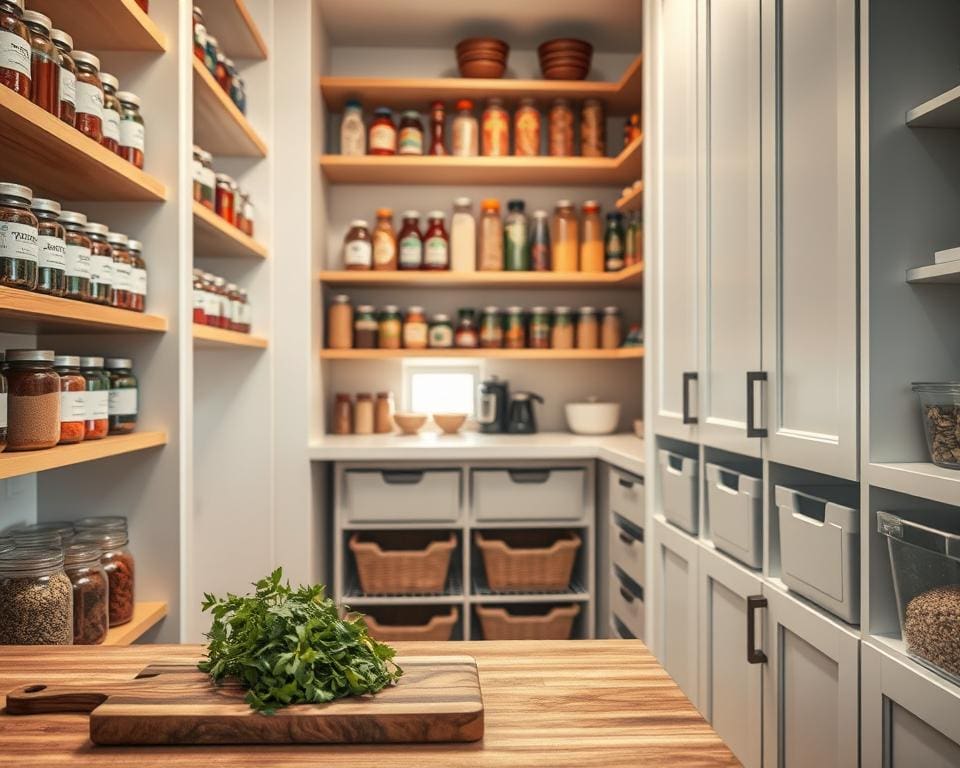
A well-planned pantry transforms meal prep and keeps a kitchen calm. This guide offers practical pantry design steps so homeowners and renters in the United States can improve workflow, reduce food waste, and store bulk buys with ease.
Start by defining the pantry’s purpose and inventory needs. Clear goals—whether long-term food storage, everyday staples, or appliance housing—make pantry planning faster and more focused.
Next, match the footprint to your layout. L-shaped, U-shaped, and galley kitchens each need different kitchen pantry design solutions to avoid bottlenecks and support the classic work triangle.
Choose storage systems that suit how your household uses food: pull-out shelves, corner lazy Susans, and adjustable cabinetry help maximize storage and access. For design ideas and workflow tips, consult trusted resources like This Old House or explore practical examples at kitchen workflow planning.
Layer in lighting, durable finishes, and age-in-place features so your pantry remains useful over time. Small upgrades—labels, clear OXO containers, and door racks—are quick wins, while custom cabinetry and integrated lighting deliver long-term value.
Across the article you’ll find tactical functional pantry ideas, step-by-step pantry planning advice, and product suggestions that lead to a pantry you actually use every day.
How do you design a functional pantry?
Start by imagining how your kitchen flows during real meals. A clear sense of pantry purpose guides every choice from shelving height to electrical outlets. Think about who uses the space and what they reach for most often so you can shape a pantry that supports everyday cooking and weekend prep.
Define your pantry’s purpose and inventory needs
List typical items: bulk goods like rice and flour, daily staples such as cereal and pasta, snacks, and small appliances like a toaster or blender. Track quantities with a paper list or apps such as Out of Milk or Pantry Check to build a reliable pantry inventory. That running inventory reveals tall bottles, bulky paper goods, and small packets so you can match container sizes and shelf spacing.
Decide the pantry primary function. If dry goods dominate, plan sealed, stackable containers and humidity control. If overflow refrigeration is common, reserve counter space and outlets for a small under-counter fridge or beverage cooler. For meal-prep households, create a staging zone near counters with lower pull-out shelves for mixing bowls and sheet pans.
Choose the right footprint and layout for your kitchen
Compare layouts with your kitchen size and workflow in mind. A reach-in pantry works well in compact kitchens because shallow depths keep items visible. A walk-in pantry gives room for custom built-ins, an island, and zones, but leave a 30–36 inch walkway for comfort. Hallway pantries benefit from pull-out drawers and slim shelving while cabinet-style pantries convert well with retrofit organizers.
Place the pantry close to prep areas and the refrigerator to shorten steps during cooking. Aim for a pantry layout near fridge or within four to six feet of the prep sink when possible. Account for door swing by choosing pocket or sliding doors if clearance is tight. Include low, mid, and high storage to accommodate children and seniors.
Select storage systems and shelving that match your needs
Choose pantry shelving that fits the items your household stores most. Open shelving offers visibility and quick access when containers are uniform. Adjustable shelving adapts to tall cereal boxes and oil bottles with one- to two-inch spacing increments. For deep cabinets, use pull-out drawers or roll-out trays so nothing gets lost at the back.
Invest in clear, stackable containers from trusted brands like OXO or Rubbermaid for staples. Add tiered spice racks and labeled bins to define zones: snack shelf, breakfast area, baking center, canned goods, and small-appliance storage. Include under-cabinet outlets for mixers and blenders so pantry use feels seamless and intentional.
Pantry design features for maximizing space and organization
A well-planned pantry blends clever storage with easy access. Start by thinking about how you use the space daily and which items need priority. Small changes in shelving, drawers, and fixtures unlock more room and make routines smoother.
Smart shelving and drawer options
Adjustable pantry shelves let you reconfigure heights for tall cereal boxes, bottles, or mason jars. Choose systems from IKEA or ClosetMaid if you want flexible, budget-friendly choices. Use sturdy brackets and secure shelves to studs for safety.
Pull-out pantry drawers turn deep recesses into reachable zones. Full-extension, soft-close slides from brands like Blum improve access and protect glassware. Roll-out trays and wire rollouts keep things visible and reduce bending.
Corner solutions such as a lazy Susan pantry or kidney-shaped turntables reclaim wasted space. Wire racks encourage airflow and cut down on stale smells. Vertical dividers store baking sheets and trays upright to save shelf width.
Storage solutions that improve accessibility
Clear, stackable containers from Anchor Hocking or OXO create uniform lines and make items easy to spot. Measure your pantry depth before buying containers to minimize empty gaps and wasted space.
Use printed waterproof labels or chalkboard tags so everyone follows the same system. Include open dates for FIFO rotation to reduce waste. Door-mounted racks free up shelf space for spices, wraps, and narrow goods.
Tiered risers put cans and bottles on display without moving back items constantly. Pull-down hardware for high shelves and lower bins for heavy items protect backs and improve reach. Magnetic closures add child safety where needed.
Lighting, ventilation, and safety considerations
Good pantry lighting changes everything. Add LED strips, puck lights, or motion-sensor units to brighten shelves. Battery-operated motion lights from brands like Mr. Beams work well for retrofits.
Hardwired under-shelf lighting gives a polished look for custom pantries. Have a licensed electrician install switches and dimmers to control brightness for tasks and ambient use.
Pantry ventilation keeps food fresh and mold at bay. Include vents or balance HVAC flow, and use a small dehumidifier in humid regions. Store dry goods in airtight containers to deter pests and clean spills promptly.
Design for safety by placing heavy items low and fragile items at mid-level. Keep walk-in aisles around 30–36 inches wide for comfortable movement. Anchor tall shelving with anti-tip brackets to prevent accidents.
Styling, maintenance, and practical tips to keep a pantry functional
A well-styled pantry feels calm and works harder. Coordinate shelf finishes, paint, and hardware with kitchen cabinetry so the pantry reads as part of the room. Light neutrals brighten tight spaces, while deeper tones make a larger pantry feel intentional. Decorative woven baskets from retailers like The Container Store or simple clear containers such as OXO and Rubbermaid Brilliance keep everything uniform and tidy, and attractive pantry labeling with a Brother P-touch or waterproof vinyl gives a polished touch.
Small, regular habits are the best pantry maintenance. Use pantry FIFO—first-in, first-out—to rotate goods by date and reduce spoilage. Label open dates on packages and place newer purchases behind older ones. Schedule seasonal purges and quick inventory checks on a quarterly basis; a short wipe-down with soapy water and a scan for expired items keeps shelves usable and fresh.
Design family-friendly zones to make daily life easier. Reserve lower shelves for kids’ snacks and cereals, mid-level shelves for everyday staples, and higher shelves for occasional items. Store a lightweight step stool inside the pantry for safe access. For pantry quick upgrades, add shelf liners, adhesive labels, clear plastic bins, or inexpensive door racks—these inexpensive changes cost under $150 and deliver big returns in order and speed.
Think long term by pairing small improvements with sensible routines. Repurpose a baker’s rack or bookcase as budget-friendly shelving and secure tall units to the wall. Keep a running grocery list tied to pantry inventory or use a simple app to alert you when staples run low. Embrace reusable containers, buy in bulk when it makes sense, and donate unopened nonperishables before they expire. With consistent pantry styling, pantry maintenance, pantry labeling, pantry FIFO, and smart choices, a cluttered closet becomes an efficient, beautiful space that supports daily cooking and joyful living.