Choosing kitchen towels is an easy, high-impact way to refresh your kitchen. This kitchen towel guide helps home cooks, busy families, renters, and design-minded homeowners pick towels that balance function and style for everyday cooking and cleaning.
In this short introduction, you’ll get a clear view of the core factors we’ll explore: kitchen tasks and usage patterns, fabric and weave choices like cotton, linen, and Turkish, plus size and GSM. We’ll also cover care, sustainability, style coordination, and practical towel selection tips so you know how many to buy and how to keep them performing.
By the end of the full guide, you’ll understand how do you select the perfect kitchen towels and find the best kitchen towels for your routine and décor. The process is simple, actionable, and tailored to real-life kitchens in the United States.
How do you select the perfect kitchen towels?
Choosing kitchen towels begins with clarity about daily tasks. Think about drying, polishing, wiping, and occasional heat handling. Small choices in material and weave shape how well a towel performs and how long it lasts.
Understand your kitchen needs and daily routines
List the typical jobs in your kitchen. Drying dishes and glassware needs lint-free fabrics. Wiping counters and tackling greasy messes benefit from quick-dry synthetics. Busy families should plan for more towels and frequent washing.
For a household that cooks daily, aim for several sets so you rotate through wash cycles. Light-use kitchens can get by with fewer multipurpose towels.
Match towel material to purpose
Select materials that suit the task. Long-staple cotton and Turkish cotton work well for dish drying and softness. Linen polishes glass and becomes more absorbent with time. Microfiber excels at streak-free cleaning on stainless steel and counters.
Seek the best towel materials for the jobs you do most. Keep dedicated polishing cloths apart from heavy-duty cleanup towels to avoid lint transfer.
Choose the right size, weave, and GSM
Pick towel sizes by function: hand towels for quick tasks, dish towels for plates, larger bar towels for big pans. Weave matters. Terry provides plush absorbency. Waffle weaves dry fast and look modern. Flat or linen weaves stay lint-free for glassware.
Compare GSM kitchen towels to match weight and drying time. Lighter waffle towels sit around 200–300 GSM. Medium terry ranges 350–500 GSM. Heavier towels over 500 GSM absorb more but take longer to dry.
Consider care, longevity, and sustainability
Check care labels and wash new towels before first use to boost absorbency. Avoid fabric softener; it reduces water pickup. Tumble dry on low or line dry to preserve fibers and hems.
Choose durable kitchen towels for high-use settings and look for eco-friendly kitchen towels when you want lower environmental impact. Brands like Boll & Branch, Coyuchi, and Brooklinen offer organic and transparent supply chains for shoppers who care about materials and ethics.
Choosing kitchen towels for style, color, and home decor coordination
A few well-chosen towels lift a kitchen’s mood. Think of them as small art pieces that repeat color, texture, and intent across surfaces. Start with a neutral base and add one or two statement pieces to create harmony without clutter.
Selecting colors and patterns to elevate your kitchen
Neutral palettes like beige, cream, gray, and white offer a clean backdrop that complements cabinets and countertops. White towels give a crisp, hotel-like feel but need more frequent washing. For energy, pick bold accent colors—reds, blues, or greens—to echo a kettle, rug, or mixer.
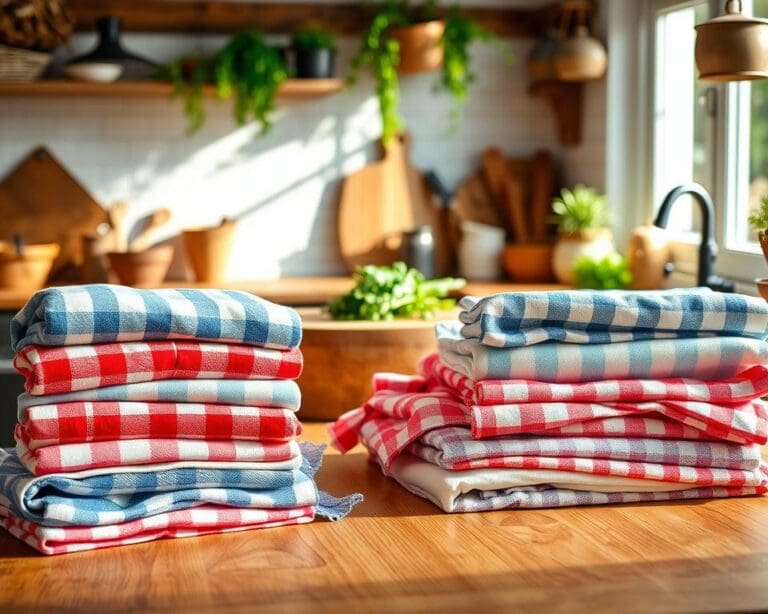
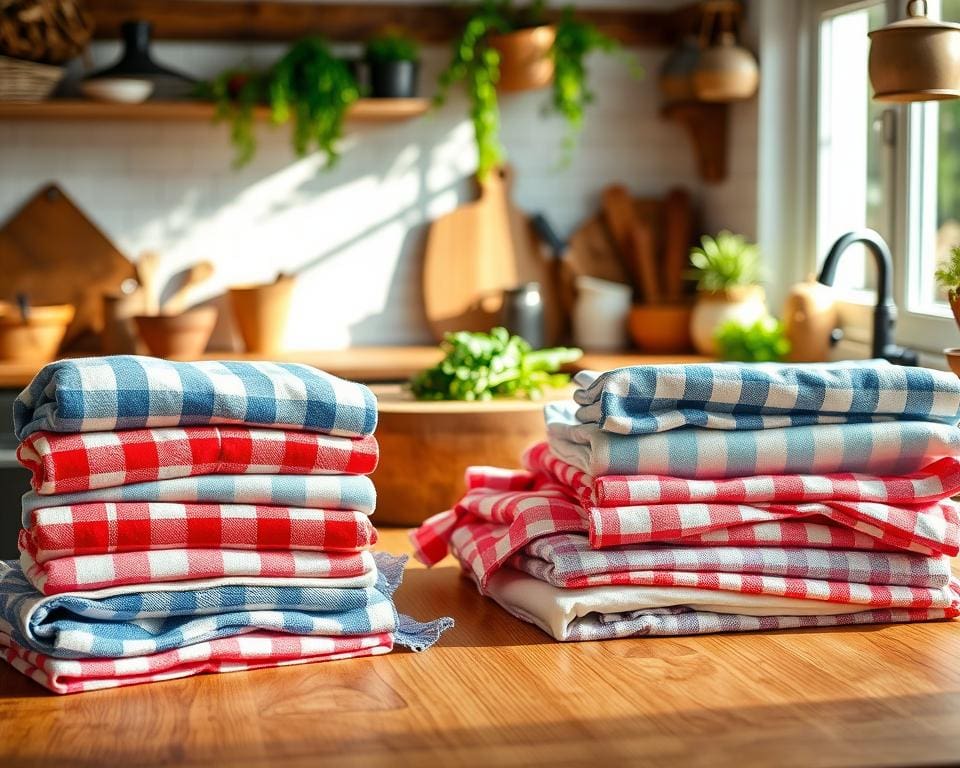
Patterned dish towels work well as focal points. Stripes, checks, and simple graphics hide small stains and add personality. Limit pattern mixing to one or two motifs so the space reads as intentional. Use complementary or analogous colors to tie towels to finishes such as stainless steel, black matte, or brass hardware.
Texture and visual interest
Mixing weaves creates depth. Pair a waffle towel with linen tea towels for contrast on hooks or a towel bar. A soft terry or long-staple cotton is practical for drying, while textured pieces bring tactile appeal and a curated look.
Layer a set of neutral base towels with a single patterned or textured statement towel. That method keeps visual balance and makes seasonal swaps simple. Choose linen tea towels for a lived-in, elegant feel in warmer months.
Branding, labels, and aesthetic quality cues
Quality shows in small details. Look for tight, even stitching, double-stitched hems, and consistent weave patterns. Fiber-content labels that name 100% linen or 100% long-staple cotton indicate authentic materials that age well.
Established brands such as Brooklinen, Parachute, and Williams Sonoma provide clear material and care information. Artisanal makers often list provenance and eco credentials. Designer kitchen towels and credible labeling signal an investment piece meant for frequent use.
- Invest in a few premium towels for high-contact tasks like dish- and hand-drying.
- Reserve budget sets for heavy cleaning or seasonal experimentation.
- Combine durable essentials with one or two patterned dish towels for visual flair.
Shopping tips, care advice, and long-term value when selecting kitchen towels
Start your search by knowing where to buy kitchen towels that match your needs. Visit Crate & Barrel or Williams Sonoma for curated cotton and linen options, check sustainable brands like Boll & Branch and Coyuchi for certified organic choices, and consider Brooklinen or Parachute for direct-to-consumer quality. Target and Bed Bath & Beyond cover budget-friendly basics, while Amazon and Etsy offer variety and artisan picks. Read product pages for fiber percentage, GSM, country of origin, and care instructions before you add items to the cart.
Use reviews to judge real-world performance: look for verified-purchase photos and comments about absorbency, linting, shrinkage, and colorfastness. Follow kitchen towel care tips by pre-washing towels on warm to remove finishes and boost absorbency. Avoid fabric softeners and dryer sheets; they leave residue that reduces performance. Routine towel maintenance includes washing in hot or warm water, adding half a cup of white vinegar every few washes to clear buildup, and tumble drying on low-medium or line drying to prevent mildew.
Treat stains promptly with oxygen-based bleach for colored towels or enzyme stain removers for food stains, and skip chlorine bleach on dyed fabrics. To revive absorbency, soak towels in hot water with baking soda or white vinegar, then wash. Rotate towels by task—dish-drying, polishing, and heavy cleaning—to reduce cross-contamination and extend lifespan. Store towels in a dry cabinet or open shelf and repair loose hems or snags quickly to prevent bigger damage.
Decide how many kitchen towels to buy based on household size: a single person needs about 4–6 dish towels plus 1–2 microfiber cloths; a couple benefits from 6–8 towels and 2–3 microfiber; a family of four that cooks often should aim for 8–12 towels plus several microfiber and hand towels. For best value kitchen towels, combine durable mid-priced basics for bulk tasks with a few premium pieces for daily high-use duties—higher-quality towels often cost less per year due to longevity. Final checklist: confirm fiber content and GSM, check for certifications like GOTS or OEKO-TEX, inspect hemming in photos or in-store, and buy a mix of styles for both function and decor.