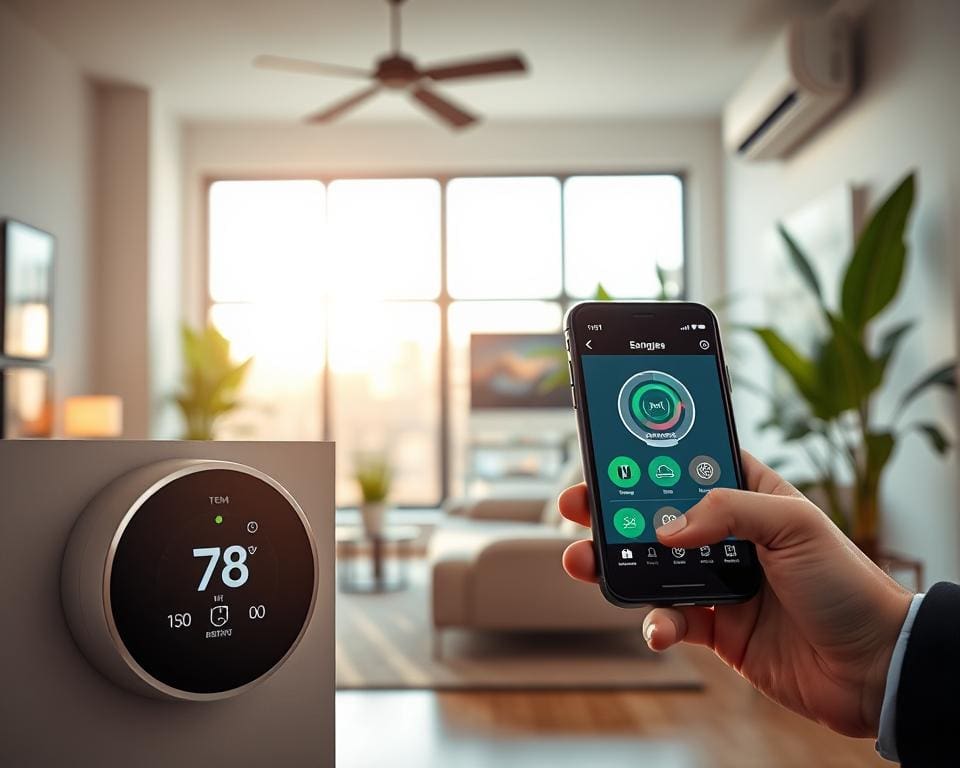
Imagine stepping into a warm living room on a damp March morning, or enjoying cooler air on a rare July heatwave, while your bills shrink and emissions fall. This opening section explains how smart home controls heating and cooling and why they matter for UK homeowners weighing upgrades for comfort and efficiency.
This is a product‑review style long‑form piece aimed at the United Kingdom market. It examines smart heating UK solutions, smart thermostat overview and connected HVAC systems, and offers brand‑aware comparisons that respect real‑world wiring, boilers, heat pumps and underfloor heating setups common in UK homes.
Rising energy costs and the government’s decarbonisation drive make smart cooling control and zone heating control more than a convenience. Intelligent systems can adapt to poor insulation, varying occupancy and mixed heating systems such as combi boilers or electric heat pumps to cut waste and improve comfort.
What follows is a clear roadmap: a technical overview of system control mechanisms; the smart devices and sensors that optimise performance; and practical buying, installation and usage advice including costs, compatibility and grant considerations. Expect rigorous, inspirational guidance aimed at helping you choose the right smart thermostat, and to understand how connected HVAC systems deliver real savings.
How does smart home technology control heating and cooling?
Smart home technology gives precise control over temperature, cutting waste and raising comfort. This smart heating systems overview sets out how devices, networks and software work together to run heating and cooling in UK homes.
Overview of smart heating and cooling systems
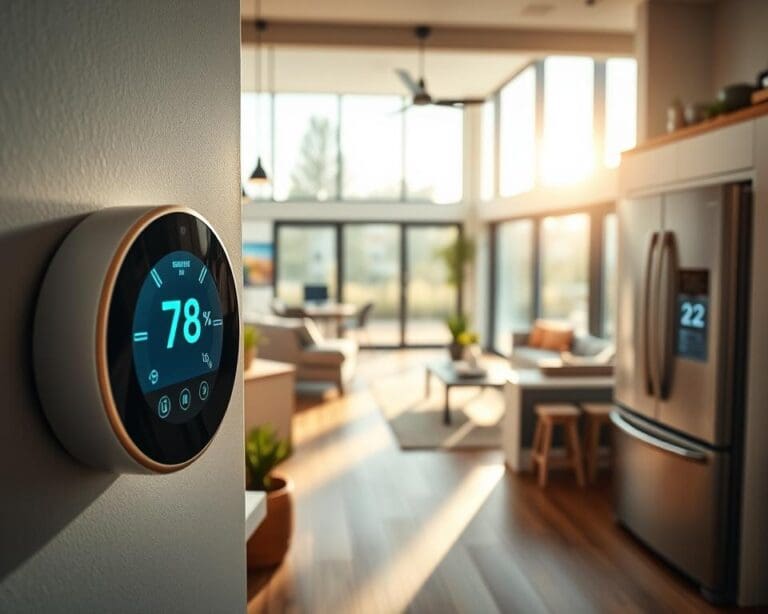
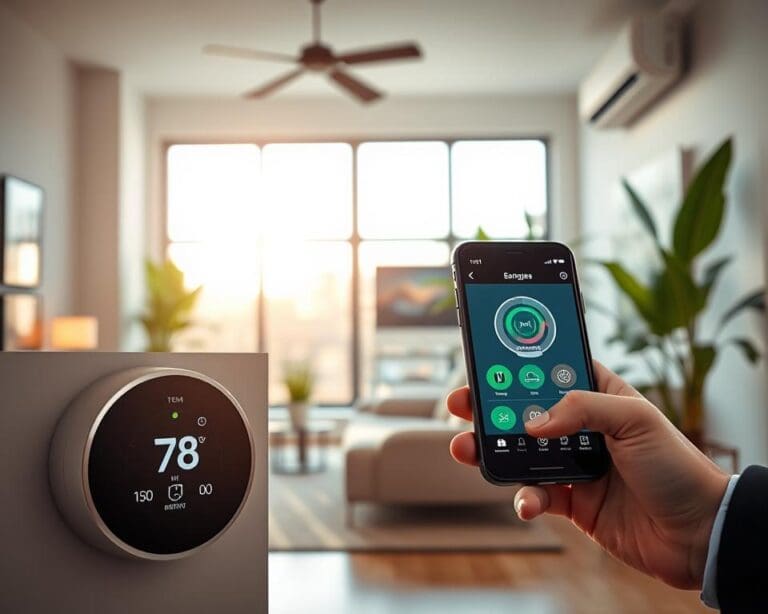
Smart thermostats are programmable, Wi‑Fi or radio‑connected devices that replace or augment conventional thermostats. A clear smart thermostat definition is a device that senses temperature, follows user schedules and permits remote control via apps from brands such as Nest, tado° and Hive.
Connected HVAC explained means heating, ventilation and air‑conditioning systems linked to home networks. These systems may use central controllers, smart valves or individual room devices to tailor warmth or cooling to each space.
Key control mechanisms
Zone control systems divide a property into independently controlled areas using multiple thermostats or smart TRVs. This approach reduces heat loss and delivers comfort improvements by targeting only the rooms in use.
Thermostat schedules set time‑of‑day temperature targets. Proper use of thermostat schedules lowers set points when occupants are out or asleep, producing smart thermostat savings when combined with good habits.
Adaptive learning thermostats observe behaviour and adjust routines automatically. Predictive HVAC control adds weather forecasts and building thermal models to pre‑heat or pre‑cool at the most efficient moment.
Geofencing heating control uses smartphone location to detect arrivals and departures. Presence sensors and motion detectors offer an alternative with less phone battery impact and fewer privacy trade‑offs.
- Wi‑Fi links cloud‑connected devices for remote access and OTA updates.
- Zigbee and Z‑Wave create low‑power mesh networks for many battery devices.
- Thread provides an emerging IP‑based low‑power protocol supported by Matter.
Hubs such as Amazon Echo, Google Nest Hub and Samsung SmartThings connect different protocols and host local automations. Cloud platforms perform machine learning and analytics, while local control offers faster response and greater privacy.
Controllers interface with boilers, combi boilers, heat pumps and air‑conditioning units by relay switching or OpenTherm for modulating control. Installers check heat pump compatibility UK and wiring for relay boxes or additional power supplies in older homes.
Benefits for UK homes
Smart systems deliver comfort improvements through room‑by‑room control and finer set‑point accuracy. Heat pump compatibility UK matters because smart controls can promote longer, lower‑temperature runs that suit heat pumps and cut running costs.
Benefits smart heating UK include lower consumption, reduced carbon emissions and the ability to respond to time‑of‑use tariffs or demand‑response signals. Trials and manufacturer figures suggest notable savings, though results depend on property fabric and user behaviour.
Safety features include frost protection and fallback modes to prevent frozen pipes. Gas and mains electrical work should be carried out by Gas Safe and registered electrical professionals, and some systems require professional commissioning for safe, compliant operation.
Smart devices and sensors that optimise temperature control
Modern homes rely on a spectrum of sensors and smart devices to keep rooms comfortable and energy use low. Small, well‑placed temperature sensors give accurate local readings, while humidity sensors and air quality HVAC control tools guide ventilation and dehumidification. Occupancy sensors add presence data so heating can follow real use. Combining these devices with smart TRVs and learning thermostats creates a responsive, efficient system suited to UK homes.
Types of sensors and their functions
Temperature sensors come as wall units or wireless room sensors. Place them away from radiators, direct sun and draughts to avoid misleading readings. External sensors help assess outdoor temperature and solar gain for smarter flow temperature decisions.
Humidity sensors prevent overheating by signalling when dehumidification is needed. VOC and CO2 air quality HVAC control sensors prompt ventilation changes to keep air safe and fresh.
Occupancy sensors include PIR models and more advanced ultrasonic or radar presence sensors. They support zoning by switching heating down in unused rooms and saving energy without affecting comfort.
Sensor integration relies on mesh networks and regular calibration. Calibrated devices and robust connectivity reduce errors and ensure reliable data for automation and manual control.
Thermostats, smart valves and smart radiators
Learning thermostats such as Google Nest adapt to routines, cutting setup time while learning occupant habits. Remote‑first programmable systems from tado° and Hive offer clear schedules and rapid manual control. A smart thermostat review often shows trade‑offs between convenience and transparency when choosing between learning and programmable models.
Smart TRVs create true room zoning by controlling radiators individually. They tend to be battery powered and radio connected to a hub or thermostat. Homeowners should expect occasional battery changes and check compatibility with central boiler control to avoid coordination issues.
Smart radiator valves UK and integrated electric radiators offer plug‑and‑play options for homes without a wet central heating system. These devices combine thermostatic control with built‑in connectivity for straightforward retrofit solutions.
Integration with renewable and energy management systems
Underfloor heating and heat pumps need dedicated controllers and manifold actuators to work well with smart controls. Some vendors build products specifically for modulating heat pump demands and flow temperature management.
Smart heating and solar PV systems can use surplus generation to charge thermal stores or pre‑heat hot water, boosting self‑consumption. Battery storage heating integration lets controllers sequence heating to use stored energy during evenings or high‑price periods.
Demand response UK schemes and time‑of‑use tariffs reward systems that shift heating to low‑cost windows. Smart meter HVAC integration supplies half‑hourly consumption data so controllers can refine schedules, spot anomalies and show real savings.
Vendor ecosystems such as tado°, Hive, Google Nest, Honeywell Home and Netatmo support many integrations. Open standards and platforms like Home Assistant help future‑proof setups and simplify connections to batteries, EV chargers and energy suppliers.
Buying and using smart heating and cooling solutions in the UK
Before you buy, check smart thermostat compatibility UK details against your boiler or heat pump. Look for explicit support for combi, system or heat pump compatibility and whether OpenTherm UK is listed for modulating control. Consult manufacturer compatibility lists and, for any gas appliance work, engage a Gas Safe registered engineer where controls interface with boilers.
Decide whether to join an ecosystem such as Google Nest, Amazon Alexa or Apple HomeKit, or to choose open platforms like Home Assistant, Zigbee or Z‑Wave. Ecosystem-locked devices give smooth integration but can restrict future choices. Open platforms offer flexibility and broader interoperability for multi-zone setups and product comparisons smart thermostats.
Weigh DIY vs professional installation honestly. Simple Wi‑Fi thermostats and smart TRVs can be DIY fits if you are comfortable with basic wiring. Complex installs—heat pump optimisation, OpenTherm wiring on combi boilers, or underfloor heating manifolds—are best left to qualified tradespeople. Safety, regulatory compliance and long-term performance often justify professional help.
Use seasonal scheduling and realistic routines to capture smart thermostat savings UK. Employ night-time setbacks, holiday modes and pre‑heat strategies for heat pumps to exploit efficient run modes and avoid rapid temperature swings. Keep manual controls as a fallback for network outages and test seasonal recalibration each autumn and spring.
Protect privacy and security by reviewing vendor policies on data privacy smart home, enabling two‑factor authentication and keeping IoT devices on a separate network segment. Prioritise smart thermostat security and apply router best practice to reduce unauthorised access. Check how long telemetry is retained and whether local control options exist.
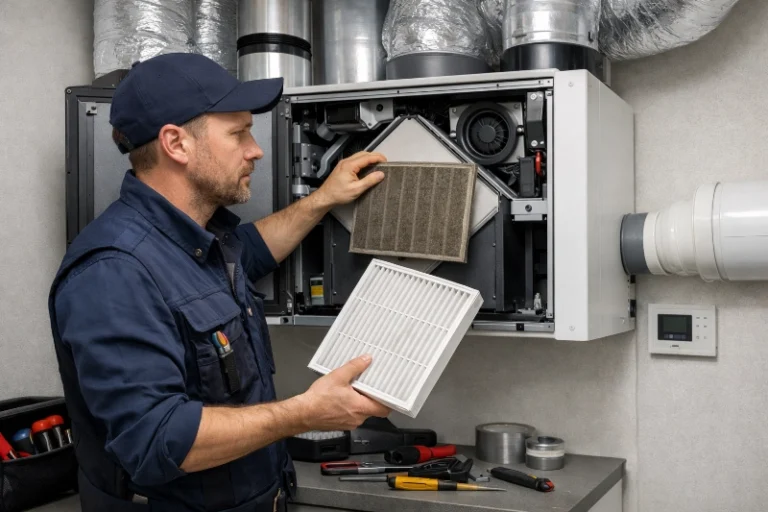
Maintain devices with regular firmware updates heating systems, replace batteries in wireless sensors and TRVs on a set schedule, and monitor valve operation and boiler interfacing. Enable automatic updates where vendor support lifecycles allow and keep manufacturer support contacts handy for troubleshooting.
Estimate smart thermostat savings UK and payback period smart heating by comparing current consumption, insulation, heating fuel and likely behaviour change. Payback periods vary, but staged upgrades often show returns within a few years in typical UK homes. Investigate ECO grants smart heating, the Boiler Upgrade Scheme for heat pumps and local retrofit offers to reduce upfront costs.
Read real user reviews and product comparisons smart thermostats for brands such as Google Nest, tado°, Hive, Honeywell Home Evohome, Drayton Wiser and Netatmo. Start small with a smart thermostat or a few TRVs to trial benefits, then expand. A staged approach can deliver immediate comfort gains, lower bills and a clear path to a lower‑carbon home.