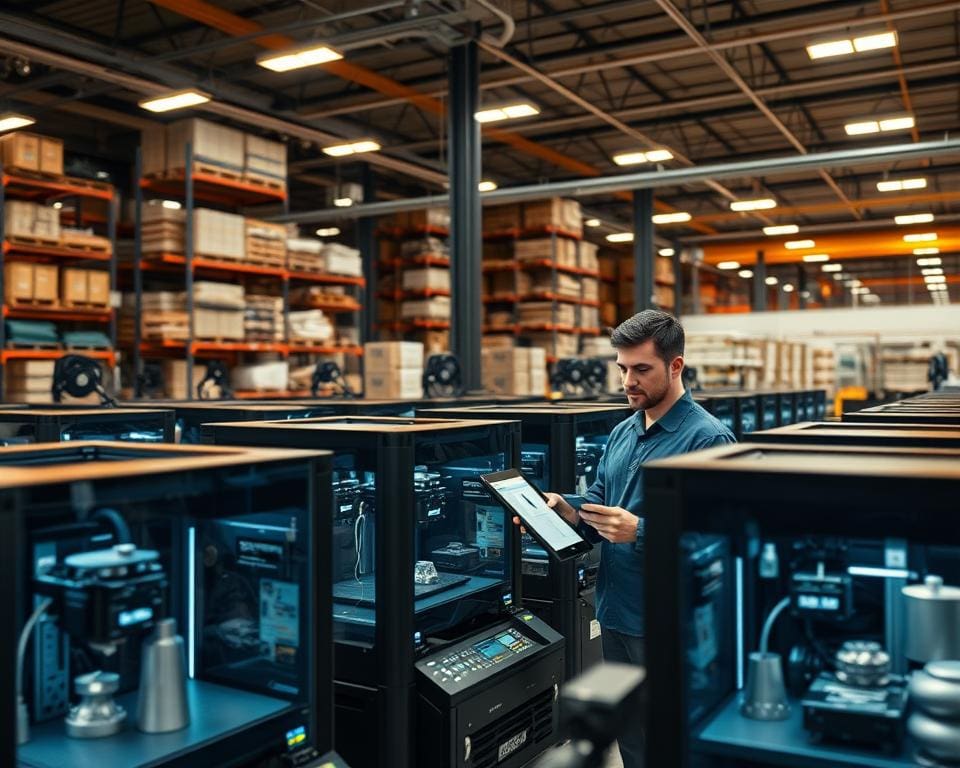
Additive manufacturing is rapidly changing the landscape of production, offering innovative solutions that were once deemed impossible. This transformative technology, primarily exemplified through 3D printing in industry, allows for the creation of intricate designs and structures that traditional manufacturing processes struggle to achieve. Understanding the diverse production uses of additive processes is vital for businesses striving for efficiency and innovation in today’s competitive environment.
As we delve deeper into this subject, we will explore how various sectors are harnessing the power of additive manufacturing, revolutionising their approaches to design and production, while significantly enhancing their operational capabilities.
Understanding Additive Manufacturing
The world of manufacturing is undergoing a remarkable transformation, driven by innovative processes such as additive manufacturing. This approach fundamentally changes how products are created, moving away from traditional methods and embracing new possibilities.
Definition and Overview
The definition of additive manufacturing can be summarised as a process of creating three-dimensional objects layer by layer from digital models. This contrasts sharply with conventional subtractive manufacturing techniques, where materials are removed from a solid block to create an item. The advantages of additive manufacturing include the ability to produce complex geometries, reduced waste, and the potential for customisation.
Key concepts in this domain encompass 3D printing, rapid prototyping, and direct digital manufacturing. These terms refer to the techniques and technologies employed in turning digital designs into tangible products. The capability to manufacture intricate designs without the constraints of traditional processes has made additive manufacturing a game-changer across various sectors.
The Evolution of Additive Manufacturing
The additive manufacturing history dates back to the early 1980s, with initial experiments paving the way for a revolution in production technologies. Significant milestones mark this journey, from the introduction of Stereolithography (SLA) to the development of techniques like Selective Laser Sintering (SLS) and Fused Deposition Modelling (FDM).
Influential companies, such as 3D Systems and Stratasys, have played crucial roles in advancing the field, pushing boundaries and creating innovative solutions. The rise of open-source projects further democratized 3D printing development, allowing more individuals and companies to access and utilise these technologies. This evolution has fostered a collaborative environment that encourages creativity and ingenuity, propelling the industry forward into a new era of production capabilities.
How is additive manufacturing used in production?
Additive manufacturing has transformed the landscape of production processes across diverse industries. Applications of additive manufacturing enable companies to establish more efficient workflows, fostering remarkable gains in production efficiency. Traditional manufacturing methods often struggle with complex designs that are easily accomplished through additive techniques, which allow for intricate geometries and lighter structures without sacrificing strength.
Rapid prototyping stands as a vital benefit, allowing manufacturers to swiftly create functional models for testing and feedback. This approach not only shortens development cycles but also reduces resource waste significantly. Through customisation capabilities, manufacturers can tailor products to meet specific customer needs, providing a competitive edge in an ever-evolving market.
The on-demand manufacturing of spare parts illustrates how manufacturing innovation manifests in practical situations. Companies can produce necessary components as needed, eliminating the need for large inventories. This adaptability enhances overall operational efficiency while responding to market demands with agility.
Applications Across Industries
Additive manufacturing has made significant strides across various sectors, enabling innovative solutions and enhancing production efficiency. Industries such as aerospace, automotive, healthcare, and consumer goods have embraced these technologies, showcasing a wide array of additive manufacturing applications that demonstrate their transformative potential.
Aerospace and Aviation
Aerospace 3D printing plays a crucial role in the aviation industry, with companies like Boeing and Airbus leveraging additive manufacturing for the production of lightweight components. This not only fosters complex geometries but also leads to substantial improvements in fuel efficiency. Precision is paramount in this field, necessitating rigorous certification processes that ensure part reliability and safety.
Automotive Manufacturing
In the automotive sector, giants such as Ford and BMW are harnessing automotive 3D printing for diverse applications, including prototypes, tooling, and the customisation of parts. These advancements facilitate innovation and significantly reduce lead times, allowing manufacturers to respond swiftly to market demands and consumer preferences.
Healthcare and Medical Devices
Healthcare innovations have increasingly incorporated additive manufacturing, particularly in the creation of custom prosthetics and dental implants. Companies like Align Technology and Materialise are at the forefront of this evolution, utilising 3D printing to enhance patient outcomes by providing tailored solutions that meet individual needs.
Consumer Goods Production
Finally, the consumer goods sector has witnessed a shift towards customisation, with brands like Nike and Adidas employing additive manufacturing to create personalised footwear. This strategy not only enhances customer satisfaction but also optimises inventory management, leading to cost savings and improved production efficiency.
Benefits of Additive Manufacturing in Production
The adoption of additive manufacturing offers a myriad of advantages that transform traditional production methods. Businesses increasingly recognise the benefits of additive manufacturing, leading to enhanced operational efficiencies and innovative designs.
Cost Efficiency and Material Savings
Additive manufacturing significantly reduces material waste compared to conventional methods. By producing components layer by layer, this process ensures that only the required amount of material is used, translating to considerable cost-effective production. Companies embracing this technology report impressive savings by minimising excess material and enhancing sustainability.
Enhanced Design Flexibility
One of the standout features of additive manufacturing lies in its design flexibility. This method allows for the creation of intricate geometries and custom designs tailored to specific requirements. Such adaptability empowers engineers and designers to innovate freely, utilising advanced design software like CAD to push the boundaries of creativity.
Reduced Lead Times
In a fast-paced market, the ability to swiftly bring products to customers is crucial. Additive manufacturing streamlines production schedules, significantly cutting down lead times for prototypes and finished products. This rapid response capability enables businesses to meet market demands more effectively, thereby enhancing customer satisfaction.
Challenges and Limitations of Additive Manufacturing
The rapid advancement of additive manufacturing has brought numerous possibilities to various industries. Despite its potential, several challenges of additive manufacturing must be addressed to ensure its effective adoption and integration. Understanding these challenges sheds light on how the industry can navigate the complexities involved.
Material Limitations
Additive manufacturing currently faces significant material constraints. The range of suitable materials is limited, which restricts the mechanical properties and performance characteristics achievable in final products. While metals and plastics are commonly utilised, ongoing research aims to expand this landscape, exploring innovative materials that can enhance durability and applicability.
Regulatory Considerations
Regulatory compliance plays a critical role in the adoption of additive manufacturing, particularly in sectors such as aerospace and healthcare. These industries are governed by stringent safety standards that require extensive testing and certification processes. Navigating these regulations is vital, as failure to comply can hinder the acceptance of new manufacturing technologies and bolster scepticism among potential users.
Scalability Concerns
Despite its advantages in rapid prototyping and small-batch production, scaling additive manufacturing for mass production presents distinct challenges. The infrastructure investment needed to support high-volume outputs can be prohibitive. Companies must weigh the benefits against these scalability concerns to determine the feasibility of implementing additive technology for larger production runs.
The Future of Additive Manufacturing
The landscape of additive manufacturing is on the brink of transformation driven by remarkable technological innovations. As new techniques emerge, industries are poised to redefine their processes, optimising efficiency and creativity. The exploration of multi-material printing, the evolution of bioprinting, and the integration of artificial intelligence and machine learning into production workflows are shaping the future of additive manufacturing.
Technological Advancements
Advancements in additive manufacturing technologies promise to unlock a myriad of capabilities. These innovations allow for more complex geometries, fostering a new realm of design possibilities. Furthermore, as materials science progresses, businesses can expect to handle a wider variety of substances, enhancing production flexibility and sustainability.
Potential Market Growth
The additive manufacturing sector is experiencing a notable surge in market trends, with projections indicating substantial growth over the coming years. Increased investment from various industries underscores the confidence in its applications, spanning healthcare, automotive, and aerospace. As nations recognise the benefits of these processes, the expectation for growth in this market remains robust and promising.
Case Studies of Successful Implementation
The transformative potential of additive manufacturing is best illustrated through real-world examples from industry frontrunners. These case studies additive manufacturing reflect not just the technological advancements but also the strategic shifts that organisations have embraced for a successful implementation of innovative methods.
Notable Companies Leading the Way
Several companies have spearheaded the adoption of additive manufacturing, showcasing how integrating this technology into their operations can provide competitive advantages. Among them:
- GE Aviation has utilised additive manufacturing to produce complex engine components, significantly reducing weight while enhancing performance.
- Siemens leverages 3D printing to create custom parts for its manufacturing processes, resulting in streamlined production lines and reduced costs.
Innovative Projects and Outcomes
Projects illustrating successful applications of additive manufacturing often yield remarkable innovation success stories. For instance:
- Prototypes developed through 3D printing have enabled rapid testing and iteration, resulting in faster time-to-market for new products.
- Unique designs created for specific client needs have not only satisfied customer demands but have also elevated brand positioning in competitive markets.
Getting Started with Additive Manufacturing
For organisations contemplating a venture into additive manufacturing, beginning with additive manufacturing can feel both exciting and daunting. The first step is to assess your specific needs, considering how this technology can optimize your production processes. Understanding your objectives will help in identifying suitable applications, whether it’s for prototyping, customisation, or streamlining production lines.
Once you’ve established your requirements, evaluating technology options is essential. Numerous 3D printing resources are available today, from established names like Stratasys and EOS to more flexible desktop 3D printers by brands like Prusa and Creality. It’s beneficial to test different systems to find one that aligns best with your operational goals and budget. Engaging with industry consultants can also provide valuable insights during this assessment phase.
Lastly, investing in training resources cannot be overlooked. Educational programmes, workshops, and community forums dedicated to 3D printing can significantly enhance your team’s competence and confidence in using new technologies. By fostering a culture of continuous learning and by connecting with the vibrant 3D printing communities, organisations can ease the transition towards successful manufacturing technology adoption, unlocking the full potential of additive manufacturing.