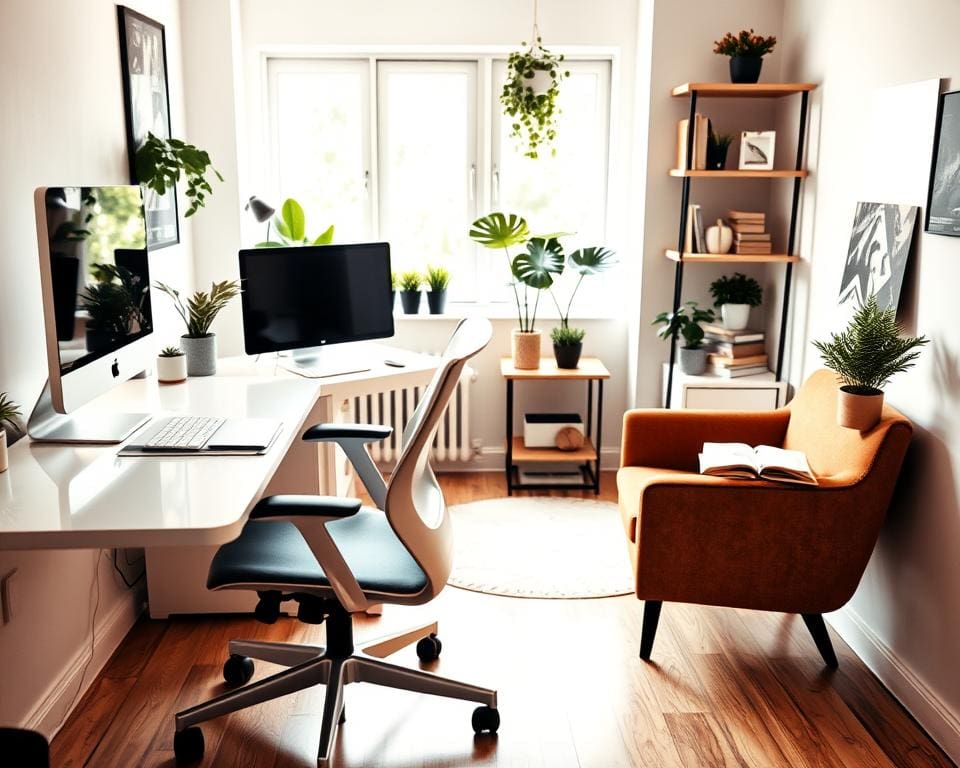
You are about to learn how to transform a compact corner into a stylish home office that works for everyday tasks and video calls. This introduction explains the purpose of the guide and what you can expect whether you live in a flat, a terraced house or have a spare nook under the stairs.
A well-designed small home office boosts productivity, lowers stress and helps you switch off at the end of the day. Research in workplace design links good lighting and ergonomic seating to better concentration and fewer aches. These benefits matter when you create a home office that is both functional and pleasing to the eye.
Small spaces bring clear challenges: limited floor area, reduced natural light, scarce storage and the need to balance multiple uses such as guest beds or dining. You will also face cable management and the task of keeping a cohesive interior style in a compact home office.
Use this guide in stages. Section 2 covers core design principles. Section 3 offers layout ideas and furniture choices, and Section 4 gives practical tips for organisation, lighting and styling. Before you start, measure your space, set a budget and list must-haves like dual monitors, filing or a tidy video-call backdrop.
Simple tools will help you plan: a measuring tape and a quick sketch, or apps such as Roomle and IKEA Place. For furniture and lighting in the UK consider IKEA, John Lewis, Made.com, Habitat and Wayfair UK. For ergonomic seating look at HÅG and Herman Miller via authorised UK dealers, and the Markus chair at IKEA.
If you plan structural work such as loft conversions or built-in cupboards, check local planning rules and building regulations. This opening matches the search intent for a stylish home office and sets you up for practical, style-led small home office ideas that suit a range of budgets.
Design principles for a functional small workspace
A thoughtful approach makes a compact home office both practical and pleasant. Use core design principles home office to guide choices about light, colour, furniture and layout. Small changes can lift mood, improve concentration and keep your workspace distinct from the rest of your home.
Maximising natural light and choosing the right window treatments
Natural light boosts mood, supports your circadian rhythm and reduces eye strain. Where possible place your desk beside or facing the window to maximise natural light while avoiding direct glare on screens. Position monitors so light comes from the side and use an adjustable monitor hood if reflections persist.
Choose window treatments that balance daylight with glare control. Sheer curtains such as voile diffuse harsh sunlight, lightweight roller blinds cut glare for video calls and Venetian blinds give precise control with adjustable slats. Pick options that allow trickle ventilation and meet Building Regulations guidance to prevent condensation.
Select light-reflective fabrics in neutral tones to amplify daylight. Metal or timber blinds add texture and a tailored finish to the room while still helping you to maximise natural light.
Selecting a colour palette to make your space feel larger
Colour changes perception. Light, cool hues recede visually and make a room feel airier. Use a small space colour palette of crisp whites, soft greys or pale blues to open the room without feeling sterile.
Consider an accent wall behind your desk to add depth without overwhelming the space. Use satin or eggshell finishes to bounce light and hide minor imperfections. Reserve high-gloss for trims or small furniture highlights only.
Keep flooring and rugs in complementary tones so the floor flows visually. This continuity prevents the footprint from appearing chopped up and helps the space feel larger.
Balancing form and function with multi-purpose furniture
Choose multi-purpose furniture that combines style with practicality. Examples include wall-mounted fold-down desks like the IKEA NORBERG, extendable tables for occasional meetings and ottomans with internal storage. Look for desks with integrated cable access and monitor mounts to keep surfaces tidy.
Consider modular systems from brands such as MADE or Muuto for adaptable configurations. For a tighter budget, combine floating shelves with a simple tabletop to create a custom workspace.
Prioritise ergonomics when selecting pieces. Ensure the desk height, legroom and drawer mechanisms support comfortable posture and long-term use. Higher-end custom joinery can maximise storage if you need a built-in solution.
Creating visual zones to separate work from relaxation
Psychological separation helps you switch off at the end of the day. Apply visual zoning home office techniques to delineate the work area from leisure space.
- Use a rug to define the desk zone and anchor furniture.
- Place open shelving or a slim bookcase as a partial divider while retaining light flow.
- Add plants or different lighting levels: a bright task light for work and warmer ambient light for relaxation.
For video calls create an uncluttered backdrop with neat shelving, framed art or a simple painted section behind you. Keep personal items minimal to avoid distraction.
Adopt a five-minute reset routine each day to keep zones tidy. Clear papers, stow cables and return items to their place so the work area remains distinct and ready for the next session.
stylish home office layout ideas and furniture selection
A compact home office layout thrives on clear choices. Pick a focal wall or corner and work outward. Keep circulation paths open so you can move without bumping furniture.
For alcoves, a corner desk uses otherwise wasted space. Narrow corridors suit floating desks or narrow console desks that double as hall tables. Consider the NORBERG wall-mounted drop-leaf desk for tight rooms or a Made.com compact desk when you want a polished look.
Built-in or custom carpentry fits awkward footprints and yields a seamless finish. If you rent, choose freestanding slim desks or tension-mounted shelving to avoid permanent fixes.
Secure wall fixing matters. Anchor to studs or use heavy-duty anchors for wall-mounted units. For cable management, add grommets, under-desk cable trays and D-Line adhesive channels to keep surfaces tidy.
Ergonomic seating that complements your decor
Your chair should support you, not merely look good. Look for lumbar support, adjustable seat height, armrests and seat depth. Test measurements so feet rest flat or plan for a footrest.
Budget shoppers may try the IKEA Markus. For mid-range options hunt the HÅG Capisco or a used Herman Miller Sayl. Premium buyers can select a Herman Miller Aeron from UK suppliers. Habitat and Made offer stylish upholstered task chairs that balance comfort with design.
Alternate seats work for occasional use. Drafting stools suit standing desks. Kneeling chairs aid posture for short stints. Add a quality seat cushion or lumbar pillow if your chair lacks features.
Smart storage: vertical shelving, under-desk organisers and hidden compartments
Use height to your advantage with tall shelving and pegboards. String System shelving and IKEA BILLY adapt to many schemes while keeping clutter off the desk.
Under-desk organisers such as slim drawer units on castors, CPU holders and keyboard trays reclaim workspace. Hidden storage options include benches with lift tops, floating cabinets and built-in benches beneath windows.
Keep important papers safe in lockable filing units and follow fire-safety guidance for document storage. Use labelled boxes, magazine files and trays from brands like Muji, WHSmith and Cass Art to keep items easy to find.
Choosing materials and finishes that elevate a compact room
Light woods such as ash or birch, pale laminates and glass reduce visual weight. Add metal or a touch of marble for a luxe accent without crowding the room.
Pick matte paints to cut glare on walls and semi-matte or durable finishes for desks. Layer texture with woven baskets, a soft rug or linen curtains to create depth while keeping the palette calm.
Choose sustainable options where possible. Seek FSC-certified wood, recycled materials and low-VOC paints from reputable UK suppliers to combine style with responsible sourcing.
Practical organisation, lighting and styling tips to boost productivity
Keep a simple daily and weekly routine to prevent clutter. Spend five minutes at the end of each day tidying your desk, and set aside one session a week for filing and inbox management. Use a small in-tray system — inbox, action, archive — and scan bills and receipts with a Fujitsu ScanSnap or smartphone apps such as Adobe Scan to reduce paper buildup and streamline home office organisation.
Arrange your desk to follow the 90-degree rule: monitor centred, keyboard and mouse at right angles to your elbows, with frequently used items within arm’s reach. Label boxes and shelves clearly using durable Brother or Dymo labellers to speed retrieval. Keep desktop peripherals minimal and shred sensitive papers periodically to protect privacy.
Layer your lighting for comfort and flexibility. Combine ambient ceiling or wall lights with task lighting and subtle accent lights for shelves or artwork. Choose adjustable LED desk lamps from Anglepoise or IKEA’s Forsa and Ranarp lines, ideally with CRI 90+ and colour-temperature control. Use cooler light (4000–5000K) for focused daytime work and warmer tones (2700–3000K) later in the day to support your circadian rhythm. Position task lights to the side opposite your dominant hand to reduce shadows, and select diffusers or dimmable fittings to control glare—essential small office lighting and task lighting strategies.
Styling should feel intentional. Limit accessories to three to five meaningful pieces: a plant, a framed print, a quality pen holder and a statement lamp. Choose low-maintenance greenery like Sansevieria, Pothos or ZZ plant to lift mood and improve air quality, and ensure pet-safe choices if needed. Anchor the area with a small rug, use curtains to soften sound, and keep a tidy, branded background for video calls. Before you launch, use a quick checklist — ergonomics, lighting at different times, cable management, labelled storage — then test the setup for a week and refine based on real use. For longevity, perform seasonal reviews, check warranties and follow local UK recycling routes or charity donation options for old gear.