To many people, The Adidas Samba Is More Than Just a Casual Sneaker because it sits in a rare space between sport, street style and everyday practicality. First designed with football in mind, it has become a familiar sight on pavements, in pubs, at gigs and on weekend breaks. Its appeal is not loud. Instead, the Samba wins people over with a low profile, a neat shape and details that feel useful rather than decorative. That quiet confidence is exactly why it keeps returning to wardrobes across the UK.
Why The Adidas Samba Is More Than Just a Casual Sneaker
The Samba’s story matters because it explains why the shoe feels different from many fashion trainers. Its roots are in indoor football, where grip, control and close contact with the ball were important. That background shaped the slim sole, the compact upper and the steady feel under foot. Even when worn with denim, tailored trousers or a summer dress, those sporting origins still show.
Unlike bulkier trainers, the Samba does not try to dominate an outfit. It sits close to the ground, which makes it easy to wear with wider jeans, cropped trousers, skirts or shorts. That adaptability is one reason it has moved through subcultures and style cycles without losing its identity.
Design Details That Do Real Work
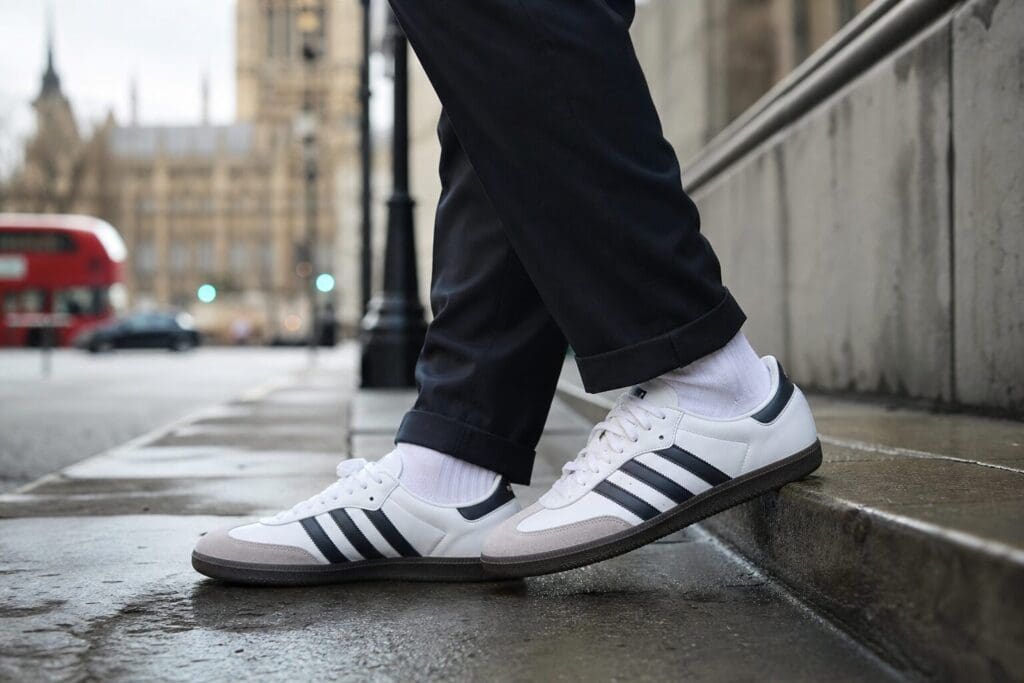
Part of the Samba’s charm is that its most recognisable features are also practical. The gum sole gives the shoe warmth and contrast, while the T toe overlay helps protect a high wear area. The serrated Three Stripes add texture without looking fussy, and the suede toe panel softens the shine of the leather upper.
These details make the trainer feel familiar from a distance and interesting up close. It is a design that rewards repeated wear rather than chasing a single trend. Scuffs can look natural, especially on darker or classic colourways, and the narrow shape keeps the outline tidy.
The Low Profile Shape
The low profile is central to the Samba’s appeal. It avoids the heavy look of chunky trainers and slips neatly beneath straight leg trousers. Because the sole is not especially tall, the shoe feels grounded and unfussy. That makes it suitable for casual offices, relaxed dinners and city days when comfort and polish both matter.
Materials, Texture and Colour
Most Sambas are associated with smooth leather, suede accents and a rubber sole, although versions vary. These materials create contrast without needing bright graphics. Black, white, cream, navy and green tones are particularly easy to style because they echo colours already found in British wardrobes. The result is a trainer that can feel fresh without shouting for attention.
From Football Roots to British Street Style
The Samba is strongly linked with football culture, but its life beyond the pitch is just as important. In the UK, terrace dressing helped turn practical sportswear into everyday style. Supporters valued trainers that looked sharp, travelled well and worked with jeans, jackets and knitwear. The Samba fitted that brief without seeming overdesigned.
Over time, the shoe also found a place among musicians, skaters, students and people who simply wanted a reliable everyday trainer. Its shape is specific enough to be recognisable, but not so extreme that it dates quickly. That balance gives the Samba an unusual cultural reach.
How to Wear Sambas Without Looking Overdone
Styling a pair of Sambas is less about copying a uniform and more about respecting their clean proportions. They work best when the rest of the outfit has a similar sense of ease. Think simple layers, good socks and trousers with enough shape to show the shoe.
Useful outfit pairings include:
- Straight leg jeans, a plain T shirt and a wool overshirt for an easy weekend look.
- Tailored trousers, a fine knit and a mac for a softer smart casual outfit.
- A midi skirt, ribbed socks and a boxy jacket for balanced contrast.
Because the Samba is slim, it can look cramped with very long hems. Let the shoe breathe a little: cropped trousers or a slight break at the ankle often works well. Socks also matter. White ribbed socks give a sporty feel, while darker socks create a neater line in winter.
Comfort, Fit and Everyday Use
Although the Samba is loved for style, it should still be judged as footwear. The narrow shape may suit some feet better than others, and the low sole gives a closer feel to the ground than many modern running inspired trainers. For long days on hard pavements, some wearers may prefer extra cushioning elsewhere in their rotation.
That does not make the Samba impractical. It simply means expectations should match the design. This is a heritage football trainer, not a plush performance shoe. For commuting, errands, casual meals and short city walks, it can be a dependable option if the fit feels right.
Care Tips That Keep the Shape Looking Sharp
Good care protects what makes the Samba appealing: its neat outline and mixed textures. The aim is not to keep the shoe museum perfect, but to stop dirt and moisture from making the upper look tired too quickly.
Helpful habits include:
- Brush suede panels gently with a suitable suede brush after dry wear.
- Wipe leather sections with a slightly damp cloth, then let them air dry.
- Avoid drying trainers on a radiator, as direct heat can affect materials.
Frequently Asked Questions
Are Adidas Sambas good for everyday wear?
Yes, for many people they work well for casual days, commuting and light walking.
Do Adidas Sambas run narrow?
They are often considered slim, so wider feet may need careful sizing.
Can Sambas be worn in smart casual outfits?
Yes, their low shape pairs neatly with tailored trousers, knitwear and simple coats.
Are Sambas suitable for rainy UK weather?
They can handle normal wear, but suede panels benefit from sensible protection.
Why are Adidas Sambas so popular again?
Their simple shape, football heritage and easy styling make them feel relevant without seeming forced across many modern wardrobes today.