Marrakech is one of Morocco’s most vivid city breaks: warm-coloured walls, spice-scented lanes, tiled courtyards and sudden pockets of calm behind carved wooden doors. For UK travellers, it feels both wonderfully different and easy to enjoy over a long weekend or a longer holiday. This guide to The best things to see and do in Marrakech focuses on the city’s essential sights, atmospheric neighbourhoods and everyday experiences that make a visit memorable.
Why Marrakech captures the imagination
Marrakech is often described through its energy, and that is fair. The medina is a maze of narrow streets where mopeds, handcarts, shoppers and cats all seem to share the same space. Yet the city is not only busy. Step into a riad courtyard, a garden or a palace, and the mood changes completely.
The best approach is to balance the lively and the quiet. Spend time in the medina, but do not rush it. Leave room for wandering, mint tea, people-watching and the small discoveries that do not appear on a checklist. Marrakech rewards curiosity, patience and comfortable shoes.
The best things to see and do in Marrakech for culture lovers
Culture is everywhere in Marrakech, from grand monuments to the everyday theatre of its streets. The city’s history can be seen in its architecture, craft traditions and religious landmarks, even when some buildings are admired from the outside.
Experience Jemaa el-Fnaa
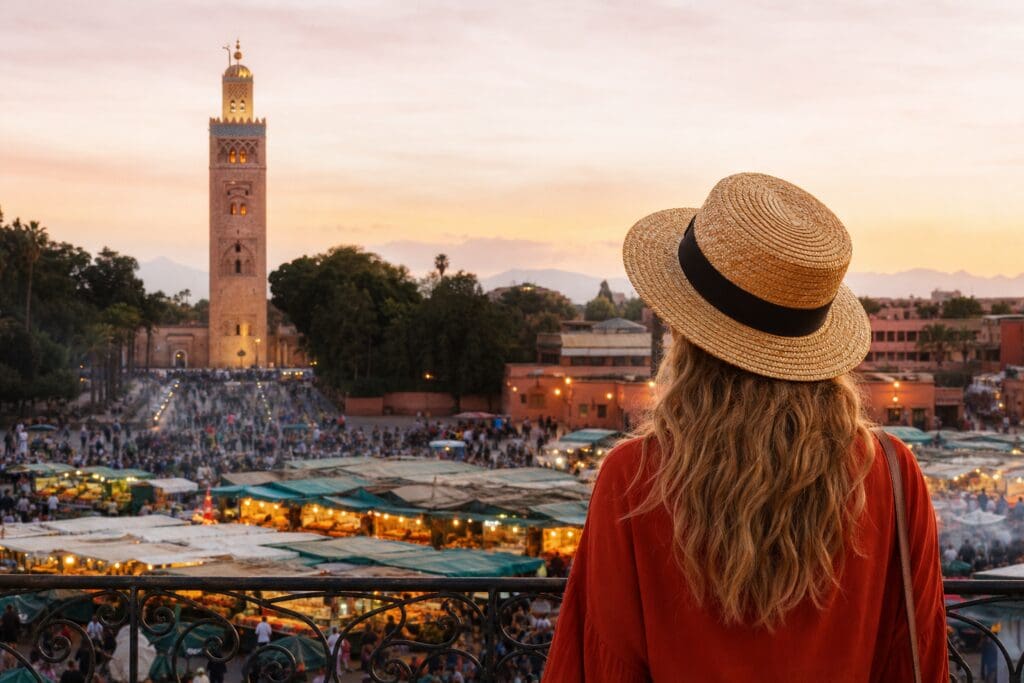
Jemaa el-Fnaa is Marrakech’s famous central square and one of the city’s defining experiences. During the day, it is a meeting point filled with movement. As evening arrives, the atmosphere grows busier, with food stalls, performers and crowds gathering under the open sky.
It can feel overwhelming at first, especially for first-time visitors. Keep valuables secure, agree prices before accepting services, and take your time. The square is best understood as a living public space rather than a polished attraction. From a rooftop café nearby, you can watch the scene unfold at a gentler pace.
Wander the medina and souks
The medina is the historic heart of Marrakech. Its lanes lead to souks selling lamps, slippers, leather goods, ceramics, textiles, spices and metalwork. Some areas specialise in particular crafts, and it is fascinating to see how skills are passed between workshops.
Bargaining is expected in many market settings, but it should stay friendly. If you are not interested, a polite “no, thank you” is usually enough. Getting slightly lost is part of the experience, although a map app can help when the lanes begin to look alike.
Gardens, palaces and peaceful corners
Marrakech has several beautiful places where design, shade and water create a calmer rhythm. These stops are especially welcome after a morning in the souks.
Jardin Majorelle is among the city’s best-known gardens, admired for its cobalt-blue buildings, cactus plants and carefully composed paths. It is popular, so visiting earlier in the day often makes the experience more relaxed. The nearby streets in the new town of Gueliz also offer a different side of Marrakech, with broader avenues, cafés and shops.
Bahia Palace is another highlight. Its courtyards, painted ceilings, carved plaster and tiled surfaces show the elegance of Moroccan craftsmanship. El Badi Palace has a more ruined, open-air character, with vast walls and a sense of faded grandeur. The Saadian Tombs, with decorative chambers and a peaceful garden setting, are also worth including if you enjoy historic sites.
For a quieter moment, consider Le Jardin Secret in the medina or the Menara Gardens outside the central lanes. Neither removes you from the city entirely, but both offer breathing space.
Food, hammams and everyday pleasures
Food is one of the great joys of Marrakech. Moroccan cooking uses spices with warmth rather than harsh heat, and meals often feel generous and sociable. Tagines, couscous, grilled meats, salads, olives and sweet pastries are common across the city, while fresh orange juice and mint tea appear everywhere.
A hammam is another classic Marrakech experience. Options range from simple local bathhouses to more polished spa-style settings. The process usually involves steam, cleansing and exfoliation, leaving you refreshed after dusty sightseeing.
Small pleasures can be just as memorable as major attractions:
- Drink mint tea on a rooftop terrace as the call to prayer echoes across the city.
- Try a slow-cooked tagine with preserved lemon, olives or tender vegetables.
- Notice the details in zellige tiles, brass lanterns and carved cedar wood.
- Browse spice stalls for the colours and scents, even if you buy nothing.
- Pause in a riad courtyard, where fountains and plants soften the city noise.
These everyday moments are central to The best things to see and do in Marrakech because they help visitors connect with the pace and texture of the city, not just its landmarks.
Day trips and practical tips for exploring
Marrakech is also a useful base for exploring nearby landscapes. The Atlas Mountains are a popular day-trip option, offering cooler air, mountain villages and scenic valleys. Some visitors also travel to the Agafay Desert, a rocky desert landscape closer to the city than the Sahara. Longer desert journeys are possible, but they require more time and should not be confused with a quick excursion.
Within Marrakech, the best way to explore the medina is usually on foot. Taxis can help between districts, though agreeing the fare before setting off is sensible if a meter is not used. Dress comfortably and respectfully, especially when visiting traditional areas. Light layers are useful, as temperatures can shift between sunny afternoons and cooler evenings.
Friday is an important prayer day, so some shops and sites may operate differently. During Ramadan, opening hours and the rhythm of daily life can also change. These variations are part of the city’s culture, but they are worth remembering when planning each day.
Frequently Asked Questions
How many days do you need in Marrakech?
Three full days is a good amount of time for most first-time visitors to Marrakech. This allows space for the medina, major palaces, gardens, souks, rooftop meals and a hammam without rushing constantly.
Is Marrakech suitable for a first trip to Morocco?
Yes, Marrakech is a popular choice for a first trip to Morocco because it offers strong atmosphere, varied accommodation and many well-known sights. The medina can feel intense, but planning gentle breaks helps.
What should I wear when visiting Marrakech?
Light, modest clothing is usually the most comfortable and respectful option in Marrakech. Loose trousers, longer skirts, breathable shirts and comfortable shoes work well, particularly in the medina and at historic sites.
Is it easy to walk around Marrakech?
Walking is the best way to explore the medina, where many lanes are too narrow for cars. Distances can feel longer in heat or crowds, so regular pauses are sensible.
What is the best area to stay in Marrakech?
Many visitors choose a riad in or near the medina for atmosphere and easy access to sights. Gueliz can suit those who prefer wider streets, modern cafés and a quieter evening setting.