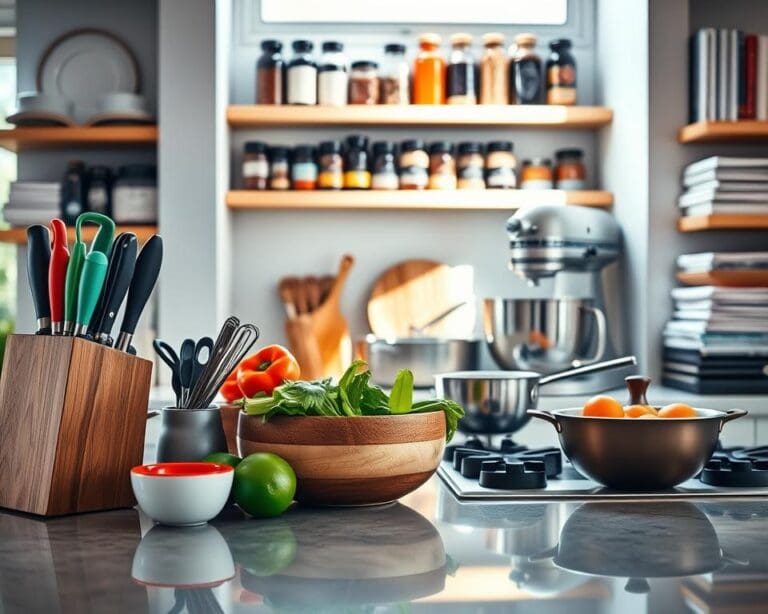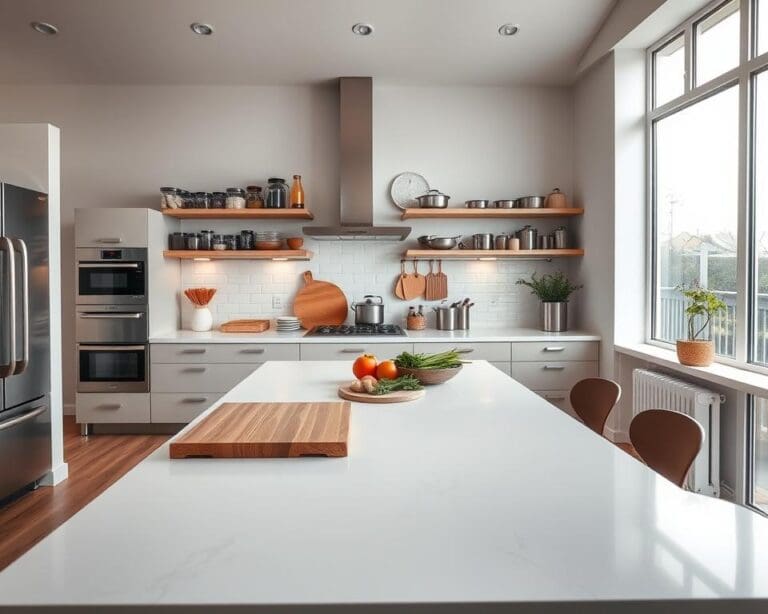
Outfitting a functional kitchen starts with a clear starter kitchen inventory that balances versatility, durability, and value. This short guide defines must-have kitchen essentials for first-time apartment dwellers, new homeowners, and hobbyist cooks across the United States.
We chose items by frequency of use, multi-functionality, longevity, safety, and cost-to-utility ratio. The kitchen essentials list emphasizes trusted brands professionals and reviewers recommend, such as Le Creuset for enamel cast iron, Lodge for classic skillets, All-Clad for stainless cookware, OXO for reliable gadgets, and Wüsthof or Victorinox for knives.
Begin by prioritizing a core set: a durable skillet and saucepan, a sharp chef’s knife, a sturdy cutting board, and basic measuring tools. These essential kitchen tools let you make everyday meals, simple baking, and casual entertaining without clutter or overspending.
As cooking habits evolve, layer in small appliances and specialty gear. Consider workflow and storage when adding pieces—modular layouts and clever storage reduce clutter and boost efficiency. For design-focused workflow tips, see this guide on improving kitchen flow with layout and zones: kitchen workflow strategies.
By following this kitchen basics for home chefs approach, readers will assemble a compact, capable kitchen that supports daily cooking, hosting, and growth in skills—all while keeping space and budget in check.
What are must-have kitchen essentials?
Outfitting a kitchen for daily joy and efficiency starts with a clear list of essentials. Choose pieces that handle many tasks, fit your cooking style, and free up precious counter space. The right mix of core cookware, essential knives, and small kitchen appliances sets you up to cook with confidence and calm.
Core cookware every kitchen needs
Start with a versatile set that covers most recipes. A nonstick 8–10″ skillet works wonders for eggs and delicate foods. Add a 10–12″ stainless steel skillet for searing and deglazing. A 2–3 quart saucepan with lid is ideal for sauces and grains.
A 4–6 quart Dutch oven or enameled cast-iron pot handles braises and soups. A 6–8 quart stockpot is essential for pasta and big batches. Consider brands like All-Clad, Calphalon, Tramontina, Le Creuset, or Lodge when choosing materials and durability.
Match materials to needs: weight, heat response, oven safety, and induction compatibility should guide your choices. Proper selection saves time and reduces clutter in a small kitchen.
Essential knives and cutting tools
A compact, high-quality knife set goes a long way. At minimum, own an 8–10″ chef’s knife, a 3.5–4″ paring knife, and a serrated bread or utility knife. Add a santoku or boning knife if your cooking leans that way.
Maintain edges with a honing steel and schedule sharpening with a whetstone or professional service. Trusted brands include Wüsthof, Victorinox, Global, and Shun. Use wooden boards like maple or walnut for everyday chopping and color-coded plastic boards for raw meats to avoid cross-contamination.
Must-have small appliances for everyday cooking
Choose small kitchen appliances that earn their spot on the counter. A microwave speeds reheating. A blender or immersion blender makes sauces and smoothies simple. A toaster or toaster oven and an electric kettle cover many quick tasks.
For households that want more hands-off cooking, an Instant Pot or slow cooker is high impact. An air fryer delivers crisp results with less oil. Match appliance size and wattage to available space and your typical meals.
Storage and organization basics to save space
Smart kitchen storage solutions keep tools accessible and counters clear. Use stackable pots, nesting bowls, vertical dividers for baking sheets, under-shelf baskets, and wall-mounted magnetic knife strips. Pegboards work well for hanging utensils.
For pantry order, choose airtight glass or BPA-free containers. Brands like OXO, Weck, and Anchor Hocking make durable options. Label and date items to follow a FIFO rotation for safety and freshness.
Consider appliance garages and pull-out drawers to hide gadgets yet keep them handy. For more ideas on space-saving kitchen organization try this practical guide with wall-mounted and cabinet organizer tips.
Essential cookware and bakeware for home chefs
Choosing the right pieces lifts your cooking from good to memorable. This short guide helps you pick the best pots and pans for everyday meals, the essential bakeware for reliable results, and practical tips for cookware care and maintenance. Use it as a quick reference when building a kitchen that lasts.
Selecting the right pots and pans: materials and sizes
Start with a small, focused set that covers most recipes. Aim for an 8–10″ and a 10–12″ skillet, a 2–3 qt saucepan, a 3–4 qt sauté pan or braiser, a 5–7 qt Dutch oven, and a 6–8 qt stockpot. Those sizes handle breakfasts, weeknight meals, and dinner for guests.
Match material to the task. Stainless steel works for searing and pan sauces, aluminum heats fast and light, copper offers precise control for delicate sauces, and enameled cast iron keeps heat steady for braising. Check induction compatibility and oven-safe limits on handles and coatings before you buy.
Nonstick vs stainless vs cast iron: when to use each
Pick nonstick for eggs, pancakes, and low-fat cooking. Use silicone, wood, or plastic utensils and avoid high heat. Look for trusted brands like T-fal or GreenPan that advertise PFOA-free coatings.
Choose stainless steel when you need browning, fond for pan sauces, or a dishwasher-safe finish. Preheat pans and add oil to reduce sticking.
Turn to cast iron—seasoned or enameled—when you need even heat and retention for searing, frying, or slow-cooked dishes. Seasoned cast iron needs routine care. Enameled cast iron avoids reactive issues with acidic foods.
Bakeware pieces that make baking easier and consistent
Build a basic set: a heavy-duty half-sheet rimmed baking sheet, a 9×13 pan, 8- or 9-inch cake pans, a loaf pan, and a muffin tin. Add a springform pan for cheesecakes and a pizza stone or steel for crisp crusts.
Choose aluminized steel for even heating and glass for casseroles and visual monitoring, keeping in mind that glass may require slight temperature adjustments for even results.
Care and maintenance tips to extend the life of cookware
Simple habits protect your investment. For nonstick, use gentle utensils and hand wash when possible. Never heat an empty nonstick pan.
For stainless steel, deglaze to lift stuck bits and use a cleaner like Bar Keepers Friend for stains. Avoid high-chloride cleaners that can pit the surface.
For cast iron, dry immediately after washing and rub with oil to preserve seasoning. Store with a thin coat of oil to prevent rust. Treat enameled cast iron gently to avoid thermal shock and skip metal scouring pads.
Rotate bakeware in the oven for even browning, avoid aerosol sprays on nonstick surfaces, and replace warped or badly scratched pans to keep results consistent. These steps keep your best pots and pans performing well for years.
Tools, gadgets, and utensils that improve efficiency
Smart tools speed up prep and lift your cooking. Choose items that promise long-term use and free up counter space. The right selection of essential kitchen tools and the best kitchen gadgets turns a busy evening into a calm, creative session.
Knives, sharpeners, and cutting boards selection guide
Start with a high-quality chef’s knife (8–10″), a serrated bread or utility knife, and a paring knife. Look for blade steels like X50CrMoV15 found in Wüsthof and VG-10 used in many Japanese knives. Full-tang construction gives balance and durability.
Keep edges sharp with a ceramic or steel honing rod for daily use, a trusted push-button sharpener for quick touch-ups, and whetstones for deeper work. Local cutlery shops such as a neighborhood knife professional can provide expert sharpening when needed.
Pick cutting boards to match tasks. End-grain wood from John Boos protects blades. Use plastic boards for raw proteins to reduce cross-contamination. Epicurean offers durable, dishwasher-friendly options that work well for daily use.
Measuring tools and prep gadgets that save time
Accurate measuring tools for cooking make the difference in baking and consistent dinners. Keep dry measuring cups, a glass liquid measuring cup with a pour spout, a full set of measuring spoons, and a kitchen scale.
Choose time-savers like a Microplane zester, box grater, garlic press or Microplane alternative, bench scraper for clean transfers, and a mandoline for even slices when you use its guard. A digital thermometer helps nail meat temps and candy stages.
Store small gadgets in a drawer organizer and pick dishwasher-safe pieces where possible to simplify cleanup.
Essential utensils: spatulas, tongs, whisks, and ladles
Build a core utensil set around a heat-resistant silicone spatula, sturdy tongs (8–12″), and a balloon whisk for whipping. Add a smaller whisk for sauces, a slotted spoon, a solid spoon, a ladle, and a flexible turner for delicate foods like fish.
Prefer silicone for nonstick pans and stainless steel for high-heat work. Brands such as OXO and Cuisinart supply durable utensils that feel at home in both busy and quiet kitchens.
How to choose multi-use tools to minimize clutter
Select multi-use kitchen utensils that replace single-purpose gadgets. A good chef’s knife reduces the need for many specialty knives. Nesting measuring cups and spoons save drawer space. A mixing bowl with a pour spout and lid doubles as storage.
Invest in quality over quantity. Tools from OXO, Cuisinart, and KitchenAid often serve multiple roles and last longer, cutting down on replacements. If a gadget gets used less than twice a year, consider renting or storing it off-site to keep your kitchen streamlined.
Organization, storage, and safety essentials for a functional kitchen
Smart pantry organization begins with categories: baking, grains, canned goods. Use clear airtight containers like OXO POP and Anchor Hocking to keep staples fresh and make visual inventory quick. Add labeled bins and shelf risers so you can see what you have at a glance and avoid expired items.
Optimize cabinets, drawers, and small spaces with practical kitchen storage ideas. Drawer dividers keep utensils tidy, pull-out shelves and wire baskets make pots and pans reachable, and lazy Susans tame corner cabinets. For tight kitchens, rely on vertical storage—magnetic knife strips, wall rails, hanging pot racks—and stackable, nesting tools to save space.
Refrigerator and freezer organization helps meal prep and safety. Use clear bins and labels for leftovers, set your fridge to 35–38°F and freezer to 0°F, and rotate items so older food is used first. For food safety, keep separate cutting boards for raw meat and produce and use a digital instant-read thermometer to confirm internal temps: poultry 165°F, ground meats 160°F, and steaks/roasts 145°F plus rest time.
Never overlook kitchen safety essentials and maintenance. Keep a Class K or ABC extinguisher nearby, install a smoke detector, and learn how to smother grease fires—cover with a lid or use baking soda; do not use water. Child and pet safety measures like cabinet locks and stove knob covers prevent accidents. Finally, routine cleaning and seasonal tasks—deep-clean the oven, descale coffee makers, defrost the freezer—preserve function and make your workspace inviting. Good lighting, a clear counter, and a few well-made pieces such as a cast-iron Dutch oven or a high-quality chef’s knife inspire more cooking and experimentation.