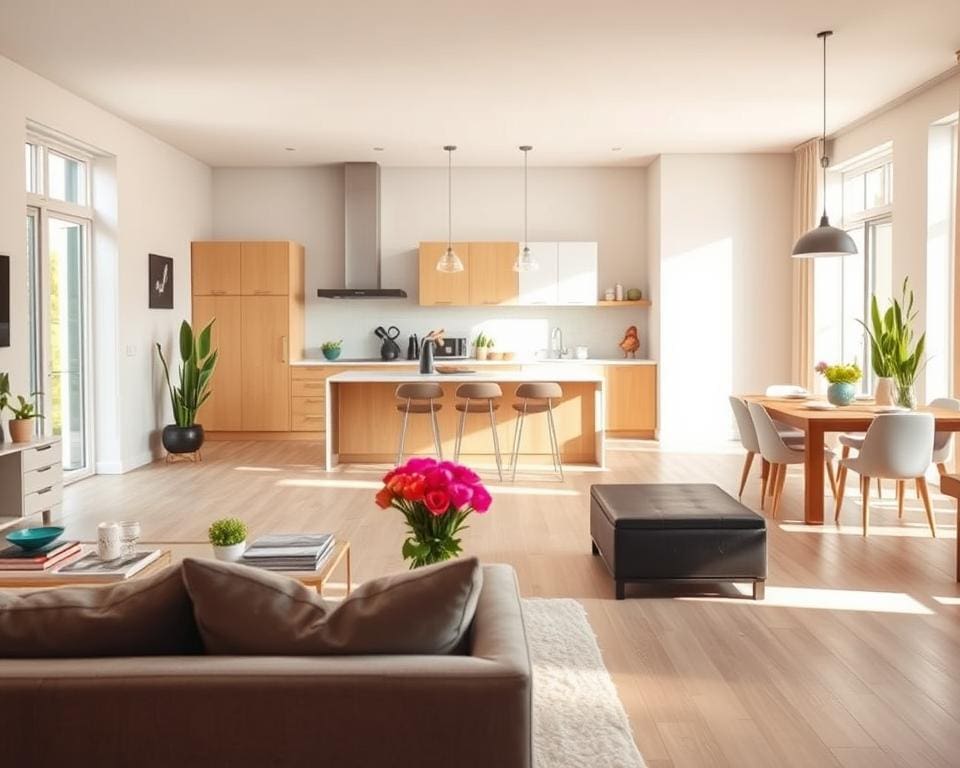
Open-plan living describes an architectural and interior design approach that removes or minimizes walls between primary living areas. In an open concept living arrangement, the kitchen, dining area, and living room flow into one another to create a continuous, multifunctional space. This layout grew from modern home design trends and modernist architecture, and it now reflects how many American families live, work, and entertain.
The benefits of open-plan living include enhanced social interaction, improved natural light, and flexible multipurpose zones that suit entertaining, remote work, and daily family life. Open-plan home advantages also extend to perceived space—rooms feel larger and more connected—and to marketability, since many homebuyers prefer bright, adaptable interiors.
Open-plan layout benefits apply across property types, from loft conversions to suburban renovations and new builds. That said, trade-offs exist: reduced privacy, noise management, and storage can be challenges. For homeowners and homebuyers, weighing these pros and cons is essential when considering resale value and livability.
In the United States, smaller household sizes, multigenerational living arrangements, and a desire for social, functional spaces have driven the popularity of open concept living. Keep reading to explore social, design, acoustic, lighting, and practical homeowner advantages that help you decide if this modern home design fits your needs.
What are the benefits of open-plan living?
Open-plan homes change how people live together. Removing barriers creates visual flow and easy movement. That shift supports modern lifestyles, from remote work to lively weekend gatherings.
Enhanced social interaction and family connection
Opening walls helps family members stay in sight and in conversation. Parents can prep dinner while helping with homework, and hosts can chat with guests while finishing a meal. These scenarios show the social benefits open-plan layouts offer every day.
Shared sightlines reduce isolation and ease supervision. Multi-generational households find more opportunities for shared time and informal care. The result is a home that supports emotional closeness and lowers stress for caregivers.
Improved natural light and perceived space
With fewer walls, daylight travels deeper into rooms. Natural light open-plan designs make spaces feel brighter and larger, which is vital in smaller homes and urban apartments.
Better daylight supports circadian rhythms and boosts mood. Simple choices, like south-facing windows and light-tone finishes, amplify brightness and cut daytime energy use.
Flexible, multipurpose living zones
Open plans let spaces adapt as needs change. A dining area can become a home office, a living room can double as a play space, and the kitchen often turns into a social hub. These flexible living spaces suit shifting routines and life stages.
- Use rugs and furniture groupings to define zones without walls.
- Install islands or shelving to create gentle separations.
- Choose pieces that move easily for quick reconfiguration.
Flexibility supports family-friendly layouts from young families to empty nesters. Fewer interior walls can cut renovation costs and make future updates simpler, which appeals to homeowners and buyers interested in long-term adaptability and open-concept socializing.
Design strategies to maximize the benefits of open-plan spaces
Open-plan design strategies begin with clear circulation and a few simple anchors. Place furniture to create natural pathways that avoid bottlenecks near entryways and kitchen islands. Use rugs to define seating clusters and position sofas with their backs toward circulation routes to separate living from dining while keeping sightlines open.
Keep scale and proportion in mind. Choose pieces that fit the room so large sofas or chunky cabinets do not fragment the space. Opt for multipurpose items such as extendable tables and storage benches to add function without cluttering sightlines. Integrated cabinetry and built-in benches offer vertical storage that preserves openness.
Furniture placement open-plan should support everyday flow. Arrange islands as work hubs and casual dining spots, leaving two clear lanes for movement. Place freestanding shelving or low consoles to hint at boundaries without full-height walls. These moves keep activity visible and the layout flexible for changing needs.
Lighting and material choices amplify the sense of unity. Plan layered lighting that combines ambient fixtures, task LEDs, and accent lamps. Suspend pendants over islands and dining tables, add recessed fixtures for even coverage, and place wall sconces in transitional zones to create pockets of warmth.
Choose continuous flooring and a restrained palette so zones read as part of one whole. Light-reflective surfaces and pale paints bounce daylight deeper into space. In high-traffic kitchen areas select durable, easy-care finishes like porcelain tile or engineered wood that flow into adjacent living zones.
Open space lighting should mix daylight with controllable electric light. Maximize glazing with larger windows or sliding doors and use sheer treatments to protect privacy without cutting light. Fit dimmers and smart controls to tailor mood and save energy.
Acoustic solutions balance liveliness with comfort. Soft furnishings, area rugs, and upholstered furniture reduce echo. Consider professional products such as Owens Corning acoustic panels or Guilford of Maine textiles to treat ceilings or walls where needed.
Architectural tweaks can create quiet niches. Partial-height partitions, glazed dividers, and sliding screens carve private corners while keeping visual connection. Built-in cabinetry can double as a sound buffer between dining and work areas.
Acoustic solutions open-plan work best alongside behavioral and technical approaches. Use white noise machines or zoned speaker systems to mask distractions. Set household norms like designated quiet hours or a dedicated work corner. Ensure HVAC zoning and discreet diffusers keep temperatures even without adding fan noise.
Privacy in open layouts need not mean closing off space. Combine reversible screens, glazing, and furniture orientation so homeowners can adjust levels of seclusion as needs change. For more ideas and practical examples, explore practical benefits described at open-plan living resources.
Practical benefits for homeowners and homebuyers
Open-plan layouts often boost open-plan home value by making rooms feel larger and more flexible in listing photos and showings. Urban loft seekers and younger couples frequently rank buyer preferences open-plan highly, while families or buyers who value privacy may prefer hybrid layouts. Tailoring a renovation to local market trends open-plan is key to getting the best resale benefits open-plan.
Cost-wise, removing non-load-bearing walls is relatively straightforward, but taking out load-bearing walls needs structural engineering and beam installation. Expect expenses for structural work, electrical relocation, and HVAC adjustments; consulting licensed contractors and checking local codes is essential. Lower-cost alternatives include partial openings, pass-throughs, and widened doorways that still deliver a sense of openness and improved home renovation open-plan ROI.
Day-to-day advantages are practical and immediate: easier entertaining, simpler supervision of children, and more efficient use of space that can reduce duplicate furnishings and maintenance. Improved daylighting can cut daytime lighting bills, while unified zones simplify cleaning. To control odors in open kitchens, invest in a high-quality range hood and proper ventilation, and consider acoustic measures like bookcases or hanging baffles for privacy and sound control.
For sellers, stage clear zones, keep sightlines clutter-free, and use layered lighting to show flow. Buyers should visualize furniture and routines, and ask about flexibility to add partitions later. Work with trusted professionals—AIA architects, National Association of Home Builders members, or certified remodelers—to ensure safety, cohesive finishes, and alignment with market trends; for practical inspiration and evidence of popularity, see this article on why open-plan living remains popular: open-plan living insights.