This short guide sets out practical and stylish home lighting ideas for every room in a typical UK house or flat. It aims to inspire homeowners and renters with attainable suggestions that improve atmosphere, boost functionality and cut energy use.
At its heart are a few simple principles. Think in layers: ambient light for general use, task light for cooking or reading, and accent light to highlight features. Choose dimmable circuits where possible and favour fittings with a high CRI (90+) in kitchens and dressing areas so colours read true.
Technology and trends shape modern interior lighting ideas UK. LED is the dominant, energy-efficient choice, while smart systems such as Philips Hue, LIFX and TP-Link/Kasa make scene-setting effortless. Low-voltage transformers suit some pendant and cabinet lights, and IP-rated fixtures are essential for bathrooms (IP44 minimum in specified zones).
Safety and compliance matter in the UK. For new circuits, consumer unit changes or work beyond simple lamp swaps, call a qualified electrician to ensure Part P compliance. That advice helps you enjoy the best lighting ideas for home without risk.
Read on for room-by-room home lighting tips, styling ideas and practical installation hacks you can implement yourself or plan with a professional. Expect lighting inspiration tailored to period terraces, modern apartments and typical family homes.
home lighting ideas to transform each room
Thoughtful lighting changes how a home feels and works. Use practical tips and stylish choices to create welcoming rooms that meet daily needs and lift the mood.
Living room ambience: layering light for comfort and drama
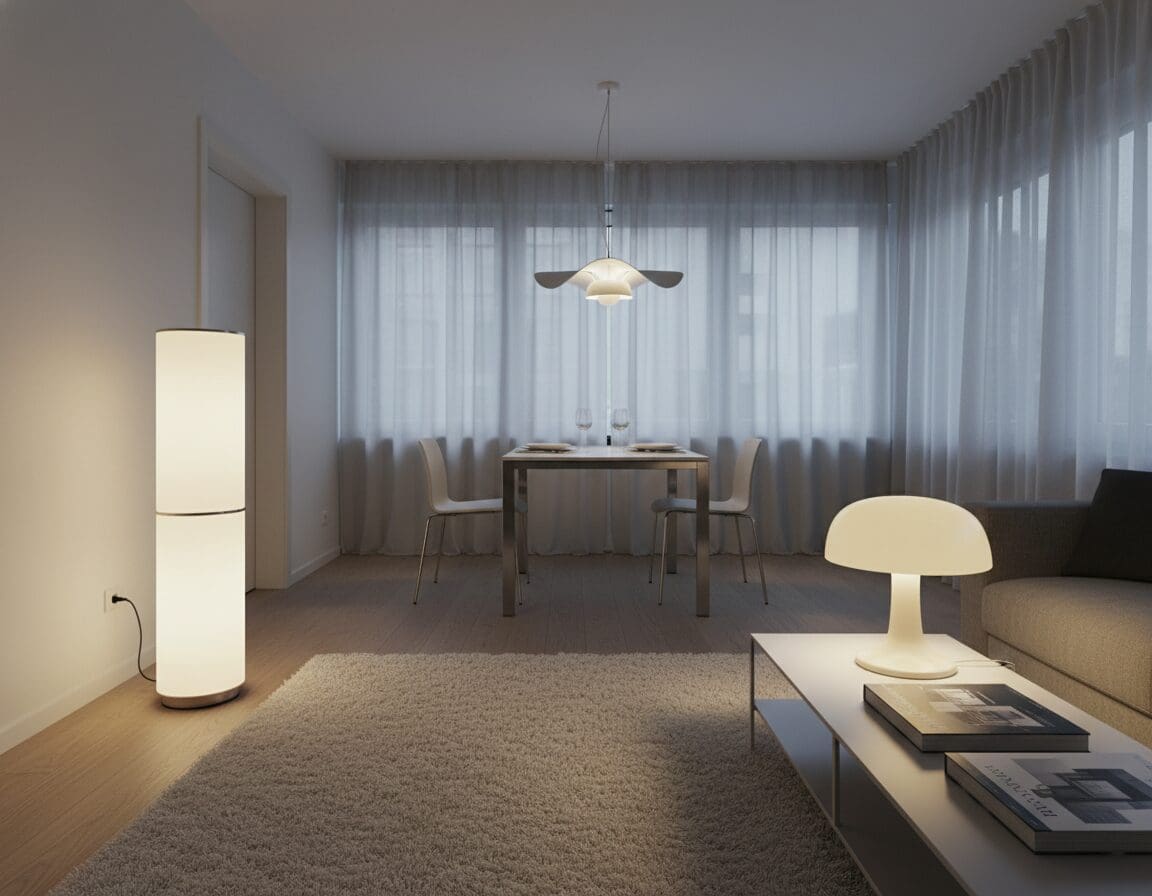
Start with layered lighting that mixes general, task and accent sources. General light from a pendant or recessed fittings gives overall illumination. Task lamps and adjustable floor lights cover reading and hobbies. Accent sources such as spotlights or picture lights add drama and feature lighting to highlight art or shelves.
Fit dimmers on ambient circuits so the ambient lighting living room can shift from bright family time to cosy evenings. Aim for 100–300 lux for general use and 300–750 lux at reading points. Consider warm 2,700–3,000K temperatures for a soft, inviting glow and brands like John Lewis & Partners, Habitat or Made.com for statement pendants.
Kitchen task lighting: under-cupboard, pendant and recessed options
Kitchens demand shadow-free worktops and flexible ambient light. Under-cupboard lighting is essential; choose anti-glare LED strips or linear bars with CRI 90+ to show true food colours. Place them close to the backsplash for even coverage.
Pendant lights kitchen over islands work as feature lighting and task sources. Hang pendants about 75–90cm above the surface for comfort and balance. Recessed kitchen lights provide even ambient illumination when spaced to the room size. Aim for 300–500 lux on work surfaces and keep fittings IP20 for general zones, increasing protection near sinks and hobs.
Bedroom lighting for rest: soft, dimmable and bedside solutions
Design bedroom lighting ideas to support sleep and relaxation. Use warm, low-colour temperatures and layered lighting that dims down as bedtime approaches. Fully dimmable bedroom lights help reduce stimulation before sleep.
Choose bedside lamp ideas with adjustable heads or wall-mounted swing arms for reading. Low-level accent lights such as plinth or toe-kick LEDs provide gentle guidance at night without bright overheads. Consider smart bulbs from Philips Hue or Dyson for tunable scenes and integrated charging in lamp designs for convenience.
Bathroom lighting: mirror illumination and moisture-rated fixtures
Bathrooms need clear, even light for grooming plus moisture-safe fittings. For mirror lighting, install vertical lamps either side of the mirror or use LED mirror cabinets that deliver even vanity lighting without shadows.
Follow UK wiring rules and select IP rated bathroom lights in zones near water, using IP44 or higher where required. Overhead downlights should be IP65 if located in the shower zone. Aim for 300–500 lux at the mirror and a neutral 3,000–4,000K for good visibility.
Hallways and staircases: safe, subtle and motion-sensor choices
Hallway lighting ideas should guide movement while avoiding glare. Use ceiling fixtures for even coverage and low-level step lights or skirting LEDs to mark routes and reduce trip risk. Staircase lighting benefits from recessed step lights or integrated handrail illumination in refurbishments.
Motion sensor lights save energy and add convenience in corridors and landings. Pair presence detectors with warm LEDs to retain a welcoming atmosphere. Use dimmable or presence-detection controls from reputable suppliers and have any rewiring carried out by a qualified electrician for safety and continuity.
Styling and design tips for stylish lighting schemes
Good lighting shapes mood and makes rooms feel intentional. Use colour temperature lighting to set a tone for each space. Small choices—bulb type, fixture scale, metal finish—combine to form a cohesive lighting design that feels thoughtful and lived-in.
Choosing the right colour temperature for mood and functionality
Define colour temperature by the Kelvin scale. Pick warm 2,200–3,000K for cosy living rooms and bedrooms. Choose neutral 3,000–4,000K for kitchens and bathrooms. Use cool above 4,000K where precise tasks need clarity.
Consider tunable white lighting for flexibility. Systems from Philips Hue and LIFX offer adjustable scenes to match the time of day. Tunable white lighting helps balance lighting mood and practical needs while supporting sleep and wake cycles.
Look beyond temperature and check CRI. Aim for CRI 90+ where colour accuracy matters, such as makeup, food prep and artwork. High CRI keeps tones true and makes interiors feel richer.
Scale and proportion: matching fixtures to room size and ceiling height
Use a simple fixture size guide to choose pendant and chandelier diameters. Add room length and width in metres, convert that sum to centimetres and use that as a starting diameter. This rule keeps proportions balanced.
Pendant size tips: hang pendants 75–90cm above dining tables or kitchen islands. For standard ceilings, lower drops create intimacy. For tall rooms, raise fixtures or choose multi-tiered chandeliers to draw the eye upwards.
Match lighting scale to furniture. Large sofas and dining tables suit statement pieces from brands such as Tom Dixon or Brokis. Compact rooms benefit from slimline recessed fittings or semi-flush pendants to avoid overwhelming the space.
Mixing finishes and styles for a cohesive look
Harmonious contrast works well when you repeat a dominant finish. Try brass pendants with matte-black task lamps and repeat one finish in door handles or taps to create continuity. Use texture—wood and woven shades—to soften metal-heavy schemes.
Mixing metal finishes becomes intentional when limited to two main finishes plus an accent. Pair mid-century brass pendants with modern glass table lamps for a modern-traditional lighting mix that feels curated rather than chaotic.
Assess existing hardware before buying. Match lighting finishes to fittings from retailers such as Neptune or Barker and Stonehouse to help unify the room and support a cohesive lighting design.
Sustainable choices: energy-efficient bulbs and smart controls
Switch to LED bulbs UK products for lower running costs, longer life and reduced maintenance. Choose bulbs by lumen output rather than old wattage labels to get the right brightness. Look for reputable names like Philips, OSRAM/LEDVANCE and Sylvania.
Smart lighting energy saving comes from timers, motion sensors and scene control. Use motion sensors in cupboards and hallways, timers for exterior lights and smart hubs for scheduled scenes that reduce waste and boost convenience.
Check product ratings and repairability. Ecodesign-compliant fittings and accessible replacement drivers extend usable life. Follow sustainable lighting tips by choosing recyclable fittings and long-life components to cut environmental impact.
Practical installation advice and budget-friendly hacks
Start by deciding which jobs are sensible for DIY and which need a professional. Simple tasks such as swapping bulbs, plugging in lamps or fitting lampshades are fine to tackle yourself. Any new wiring, changing circuits or installing ceiling roses must be done by a registered electrician in the UK to meet Part P. Look for tradespeople registered with NICEIC or SELECT and request at least three quotes so you can compare scope, timescale and warranty.
Use budget lighting ideas to get big impact for less. Plug-in pendant lights are a smart alternative when rewiring is impractical, and smart bulbs added to existing lamps deliver scene control without hard-wiring. LED strip lights with adhesive backing work well for shelves and alcoves, while upcycling a lamp from a charity shop with a new shade or a spray finish refreshes a room on a tight budget. These DIY lighting hacks stretch your spend while keeping style high.
Prioritise safety and correct specification during installation. Choose IP-rated fittings for bathrooms and wet zones, ensure transformers or LED drivers are accessible and ventilated, and anchor heavy chandeliers into ceiling joists using appropriate fixings. Test placement with temporary lamps before committing to hard-wired positions so you can adjust sightlines and layering without costly rewiring.
Create a simple lighting plan that maps switches, circuits and zones, and group task lights separately from ambient fittings. Calculate total load and prioritise upgrades: start with energy-efficient bulbs and dimmers, then replace fixtures over time. Where possible, investigate government schemes or retailer offers for energy-saving improvements, and if in doubt, hire electrician UK to certify work and give peace of mind. These lighting installation tips and budget lighting ideas will help you achieve a safe, flexible and stylish result.