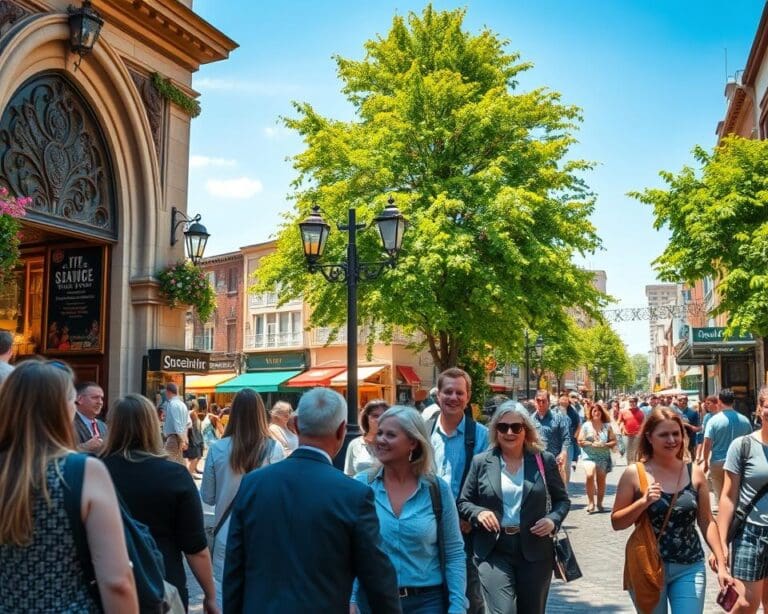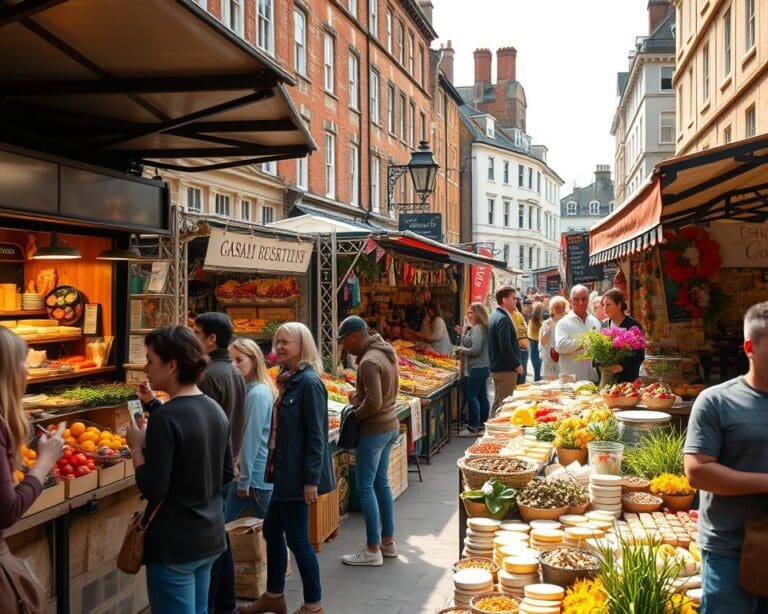
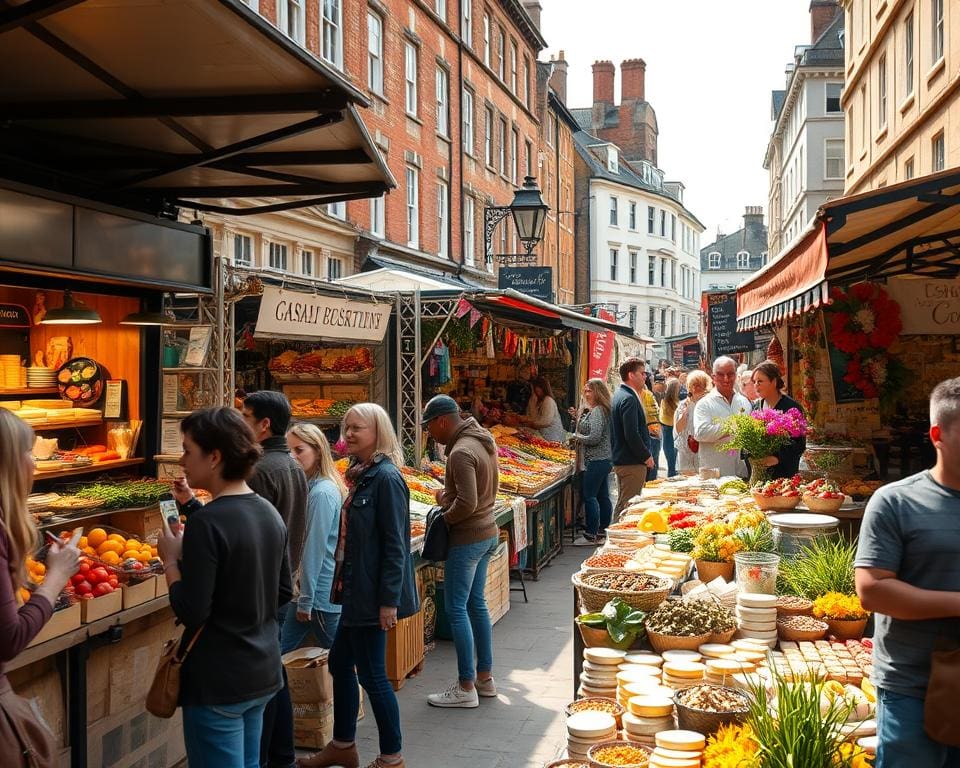
This short guide answers the question “What are the top foodie markets in the UK?” for travellers and locals who want authentic flavours and real craft. It outlines a curated route through top UK foodie markets, from London’s Borough Market and Camden Market to Manchester’s Mackie Mayor and Altrincham Market, and beyond.
Knowing the best food markets Britain has to offer helps you find seasonal produce, meet independent producers and sample regional specialities. The article points to historic covered markets, lively street-food hubs, coastal stalls and specialist pop-ups that champion sustainability and provenance.
Expect recommendations, practical visiting tips and highlights that span England, Scotland, Wales and Northern Ireland. We include city staples such as Maltby Street Market and Glasgow’s markets, as well as coastal names like Padstow, St Ives, Lerwick and Stornoway, so you can plan trips for every season.
The piece is structured to be useful and inspiring: a contextual overview and selection criteria first, followed by city market picks, then quirky regional and rural markets with seasonal and sustainability notes. Use this British food markets guide to map your next culinary adventure.
What are the top foodie markets in the UK?
Britain’s market scene has seen a vivid revival. Urban regeneration projects, rising artisan producers and a strong interest in provenance have reshaped how people buy and enjoy food. This piece gives a clear view of the current landscape and the practical criteria used to judge outstanding markets.
Overview of Britain’s foodie market scene
The UK market overview shows diversity. Historic covered markets sit beside modern food halls UK, while outdoor farmers’ markets Britain deliver direct-from-producer goods. Street-food corridors such as Maltby Street Market have grown into culinary destinations.
Borough Market remains a national hub for artisan cheese, charcuterie and speciality produce. Former municipal markets have been reinvented as contemporary hubs, with Mackie Mayor in Manchester offering chef-led stalls and communal dining.
Markets follow a seasonal rhythm. Spring and summer bring British-grown vegetables and outdoor events. Autumn highlights game, apples and root veg. Winter markets focus on preserved produce, cured meats and festive treats.
Market accreditation and standards are important. Many traders work with local authorities and bodies like the National Farmers’ Retail & Markets Association to maintain hygiene, traceability and licensing. Accessibility has improved, with better transport links and family-friendly facilities, though some rural markets still need a car or seasonal ferry to reach.
Selection criteria for top markets
To decide which markets make the list, we apply objective best food market criteria. These are practical measures you can use when deciding how to choose food markets for visits or research.
- Quality and variety of stalls: excellent fishmongers, butchers, bakers and artisan producers.
- Provenance and local sourcing: emphasis on seasonal, traceable goods such as Cornish fish and Welsh lamb.
- Reputation and history: markets with long traditions that shape British market culture, like Edinburgh Farmers’ Market or St Nicholas Market in Bristol.
- Innovation and street-food offering: diverse stalls and chef pop-ups, a common sight across Camden Market and Borough Market.
- Atmosphere and visitor experience: lively ambience, demos, tastings and learning events.
- Accessibility and practicalities: regular trading days, transport links and facilities for families and disabled visitors.
- Sustainability practices: steps to reduce food waste, packaging-free options and support for small producers.
These market selection criteria UK map differently by location. Coastal markets score highly on seafood freshness and direct-from-boat provenance. City markets often excel at variety, innovation and late-night street food.
Evidence comes from market websites, council pages, farmers’ market directories and reviews in publications such as The Guardian, The Telegraph and Time Out. First-hand visitor reports add practical detail about facilities and atmosphere.
Ultimately, market lists follow clear metrics but personal taste and seasonality will shape which markets feel like the best match for each visitor.
Iconic city markets for gourmet street food and fresh produce
City markets across Britain pulse with flavour and history. These hubs pair fresh produce with bold street food, inviting travellers to taste regional specialities and global influences in one visit. Plan to wander, sample, and buy from producers who care about provenance.
London markets worth travelling for
Borough Market is essential for artisan cheese from Neal’s Yard Dairy, specialist fish stalls and cured meats from Brindisa. Go early for morning produce or mid-morning for street-food lunches. Note that some areas have cobbled surfaces near London Bridge station.
Maltby Street Market offers a compact, community feel with small-batch traders, independent bakers and seasonal treats. It works best mid-morning to early afternoon and sits close to Bermondsey walks.
Camden Market food spans the Stables Market and Camden Lock, delivering eclectic international fare for late mornings and afternoons. The site is well served by Camden Town station and suits those chasing global street food.
Broadway Market and Netil Market in Hackney showcase East London producers on Saturdays, from brunch stalls to independent butchers. Columbia Road Flower Market brings artisanal cafes and food traders to life on a Sunday, perfect for a mixed market stroll.
- Tip: travel early to avoid crowds and secure the best produce.
- Tip: bring reusable bags, cool boxes for perishables and expect most vendors to accept cards and contactless.
- Tip: combine market visits with neighbourhood walks in Southwark, Bermondsey or Hackney.
Manchester, Birmingham and other northern favourites
Mackie Mayor in Manchester occupies a restored Victorian hall with charcuterie, bakeries and international street food. It excels as an evening and weekend destination for dining.
Altrincham Market has built a reputation for independent producers, artisan cheese and chef-run stalls. Visit on weekdays for focused shopping and on weekends for a lively food-hall atmosphere.
Leeds and Sheffield markets, housed in the Corn Exchange and city halls, serve local Yorkshire specialities from fishmongers and deli counters. Birmingham markets feed the city’s global palate, while Digbeth hosts street-food events that highlight the West Midlands scene.
- Note regional flavours: Lancashire hotpot, Yorkshire cured meats and hearty Midlands pork and game.
- Advice: use trains and trams to reach city-centre markets and check opening days for specialist stalls.
Scottish and Welsh city markets
Scottish food markets place seasonal game, smoked salmon and Hebridean shellfish centre stage. Edinburgh Farmers’ Market on Castle Terrace and Royal Mile traders focus on venison, oatcakes and artisan cheeses paired with whisky tastings.
Glasgow markets, from the Barras to West End pop-ups, blend street food with comfort dishes and craft producers. Island markets such as Stornoway and Lerwick reward travellers chasing Stornoway black pudding and Shetland seafood.
Cardiff markets preserve Welsh food traditions. Cardiff markets in the Victorian Central Market house butchers, bakers and sellers of Welsh lamb, Caerphilly cheese and bara brith. Swansea and Newport complement coastal seafood offers with local fishmongers and artisan goods.
- Tip: plan visits around seasonal peaks, such as autumn game in Scotland, and check timetables for island market travel.
- Tip: smaller markets may run only at weekends or seasonally, so verify opening times before you travel.
Quirky regional and rural markets showcasing British food culture
Regional and rural food markets in the UK offer intimate, producer-to-consumer encounters where rare local specialities surface. These settings let you buy directly from fishermen, farmers and artisan makers, and they often reveal traditions you won’t find in city centres. Visiting a coastal harbourside stall or a village barn market rewards curiosity and taste alike.
Coastal fish markets have a singular appeal: direct-from-boat sales and the freshest seafood. Think Portobello’s nearby offerings, Newlyn Market in Cornwall, Lerwick in Shetland, and the crab and lobster stalls of St Ives and Padstow. You will find smoked fish, kippers, seaweed products and pickled seafood made by local methods of preservation, with catches that vary by season and quota.
Use seasonal buying tips and ask producers about catch dates, farming methods and animal welfare. Bring a cool box for seafood and insulated bags for cheeses, and favour in-season produce for flavour and price. Look for MSC, RSPCA-assured or similar certifications and support fishermen and farmers who practise low-impact methods to ensure sustainability.
Plan visits around market festivals UK and specialist fairs, from oyster festivals to cheese events such as The Big Cheese and autumn game fairs. Producers welcome conversation and often offer tastings and cooking tips. Check National Farmers’ Retail & Markets Association listings, local tourism pages and producers’ social media for dates, and remember to confirm opening days, transport options and any biosecurity rules before you travel.