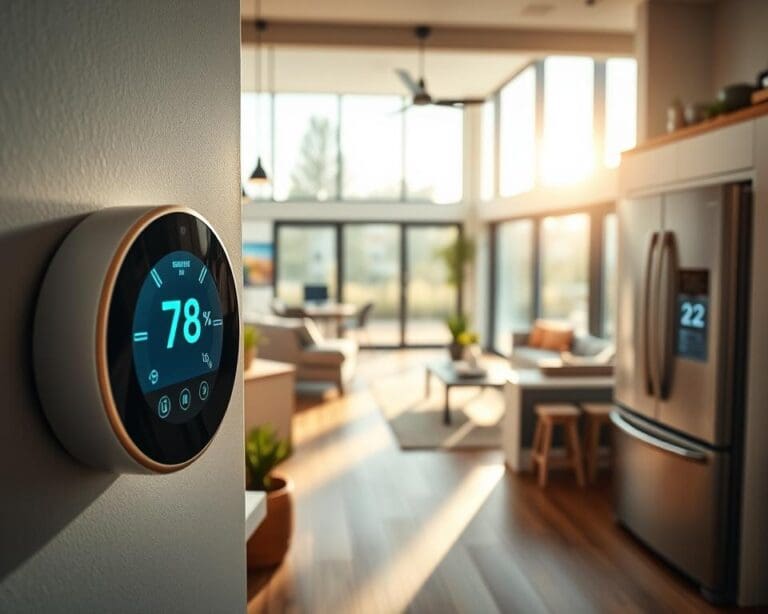
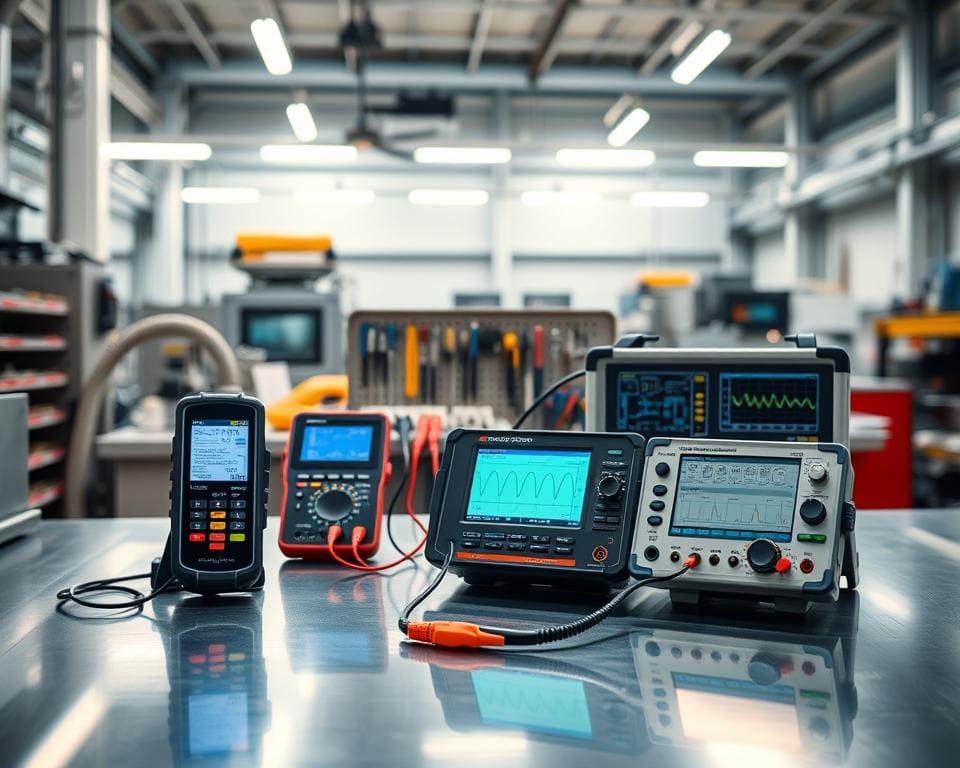
Machine diagnostics is the disciplined practice of detecting, analysing and predicting faults or performance decline in mechanical, electrical and electronic systems. It relies on a mix of diagnostic hardware and software to turn raw signals into clear, actionable insight for engineers and maintenance teams.
This diagnostic device review UK focuses on the devices that deliver reliable data for machine condition monitoring. We cover handheld instruments for on-site diagnostics, embedded diagnostics within controllers, networked IoT monitoring devices and gateways, diagnostic software and analysers, and specialist laboratory and bench equipment.
The article aims to identify which industrial diagnostic tools give the best balance of form factor, accuracy and connectivity. We assess ease of use, interoperability with platforms such as SCADA, and suitability for UK industrial environments, including ATEX-rated options where needed.
Credible signals to watch for include manufacturer reputation from brands such as Fluke, Keysight, National Instruments, Siemens, Rockwell Automation, Honeywell and Bosch Rexroth, plus accuracy specifications, IEC and ISO certifications, and UK warranty and service networks.
Each section builds logically: we start with the roles that focus on system performance, then examine handheld tools, embedded controllers, networked sensors and gateways, diagnostic software and analysers, and finally specialist lab equipment. The goal is to link device capabilities to the right users so technical decision‑makers can match tools to the task.
What roles focus on system performance?
Diagnosing machine health needs a team with varied skills. This short introduction sets the scene for the key contributors who keep plants and data centres running, whether in automotive, rail, or pharmaceutical production across the UK.
Overview of roles involved in diagnostics
- System performance engineers, sometimes called reliability or performance engineers, lead efforts to define and meet performance targets.
- Predictive maintenance engineers and reliability‑centred maintenance (RCM) specialists design programmes to spot faults before failure.
- Condition monitoring technicians gather vibration, temperature and power quality data at the plant floor.
- IT operations teams ensure connectivity and data integrity for SCADA and historians.
- DevOps engineers deploy analytics, tie observability tools to telemetry, and automate monitoring workflows.
- Control systems engineers manage PLCs, industrial PCs and embedded diagnostics.
- OEM service engineers support device‑level troubleshooting while field service technicians perform hands‑on repairs.
Responsibilities of system performance engineers
System performance engineers set performance KPIs and design monitoring strategies that map to business goals. They choose diagnostic devices, validate sensor outputs and define anomaly thresholds.
These engineers read vibration spectra, thermal profiles and power quality reports. They track MTBF and OEE, run root‑cause analysis and lead continuous improvement. Familiarity with Siemens platforms, SKF Microlog and Emerson Plantweb is common.
Statistical skills, signal processing know‑how and experience with machine‑learning toolkits help them build predictive models that reduce unplanned downtime.
How IT operations and DevOps contribute to diagnostics
IT operations diagnostics keep networks and gateways secure and reliable. Teams host SCADA, manage historians and ensure data retention meets regulatory needs across maintenance roles UK.
DevOps monitoring automates deployment of monitoring agents and CI/CD pipelines for analytics code. Integrations with Datadog, New Relic or Prometheus bring application performance monitoring together with industrial telemetry.
Security practices such as VPNs, TLS and role‑based access control protect telemetry and support compliance with UK cybersecurity guidance.
Manufacturer and field service technician roles
OEM service engineers provide firmware updates, calibration and deep device‑level diagnostics using proprietary suites like Siemens TIA Portal or Rockwell Studio 5000.
Field service technicians use handheld multimeters, thermal cameras and portable oscilloscopes to validate repairs on site. Their work closes the loop between lab analysis and operational reality.
Mapping devices to roles clarifies responsibility: embedded PLC diagnostics suit control engineers, IoT gateways and analytics platforms sit with IT and predictive maintenance teams, and handheld tools are the domain of field service technicians.
Cross‑functional diagnostics teams, supported by vendor training and UK certification routes, create resilient programmes that blend mechanical, electrical, controls and IT expertise.
Handheld diagnostic tools for on-site assessment
Field engineers reach for compact instruments when speed and precision matter. Handheld diagnostic tools let teams diagnose faults without returning to a workshop. These devices bridge bench accuracy and site practicality to keep production moving.
Multimeters and portable oscilloscopes
Multimeters measure voltage, current, resistance and continuity. In the UK, technicians often choose Fluke 117 or Fluke 87 for durability and safety ratings. Handheld power analysers from Fluke and Kyoritsu add specific load and power checks.
Portable oscilloscope units from Keysight, Rigol and Tektronix capture transient waveforms. A portable oscilloscope enables time‑domain analysis of signal integrity and power electronic switching on the move.
When evaluating tools check input impedance, bandwidth, sample rate and CAT III/CAT IV safety ratings. Consider IP rating for harsh environments, battery life and calibration intervals.
Typical on‑site uses include motor current signature analysis, inrush current checks, verifying sensor outputs and diagnosing PLC I/O faults.
Infrared thermal cameras for fault detection
Thermal camera diagnostics highlight hot spots that signal friction, electrical faults, poor thermal contact or bearing failure. Teledyne FLIR T‑Series and Ex‑Series products pair resolution with field ruggedness.
Key specs are resolution, NETD thermal sensitivity and temperature range. Radiometric capability supports trending over time and image export for reports.
Use cases cover electrical distribution panel inspection, bearing and gearbox assessments and heat‑loss studies during preventive maintenance rounds.
Sites with explosive atmospheres require ATEX or IECEx rated imagers to meet safety rules in industrial settings.
Mobile device-based diagnostic apps and hardware dongles
Smartphone and tablet apps link to specialised sensors via Bluetooth or USB dongles. Examples include the Fluke Connect app for instrument data logging and various OBD apps for automotive checks.
Bluetooth vibration sensors from manufacturers such as SKF, Monnit and Emerson pair with mobile diagnostic apps for quick condition checks. Hardware dongles for OBD‑II or factory interfaces give direct access to control data.
Benefits include rapid data capture, cloud sync, photo and note attachment and immediate sharing with off‑site experts. Integration with PC platforms and CSV export eases upload to CMMS or EAM systems like IBM Maximo or SAP PM.
Be aware of limits: mobile tools can trail calibrated bench instruments in accuracy. Choose industrial‑grade hardware dongles and maintain device security and update routines for reliable operation.
Embedded diagnostics within industrial controllers
Embedded diagnostics bring clarity to complex control systems. Small faults that once hid in wiring or modules are now flagged instantly. Engineers can trust automatic logs to show when an issue began and what triggered it.
Programmable Logic Controllers with built-in diagnostics
Modern PLC diagnostics cover I/O fault detection, watchdog timers and communication health checks. Diagnostic registers and built-in system logs record events so teams can review error timelines. Backplane diagnostics, module-level LEDs and automatic error logging speed troubleshooting on the factory floor.
Major vendor ecosystems enhance visibility. Siemens PLC diagnostics via the S7 family and TIA Portal provide deep trace and alarm data. Rockwell embedded diagnostics in CompactLogix and ControlLogix offer module status, network health and integration with HMI for operator alerts. Mitsubishi and Schneider Electric controllers supply comparable features for mixed-plant environments.
These capabilities deliver tangible value: immediate detection of card failures, communication dropouts and I/O anomalies. Faster identification reduces mean time to repair and keeps production moving.
Industrial PCs and edge controllers
Industrial PC edge controllers handle analytics at the machine, not in the cloud. Devices from Beckhoff, Siemens IPC and Advantech run local inference, gateway services and operator displays. This allows near‑real‑time decision making and bandwidth savings.
Embedded diagnostics for industrial PC edge controllers include hardware health monitoring for disk, memory and CPU temperature, watchdogs and secure boot. Containerised diagnostic services can isolate faults and allow safe restarts without halting the whole system.
Choosing industrial‑grade, fanless designs improves reliability in harsh sites. Local analytics reduce cloud latency and enable continued operation when networks are disrupted.
Sensor arrays and embedded microcontroller self-tests
Sensors are the first defence for detecting degraded equipment. Arrays of accelerometers, temperature probes, pressure transducers and strain gauges feed continuous status to controllers. Many modules include sensor self-test routines and health flags that mark suspect readings.
Built‑in self‑test (BIST), CRC checks and redundancy schemes protect data integrity. Suppliers such as STMicroelectronics, Bosch Sensortec and TE Connectivity provide sensor packages with self‑diagnostic features, while device implementations appear in products from Siemens, Rockwell and ABB.
Specify sensors with self-diagnostic capabilities for critical assets and ensure firmware supports remote test execution and reporting. Log calibration history and follow ISO/IEC guidance to keep the sensing layer trustworthy and auditable.
Networked monitoring devices and IoT gateways
Modern maintenance relies on networked monitoring devices to feed timely data from plant floor to cloud. Small, purpose-built condition monitoring sensors capture temperature, humidity and vibration, giving engineers clear signals about machine health. Triaxial accelerometers and high-sensitivity vibration sensors pick up bearing wear, while thermocouples and RTDs track thermal drift.
Careful selection of sensor mounting and sampling rate matters. Magnetic mounts suit temporary checks. Stud mounts give repeatable readings for permanent installs. Look for IP ratings and certification when deploying in hazardous zones. Suppliers such as SKF, Fluke and Bruel & Kjaer offer proven sensor options and National Instruments DAQ modules support flexible data collection.
Condition monitoring sensors (vibration, temperature, humidity)
Key metrics include sampling frequency, dynamic range and sensitivity. Higher sampling captures transient faults. Dynamic range reveals both small and large events. Sensor placement and spacing influence detection, so plan for permanent and portable coverage. Balance cabling against battery life when choosing wired or wireless fit-outs.
Data retention and secure transfer underpin diagnostics and compliance. Real-world projects show temperature and humidity tracking improves product quality and reduces regulatory risk. Read more on smart sensor benefits in practical deployments at smart sensor case studies.
IoT gateways and protocol converters
IoT gateways UK providers often supply protocol conversion from Modbus, Profibus and EtherNet/IP to cloud protocols. MQTT gateways translate field telemetry into lightweight payloads for analytics. Gateways perform edge aggregation, local buffering and OTA updates while enforcing TLS encryption during transport.
Choose gateways that support OPC UA for industrial interoperability and BACnet for building management. Vendors such as Advantech and Moxa supply rugged units. Look for secure onboarding, buffer capacity and scalable fleet management when specifying gateways for busy sites.
Wireless sensor networks and mesh systems
Wireless sensor networks reduce cabling costs and speed retrofits. LoRaWAN suits long-range, low-power use across dispersed UK sites. Zigbee and Thread deliver short-range mesh for dense environments. WirelessHART fits process industries that need deterministic timing.
Plan for frequency allocation, interference mitigation and redundant gateways to enhance reliability. Consider Ofcom rules and battery management when designing network topologies. Integrate mesh systems with CMMS and data historians to enable edge-to-cloud workflows for predictive maintenance.
- Advantages: faster deployment, flexible retrofits and lower installation cost.
- Limitations: bandwidth, latency and battery life require careful design.
- Integration point: MQTT gateways and LoRaWAN backhauls streamline telemetry to analytics platforms.
Diagnostic software platforms and analysers
Software sits at the heart of modern plant diagnostics. Diagnostic software platforms gather telemetry from controllers and sensors, turn raw data into insight and give teams the tools to act before small faults become major incidents.
SCADA systems such as Siemens WinCC, GE iFIX and Schneider EcoStruxure provide supervisory layers that collect alarms, host historian storage and present operator views. SCADA diagnostics link PLC and edge controller tags to central displays, tie into PI System or Honeywell Process Historian for long-term trending and support regulatory reporting.
SCADA and supervisory diagnostic modules
These modules offer alarm management, trend analysis and root‑cause workflows that help operators follow incident timelines. Centralised situational awareness speeds decision making. Integrations with Plantweb architectures and the PI System allow post‑mortem analysis and audit trails for compliance.
Predictive maintenance platforms using machine learning
Predictive maintenance tools ingest time‑series streams and apply models to detect anomalies and estimate remaining useful life. Vendors include IBM Maximo with Watson IoT, Siemens MindSphere and GE Predix, along with specialist providers. Typical analytics use FFT for vibration, supervised and unsupervised learning, random forests, LSTM networks and gradient boosting.
Successful deployment needs labelled failure data, clear KPIs and a plan for model retraining. Edge inference can reduce latency while cloud training supports heavier computation. UK adopters must consider data sovereignty and GDPR‑compliant processes when choosing suppliers for predictive maintenance UK projects.
Log analysers, APM tools and visualisation dashboards
Log analysers such as the Elastic Stack correlate machine telemetry with application logs. APM tools like Datadog and New Relic monitor application performance and infrastructure health. Visualisation dashboards built with Grafana or Kibana present role‑specific views for engineers and management.
These tools support alerting, anomaly detection and automated workflows that create work orders in CMMS solutions such as IBM Maximo or SAP PM. Best practice is to define clear dashboards, implement role‑based access and maintain runbooks so teams respond consistently when thresholds are breached.
- Benefits: faster fault isolation, reduced downtime and improved compliance.
- Integrations: connect log analysers, APM tools and historian systems for a single pane of glass.
- Governance: ensure data handling aligns with UK regulations and vendor support is local.
Specialist laboratory and bench equipment
High-precision tools and controlled bench setups extend diagnostics beyond what on-site testing can achieve. Specialist diagnostic equipment such as vibration analysers and spectrum analysers from Brüel & Kjær, SKF and OROS allow detailed frequency-domain analysis and modal testing that reveal root causes of intermittent faults.
Motor test benches and endurance rigs from Siemens, Pruftechnik and Dynapower test systems enable load testing, efficiency mapping and repeatable failure-mode reproduction. Bench instrumentation UK also covers power analysers and harmonics analysers from Fluke, Hioki and Keysight, plus oscilloscopes and signal generators from Keysight and Tektronix for controlled signal injection.
Laboratory analysers and environmental chambers support HALT/HASS and climate stress testing, making component qualification and certification reliable. Good practice demands calibration traceability to UKAS standards, documented test procedures and structured FMEA so results feed cleanly into in‑plant historians and ML platforms.
When field data is insufficient, escalate to lab testing for safety-critical assets, persistent intermittent faults or model validation. Collaboration with third‑party test labs and universities such as Cranfield University or the University of Sheffield AMRC can broaden capability and ensure data from specialist diagnostic equipment and laboratory analysers integrates with your predictive-maintenance strategy. Learn more about practical quality monitoring and process adjustment here.